| When the Door Closed |
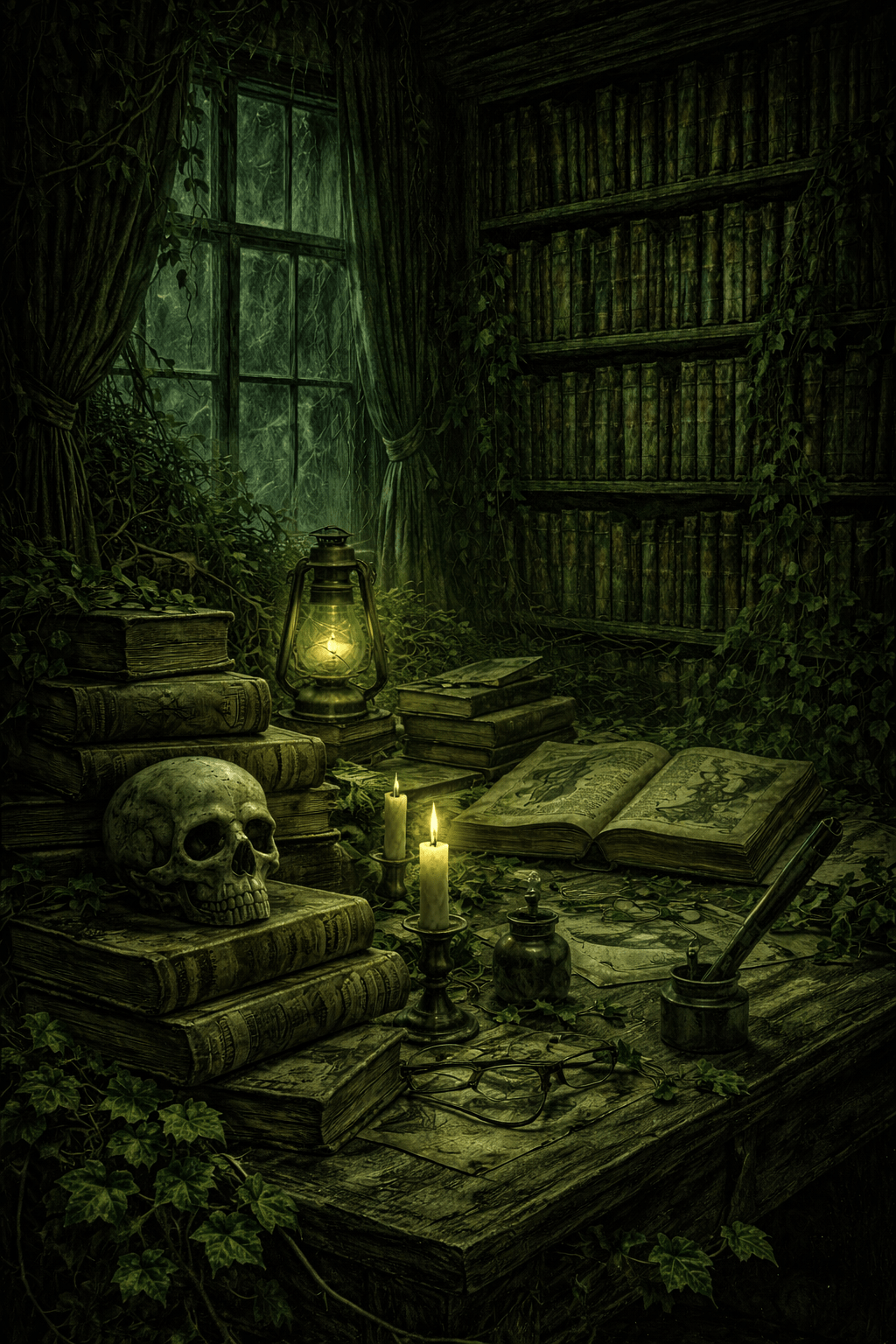
| There was no announcement when it happened. No gradual tapering. No fatigue. No conscious decision to stop. Horror did not fade from my life; it completed its function within it. The door did not slam. It settled into place, and only afterwards did I notice that I had not tried to open it again. That distinction matters. For years, reading had been a form of orientation. It had helped me live with uncertainty, absorb contradiction, and hold difficult questions without rushing toward resolution. Horror — alongside writing on the occult, theology, and belief — had been central to that process. It had trained patience. It had sharpened attention. It had given me stamina. And then, quietly, it stopped demanding further energy. This is difficult to describe without drifting toward sentiment, which it wasn’t. There was no revelation. Just a moment of resistance. An attempt to engage with something I would once have approached without hesitation, followed by the recognition that my internal response had altered. Not avoidance. Not fear. Something more neutral. More settled. For a long time, I had believed that seriousness required endurance. That if something mattered, you remained with it indefinitely. But this felt different. It did not feel like a retreat. It felt like completion. The questions horror had once helped me sit beside were no longer volatile. They had been metabolised. That word is important. The uncertainty that once required symbolic framing had been absorbed into a broader way of thinking. What had once needed scaffolding no longer did. The structure had transferred inward. There was no grief attached to this shift. No sense of loss. I did not feel that something had been taken. I felt something had concluded. We tend to describe long engagements in binary terms: lifelong devotion or abandonment. We struggle to articulate the third possibility — that something can be profound, finite, and complete. I did not outgrow horror. I finished with it, for that moment in time. Growing out of something implies rejection. Finishing with something implies respect. It suggests the relationship had purpose, and that purpose had been fulfilled. When I look back now, I can see that the conditions that made horror necessary had changed. The intensity that once drove acquisition and immersion had redistributed itself. Attention did not disappear; it shifted terrain. Fear did not vanish; it stabilised into awareness. The subjects themselves remain what they have always been. Death. Belief. Meaning. The unknown. What changed was my need to approach them through that particular form. I no longer require the architecture. There is something almost impolite in admitting this. It risks sounding utilitarian, as though horror were a tool to be set aside once used. That is not how it felt. The gratitude remained. The influence remained. What dissolved was compulsion. And I did not replace it. No equivalent obsession arrived to fill the space. That absence was instructive. It revealed something I had not yet understood: attention does not have to be constant to be legitimate. Long engagements can end without invalidating themselves. Around this time, the shelves were dismantled — not as a symbolic gesture, but because life shifted. Books were boxed. Some were passed on. Some were lost. Some remained for a while before finding other homes. The dismantling did not feel destructive. It felt transitional. The physical structure had served its purpose. It had held weight during a period when external scaffolding was necessary. It had given form to inquiry. Once that transfer was complete, the objects no longer needed to remain in the same configuration. There was no urge to reconstruct the room. No desire to rebuild the territory. The habits had already been internalised. I still notice the atmosphere. I still respect silence. I still distrust easy reassurance. I still prefer implication to spectacle. Those instincts did not disappear with the shelves. They were absorbed. Another misunderstanding often arises here — that leaving horror must mean turning toward comfort. That complexity was replaced with simplicity. That darkness was rejected. None of that occurred. The sensibility remained. What changed was its habitat. I still respond immediately to dark pulp imagery — the restraint, the shadows doing the work, the refusal to overexplain. That language still makes sense to me. It is not nostalgic. It is not ironic. It feels structurally honest. But horror ceased to be the environment in which thinking happened. It stopped functioning as a container for uncertainty because uncertainty no longer required containment. This is the most difficult part to articulate. The ending did not feel like withdrawal. It felt like equilibrium. I did not miss horror. For years, reading had structured evenings, weekends, and quiet hours. It had defined space and time. The idea that it could conclude without leaving an absence felt implausible until it happened. Yet nothing rushed in to replace it. The space did not feel empty. It felt open. Looking back across the full arc — early recognition, tracking, accumulation, correspondence, saturation, integration — the conclusion feels coherent. The relationship had a shape. It was not infinite. It was seasonal. That does not diminish it. If anything, it renders it more precise. I do not need to return to prove continuity. I do not romanticise the intensity of that period. It belongs to its time. What remains is quieter. Tolerance for ambiguity. Respect for seriousness. Suspicion of spectacle. A preference for writing that does not rush to reassure—an instinct for noticing when something is misaligned before it declares itself loudly. These were learned slowly, through attention rather than instruction. They did not disappear when the books did. When I say the door closed, I do not mean it locked. I mean, it settled. I could open it if I chose. I do not feel compelled to. That feels like the correct ending. Not because horror failed me, and not because I became someone else, but because the work it was doing had reached completion. The dark had done what it needed to do. And I no longer required it to carry the weight. |
| About our writing & imagery Most articles reflect our real gardening experience and reflection. Some use AI in drafting or research, but never for voice or authority. Featured images may show our photos, original AI-generated visuals, or, where stated, credited images shared by others. All content is shaped and edited by Earthly Comforts, expressing our own views. |

