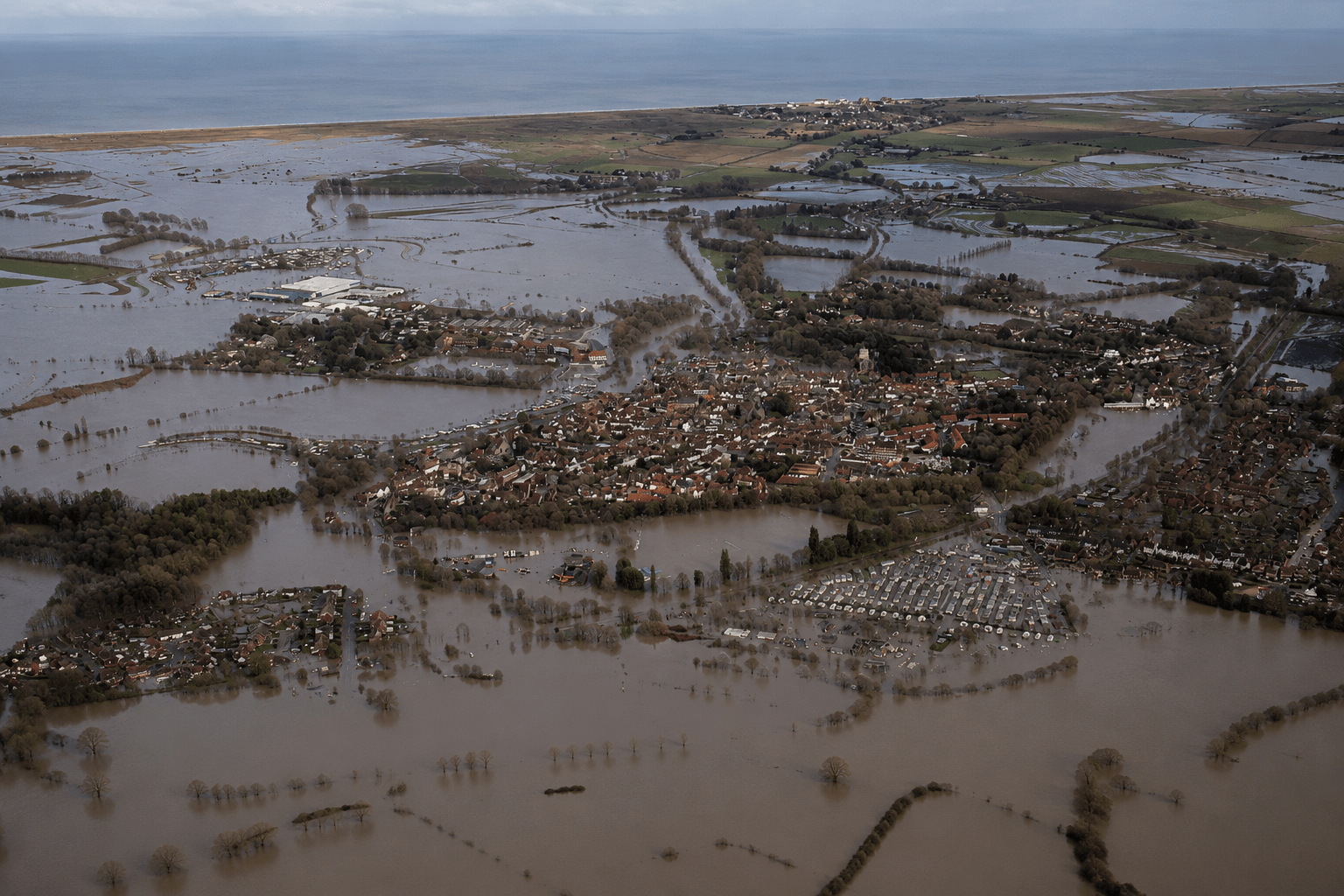
| Part One: The Day Sandwich Became an Island A few days ago, I watched an odd film on Netflix called The Last House. I won’t attempt to explain the entire plot because that isn’t really what interested me about it. What stayed with me afterwards was something much more ordinary: a family accustomed to opening cupboards, turning on taps, and assuming that tomorrow would function much like today, suddenly having to think about food, water, electricity, and survival in completely different ways. It also reminded me of Under the Dome, the television series from some years ago in which an entire town suddenly found itself cut off from the outside world. The premise there was fantastical, of course, but the question underneath it wasn’t. Put a boundary around a group of people and everything inside that boundary becomes finite. Food, fuel, medicines and other necessities no longer arrive when required. What you already have begins to matter, what you can produce matters even more, and eventually what you know how to do may become just as important as either. That got me thinking about where I live. Sandwich is an ancient town, once defended by walls, earthworks, ditches and gates, and although much of that physical defence has disappeared, the shape of the old town remains remarkably easy to recognise. We still walk along the old walls today, though few of us think about their original purpose as we do so. Modern Sandwich is connected to the surrounding countryside by roads, railway, river crossing and footpaths, and we cross those old boundaries without giving them the slightest thought. Food arrives in shops, delivery vans appear at our doors, fuel reaches filling stations, and those of us who need to be somewhere outside the town get into a vehicle and go there. My allotment happens to be outside the old town. Normally, that fact is of no importance whatsoever, but watching The Last House left me wondering what would happen if, one day, it suddenly were. What follows is fiction. I’m not predicting a disaster or suggesting that the events described here are about to happen. The circumstances are invented, but I’ve tried not to invent their consequences. The house is real, the town is real, and even the food with which we begin this story is real. Rather than create an imaginary family with a conveniently stocked pantry, I decided to use our own household and ask what might genuinely happen if several individually manageable problems occurred at precisely the wrong time. |
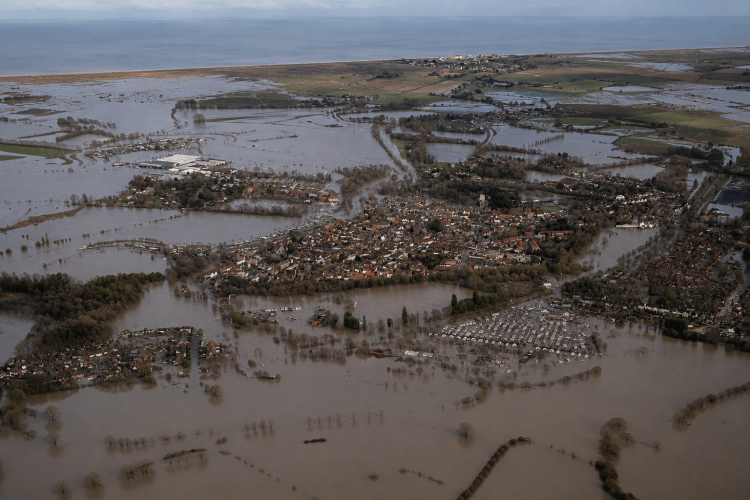
| When the Weather Changed Our story begins in the summer of 2026, and this part isn’t particularly difficult to imagine because we are already living through an extraordinarily dry period. By the middle of August here in Kent, meaningful rainfall has felt conspicuous by its absence for weeks. Gardeners notice these things rather earlier than most because we’re dealing with the consequences every day. Lawns lose their colour, soil hardens, and plants that would normally manage perfectly well begin to show signs of stress. Watering becomes something to think about rather than simply another job on the list. At the allotment, however, food is still being produced. Beans, tomatoes, courgettes, cucumbers, squash and potatoes regularly find their way home, sometimes in quantities greater than we can immediately use. During the preceding weeks we have given substantial amounts away. There is little point allowing perfectly good food to spoil simply because we can’t eat it quickly enough, and Sue hasn’t had time to prepare everything for freezing. There is also the rather obvious problem that freezer capacity is finite. Under normal circumstances, none of this matters because there will be another visit to the allotment, another harvest and, should we need anything else, another visit to the shops. That is one of the quiet luxuries of normal life. We can deal with today’s surplus without having to worry very much about tomorrow’s shortage. For our story, however, the dry weather continues into September. Forecasts increasingly discuss the developing El Niño and the possibility of significant disruptions to weather and agriculture worldwide. Exactly what that means for Britain remains uncertain, as these things invariably are, although reports from elsewhere are beginning to mention crop losses, flooding, drought, and increasingly difficult growing conditions. Here in Kent, life continues much as it always has. The taps work, supermarket shelves are stocked, and the allotment continues to produce. Eventually, the weather changes, and after such a prolonged period of wondering when meaningful rain might finally arrive, the forecast begins suggesting that rather too much of it is coming at once. The first warnings aren’t particularly remarkable: heavy rain, strong winds, localised flooding possible and advice to avoid unnecessary journeys if conditions deteriorate. It is the sort of forecast most of us acknowledge before continuing with whatever we had planned. The rain begins during the evening and continues through the night. By morning, there is standing water in places that hadn’t held any the previous day; drains are struggling, and reports begin to appear of problems on some of the roads around the town. The Stour is being watched increasingly carefully, while railway services are disrupted by flooding and debris elsewhere along the line. None of this initially feels like the beginning of a crisis. It feels like very bad weather, the sort of thing that causes inconvenience for a day or two before everyone gets on with clearing it up. One road closes during the morning, and traffic is diverted elsewhere. Another becomes difficult later in the day. The railway develops further problems and services are suspended while engineers inspect the infrastructure. Sandwich remains accessible, simply less conveniently than usual, and most people respond in exactly the way you would expect. Journeys are postponed, plans are changed, and the supermarket becomes rather busier as people decide it might be sensible to have a little extra food indoors in case getting around remains difficult tomorrow. There is nothing irrational about that decision. The difficulty is that several thousand other people can reach precisely the same sensible conclusion at approximately the same time. Bread begins disappearing more quickly than usual, bottled water follows, milk becomes noticeably thinner on the shelves, and there is even a brief return of the familiar COVID-era interest in toilet rolls. The shop hasn’t suddenly run out of food, and nobody seriously believes it will. People are simply buying today what they might otherwise have bought tomorrow. By the evening, however, the situation has changed again. The river crossing is closed as a precaution. At the same time, water levels and infrastructure are assessed, emergency access is maintained where possible and ordinary traffic is directed towards alternative routes that are themselves becoming increasingly difficult. Several footpaths still provide ways out depending upon water levels and exactly where someone wants to go, so Sandwich isn’t sealed in any literal sense. A reasonably fit person wearing waterproofs and carrying a rucksack could still walk out by one of the usable routes. A supermarket lorry cannot. Neither can a fuel tanker, refuse vehicle or ordinary delivery van, and this is where the difference between being trapped and being isolated begins to matter. People can move, but the quantities of things upon which a modern town depends cannot move nearly so easily. The medieval walls haven’t reappeared, there is no transparent dome descending from the sky, and nobody is physically preventing residents from leaving. Yet, the flow of goods into the old town has slowed almost to a stop. For hundreds of years the old defences have been little more than part of the landscape, somewhere to walk, exercise the dog or show visitors. Now, without anyone rebuilding a single stone, the distinction between what is inside and what is outside begins to feel relevant again. Unfortunately, our allotment is outside. It isn’t far away, and nothing has happened to it. The beans are still growing, courgettes are almost certainly continuing their relentless production and the tomatoes haven’t suddenly disappeared because a road closed. Yet if the routes we normally use to reach it are inaccessible, all that food might as well be considerably further away. We haven’t lost the allotment; we’ve lost reliable access to it, and for what happens next the difference is surprisingly small. |
| What Was Already Inside This is the point at which I begin looking around the house, not because we’re starving or even particularly worried, but because curiosity has started turning into calculation. I open the cupboards, fridge and freezer and discover something reassuring: there is food everywhere. The freezer is particularly encouraging. Its drawers are full, including plenty of vegetables and meals accumulated over time. The cupboards contain flour, cereals, nuts, seeds, sauces, preserves, dried ingredients, and a miscellaneous collection of things that inevitably develop in a household where people cook rather than buy every meal ready-made. We don’t eat meat, and we don’t drink alcohol, so neither forms part of the calculation. The fridge contains the usual collection of short-lived foods, and, sitting around the kitchen, there is a substantial amount of fresh produce brought back from the allotment before the weather deteriorated: beans, tomatoes, courgettes, cucumbers, squash and potatoes, along with fruit bought from the shops. Taken together, the immediate impression is that we have plenty. In one sense, we do, but the longer I look, the more I realise there is a difference between having plenty of food and having a long-term food supply. Fresh produce has a clock attached to it. The fruit will ripen and eventually spoil, as will many of the vegetables. Shop-bought fresh produce isn’t designed to sit around indefinitely either. The freezer gives us considerably more time, but only for as long as it remains a freezer. Then I think about everything we’ve given away from the allotment during the preceding few weeks. At the time, it was the sensible thing to do. We couldn’t use everything, Sue didn’t have the time to process all of it, and there wasn’t unlimited room in the freezer anyway. Besides, another harvest was only a few days away. Nobody makes ordinary household decisions on the assumption that access to their food supply is about to disappear. Now those decisions look slightly different. There is no point regretting them because we couldn’t possibly have known, but they demonstrate something interesting about abundance. When tomorrow’s supply is assumed, surplus has relatively little value. When tomorrow’s supply becomes uncertain, the same courgette starts to look rather different. The freezer presents another contradiction. Initially, it is our greatest advantage because it contains the largest concentration of stored food in the house. Yet all that security depends upon an uninterrupted electricity supply. The moment the lights flicker, even briefly, I begin looking at those drawers differently. A prolonged power failure wouldn’t leave us without food immediately, but it would start a clock running on a quantity of food far greater than two people could sensibly consume before some of it spoiled. Coincidentally, I had already been considering purchasing a small petrol generator for the gardening business. It wasn’t intended as preparation for some future emergency; portable electricity is useful when your work regularly takes you away from mains power. For our fictional experiment, we’ll assume I bought it before any of this happened, because allowing myself to order one afterwards would rather defeat the purpose of seeing how well prepared we actually were. The generator offers reassurance, but not independence. It needs petrol, and although some fuel can reasonably be stored with the work equipment in the garage, it isn’t unlimited. Running the freezer from a generator therefore doesn’t solve the problem so much as move it somewhere else. Electricity becomes petrol, petrol becomes another finite resource, and suddenly I’m thinking not simply about whether something works but about what it requires to continue working. Water produces an even more interesting calculation. Plenty is coming from the tap, but very little drinking water is actually stored in the house. Why would there be? We live in Britain, where clean, treated water is normally available in the kitchen whenever required. The supply is still functioning perfectly well, yet news reports are beginning to mention electricity problems and pumping difficulties elsewhere, and, for the first time, it occurs to me that the water in the pipes and the water we actually possess are two different things. I fill some containers, not because anyone has told us the supply is going to fail, but because by now I have begun questioning assumptions that wouldn’t have crossed my mind yesterday. The First Night By evening, the rain has eased and, inside the house at least, remarkably little has changed. The electricity is working, the water still comes from the tap, the internet is available, and we are preparing an ordinary meal. Outside, Sandwich is quieter than usual, but there has been no catastrophe. Nobody has been abandoned, emergency services are functioning, and engineers are working on the various problems. The expectation is that access will begin to improve over the next day or two, which seems entirely reasonable. Modern infrastructure occasionally fails, and people repair it; that is how things normally work. We therefore aren’t rationing food, counting individual portions of rice or guarding the remaining petrol. We have no reason to behave as though this is anything more than an unusually disruptive spell of weather. There is a freezer full of food, well-stocked cupboards, fresh produce from the allotment sitting in the kitchen and some fuel in the garage. Somewhere beyond the closed routes, more vegetables continue to grow on land we expect to visit again very shortly. The supermarket is expecting another delivery in the morning, and everyone assumes the various access problems will begin to resolve themselves. Perhaps the lorry will be late. Some shelves may remain empty for another day. None of that feels particularly significant when you’re sitting in a warm house with the lights on and dinner on the table. What we don’t yet understand is that this is precisely the point at which our sixty-day experiment has already begun. There is no announcement marking it, no moment when everybody collectively realises that ordinary life has changed and no opportunity to go back three weeks and preserve the allotment produce we gave away. There is simply an evening when we go to bed believing that tomorrow will begin putting everything right. By morning, the supermarket delivery hasn’t arrived. More rain has fallen upstream, another access route has become unusable, and the electricity network is beginning to experience problems of its own. The taps still work, the lights are still on, and there is still plenty of food in the house, but for the first time in our lives the old boundary around Sandwich is beginning to determine what reaches us and what doesn’t. The walls haven’t really gone back up, of course. It is beginning to feel as though they have. |
| About our writing & imagery Most articles reflect our real gardening experience and reflection. Some use AI in drafting or research, but never for voice or authority. Featured images may show our photographs, original AI-generated artwork, or, where stated, credited images shared by others. All content is shaped and edited by Earthly Comforts, expressing our own views |


Very thorough and believable. We are dealing with the opposite…too much rain. The garden seems to be doing okay regardless.
LikeLiked by 1 person
We are only just starting to get rain now, first time in 67 days, a first really in the UK.
LikeLiked by 1 person
Glad you’re finally getting rain! Sixty-seven days is a very long time. August has been a bizarre month here as it’s usually when we have the driest month.
LikeLike