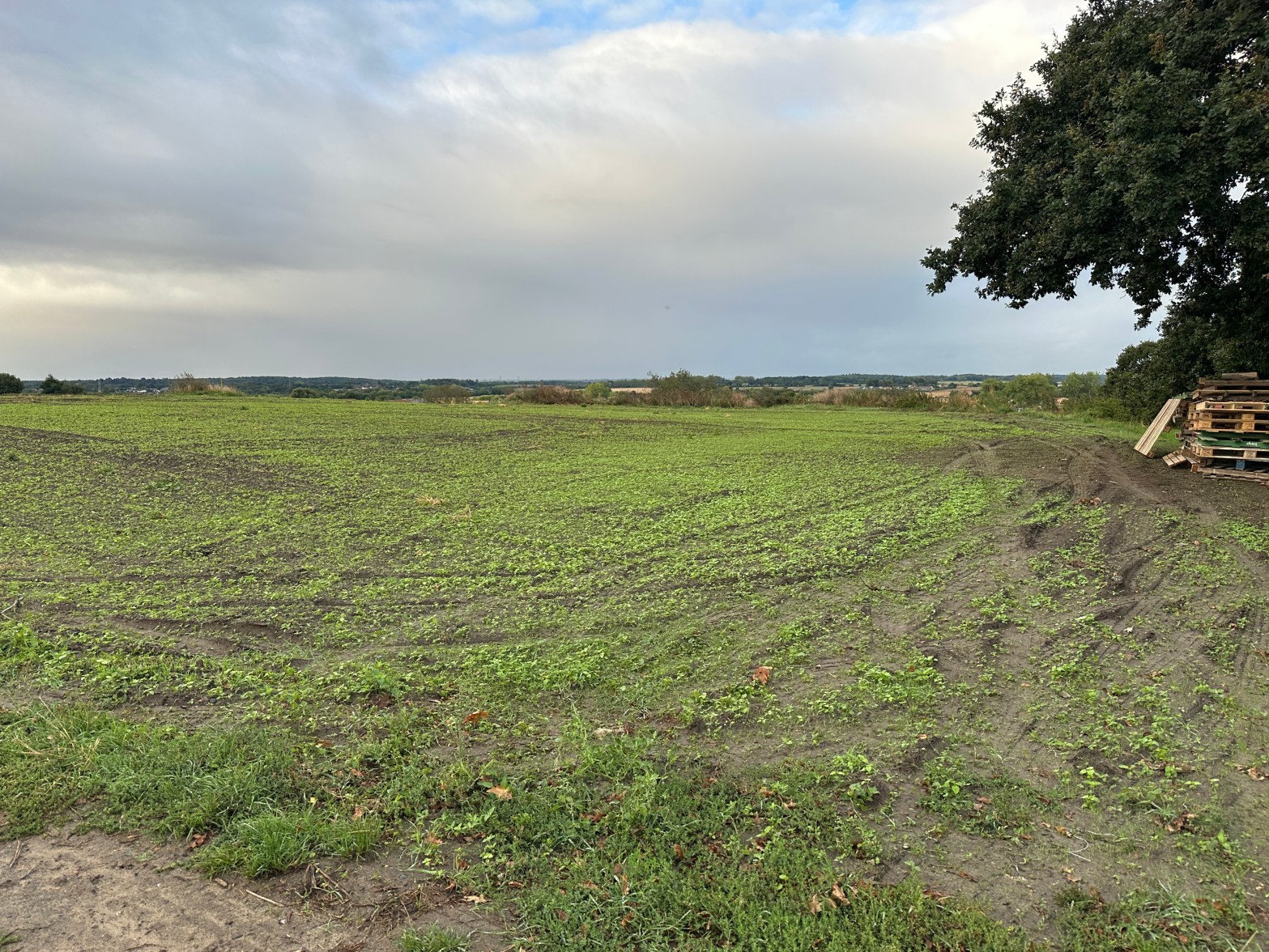
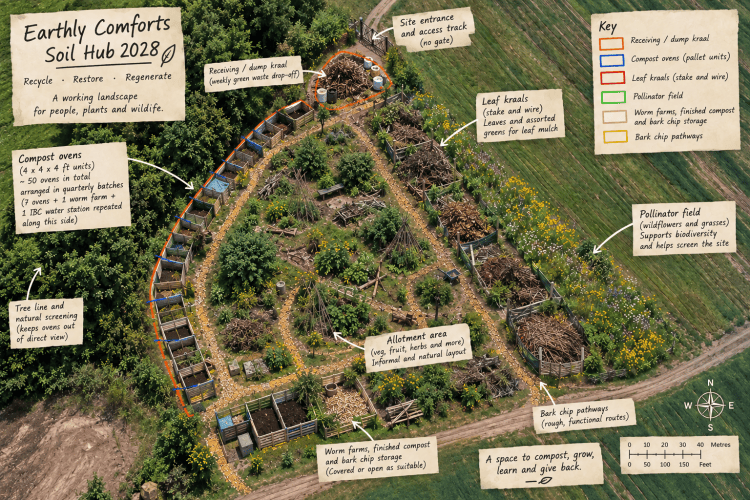
| What the Soil Hub might look like this time two years from today … |
| Episode One — We Finally Have a Field |
| The Soil Hub began as an idea in March 2023. At the time, it wasn’t really a project at all. It was a question that kept coming up whenever we finished a day’s gardening and looked at the bags of grass, hedge clippings, leaves, and other green material we had taken from our clients’ gardens. Why were we treating all of this as something to get rid of when, given enough time and the right processes, much of it could potentially become something useful? For the first couple of years, however, the practical answer was rather less imaginative. We paid somebody else to take it away. As Earthly Comforts grew, so did the amount of green waste we generated, and by November 2025 we were spending around £900 a month to have it removed. At that point, the environmental and financial questions began pointing in the same direction. We needed to find a better way. Looking for Somewhere to Put It In December 2025, we began actively looking for land where we could at least store our green waste while we worked out what came next. That sounds relatively straightforward until you actually try doing it. Land isn’t cheap, landowners are understandably cautious about anything involving the word waste, and the amount of space available rarely seems to correspond with the amount of space you actually need. Eventually, in February 2026, we found a temporary home on part of a horse field. Calling it a field gives rather too generous an impression of the space we actually had. Our allocated area measured only around 60 feet by 15 feet, yet it cost us £300 a month. We made it work because we had to. We collected green material in our familiar white sacks and accumulated it there over the next six months. It solved the immediate problem of paying to have everything taken away, but it didn’t really solve the bigger problem. We were storing green waste rather than doing very much with it, and the site was never going to provide enough room to develop the Soil Hub we had been imagining. An Idea That Kept Changing Readers who have followed the Journal for a while may remember The Soil Builders Hub Club, where we first explored compost, worms, leaf mould, mulch and the wider idea of returning organic material to the soil rather than continually removing it from the cycle. The Soil Hub has appeared in various forms since then. We’ve written about potential sites, drawn and redrawn plans, seen opportunities appear and disappear, and the project itself has changed considerably as we’ve learnt more about what might actually work. One of the biggest changes has happened very recently. Our earlier design centred around what we called compost ovens. These were intended to be high-density pallet units, packed tightly with green material and largely sealed off from outside air. The idea was to allow the material to break down slowly in a low-oxygen, effectively anaerobic environment, potentially for many months, before opening and turning it and eventually introducing suitable material into a worm-composting system. It was an interesting idea on paper, but the closer we’ve come to actually building the Soil Hub, the more we’ve questioned whether it is the right approach. So the ovens have changed. Opening the Ovens The latest design keeps the name compost oven because I’ve grown rather attached to it, but it changes what happens inside. Instead of deliberately creating a dense, oxygen-poor environment, we’re moving towards open, aerobic composting units. The green material will still be contained in approximately 4 × 4 × 4-foot pallet structures, but we’re designing the construction to allow air to move through them. Even the fronts have changed. Rather than using another solid pallet, we’re considering removable framed doors made from wire and green netting. These should contain the smaller material while remaining breathable and, importantly, can be taken completely away when an oven needs filling or turning. The outward-facing pallet walls may also be covered with green netting, partly to contain loose material and partly to make a collection of assorted reclaimed pallets look rather more intentional. We’re also considering simple framed tarpaulin roofs. These wouldn’t seal the ovens. They’d shed the worst of prolonged winter rain while leaving the sides open to air. We’re trying to keep moisture in the compost without allowing the contents to become waterlogged. Perhaps the biggest operational change is that we’re no longer talking about packing an oven and leaving it untouched for a year. Our present thinking is to work in roughly three-month stages, opening and turning the material as it progresses. None of that should be regarded as the final answer. The first ovens will be prototypes. We’ll build them, fill them with the green waste we actually collect and discover how they behave. The second group may well be slightly different from the first. That is really what The Soil Hub Revisited is going to be about. September 2026 — We Finally Have a Field After several false starts, on 11 September 2026 we finally moved our accumulated green material from the temporary storage site to a new field outside Sandwich. A grab lorry collected everything and deposited it at the new site, and three of us then spent the afternoon reorganising the sacks and beginning to make some sense of our new home. And this time we haven’t acquired another tiny corner in which to squeeze bags. We have a genuinely impressive amount of space — roughly 200 feet by 200 feet, or not far short of an acre — for what I consider a very reasonable monthly rent. After paying £300 a month for an area measuring roughly 60 by 15 feet, the difference is difficult to overstate. Waiting at the field are almost 90 second-hand pallets, bought for £1.50 each and delivered directly to the site. At the moment they are simply a rather untidy stack of timber. Over the coming months, many of them should become the first working compost ovens. For the first time, we’re no longer trying to design the Soil Hub around a hypothetical piece of land. We can design it around the land we actually have. A Gardener’s Hobby That Got Rather Ambitious For now, I think the best way of describing the Soil Hub is as a gardener’s hobby that has become rather ambitious. We’re not setting out to manufacture bags of commercial compost. What interests me is whether we can take suitable green material generated through the gardens we maintain and turn it into something genuinely useful. And there is an important distinction there. I don’t particularly want to produce rough compost simply because it is preferable to a pile of garden waste. The ambition is to produce a finished compost soil improver: mature, friable material that has been properly processed and sieved, and that I would be perfectly happy to put back into soil myself. That means the compost ovens are only the first stage. From Garden Waste to Finished Soil Our everyday green waste will arrive in 125-litre garden sacks. Rather than asking the gardening team to decide which particular oven every sack belongs in, we’re now planning a large receiving kraal near the entrance to the working area. During the week, our 125-litre green waste bags can be left at the kraal. At intervals, probably over a weekend, we can inspect that accumulated material, remove anything unsuitable and mix different types of green waste before loading the active ovens. That additional handling is slightly more work, but it gives us far greater control over what goes into each batch. A day’s worth of wet grass, for example, doesn’t have to become one dense mass in the bottom of an oven. You can combine it with the different materials collected throughout the week. Leaves will follow a separate route. Large, simple stake-and-wire kraals will allow them to settle and break down slowly into leaf mulch and eventually leaf mould, without taking up valuable oven space. Suitable woody material can have its own uses, particularly as woodchip. We are already planning bark or woodchip pathways through the working parts of the Hub, helping us move around the site without turning the field into a mud bath during winter. Gradually, different waste streams will have different destinations, rather than everything disappearing into the same pile. And Then Come the Worms Composting is only the first biological stage of what I want to explore. Once we begin producing properly conditioned compost, the next part of the experiment will be outdoor worm farms. These won’t simply be somewhere to throw fresh garden waste. I want to see what happens when we run selected composted material through another biological process involving worms and the extraordinary community of microorganisms associated with vermicomposting. The resulting vermicast is where the original Soil Builders idea starts becoming particularly interesting. We should eventually have ordinary mature compost, worm-processed material and perhaps combinations of the two. We can screen and refine these rather than shovel them straight from an oven onto a garden. The little allotment area we’re planning within the Soil Hub will give us somewhere to use what we make. That matters. We can talk endlessly about producing wonderful soil improvers, but eventually something needs to grow in them. If our finished material doesn’t perform well enough for us to use it ourselves, then we haven’t finished the job. Six Months to Build It — Perhaps Eighteen Months to Know Physically creating the Soil Hub could easily occupy the next six months. There are compost ovens to prototype and build, a receiving kraal to construct, leaf kraals to establish, paths to create, outdoor worm systems to develop and a small growing area to bring into use. But constructing the Hub and proving that it works are two very different things. Biology isn’t particularly interested in deadlines. Material has to decompose, settle and mature. Our first three-month turn will tell us something, but it won’t tell us everything. Different seasons will behave differently. Some combinations of garden waste will almost certainly work better than others. The outdoor worms will have their own opinions about our plans. Realistically, I suspect it could be 18 months before we begin seeing the proper results. And that’s why The Soil Hub Revisited isn’t going to be a conventional series with a predetermined number of episodes. We’ll write when something happens. We’ll build the first ovens and show what we’ve built. We’ll fill them. We’ll open them again after their first cycle and see what we find. If the material is developing beautifully, we’ll document it. If we’ve produced four cubic feet of something wet and thoroughly unpleasant, we’ll document that too and work out why. We’ll follow the compost through its different stages, set up the worm farms, examine the first vermicast, sieve our first genuinely finished material, and eventually put some of it onto the Soil Hub allotment. This isn’t a story being written retrospectively once we know it succeeds. We’re starting the story without knowing the ending. After three and a half years of ideas, changing designs, rising disposal bills, tiny rented storage areas, abandoned possibilities, and a lot of drawings, the Soil Hub finally has what every version of the idea required. We have a field. And now we get to find out whether we can build soil. |
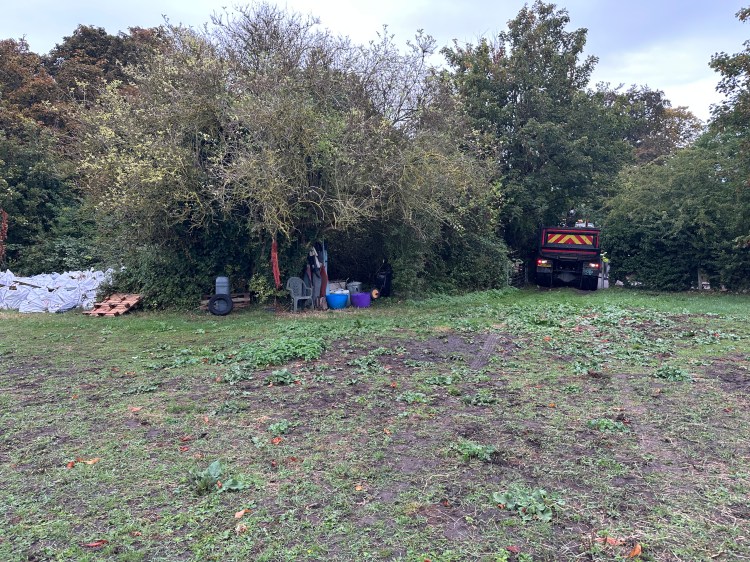
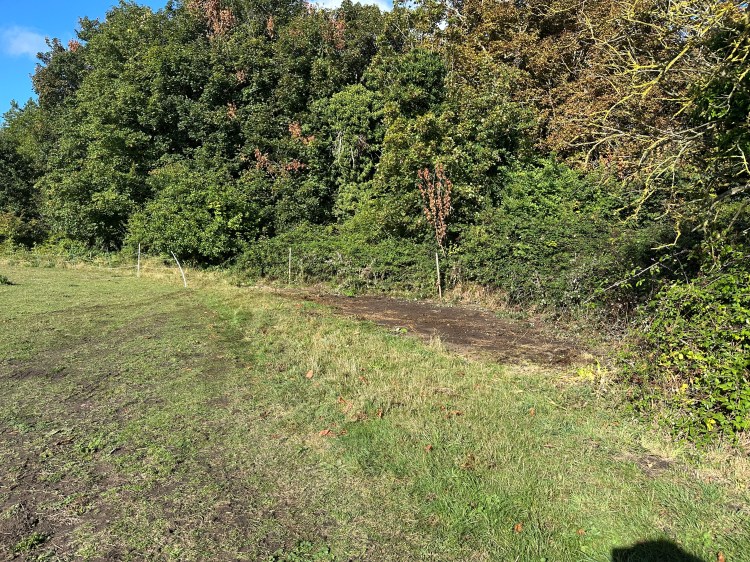
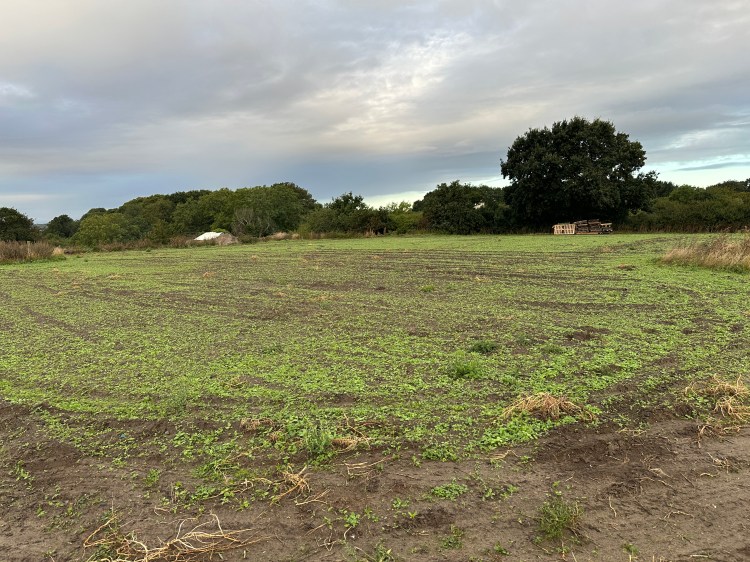
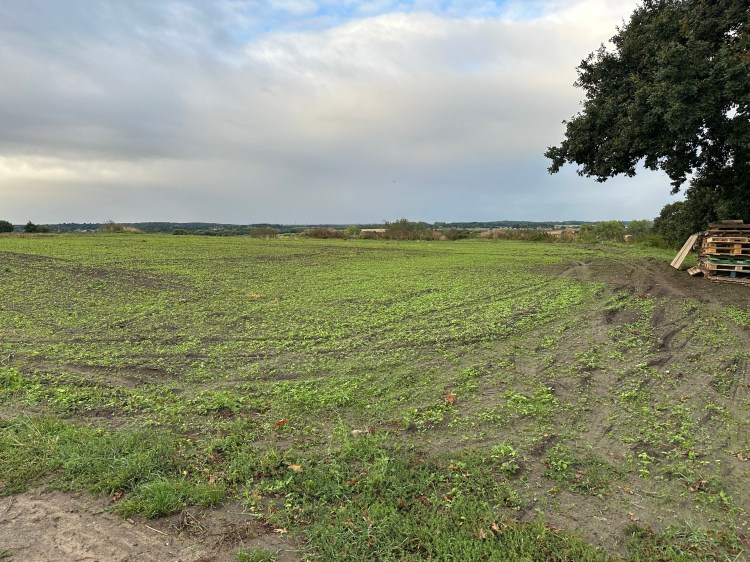
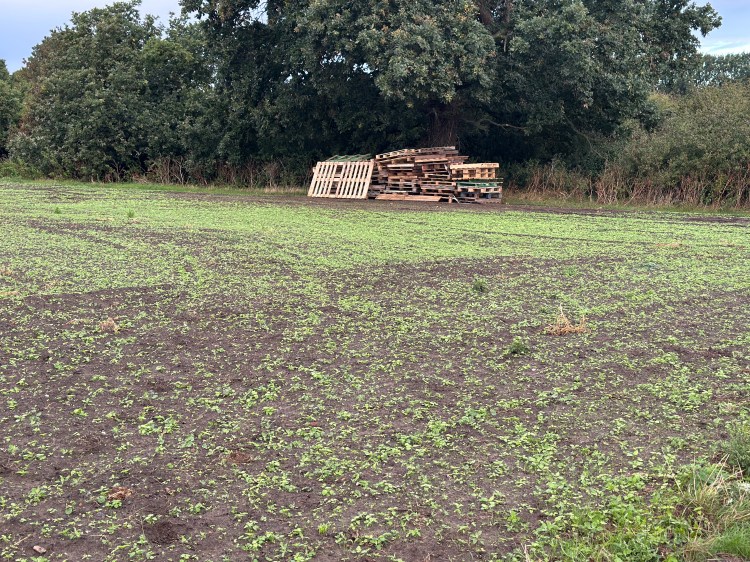
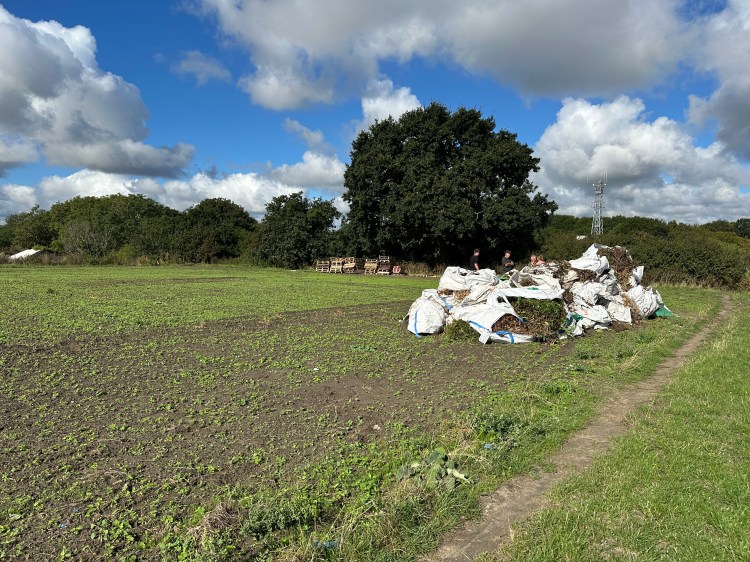
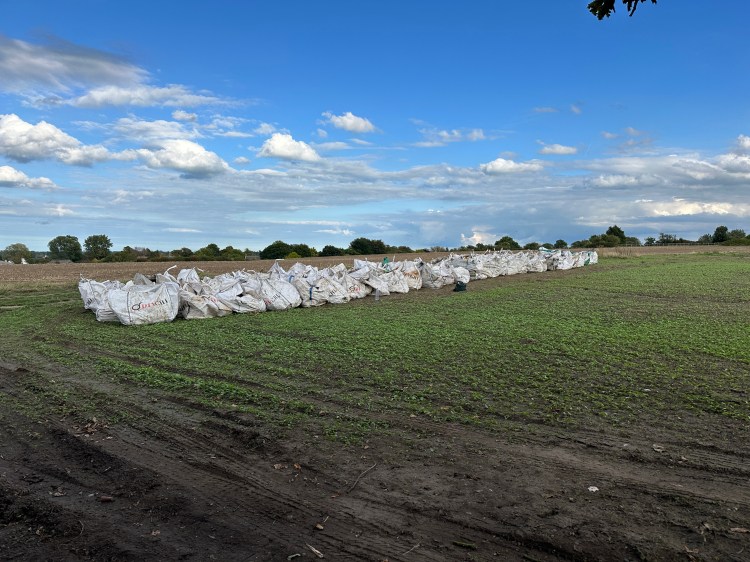
| The grabber lorry is reversing backwards into the old field to collect the stored green waste in white ton sacks to showing the ‘ultra small empty’ space to the new field at various angles and with the white sacks in situ – both untidied and tidied. |
| About our writing & imagery Most articles reflect our real gardening experience and reflection. Some use AI in drafting or research, but never for voice or authority. Featured images may show our photos, original AI-generated visuals, or, where stated, images credited to others. All content is shaped and edited by Earthly Comforts, expressing our own views. |


This sounds like a great idea. You’re making great progress, Rory.
LikeLiked by 1 person
Lets hope so, there are just so many things in the air at present.
LikeLiked by 1 person