
| Anemone Japanese Anemone |
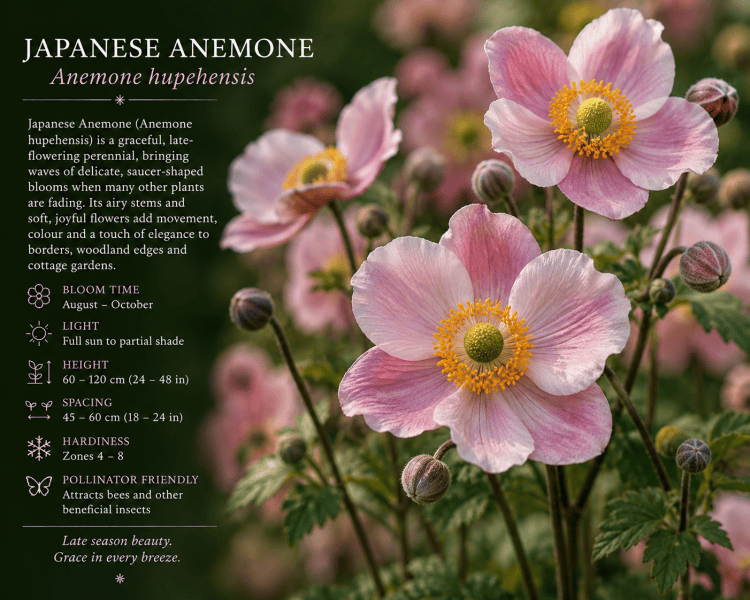
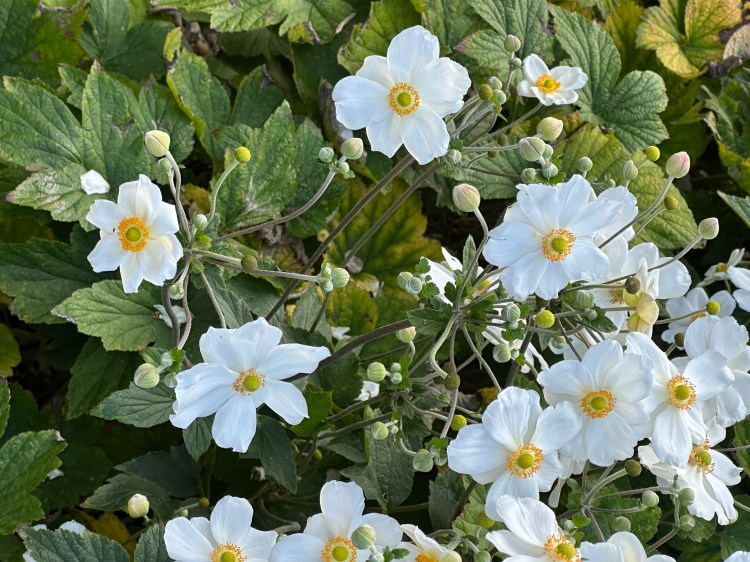
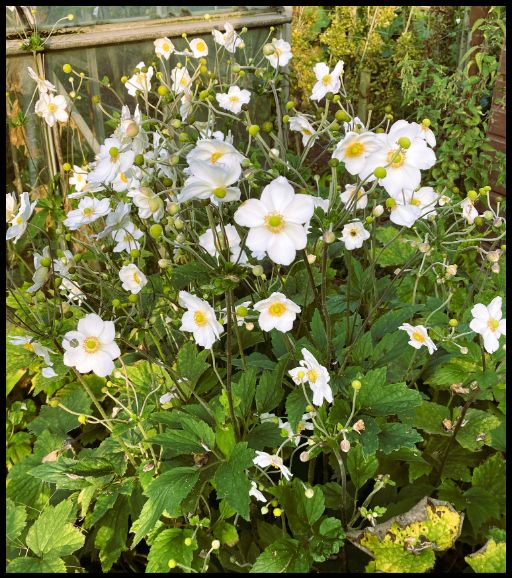
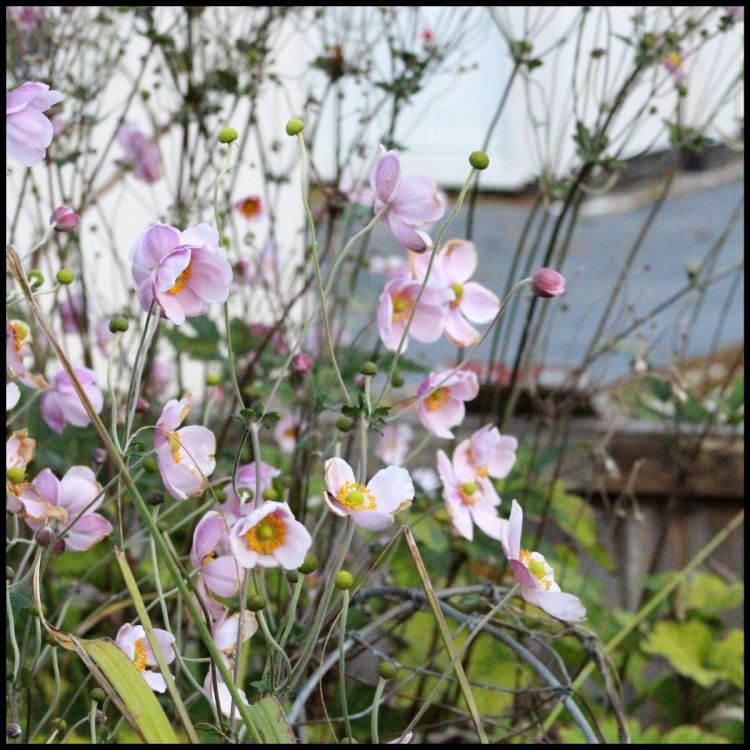
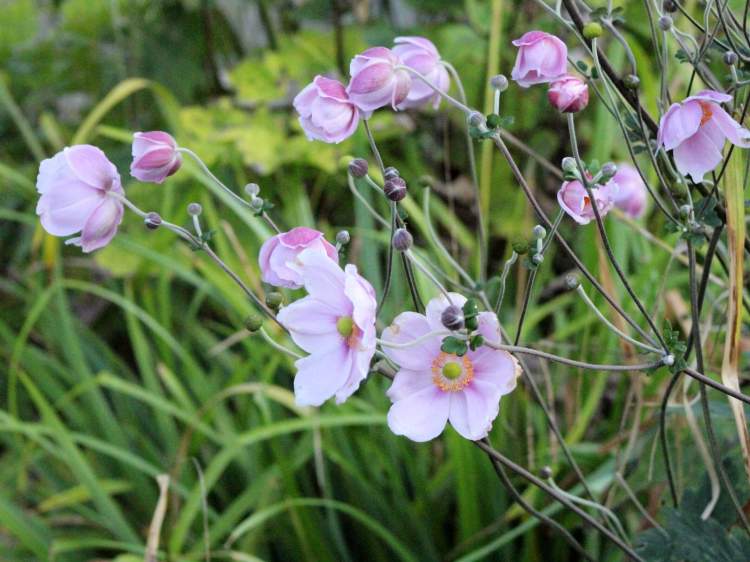
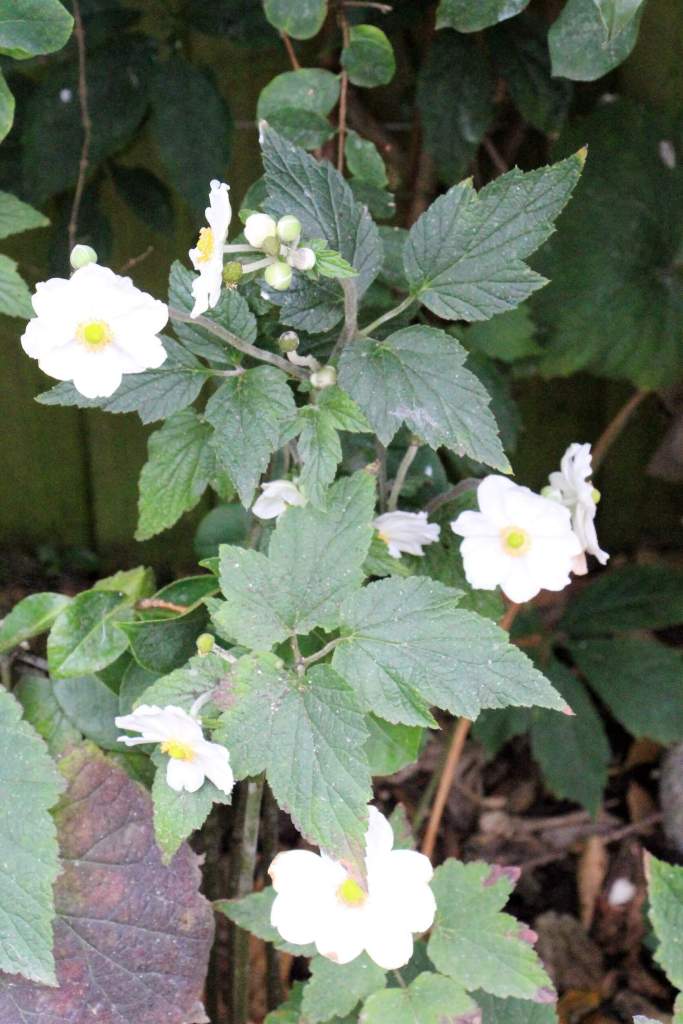
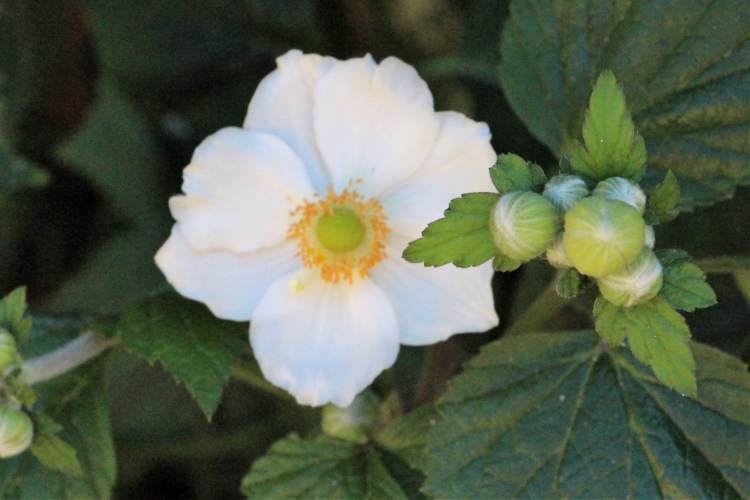
| Some plants demand attention; others seem content to wait until you happen to notice them. This Japanese anemone was one of the latter. I photographed it in a client’s garden in September, not because I had gone there intending to investigate Japanese anemones, but simply because it looked particularly good. Tall stems carried white flowers above the surrounding foliage, and behind them were enough unopened buds to suggest the display was nowhere near finished. At a time of year when quite a few plants begin to look as though they have done enough for one season, this one seemed to have other ideas. I knew it as a Japanese anemone, although “Japanese thimbleflower” is another name you sometimes encounter. The plant in my photograph is very likely the old white cultivar ‘Honorine Jobert’, although I wouldn’t identify a cultivar with absolute certainty from a photograph alone. That small reservation is worth making because several white Japanese anemones exist, and plants do not, inconveniently, arrive in gardens wearing labels. What interested me more was why I had stopped to photograph it in the first place. A plant that understands September There is something particularly useful about a plant whose best moment comes late. By September, a garden can get a little confused. Summer has not quite gone, autumn has plainly arrived, and some borders contain plants at completely different stages of proceedings. A few are still flowering enthusiastically, others have gone to seed, and some have collapsed into the plants beside them and apparently decided to stay there. Japanese anemones occupy that awkward period rather well. Their foliage forms a substantial green presence earlier in the year. Still, the flowers arrive from late summer into autumn on tall, branching stems, often around a metre high and sometimes considerably taller in good conditions. The flowers themselves are uncomplicated: pink or white, generally saucer-shaped, with a conspicuous circle of yellow stamens around the green centre. On the white forms especially, their simplicity makes them stand out without dominating everything around them. ‘Honorine Jobert’ is a particularly fine example. It can reach somewhere around 1–1.5 metres, carrying its white flowers on slender stems above the foliage, and it has been grown for well over a century. It also holds the Royal Horticultural Society’s Award of Garden Merit. None of that was apparent when I took the photograph, of course. What was apparent was that the plant was flowering beautifully in September and still had a remarkable number of buds waiting their turn. That is sometimes the more useful way to meet a plant. See what it actually does in a garden first, then find out its credentials afterwards. Japanese, but not quite The name led me somewhere unexpected. Japanese anemones have been associated with Japanese gardens for a very long time, but their history begins largely in China. The plants we collectively call Japanese anemones have a rather complicated ancestry involving Anemone hupehensis and related Asian species, with the familiar garden hybrids subsequently developed from them. A. hupehensis itself takes its name from Hupeh, the older spelling of Hubei province in China. Plants originating in China were cultivated in Japan and became so strongly associated with Japanese horticulture that the geographical name stuck. They reached European cultivation during the nineteenth century, and generations of gardeners have continued calling them Japanese anemones ever since. Botanical names can be revised; common names tend to pack their bags rather less readily. There is another small complication. Plant taxonomy does not always remain obligingly still either, and different botanical treatments have placed some of these plants differently as our understanding of their relationships has developed. For the ordinary gardener, however, “Japanese anemone” remains a perfectly useful description for this familiar group of late-flowering perennials. Sometimes knowing that a simple garden name conceals a much more complicated story is enough. Beautiful, dependable – and capable of wandering Looking at those delicate flowers, you might reasonably expect a delicate plant underneath. That would be a mistake. Once Japanese anemones are established and happy, they can spread enthusiastically through their root system. New growth can appear beyond the original clump, and root pieces left in the ground can produce new plants. This makes them wonderfully useful when you actually want a generous colony of late-season flowers. It becomes less endearing when somebody decides that the Japanese anemone allotted two feet of border five years ago has now annexed considerably more territory. This is one of those gardening characteristics that doesn’t fit comfortably into “good” or “bad”. A plant spreading is only a problem when it spreads somewhere you don’t want it. In a larger informal border, beneath the lighter shade of trees or in a part of the garden where a substantial colony is welcome, that ability can be an advantage. Put the same plant into a small, carefully controlled bed, and the conversation may eventually become rather different. It also means I wouldn’t plant one without thinking about what is around it and what that part of the garden is supposed to become. Give it somewhere it can gradually develop, rather than a tiny space where it will eventually need policing. If an established clump becomes too large, you can lift and divide sections, although leaving pieces of root behind may cause the plant to return quietly. Japanese anemones apparently don’t care whether the gardener considers the matter settled. Getting the conditions right They are refreshingly undemanding in other respects. Japanese anemones grow in sun or partial shade and are particularly useful in light or dappled shade. They prefer fertile soil that holds some moisture while still draining properly. Very dry ground doesn’t suit them particularly well, but neither does soil sitting wet through winter. That distinction between moist and waterlogged crops up repeatedly in gardening because plants are considerably better at recognising it than we sometimes are. A spring mulch of compost or other organic matter is useful, particularly where the soil tends to dry during summer. Newly planted specimens need watering while they establish, but a settled clump in suitable ground shouldn’t require endless attention. Despite the height of the flowering stems, established plants are generally sturdy enough not to require staking. There is also no great need to rush out in autumn and remove everything the moment flowering finishes. Leaving the old stems and foliage through winter can provide cover for insects and other small creatures, with the dead material cut down before new growth gets properly underway in spring. It is one of those occasions when doing slightly less gardening can actually be useful. And if you want more plants, their tendency to spread suddenly becomes rather convenient. You can divide established clumps, and you can also propagate Japanese anemones from root cuttings. The very characteristic that makes one difficult to remove also makes it easy to reproduce. Gardening is full of these small shifts in perspective. Looking at it again What I like most about the plant in the photograph isn’t really its history, its hardiness or even its usefulness. It is the timing. Look closely, and the flowers are only part of what is happening. There are open blooms, flowers beginning to fade, newly opening buds and tight green buds still some distance from flowering. The plant isn’t producing a single spectacular flush and disappearing. It is moving through its display gradually, which is exactly what you want as summer gives way to autumn. Those stems also look slightly improbable. The flowers seem almost to hover above the heavier mass of foliage beneath them. When several stems move independently in a breeze, the effect differs greatly from that of a dense flowering shrub or a solid block of bedding plants. The old name “windflower”, used for anemones more generally, suddenly makes rather more sense when you watch them rather than look at a photograph. I suspect that is why this particular plant stopped me. It wasn’t rare. It wasn’t exotic. I hadn’t travelled anywhere to find it, and until I photographed it I hadn’t intended to write anything about it. It was simply doing something exceptionally useful at exactly the right moment, in an ordinary garden in September. Those are often the plants worth looking at twice. |
| About our writing & imagery Most articles reflect our real gardening experience and reflection. Some use AI in drafting or research, but never for voice or authority. Featured images may show our photos, original AI-generated visuals or, where stated, credited images shared by others. All content is shaped and edited by Earthly Comforts, expressing our own views. |


Beautiful flowers Rory
LikeLiked by 1 person
Such a gorgeous flower, Rory. I’ll look for them since they grow in my area.
LikeLike