| Giving Trees Room to Breathe Part 1 |
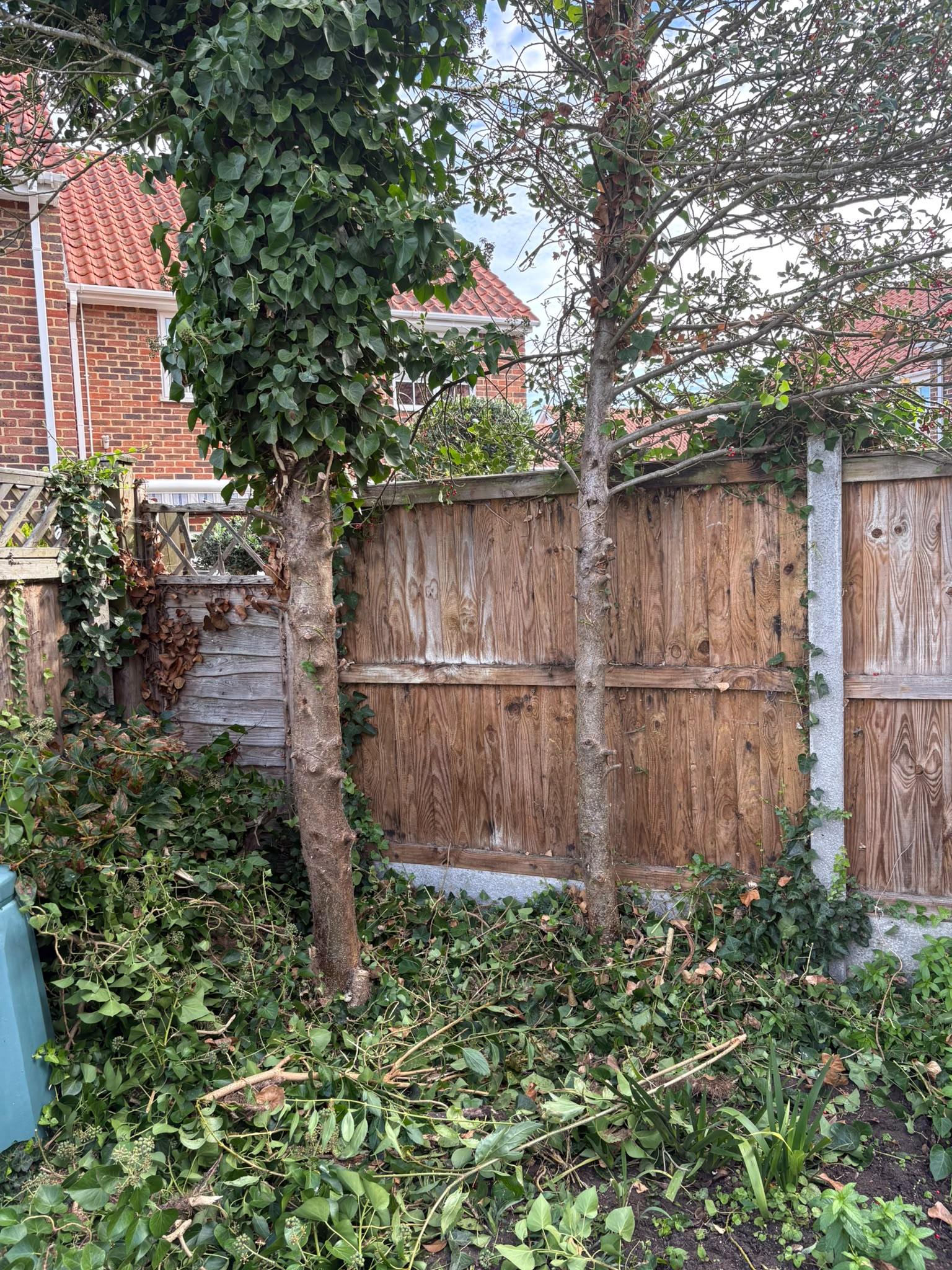
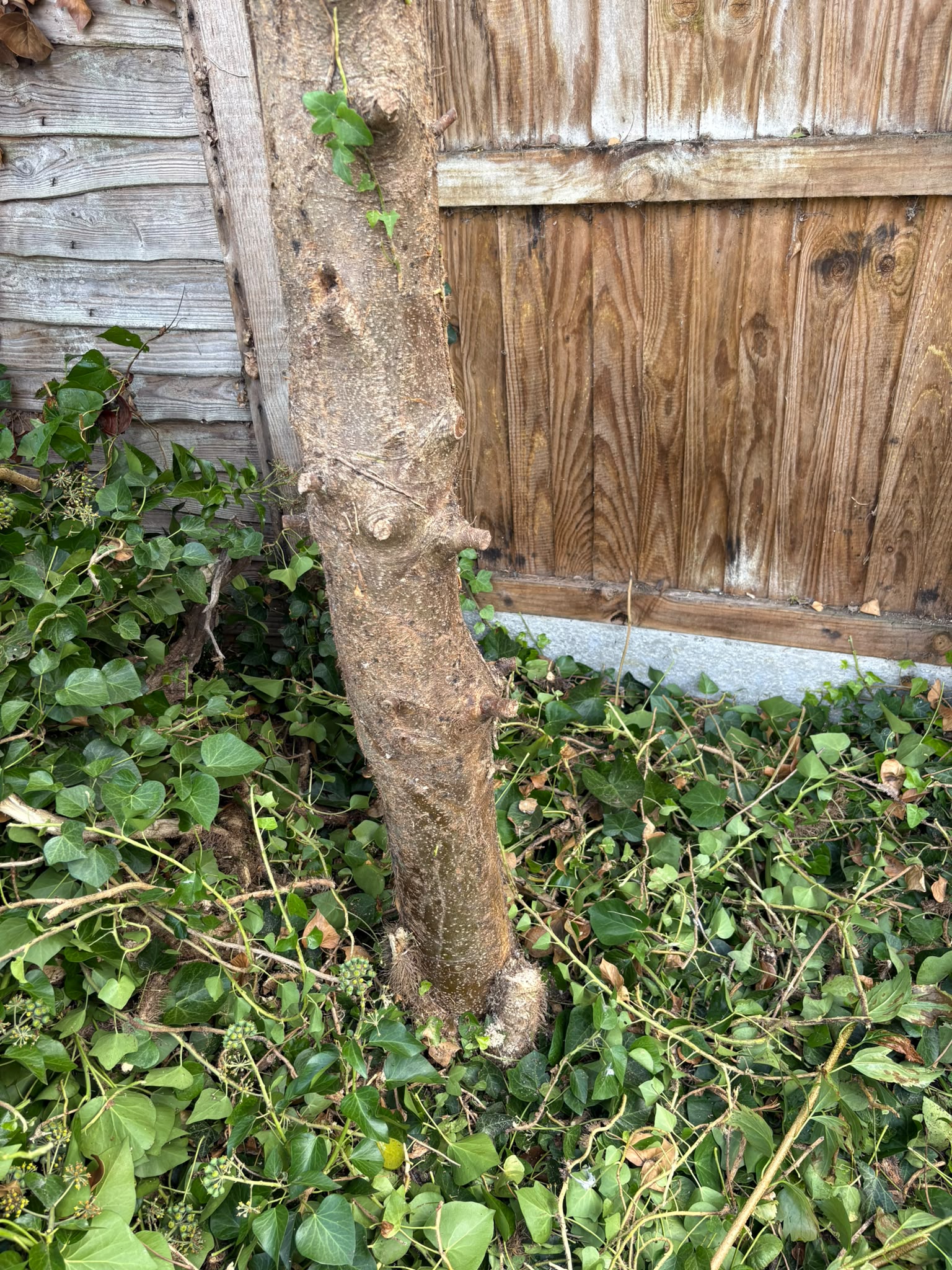
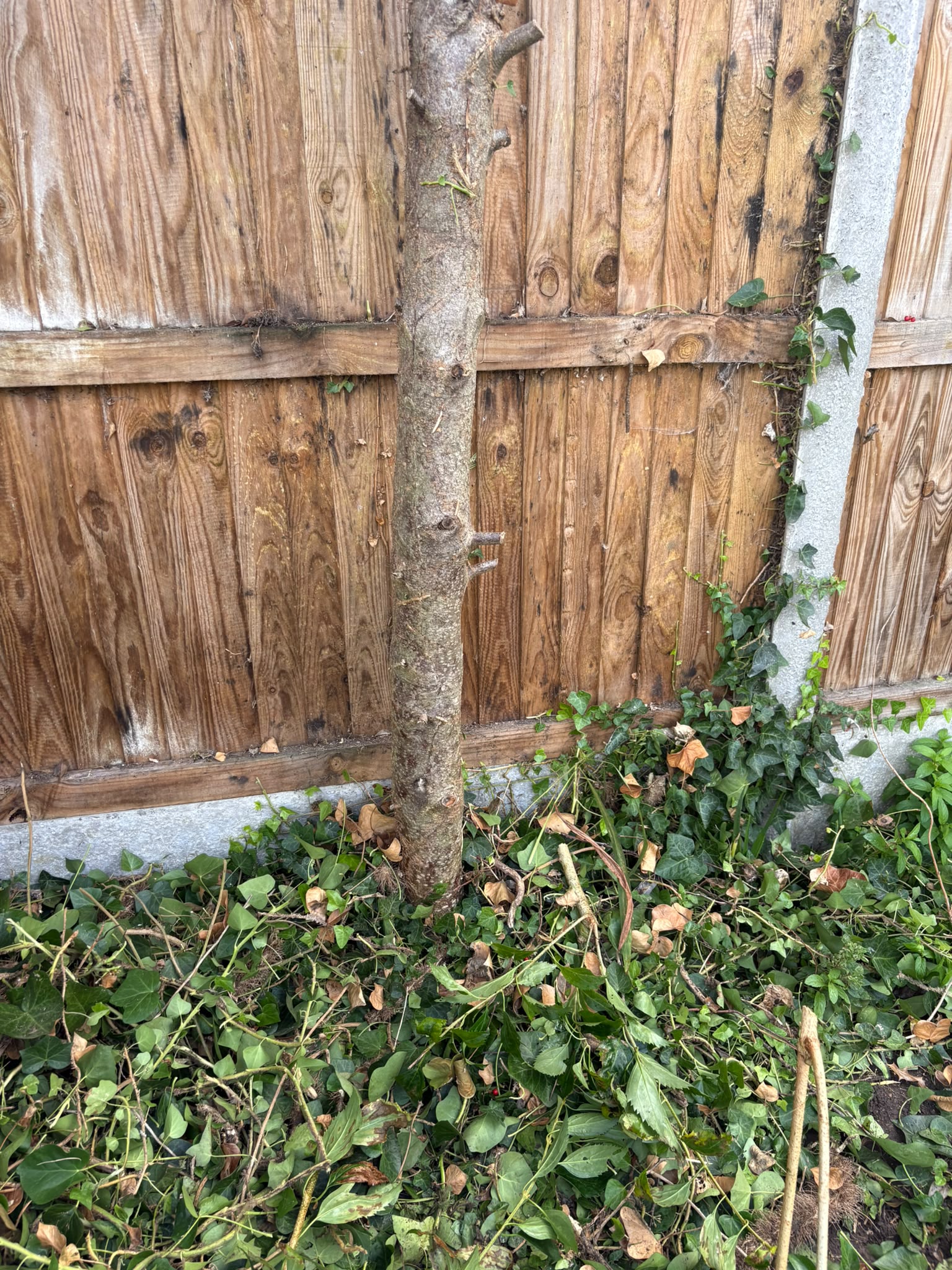
| Not every garden visit I make is about providing an estimate or securing additional work. Sometimes a client simply wants a little guidance on how best to approach a particular problem, and I am always happy to offer that advice without charge. In this instance, there was no reason for the client to pay a gardener to carry out the initial work when, with the right guidance, the client was perfectly capable of doing it himself. My involvement was simply to explain what needed to be done and why. The more demanding work will come later, most likely in December, when the business intends to return with ladders to begin carefully removing the dead ivy from the upper sections of the trees, provided it is safe to do so. |
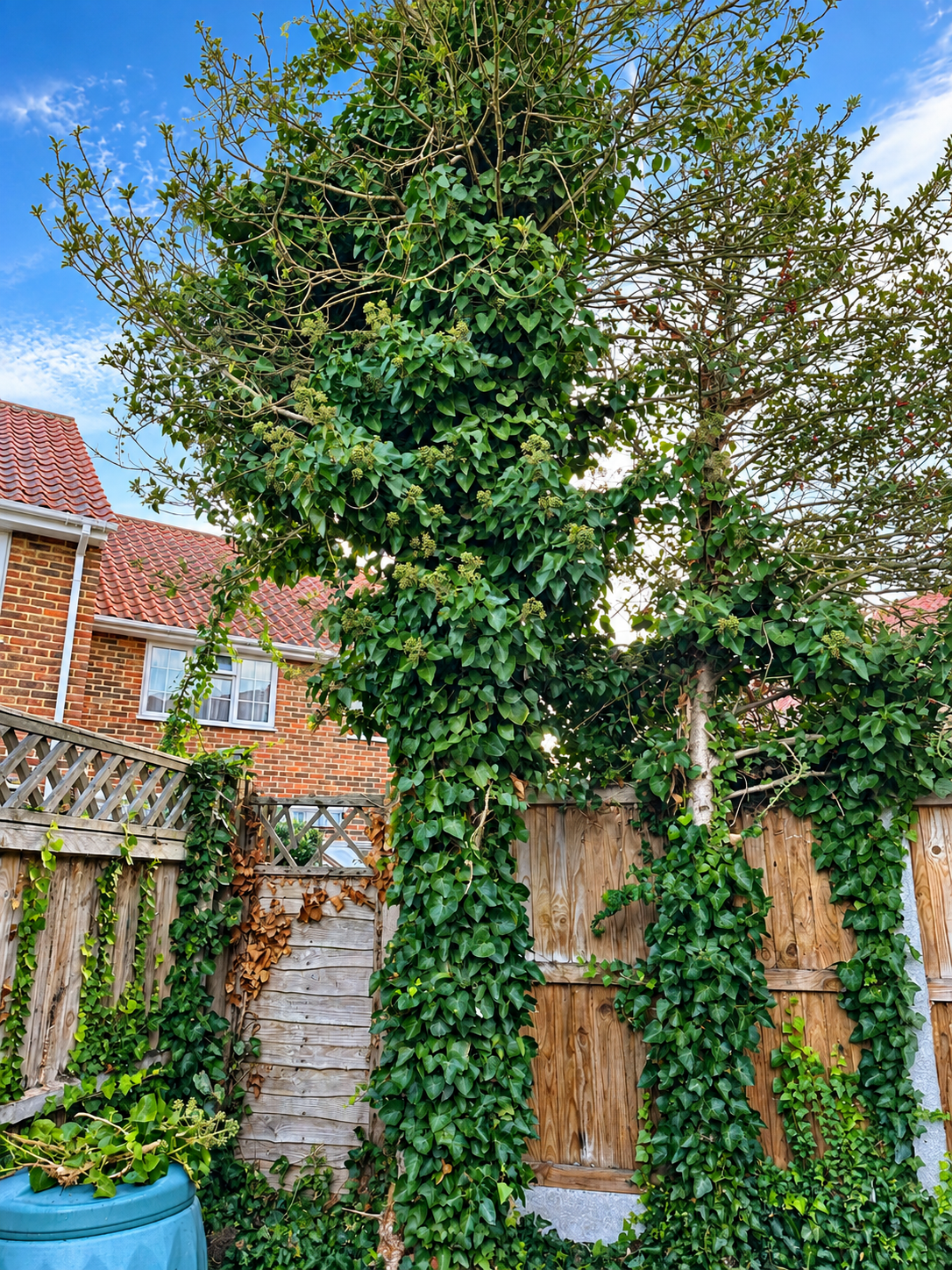
| Ivy is one of those plants that divides gardeners’ opinions. Some regard it as an unwelcome invader, while others recognise its considerable value to wildlife, particularly as a source of late-season nectar, pollen and winter berries. Personally, I think ivy has a place in most gardens, but sometimes its enthusiasm for climbing exceeds what a garden can comfortably accommodate. Last Monday, a client invited me to inspect two trees growing along a garden boundary. Both had become heavily colonised by mature ivy, with thick growth extending up their trunks and spreading into the upper branches. In places, the ivy had developed into substantial woody stems, while the evergreen foliage had formed dense masses that obscured much of the trees’ natural structure. The problem with ivy is not that it feeds upon the tree. Contrary to a surprisingly persistent belief, common ivy (Hedera helix) is not a parasite. It uses the tree for support, attaching itself to the bark through specialised aerial rootlets, while obtaining water and nutrients through its own roots in the soil. However, when ivy becomes particularly extensive, its weight and additional wind resistance can place extra strain on branches, especially where the supporting tree is already weakened or structurally compromised. Dense growth can also make it difficult to assess the condition of the trunk and branches beneath. Having inspected the trees, I advised the client to sever the main ivy stems near ground level, interrupting the connection between the established climbing growth and its root system. This is often a sensible first step when dealing with heavily overgrown ivy, particularly where pulling living stems from the upper branches could cause unnecessary damage. The client then carried out the work as advised, cutting through the substantial woody ivy stems around the lower trunks. As the accompanying photographs show, the growth was considerable, with ivy established over many years. The important thing now is patience. Although the stems have been severed, the foliage above will not disappear overnight. Over the coming weeks, the disconnected ivy should gradually begin to wilt, brown, and die back as it exhausts its stored moisture. Any rooted ivy remaining at ground level will need further attention to prevent fresh growth from climbing the trunks again. We intend to return around December, once the upper growth has begun to die back, to assess what can be removed safely. Working at height will require particular care, as even dead ivy can remain firmly attached to bark and branches. Rather than pulling everything away indiscriminately, we will selectively remove accessible material, avoiding damage to the trees themselves. Any work beyond safe ladder access will need appropriate professional equipment or assistance. We need to strike an interesting balance here. Ivy provides valuable shelter and food for birds, insects, and other wildlife, and its removal should never be treated as an automatic requirement simply because it climbs a tree. In many situations, ivy and its supporting tree coexist perfectly well for decades. The decision to intervene should depend upon the condition of the tree, the amount of growth involved and the circumstances of its location. In this particular garden, the objective is not to eliminate ivy from the entire boundary, but to bring its growth back under control and allow the trees’ structure to become visible once again. Sometimes good gardening isn’t about removing everything that has grown, but about understanding what should remain, what needs managing, and when it is best to intervene. And occasionally, as these photographs demonstrate, the first stage of a job is simply knowing where to make the cut. |
| About our writing & imagery Most articles are grounded in our real gardening experience, observations and reflections. AI may assist with research, drafting and editing, but the experiences, opinions and editorial direction are our own. Featured images may include our photography, original AI-generated visuals or, where stated, images credited to others. All published content is reviewed and shaped by Earthly Comforts before publication. |

