| Verbena bonariensis The Plant That Makes Room for Everything Else |
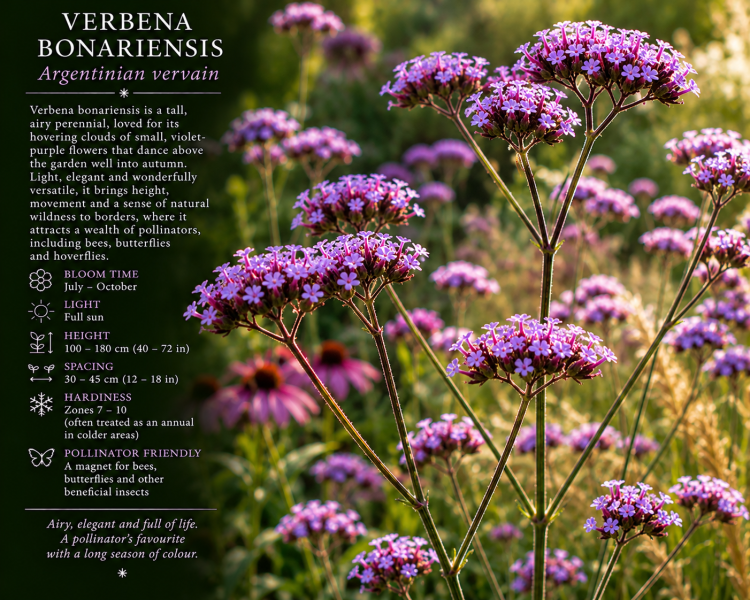
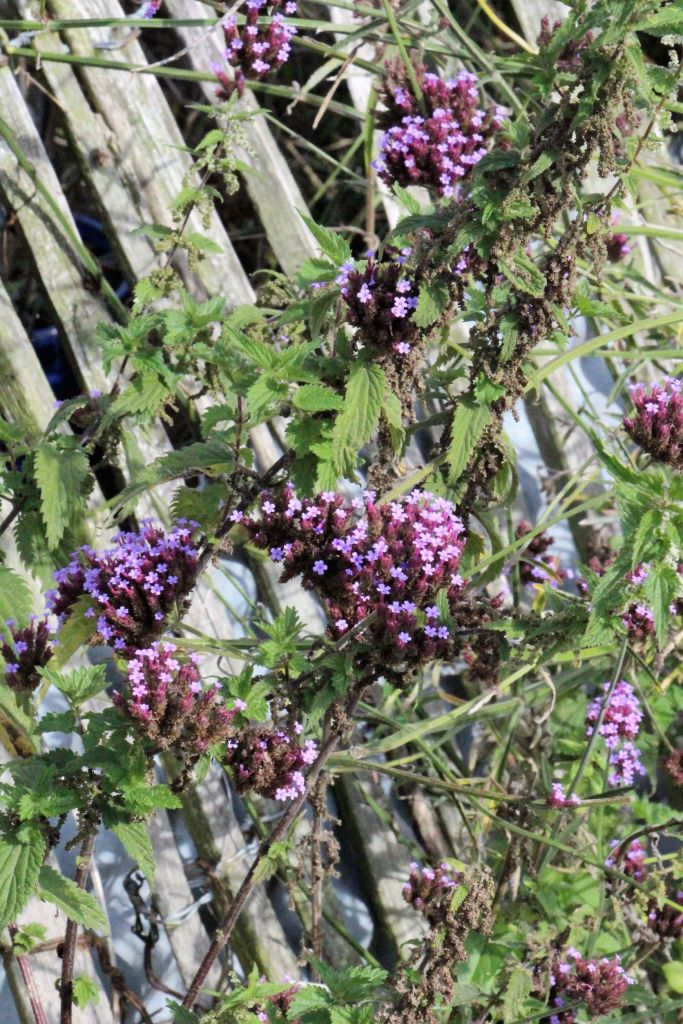
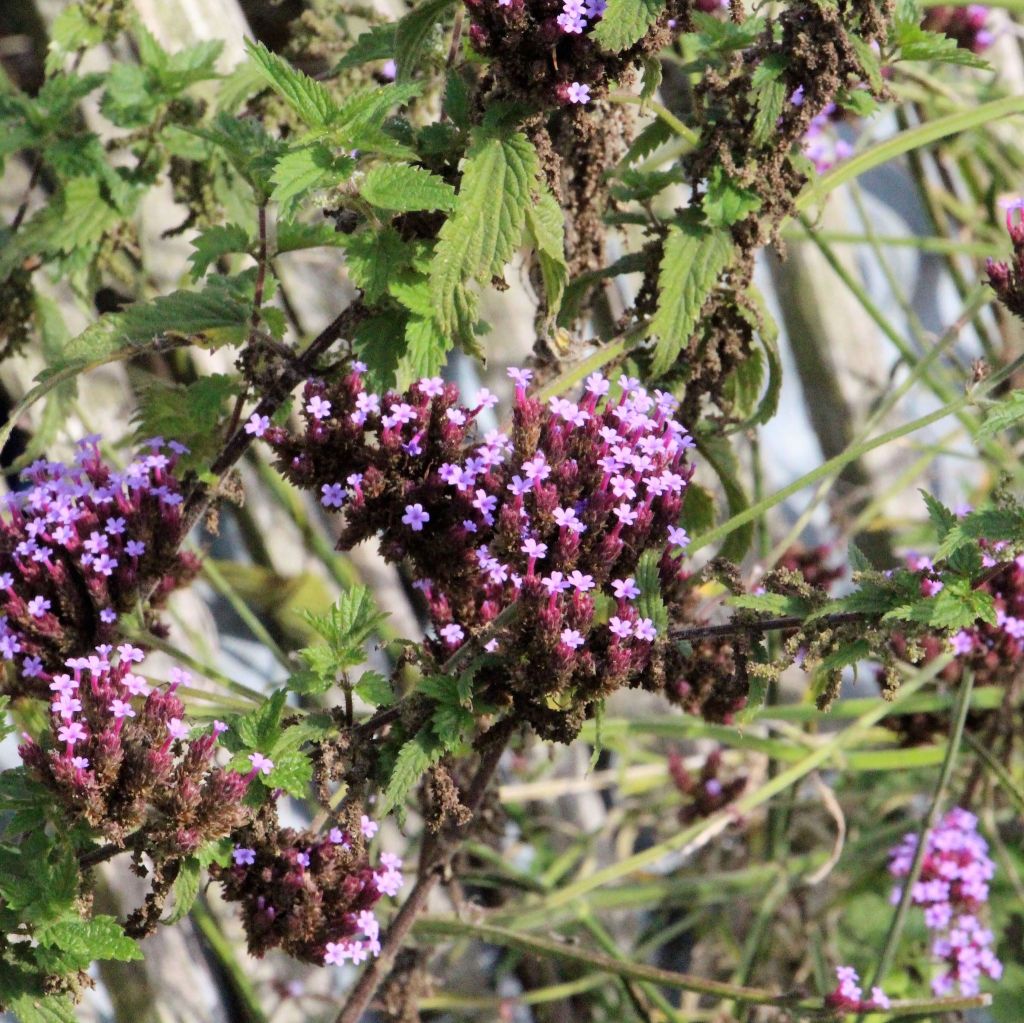
| One of the more difficult things to achieve in a garden is height without heaviness. A border can look wonderfully full at ground level but rather flat when viewed from across the lawn. Introduce too many tall, substantial perennials, however, and suddenly everything behind them disappears. Finding something that adds height without taking over the entire view is not always straightforward, particularly in smaller gardens where every bit of planting space needs to earn its keep. This is where Verbena bonariensis comes into its own. Sometimes known as purpletop vervain, this South American perennial takes its botanical name from Buenos Aires in Argentina. Despite its origins in warmer regions, it has become a familiar sight in British gardens, particularly those favouring informal, wildlife-friendly planting. Its slender, branching stems can reach around five or six feet in favourable conditions, carrying small clusters of purple flowers above comparatively sparse foliage. On paper, those dimensions suggest a rather imposing plant, yet in reality it occupies remarkably little visual space. What makes it so useful is that you can see through it. Unlike many taller perennials, which traditionally find themselves relegated to the back of a border, Verbena bonariensis can be planted much closer to the front without obscuring everything behind it. Its stems rise amongst neighbouring plants, allowing flowers of different heights and colours to remain visible. It works particularly well alongside ornamental grasses, rudbeckias, echinaceas and sedums, although its simplicity makes it surprisingly adaptable to more traditional planting schemes. The individual flowers deserve closer examination. What appears from a distance to be a small purple flower head is actually a collection of tiny tubular flowers that open progressively and provide nectar over an extended period. Butterflies are particularly fond of them, although bees, hoverflies and other visiting insects also take advantage of the display. Flowering generally continues from summer well into autumn, sometimes until the first significant frosts, making it especially valuable when many earlier-flowering plants have finished. Despite its apparent delicacy, Verbena bonariensis is quite robust during the growing season. Its stems are stiff, angular and slightly rough to the touch, and established specimens rarely require staking unless particularly exposed. It prefers an open, sunny position with reasonably free-draining soil and generally copes well with dry conditions once established. Winter wet, however, can be considerably more troublesome than summer drought, especially in heavier clay soils. Its hardiness is something worth considering. Although technically a perennial, it can be relatively short-lived in colder British gardens, and severe winters may kill established plants. Fortunately, it often compensates by producing seedlings, sometimes with considerably more enthusiasm than the gardener anticipated. These frequently appear in gravel, between paving slabs. Along the edges of paths, showing that the plant’s preferred growing conditions do not always match the expensive compost we thoughtfully provided. There is little point in becoming too enthusiastic with the secateurs during autumn. Leaving the old stems standing provides some winter structure, while the remaining seeds may offer food for birds. Cutting back in spring, once the worst of the winter weather has passed and new growth is becoming apparent, is generally a sensible approach. A little mulch around the base can help protect established plants, provided it doesn’t encourage excessive moisture around the crown. Self-seeding is perhaps one of the plant’s most enjoyable characteristics, although it does require occasional management. Unwanted seedlings are easy to remove while young, and others can be transplanted to more suitable positions. Rather than treating every unexpected seedling as a weed, it is worth considering whether the plant has discovered a better location than the one originally chosen for it. Gardens occasionally produce some remarkably attractive combinations without our involvement, which can be mildly embarrassing considering how much time we spend planning them. What I particularly appreciate about Verbena bonariensis is how much it contributes without overwhelming its neighbours. We often assess plants according to the space they fill, yet the spaces between plants are equally important. They allow light through, create depth and give individual flowers room to be appreciated. A border doesn’t necessarily become more interesting simply because every available inch has been occupied. Watch a butterfly feeding on one of those purple flower heads on a warm September afternoon, and you’ll see the whole plant gently moving beneath it. Beyond the slender stems, the rest of the garden remains visible, carrying on with its own seasonal business. There is a great deal to admire in a plant that can grow six feet tall and still manage not to get in everybody else’s way. |
| About our writing & imagery Plants Worth Looking at Twice brings together practical gardening experience, botanical research, natural history and personal observation to explore the often-overlooked qualities of familiar and unusual garden plants. AI may assist with research, drafting and editing, but the editorial direction, horticultural perspectives and final content are shaped and reviewed by Earthly Comforts. Images may include our own garden photography, credited third-party photographs or original AI-generated botanical illustrations. AI-generated images are artistic interpretations rather than photographs of living specimens. |

