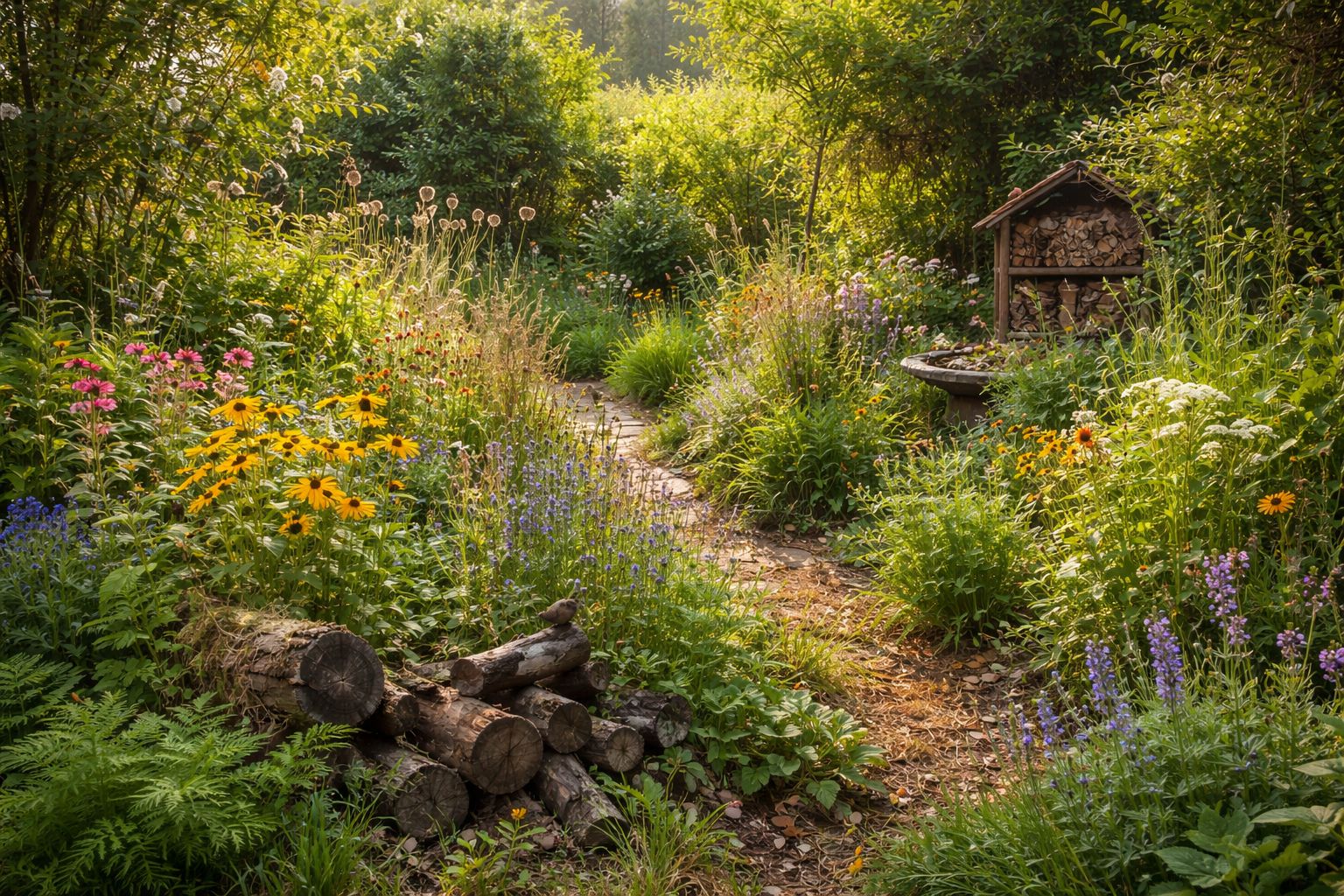
| There’s a particular look many people associate with a “good” garden: crisp lawn edges, bare soil between plants, everything trimmed back to a polite height. It photographs well. It reassures the eye. And it’s often far less healthy than it appears. After years of working in real gardens — not show gardens, not magazine spreads — I’ve come to trust a different visual language. One where things overlap. Where leaves lie, where they fall. Where plants lean, self-seed, and fill space in ways we didn’t strictly plan. These gardens can look untidy to the untrained eye, but biologically, they’re usually doing far better. A garden that’s a little messy is often a garden that’s functioning. Nature Doesn’t Do Neat — It Does Balanced If you walk through a woodland edge, a hedgerow, or even a neglected corner of a field, you won’t find clean lines or exposed soil. You’ll find layers. Ground cover, leaf litter, stems, decaying material, and new growth pushing through old. That “mess” is structure, and structure is what allows life to stack up rather than cancel itself out. Gardens that try to fight this — stripping beds bare, removing every fallen leaf, cutting everything back at once — reset themselves repeatedly. They never settle. Soil dries out faster, nutrients wash away, pests rebound harder, and plants rely more heavily on intervention to survive. Messy gardens, by contrast, are allowed to remember where they were yesterday. Soil Health Thrives Under Cover Bare soil is one of the most damaging things we normalise in gardening. It heats up, dries out, erodes, and loses life. A layer of leaves, spent stems, or low ground cover protects soil from temperature swings and moisture loss, while feeding the organisms that actually make nutrients available to plants. Worms, fungi, bacteria — they don’t need tidiness. They need carbon. They need cover. They need time. When you see a bed that looks “overgrown” but the plants are strong, upright, and deeply coloured, it’s usually because the soil underneath is alive and undisturbed. The surface mess is doing a quiet job. Fallen Leaves Are Not Waste Autumn leaf fall is one of the most misunderstood moments in the garden year. Leaves are often treated as rubbish to be cleared, bagged, and removed as quickly as possible. In reality, they are a slow-release soil conditioner delivered for free. Left in place — or lightly redistributed — leaves break down into humus, improving soil structure and water retention. They shelter insects through winter, feed fungal networks, and reduce compaction from rain. Removing them entirely forces the soil to fend for itself. A thin layer of leaves in borders isn’t neglected. It’s future fertility. Wildlife Needs Untidiness to Function Insects don’t live in clipped lawns and bare beds. Birds don’t forage where there’s nowhere to hide. Hedgehogs don’t cross landscapes that have been scrubbed flat. Mess provides shelter, overwintering sites, nesting material, and food chains that actually regulate themselves. Aphids, for example, are far less of a problem in gardens where predators can establish. That only happens when there’s enough habitat for them to stay year-round. A messy garden often has fewer problems precisely because it looks like it might. Self-Seeding Is a Sign of Health, Not Loss of Control When plants self-seed successfully, it means conditions are right. The soil is open enough to receive seed, moisture levels are consistent, and competition is balanced rather than aggressive. These volunteers are often tougher than anything we plant intentionally because they’ve chosen their spot. Not every seedling needs to stay, but dismissing them all as weeds misses an opportunity. Some of the most resilient planting schemes evolve this way — through gentle editing rather than strict enforcement. Messy gardens tend to design themselves over time. The gardener’s role shifts from control to guidance. Over-Tidying Creates Work, Not Order There’s a belief that regular hard tidying reduces maintenance. In practice, it often creates more. Cutting everything back at once encourages soft, fast regrowth. Exposed soil invites weeds. Lawns cut too short dry out and thin. The cycle accelerates. Gardens that are allowed to hold their own shape — with selective pruning, seasonal pauses, and retained structure — move more slowly. Growth becomes denser but steadier. Interventions become lighter and more thoughtful. Mess, used intentionally, is a labour-saving device. Structure Matters More Than Neatness This isn’t an argument for abandonment. Healthy, messy gardens still have structure. Paths are clear. Access is sensible. Plants aren’t smothering one another to death. The difference is that structure comes from layers and relationships, not from stripping everything back to a baseline. Think in terms of height, ground cover, and seasonal presence rather than emptiness and symmetry. A garden can be full without being chaotic. Good structure allows the mess to work. Seasonal Mess Is Part of the Cycle One of the hardest habits to break is the idea that gardens should look the same year-round. Winter structure, spring emergence, summer fullness, autumn decay — these phases are not failures to maintain. They are the garden breathing. Cutting back too early removes shelter. Cleaning too late can damage new growth. Learning when to leave things alone is as important as knowing when to act. Mess has a seasonality to it. When respected, it carries the garden forward rather than holding it back. A Healthier Garden Often Looks Calmer, Not Sharper Interestingly, gardens that embrace this approach often feel calmer rather than wilder. There’s less visual tension because the planting makes sense for the space. Plants sit comfortably with one another. Nothing looks forced. The eye relaxes when it stops being asked to admire control for its own sake. Messy gardens don’t shout. They hum. Redefining What “Cared For” Looks Like The real challenge is cultural. We’ve been taught that care equals removal: cutting, clearing, cleaning. In reality, care often looks like restraint. Knowing what to leave. Understanding what feeds what. Trusting processes that don’t happen overnight. A messy garden isn’t uncared for. It’s usually deeply considered. Once you start seeing gardens this way, it becomes hard to unsee. And harder still to go back to fighting nature when working with it is quieter, cheaper, and far more effective. |
Unless stated, featured images are my own work, created independently or with the assistance of AI.

