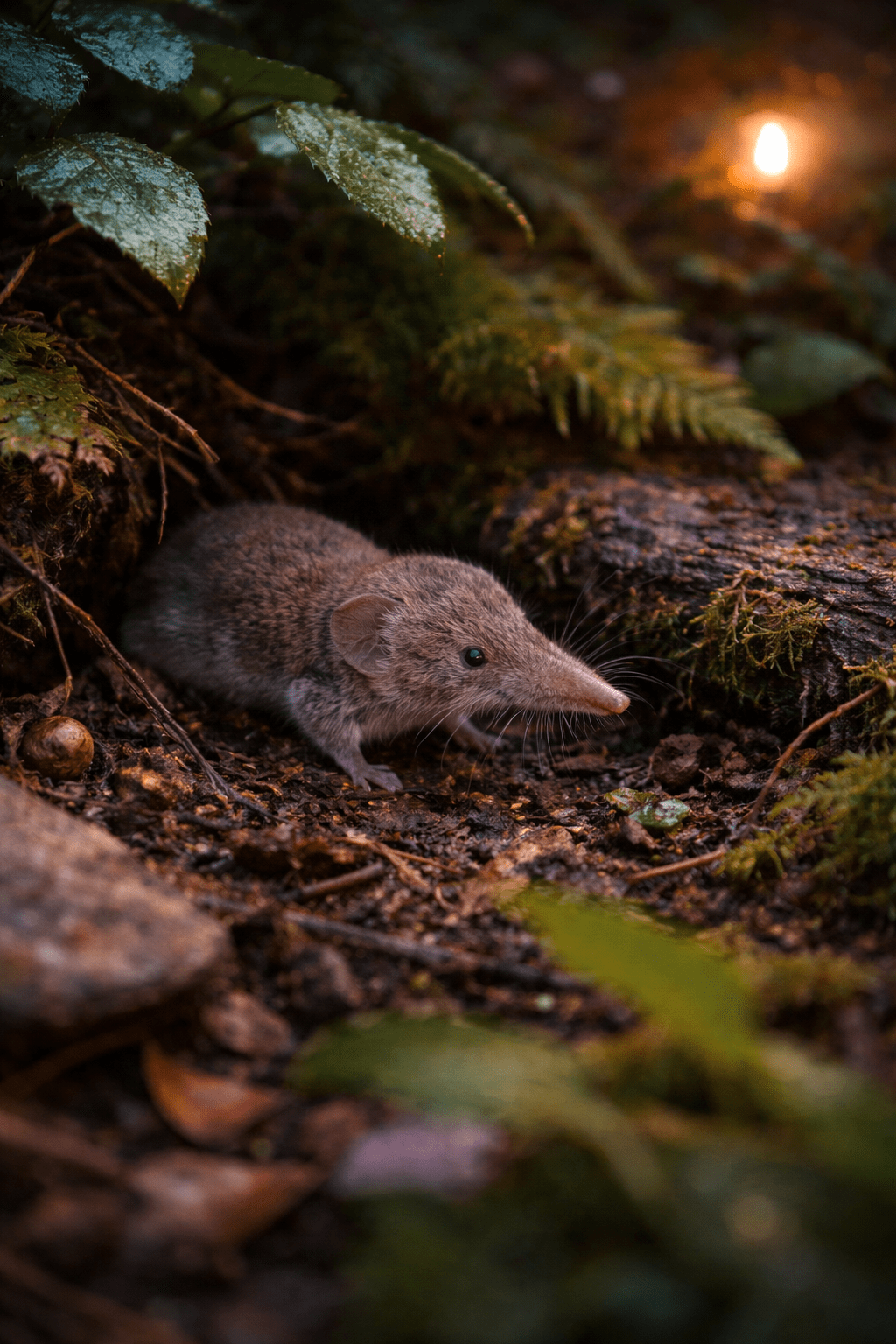
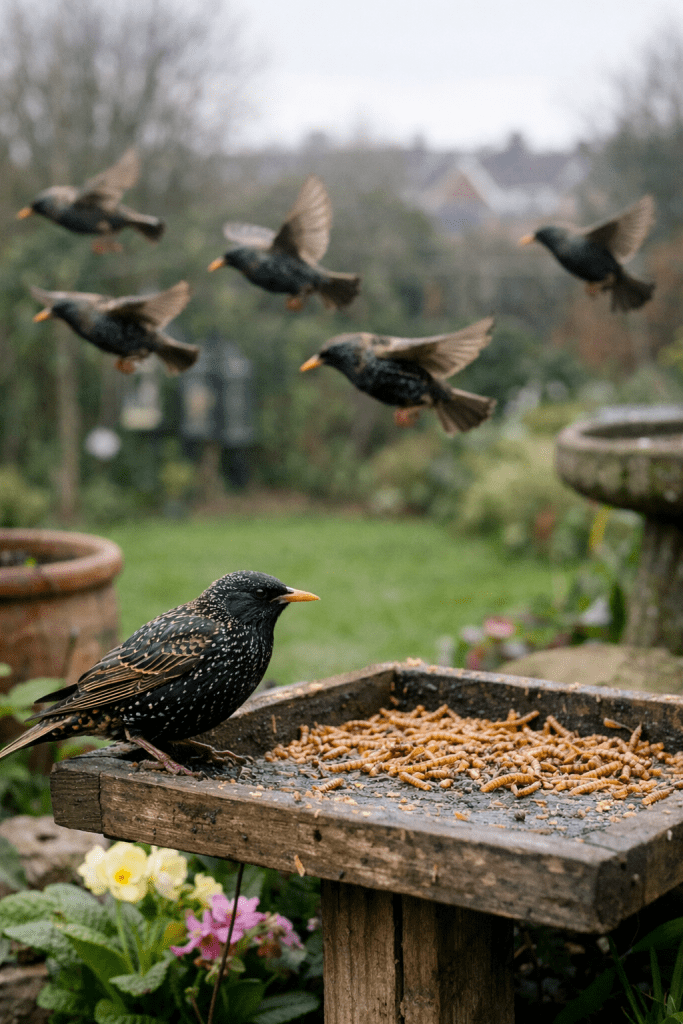
| Witnessing Wildlife Loss from the Soil Up I haven’t been professionally gardening for decades, as some people have. But I have lived with gardens and paid attention to them for most of my life — from growing up at home with my parents, through adulthood, and into the work I do now. Long familiarity counts for something, especially when you notice what has quietly changed. What I want to talk about here isn’t soil health or seasonal planting guides. It’s something deeper, learned not from textbooks but from lived experience: gardens today are frontline witnesses to wildlife loss. This isn’t abstract or theoretical. It’s daily, subtle, and personal. The Moment I Noticed Something Was Wrong As a child growing up in Surrey in the late 1970s, I used to hear what I called the song of the shrew regularly in gardens — a high, insect-like sound moving through the undergrowth in the evenings. It was part of the background noise of being outside, something so familiar it didn’t need naming at the time. By around 2006, that sound had become far less common. I didn’t notice it disappearing all at once — it faded gradually. At first, I assumed it was me. Maybe I wasn’t listening properly. Maybe life was louder. But season after season, the sound didn’t return with the same regularity. Shrews are not classed as endangered in Britain, and I’m careful not to overstate what I’m hearing. But this change felt local, real, and persistent — and it became a quiet alarm bell. Not a headline moment, but an early signal that something in our gardens, at ground level, was shifting. At the time, I didn’t have the language or context to fully understand it. Looking back now, I see it as part of a much larger pattern — one that many gardeners would go on to recognise in different ways, with different species, in different places. Over the last few years, I’ve noticed an especially acute absence of starlings here in Kent. This isn’t a long-term memory stretching back decades — it’s a recent, sharp change. In spring, I used to see flocks of perhaps sixty birds moving through the garden, feeding, chattering, filling the space with noise and movement. Now, I’m lucky if I see a dozen. Starlings are still classed as a widespread species, but they are also officially recognised as being in serious decline nationally, and what I’m seeing feels like that reality playing out locally, in real time. It’s not that they’ve vanished entirely — it’s that their abundance, their presence as a force in the garden, has thinned dramatically. And once you notice that kind of reduction, it’s very hard to unsee it. What Science Tells Us My anecdote is supported by hard evidence: UK wildlife is in decline. The State of Nature report shows that species across the UK have fallen by about 19% on average since 1970, and that nearly one in six species is now threatened with extinction. Invertebrates like pollinators have decreased in range too, with bees and hoverflies down significantly. (State of Nature) Garden birds, long considered one of the most familiar signs of wildlife in everyday life, also reflect this trend. The RSPB’s Big Garden Birdwatch — the world’s largest citizen science survey — continues to show long-term declines in species like house sparrows and starlings, even as other species fluctuate. (RSPB) And the butterflies many of us once took for granted? Recent figures from the UK Butterfly Monitoring Scheme show summer 2024 was one of the worst years on record for common butterflies, with more than half of native species showing declines. (The Guardian) These trends are not isolated quirks. They reflect broad, systemic pressures: habitat loss, climate change, pesticides, and habitat fragmentation. Gardens: Small Places, Big Potential Research into urban garden ecology — such as the Biodiversity in Urban Gardens (BUGS) project — shows that gardens are not just pretty spaces; they are significant habitats for wildlife. Gardens collectively cover vast areas, often larger than many nature reserves, and support a surprising amount of biodiversity. (REF Impact) This aligns with what I’ve noticed on the ground: private gardens can be refuges for insects, birds, small mammals, amphibians — even if that wildlife is under pressure. But they only perform this role if we let them. Gardening with Wildlife in Mind When I’m tending someone’s garden, I try to work with wildlife schedules, not human convenience. This means: Taking time to prune and cut at times that don’t disturb nesting or feeding patterns Leaving areas of mess — leaf litter, seedheads, dead wood — that provide habitat Choosing plant species that offer nectar, berries, and structure for insects and birds I learned much of this while volunteering at the Gaza Salts Nature Reserve. There, I saw what it looks like when plants and animals are given room to be, and I try to bring that ethic into every garden I touch. This approach is not just about being soft on tidiness — it’s about understanding gardens as ecosystems, not lawns with decoration. Echoing this, gardening experts like Isabella Tree emphasise that supporting biodiversity doesn’t mean abandoning care, but rather adapting active gardening to create a dynamic habitat for wildlife. (Financial Times) The Tension Between Clients and Ecology One challenge I often face is balancing a client’s visual preferences with what the garden actually needs to support life. Some clients want clipped edges and perfectly bare soil; others are open to wildflower patches and leaf piles. I take every opportunity to educate and explain why a slightly wilder patch can mean more insects, more birds, more life. But if a garden’s owner cannot see beyond strict aesthetics — and never will — I’m honest and sometimes choose to walk away. That’s not because I want to be difficult. It’s because gardening isn’t just about appearances. If a space cannot be allowed to reconnect with nature, it becomes little more than decoration — and that’s not the kind of legacy I want to help create. The Emotional Reality There’s a quiet weight that comes with noticing wildlife loss — not just the practical implications for plant and animal communities, but the emotional toll. You prepare food for pollinators, and fewer show up. You leave a log pile for hedgehogs, and it sits undisturbed. In the gardening profession, this grief is rarely discussed. Many gardeners see themselves as service providers, not stewards. But more and more people in our field are waking up to the idea that yes, we are custodians of living places. We have a responsibility to the gardens under our care — to protect what remains and restore what we can. If Gardens Are Refuges, What Does That Make Us? At first, I resisted grand titles for what I do. I’m not a scientist, not a politician, not a headline writer. But over the years, I’ve come to see my role — and that of many gardeners — as something vital: wild garden caretakers. Not controllers of every blade of grass. Not the decorators of soil. Not distant observers. Caretakers. We notice the absence. We protect margins. We fight for tiny lives, not because it’s easy, but because it’s necessary. So What Can We Do? There’s no single solution, but there’s a lot each of us can do: Plant for pollinators and wildlife, not just colour. Leave structural diversity — seed heads, leaf litter, shaded corners. Reduce pesticides and embrace natural pest control. Educate others about why gardens matter beyond aesthetics. Because every garden is a small refuge — a potential stronghold in a world where habitat is shrinking, and wildlife is losing ground. And if we gardeners can see, feel, and respond to these changes, then perhaps we can help shift how others understand their own patch of earth. The soil beneath our feet is not just dirt. It’s evidence. It’s memory. And it’s hope — if we choose to tend it not just with our tools, but with our awareness. |
| Sources referenced UK wildlife status & trends State of Nature Report (UK) State of Nature partnership https://stateofnature.org.uk Comprehensive assessment of UK species trends, showing average declines and extinction risk. RSPB – Big Garden Birdwatch results Royal Society for the Protection of Birds https://www.rspb.org.uk/whats-happening/big-garden-birdwatch/results Long-running citizen science data on garden bird populations. UK Butterfly Monitoring Scheme Butterfly Conservation & UKBMS https://ukbms.org Long-term monitoring of butterfly abundance and distribution. Insects & citizen science Bugs Matter survey Kent Wildlife Trust & partners https://www.kentwildlifetrust.org.uk/bugs-matter Citizen science study documenting major declines in flying insects. Urban gardens & biodiversity Biodiversity in Urban Gardens (BUGS) Project University of Sheffield / UK Research Excellence Framework https://impact.ref.ac.uk/casestudies/CaseStudy.aspx?Id=11853 Research shows the collective importance of domestic gardens as wildlife habitat. British shrews & small mammals The Mammal Society – Common Shrew species profile https://www.mammal.org.uk/species-hub/common-shrew Species status, ecology, and conservation context. The Mammal Society – “Living on a knife-edge: Britain’s shrews.” https://www.mammal.org.uk/blog/2021/04/living-on-a-knife-edge-britains-shrews Explains monitoring difficulties and the ecological vulnerability of shrews. People’s Trust for Endangered Species (PTES) – Shrew factsheets https://ptes.org Species information and conservation pressures. UK Centre for Ecology & Hydrology (UKCEH) “Alarming decline in small mammals in the UK” https://www.ceh.ac.uk Evidence of range contractions in small mammal species. Rewilding & ecological gardening context Isabella Tree – interviews and writing on rewilding & land stewardship (e.g., Financial Times, Knepp Estate coverage) https://www.ft.com Conceptual framing for stewardship-led land management. |
Unless stated, featured images are my own work, created independently or with the assistance of AI.


Beautiful post, and it brings so much into perspective.
LikeLiked by 1 person
Thank you Eugenia
LikeLike