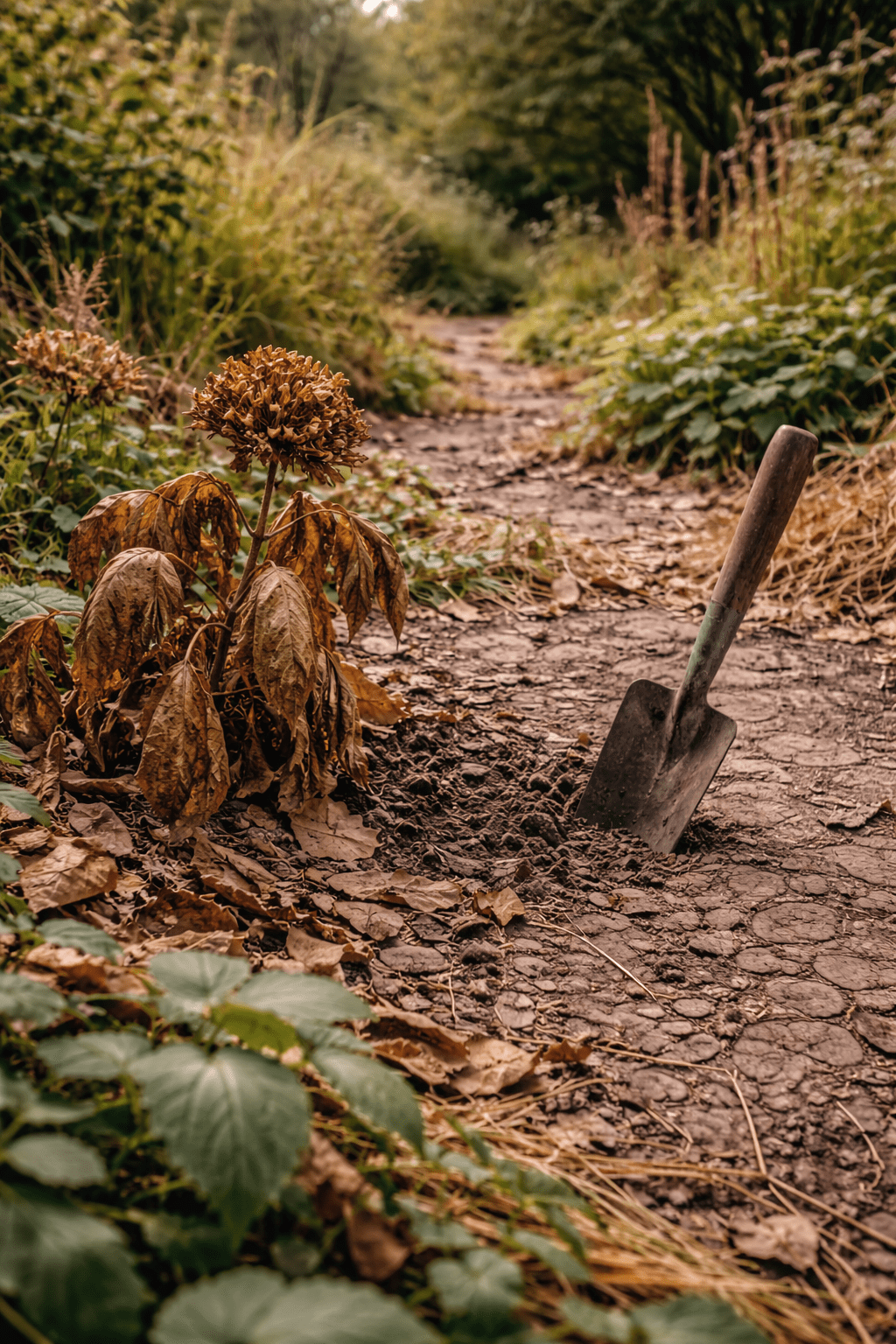
| Plant death, lawn failure, and why realism is ecological care Gardening is often framed as an act of rescue. You plant, you water, you tend, and the garden responds. When it doesn’t, the assumption is that something went wrong. Effort was insufficient. Timing was off. Care was lacking. That framing is misleading. Not everything in a garden can be saved, and trying to save everything often causes more damage than accepting loss. Plant death and lawn failure are not moral judgements. They are outcomes shaped by conditions, limits, and timing. Realism is not neglect. It is ecological care. Plants die for reasons unrelated to attention. Soil structure, drainage, heat, cold, drought, competition, and simple mismatch all play a role. A plant can be well chosen and well tended and still fail. Expecting otherwise places responsibility where it doesn’t belong. Gardens are not controlled environments. Lawn failure is one of the clearest examples. Lawns are treated as default ground cover, expected to remain green and resilient regardless of use, weather, or soil conditions. When they thin, scorch, or collapse, it’s often framed as poor maintenance. More often, it’s poor suitability. Grass struggles on compacted soil, in shade, under drought, or with heavy foot traffic. Forcing it to persist through constant reseeding, watering, and feeding isn’t caring. It’s resistance. Allowing a lawn to fail can be the most honest response to conditions it cannot meet. Failure can be information. Plant death carries similar lessons. Annuals that don’t make it through the heat. Perennials that rot in winter. Shrubs that never settle. These losses reveal something about the site. They point to limits that were always there, even if they weren’t obvious at planting. Ignoring that information leads to repetition, not improvement. There’s a strong emotional reaction to loss in gardening. Plants represent time, money, and intention. Watching them die feels personal. That reaction often drives overcorrection. Extra watering. Feeding stressed plants. Replacing like-for-like without changing conditions. This cycle rarely ends well. Ecological care asks a different question. Not “how do I save this?” but “what is this place telling me?” That shift removes blame and introduces curiosity. It treats the garden as a system rather than a project. Systems don’t promise survival. They offer feedback. One of the most damaging ideas in gardening is that success means permanence. That once something is established, it should stay. In reality, gardens are in constant negotiation with climate, soil, and time. Stability is temporary. Loss is part of that process. Trying to prevent all loss leads to intensive inputs. Water, chemicals, labour. These inputs prop up plants that are poorly suited, while masking underlying issues. Over time, the system becomes fragile. It relies on constant intervention to appear functional. Fragility is not care. Accepting loss allows systems to recalibrate. Gaps open. Light changes. Soil rests. New growth emerges, sometimes uninvited. These shifts are not signs of decline. They are transitions. Gardens are always editing themselves. Lawn failure often creates space for alternatives that cope better. Clover, moss, groundcover, or even informal planting can replace grass without the same resource demands. This isn’t giving up. It’s responding honestly. Honest responses last longer. There’s also a seasonal element to this acceptance. Some losses are temporary. Summer scorch recovers. Winter dieback returns in spring. Others are permanent. Distinguishing between the two prevents unnecessary action. Patience saves energy. Another overlooked aspect is scale. Small losses are often manageable. Large-scale failure feels catastrophic. But scale doesn’t change the principle. Whether it’s one plant or an entire lawn, forcing recovery against conditions rarely works. Replacement without adaptation repeats the problem. Ecological care includes restraint. Knowing when to stop watering. When to stop feeding. When to stop trying to reverse a decline that has already happened. This restraint protects resources and prevents further stress to surrounding plants. Letting go can stabilise what remains. There’s also an ethical dimension. Water, energy, and materials are shared resources. Propping up failing planting through constant input prioritises appearance over sustainability. Choosing not to save everything acknowledges those limits. Limits are not shortcomings. They are realities. This approach can feel uncomfortable in a culture that equates care with intervention. Doing less can feel like indifference. In practice, it often reflects a deeper understanding. You stop fighting the site and start working with it. That’s ecological literacy. Plant death is not always a mistake. Sometimes it’s a correction. A way of narrowing options. A reminder that not every idea fits every place. When gardeners accept this, choices become clearer. Clarity reduces waste. Gardens that allow for loss tend to become more resilient. Plants that survive do so because they’re suited, not because they’re protected. Lawns that give way make room for systems that cope better with stress. Resilience is selective. There is no virtue in keeping something alive at all costs. Gardens don’t measure success that way. They respond to balance, not effort. Learning to recognise when saving is appropriate and when it isn’t is part of responsible care. Responsibility includes acceptance. When gardeners stop trying to save everything, pressure lifts. The garden becomes less of a test and more of a conversation. Loss stops feeling like failure and starts feeling like guidance. That guidance improves decisions. Not everything can be saved. That truth doesn’t diminish gardening. It grounds it. It aligns care with reality and replaces guilt with understanding. Realism is not harsh. It’s respectful. Ecological care isn’t about preserving every plant. It’s about stewarding the conditions that allow the right plants to thrive. Sometimes that means letting others go. That’s not failure. It’s fidelity to the place. |
Unless stated, featured images are my own work, created independently or with the assistance of AI.

