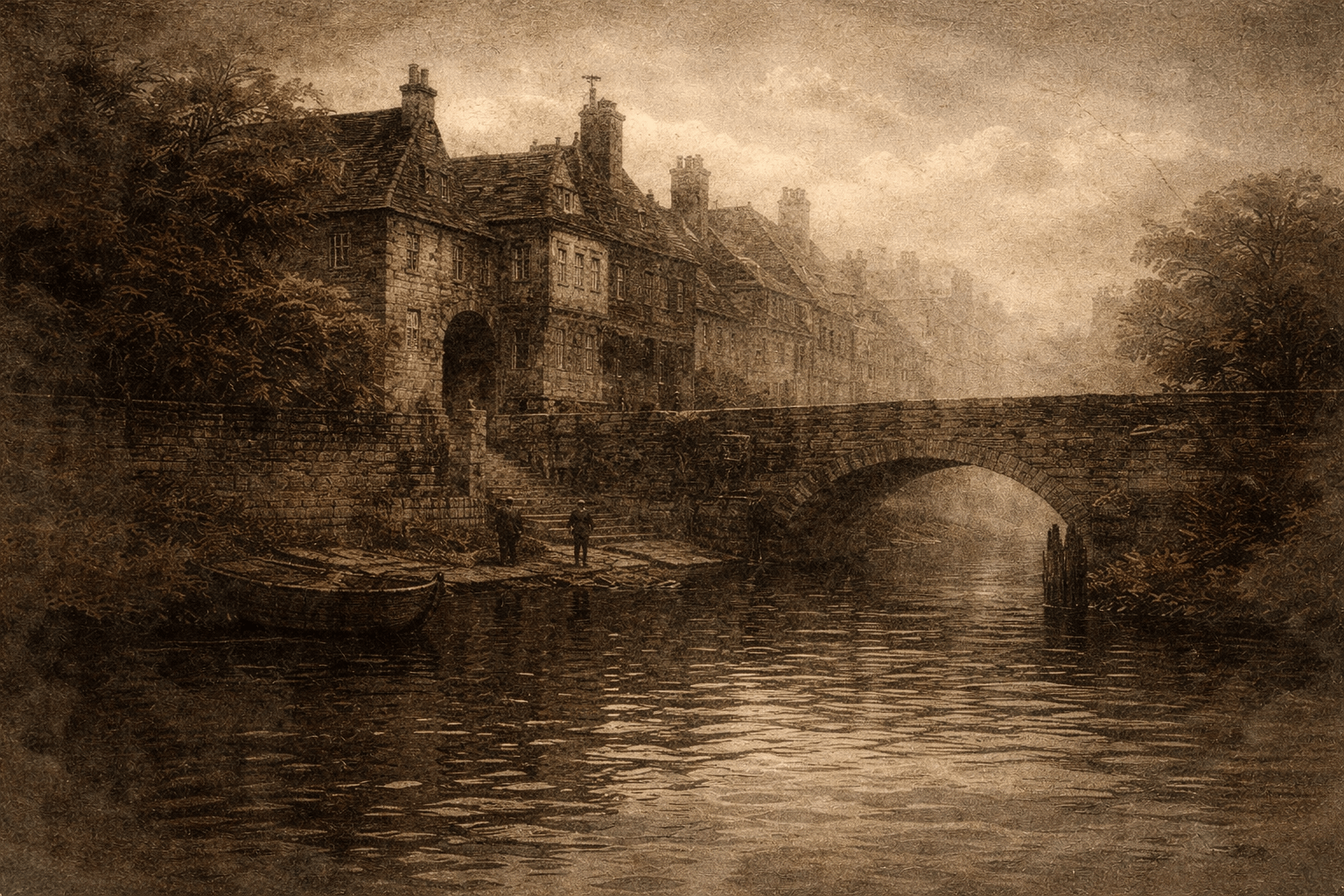
| Part Nine Once a town learns to live with memory, it begins to live with time differently. In Sandwich, time stopped being measured by arrival and departure and became something slower, more internal. The urgency that comes with importance eased, replaced by a steadier sense of duration. Life was no longer shaped by what passed through, but by what stayed. This shift altered the town’s rhythm. Days became less dictated by tides of trade and more by routines that repeated without spectacle. Work continued, but it was quieter. The scale has been reduced. Activity no longer needed to announce itself to justify its existence. Purpose was found in continuity rather than throughput. Living with time in this way produces patience. Change is still noticed, but it is absorbed rather than resisted. Growth was no longer the measure of health. Stability was. The town learned that not everything needed to be accelerated to remain alive. That patience reshaped how space was used. Streets were not widened to accommodate expansion. Buildings were adapted rather than replaced. Around the Quay, older forms remained legible even as their original urgency faded, not preserved deliberately, but left intact because there was no pressure to overwrite them. The town’s form settled into itself, held in place by habit as much as by structure. The environment reinforced this recalibration. The river, unchanged in its behaviour, continued to move at its own pace. Its slowness discouraged urgency and rewarded attention. The land remained consistent in its limits. Together, they shaped a rhythm aligned with endurance rather than ambition. Social life followed suit. Relationships deepened because they lasted. Roles became familiar. Trust is accumulated through repetition rather than novelty. In a town no longer driven by external demand, social cohesion became one of its primary resources. This way of life did not eliminate challenge. It redefined it. Difficulty arrived not as a crisis, but as wear. Repairs, upkeep, and care became the work of continuity. Effort was invested in holding things together rather than pushing them forward. Time, in this phase, became something lived alongside rather than competed with. The past did not rush the present. The future did not demand reinvention. The town occupied a middle ground where persistence was enough. A town allowed by circumstance reaches maturity when it stops mistaking speed for vitality. The sandwich arrived there slowly. Its survival was no longer a question of keeping up, but of staying intact. That distinction shaped everything that followed, even when it went unnoticed. |
Sandwich: A Town Allowed