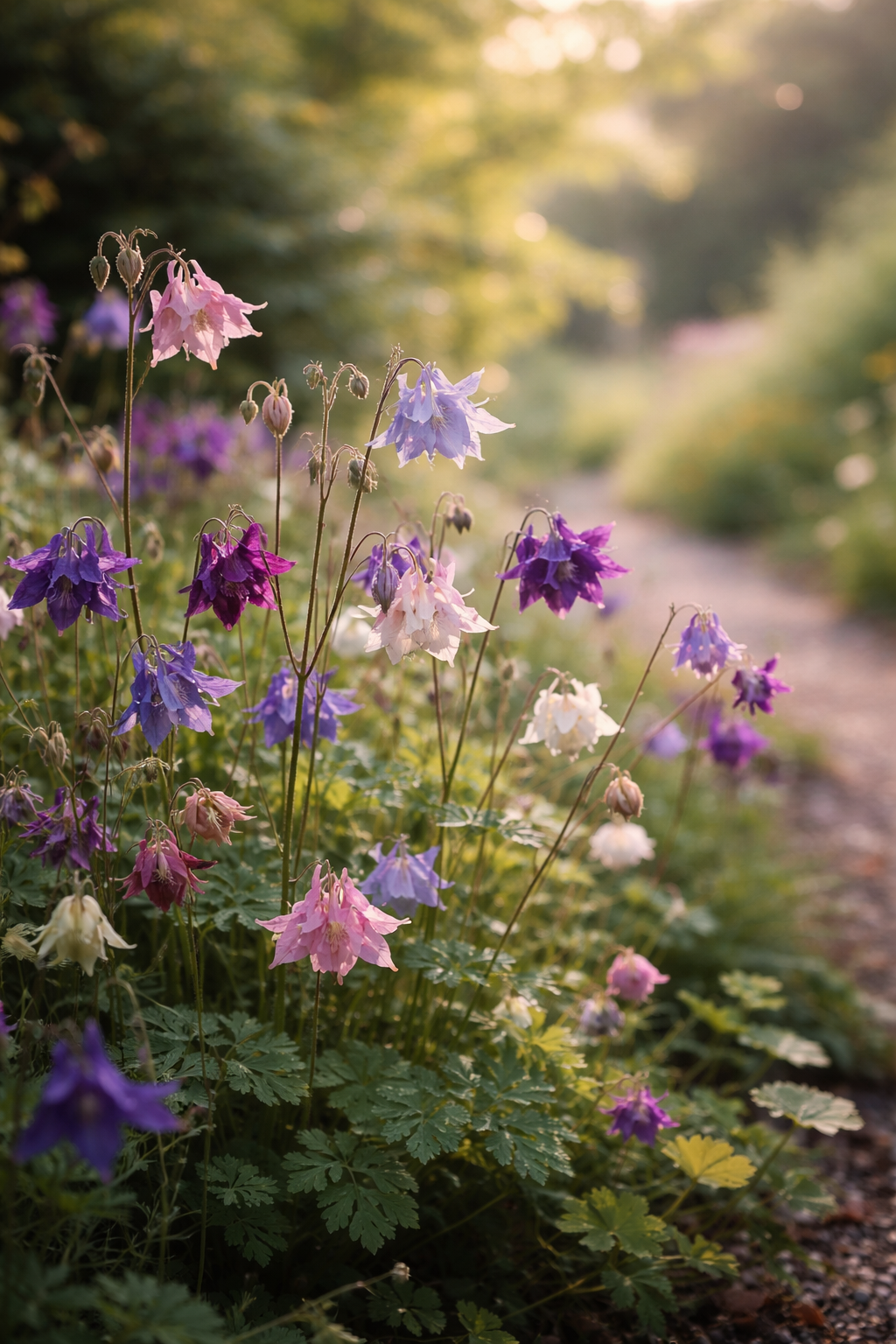
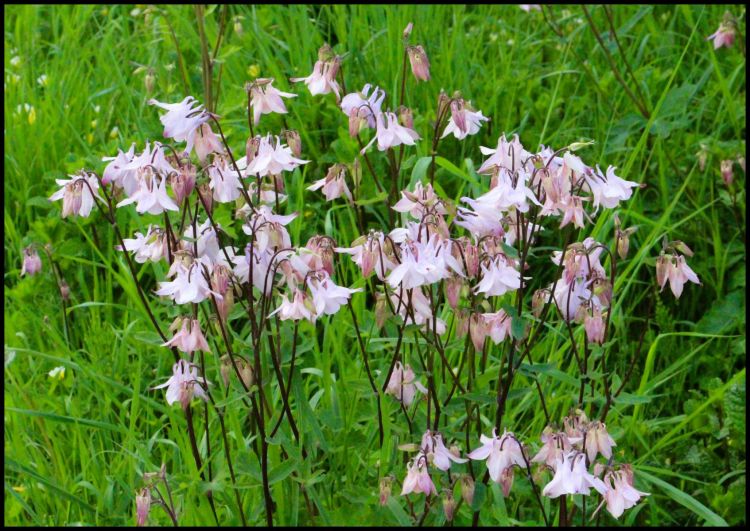
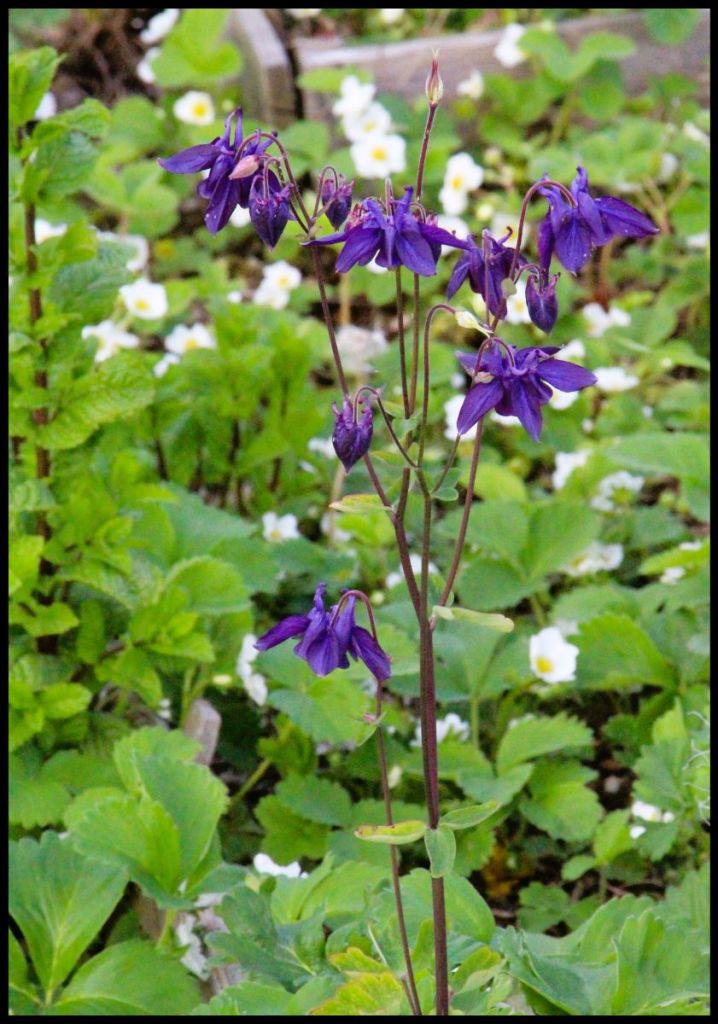
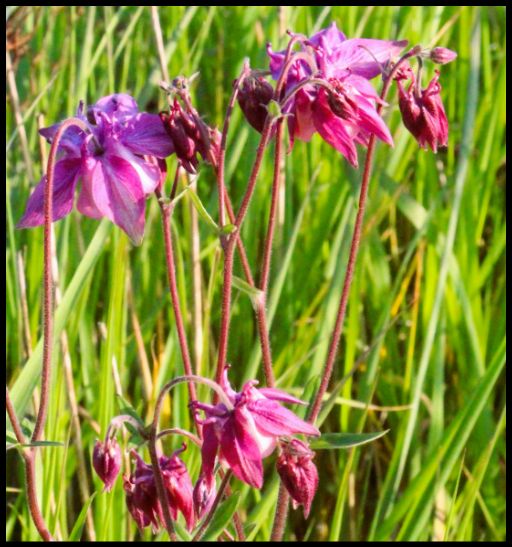
| Aquilegia (Granny’s Bonnet) On Gardens That Don’t Keep Still Aquilegia has a habit of arriving where it wasn’t invited. Not rudely — more like someone letting themselves in through a side gate you forgot you owned. You plant one, maybe two. A pale blue from a plant fair, a purple someone pressed into your hand years ago, with the promise that it “won’t take over.” You tuck them into a border with intent. You imagine a pattern. And then, two springs later, there they are again — but not where you put them. A pale one leaning out of the gravel. A mauve flower nodding beneath a rose. A colour you don’t remember buying at all. Aquilegia is short-lived, promiscuous, and entirely uninterested in your long-term plan. Which is precisely why it endures. A Flower That Refuses to Be Permanent Aquilegia is often described as a cottage garden staple, but that phrase hides its real nature. Cottage gardens, at least the way we talk about them now, imply a kind of settled charm — an aesthetic that looks accidental but is usually carefully held in place. Aquilegia doesn’t really belong to that kind of order. It lives briefly. Two or three years if you’re lucky. It puts its energy into flowering, then into seed, then it bows out without ceremony. There’s no long decline, no dignified fading. It simply stops turning up — unless its children have already moved in. This is the first quiet lesson it offers: permanence in gardens is mostly illusion. Even plants we think of as reliable are only reliable because we keep re-introducing them, propping them up, dividing them, correcting their absence. Aquilegia doesn’t ask for that kind of relationship. It operates on the basis of continuation rather than survival. The parent plant doesn’t matter much. The future is in the seed. Self-Seeding as a Form of Negotiation Self-seeding plants are often talked about as either charming or problematic, depending on how much control you feel you ought to have. Aquilegia sits awkwardly in that conversation. It doesn’t swamp borders. It doesn’t muscle out neighbours. It just appears — lightly, persistently, and slightly wrong-footing. In practice, this means you are always in negotiation with it. Leave seedlings where they fall, and the garden shifts shape slowly, almost imperceptibly. Lift them and rehome them, and you feel like a curator. Remove them altogether, and the plant disappears from your life with surprising ease. There is no drama either way. What’s interesting is how often people assume self-seeding equals chaos. In reality, Aquilegia’s seedlings are some of the easiest to recognise and move. They are generous without being aggressive. The myth is that you lose control; the truth is that you’re offered a choice every spring — one that repeats annually, without judgment. That rhythm alone makes it valuable. Colour Drift and the Myth of the Named Variety Garden centres sell Aquilegia in named forms: specific colours, specific shapes, sometimes even specific promises. And for a year or two, those promises hold. The flowers look as advertised. The labels feel accurate. Then the seeds grow up. Aquilegia cross-pollinates freely. Bees don’t respect cultivar boundaries. The result is colour drift — blues muddying into purples, whites picking up veining, spurs lengthening or shrinking unpredictably. Over time, the original variety dissolves into a local population shaped by chance, proximity, and pollinator behaviour. This is sometimes framed as a disappointment. The plant “doesn’t come true from seed,” as though truth were a fixed point. But that assumes the original plant was more authentic than its offspring. In reality, what you’re seeing is adaptation playing out in miniature — a garden-scale version of how plants have always behaved. The myth here is that stability is natural and variation is failure. Aquilegia gently proves the opposite. Where It Chooses to Grow (and Why That Matters) One of the more revealing things about Aquilegia is where it chooses to establish itself. You’ll often find it edging away from cultivated perfection — in gravel paths, against walls, at the base of hedges, beneath shrubs where light is dappled rather than full. It doesn’t demand richness. In fact, over-fed soil often produces soft, short-lived plants that flop and vanish. Aquilegia seems to prefer restraint. It leans into gaps rather than borders. It favours edges over centres. As a working gardener, you start to notice this pattern. Plants that self-seed successfully are often telling you something about microclimate, moisture, disturbance, and competition. Aquilegia’s presence is a quiet reading of the garden as it actually is, not as it’s drawn on paper. It reminds you that the garden has its own preferences — and that listening is often more productive than correcting. Short-Lived Doesn’t Mean Fragile There’s a tendency to equate longevity with strength. Trees last for centuries; therefore, they are strong. Annuals bloom and die; they are weak. Aquilegia sits in the middle ground and complicates that thinking. It isn’t fragile. It’s just uninterested in staying put. Its strategy is distribution rather than endurance. Spread lightly, widely, repeatedly. Accept loss as part of the process. That makes it remarkably resilient, even if no individual plant lasts very long. This matters because gardens are full of hidden labour — staking, feeding, mulching, protecting. Aquilegia asks for very little of that. It tolerates neglect better than fuss. If it fails one year, it often returns another. If it thrives, it rarely overstays its welcome. There’s something quietly instructive in that balance. The Gardener’s Hand — Present, but Light Aquilegia tends to reward gardeners who interfere less, not more. Deadheading can prolong flowering but reduces self-seeding. Leaving seedheads invites surprise but shortens the parent plant’s show. Either approach is valid; neither is morally superior. What matters is intention. Gardens that try to freeze themselves at a peak moment often struggle with plants like this. Gardens that allow drift — small changes year to year — tend to absorb Aquilegia easily. It becomes part of the conversation rather than a problem to be solved. From experience, the most successful use of Aquilegia isn’t in formal planting schemes, but in gardens that accept revision. Where paths shift slightly. Where borders breathe. Where not every gap is rushed to be filled. It’s a plant that teaches you when to step back. Why It Keeps Turning Up in Older Gardens There’s a reason Aquilegia persists in older gardens long after other plants have gone. Not because it was planted carefully, but because it learned its place. Over time, it found the cracks that suited it, the timings that worked, the companions that didn’t overwhelm it. In that sense, it’s less a decorative choice and more a resident species — shaped by that specific garden’s conditions. This is easy to overlook in an age of instant results and imported palettes. Aquilegia reminds you that gardens are not installations. There are ongoing negotiations between intention, chance, and time. And some plants are better at negotiating than others. A Plant That Resists Ownership You can buy Aquilegia, but you can’t really own it. You can invite it, tolerate it, remove it, or learn from it — but you can’t make it behave exactly as you imagined. That resistance is its quiet gift. In a culture that increasingly frames gardens as expressions of control — curated, themed, optimised — Aquilegia offers a different model. One where success isn’t sameness, and value isn’t permanence. It doesn’t stay fixed. And neither are gardens worth spending time in. |
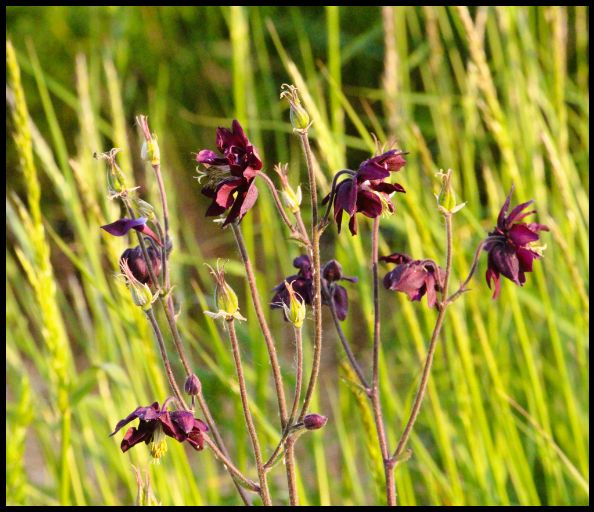
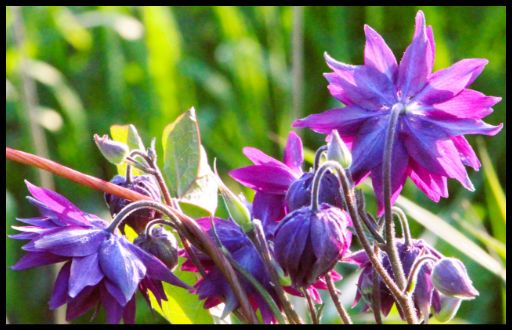

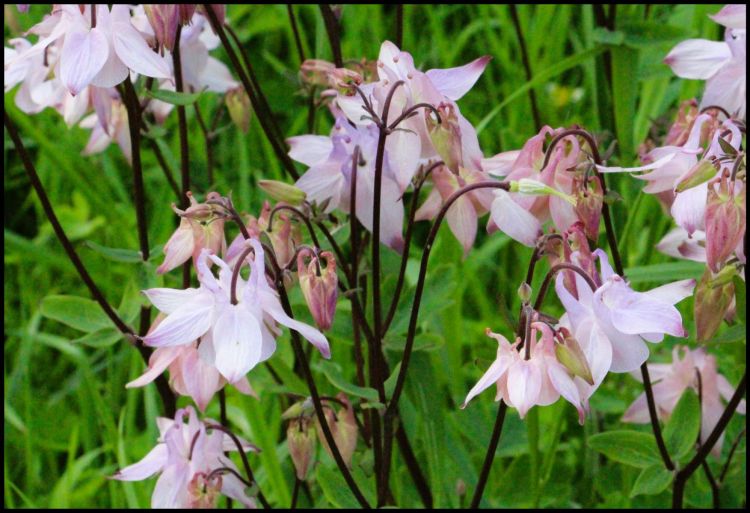
| About our writing & imagery Many of our articles are written by us, drawing on real experience, reflection, and practical work in gardens and places we know. Some pieces are developed with the assistance of AI, used as drafting and research tools rather than as a voice or authority. Featured images may include our own photography, original AI-generated imagery, or—where noted—images kindly shared by other creators and credited accordingly (for example, via Pixabay). All content is shaped, edited, and published by Earthly Comforts, and the views expressed are our own. |

