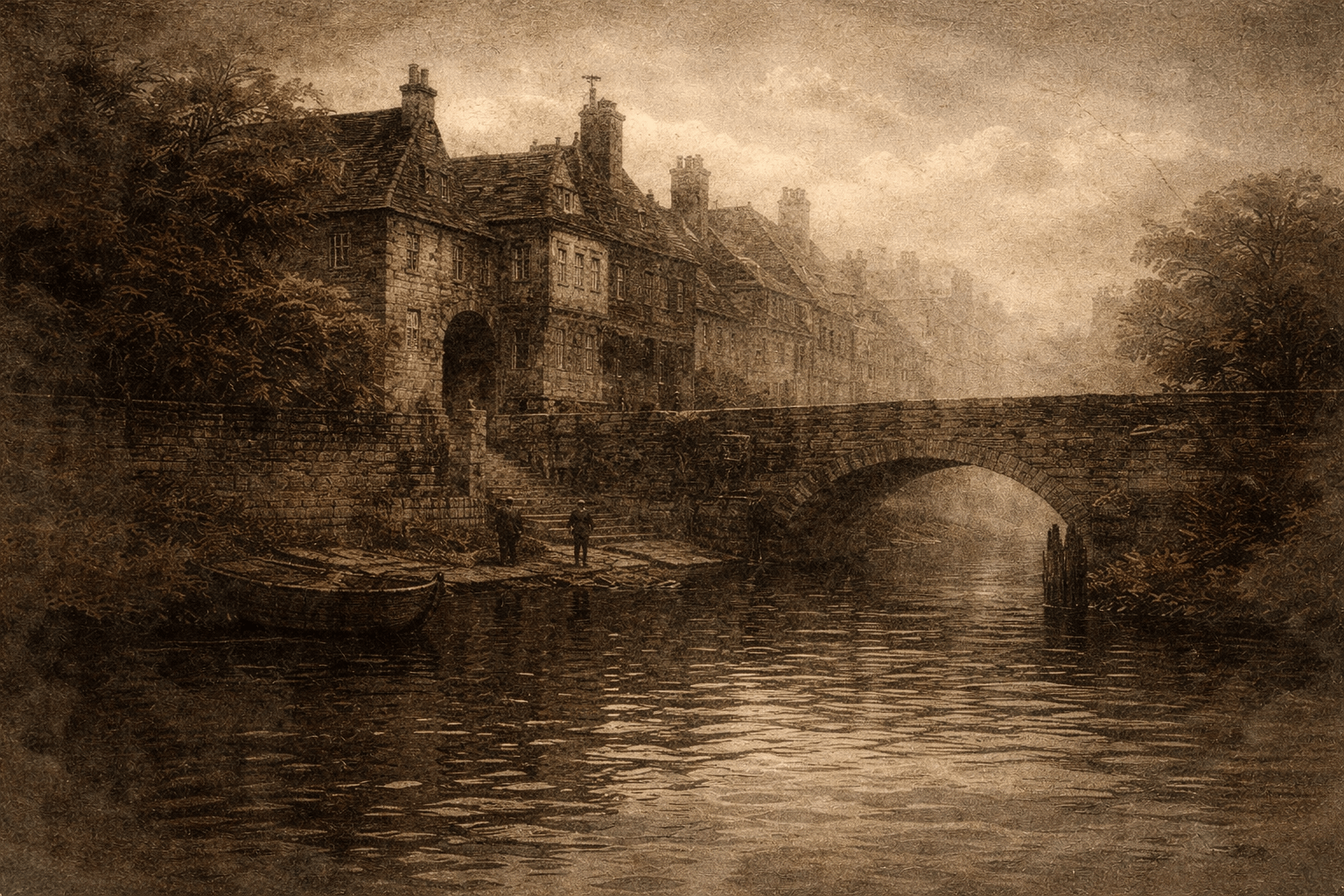
| Part Twelve Every place that lasts reaches a point where explanation becomes unnecessary. In Sandwich, that point arrived not through decision or declaration, but through familiarity. The town no longer needed to define itself by what it had been or justify itself by what it was not. It existed, quietly, within the shape it had grown into. By this stage, history no longer sat at the front of the town’s thinking. It worked in the background, shaping proportions, habits, and expectations without demanding attention. The layout of streets, the scale of buildings, and the pace of daily life all carried the imprint of long accommodation. Nothing here needed to assert age or importance. Time was present through use rather than display. What endured did so because it fit. Structures remained because they continued to serve, even if differently than before. Routes persisted because they still made sense. Boundaries were held because they aligned with how the town functioned. Change occurred, but it arrived carefully, filtered through what could be absorbed without strain. The environment continued to play its steady role. Land and water did not soften their limits, but the town no longer tested them. The relationship had matured into understanding rather than negotiation. Flood, silt, and soil were no longer framed as problems to be solved, but as conditions to be accounted for. Life adjusted accordingly. Socially, this produced a particular kind of continuity. Belonging was earned through presence rather than arrival. Knowledge accumulated slowly, passed on through repetition rather than instruction. The town valued those who stayed, who noticed, who tended to what already existed. Ambition was not absent, but it was scaled to place. This is often where outside narratives struggle. A town that is no longer prominent is easily described as finished. But Sandwich was not finished. It was complete in a different sense. It had aligned itself closely with its circumstances, so survival no longer required constant effort to be something else. The River Stour still moved alongside the town, contained but not silenced. Its presence remained a reminder of how much of the town’s story had been shaped by forces beyond intention. That reminder no longer caused tension. It provided context. The river did not need to be overcome for the town to continue. It simply needed to be understood. What emerges at the end of this history is not a lesson, but a pattern. Places last when they stop demanding more than their conditions can give. Sandwich did not endure because it resisted change, nor because it mastered its surroundings. It endured because it learned, over time, how to fit. The idea of being “allowed” is not passive. It does not imply weakness or accident. It describes a relationship built on attention, adjustment, and restraint. The town survived by recognising what was possible, and by building carefully within that allowance rather than pushing beyond it. Sandwich remains because it never treated permanence as guaranteed. It adapted when it had to, settled when it could, and carried forward enough of its past to stay coherent without being confined by it. That balance, maintained across generations, is what gave the town its longevity. There is no closing moment to mark, no final turn to record. The story does not end so much as level out. Sandwich continues, as it always has, shaped by land and water, memory and habit, existing not by entitlement, but by ongoing consent between place and people. |
Sandwich: A Town Allowed