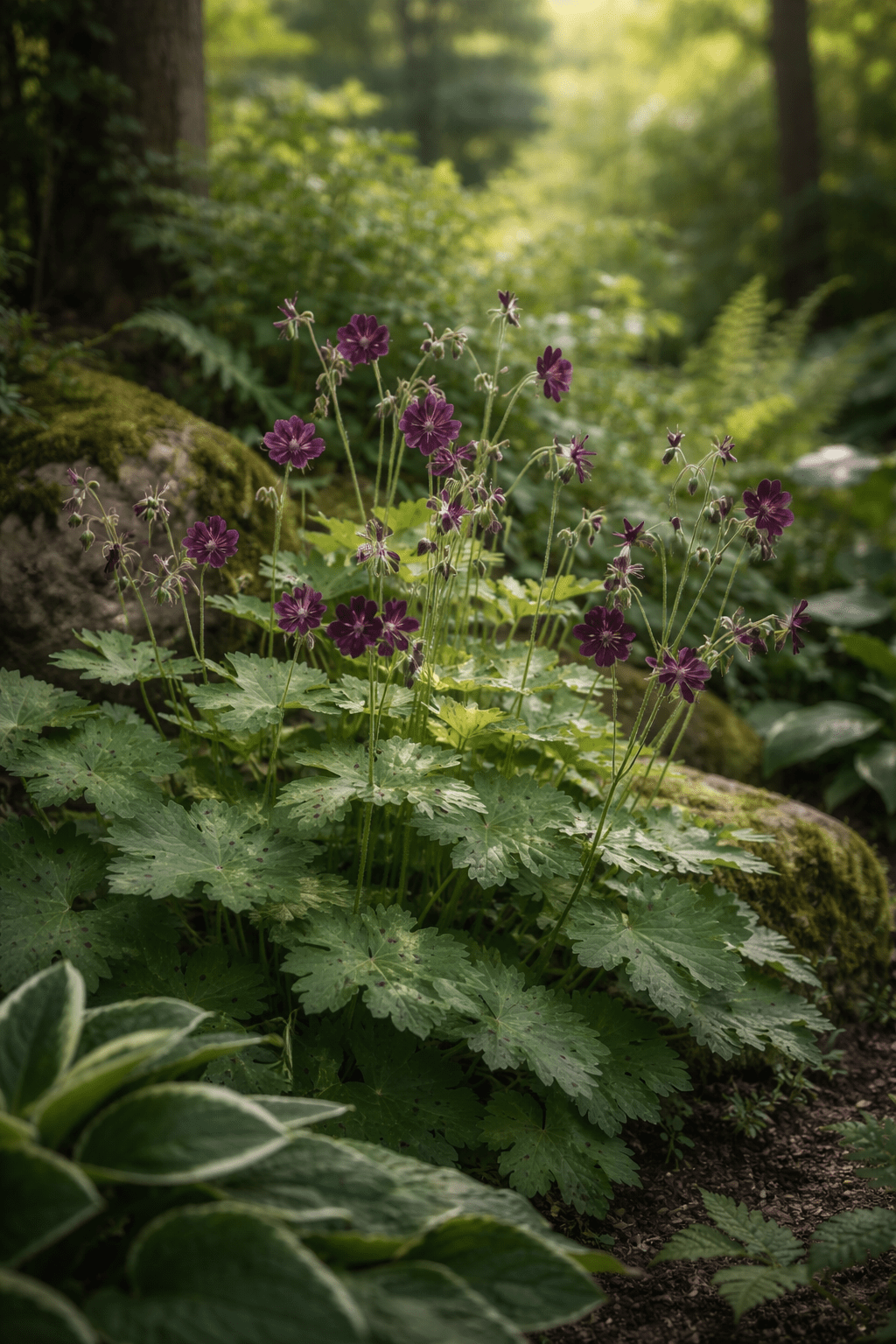
| Geranium phaeum The plant that keeps its counsel There are plants that arrive announcing themselves, and others that seem to have been there long before you noticed. Geranium phaeum, the dusky cranesbill, belongs firmly to the second group. With its shade tolerance, resilience, and unassuming nature, it doesn’t perform, doesn’t lean towards the lens, and doesn’t need staking or reassurance. It sits in the quieter parts of a garden—under trees, beside fences, behind sheds—and simply continues. I’ve come to think of it as a plant with manners. It knows when not to interrupt. In gardens away from the spotlight, where light slides in sideways rather than dropping straight down, Geranium phaeum finds its rhythm. Shade-tolerant without being sulky, long-lived without becoming domineering, it does something that’s surprisingly rare: it ages well. It looks better in its third, fifth, or even tenth year than it ever did in the first. That quiet persistence is the main reason it deserves attention. Shade is not a problem to be solved. One of the quieter myths of gardening is that shade is a flaw. This idea is rarely stated outright but is often implied. People say, “Nothing grows there.” Usually, they mean nothing flashy grows there. Nothing with a catalogue smile. Geranium phaeum doesn’t tolerate shade. It accepts it. The foliage emerges early, a soft green often marbled or marked in the center. In spring, stems lift the flowers just enough to be seen, but not enough to dominate. The flowers—dusky purples, near-black maroons, sometimes plum—face downward, as though disinterested in applause. This isn’t shyness. It’s a different economy of attention. In real gardens, especially older ones, light is rarely uniform. Trees and awkward boundaries create patches of light that last for hours, not days. Geranium phaeum coexists with this variability. It doesn’t scorch if the sun reaches it briefly. It doesn’t thin out if the sun disappears for a week. That tolerance quietly redefines the space. Instead of imposing brightness, Geranium phaeum invites appreciation of subtlety and depth. The garden shifts from demanding attention to inviting contemplation. Longevity as a quiet virtue There’s a temptation—especially online—to measure plants by speed. How quickly they fill space, flower, and make an impact in the first season. By those standards, Geranium phaeum appears unremarkable. It settles rather than surges. But watch it over time. In its second or third year, the clump broadens, knitting itself into the surrounding soil. Roots deepen, stems thicken slightly, and the whole plant becomes less reactive to weather swings. Dry spells pass without panic. Late frosts might nip the tips, but the plant responds calmly, sending up new growth without sulking. Long-lived perennials like Geranium phaeum free you from constant work. Their steady presence, not dramatic speed, is the point. I’ve seen Geranium phaeum thrive for years with nothing more than an occasional cut-back and the accidental compost drift that comes from neighbouring beds. Its low-maintenance nature means it doesn’t require feeding schedules or seasonal fussing. If anything, it performs best when left alone. That can be uncomfortable advice in a culture that equates care with constant intervention. The beauty of downward-facing flowers There’s another assumption worth nudging here: that flowers are meant to face us. Many of the most celebrated garden plants hold their blooms high and open, as if posing. Geranium phaeum does the opposite. Its flowers nod. This subtle design prompts you to slow down, an essential part of the plant’s value. You notice the color in passing, not head-on. Dark petals absorb light, creating shifting depth through the day. In the morning or late afternoon, angled light makes the flowers glow softly. At midday, they retreat. It’s a plant that rewards looking at it at different times and from different heights. Children spot it before adults do. So do dogs, incidentally, who seem to appreciate the cooler ground beneath its canopy. There’s something instructive in that. Not every plant is meant to be read at a glance. Self-seeding: presence without invasion Cranesbills have a reputation for spreading, and like most reputations, this one needs context. Geranium phaeum will self-seed, but it does so politely: seedlings stay close, are easily managed, and the plant never becomes invasive. In practice, I’ve found its self-seeding to be more suggestive than takeover. A few young plants emerge, offering options rather than problems. Left alone, they help a planting feel established rather than arranged. Removed, they come away cleanly. If you desire a garden defined by subtle, inevitable evolution, rather than rigid control, Geranium phaeum is an ally. Its gentle spread embodies a philosophy of gradual, natural change. And age, in gardens, is rarely a disadvantage. Foliage that earns its keep Much is made of flowers, but in shaded gardens, foliage carries the long story. Geranium phaeum’s leaves are generous without being coarse. They form a loose canopy that suppresses weeds, not through aggression but through their presence. In practical terms, this means less bare soil and fewer weeds. In aesthetic terms, it means continuity. After flowering, the plant doesn’t collapse. It holds its shape, often deepening in color through summer and into early autumn before retreating. I’ve planted it with ferns, hellebores, and spring bulbs and found quiet success. Not for drama, but because it knows how to share. It fills gaps without pushing neighbors aside. There’s a lesson there too, if you’re inclined to look for one. A plant for gardeners who notice Geranium phaeum won’t transform neglected gardens overnight. Its gift is quiet continuity—a thread woven through years, not seasons. That’s why it appeals to working gardeners. Seeing the same gardens month after month, you value plants that recognize you. Plants that respond to familiarity, not novelty. This cranesbill does just that. It becomes a constant in places shaped by change—leaf fall, shifting shade, and changing moisture. It doesn’t mind being overlooked, which makes it more noticeable over time. Here’s its philosophy: Some things are precious not for flash or speed, but for their ability to endure unnoticed and steady. Persistence itself is the value. Closing thought Some gardens are designed for admiration, others for living with. Geranium phaeum belongs in the second category. It sits quietly at the margins, doing its best, unconcerned with trends or attention. In a world addicted to speed, that patience is quietly radical. |


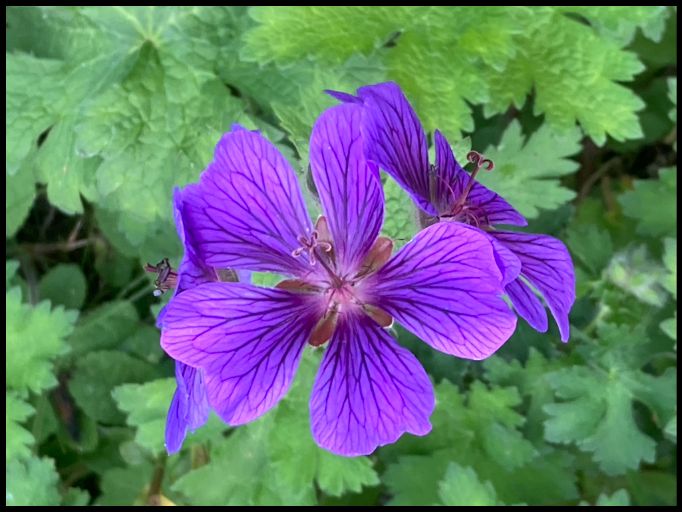
| About our writing & imagery Many of our articles are written by us, drawing on real experience, reflection, and practical work in gardens and places we know. Some pieces are developed with the assistance of AI, used as drafting and research tools rather than as a voice or authority. Featured images may include our own photography, original AI-generated imagery, or—where noted—images kindly shared by other creators and credited accordingly (for example, via Pixabay). All content is shaped, edited, and published by Earthly Comforts, and the views expressed are our own. |


Awesome. Thanks for sharing.
LikeLiked by 1 person
Thanks Michael.
LikeLike