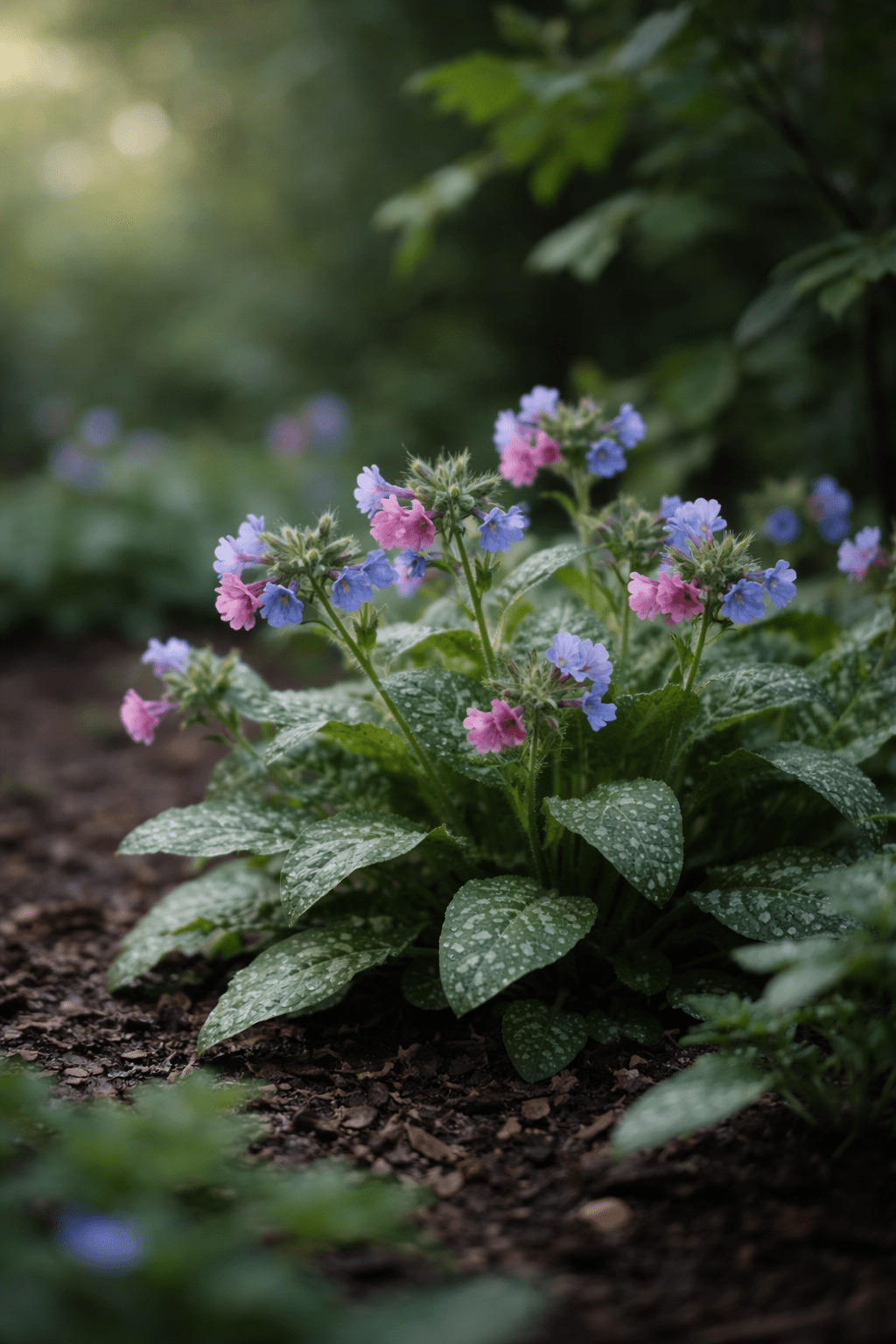
| Pulmonaria The Sound of the Season Starting Pulmonaria is not a dramatic plant. It doesn’t arrive with ceremony, height, or scent that carries across a border. You don’t notice it from the gate. You notice it because something has started moving again. You have been waiting long enough to hear it. It is one of the first plants I look for when winter loosens its grip. This isn’t because Pulmonaria is showy, but because it is early in a way that feels purposeful. It does not feel merely optimistic. Pulmonaria doesn’t gamble on spring or rush. It times itself to a moment when the soil is still cold, the light is still thin, and the insects that matter most are running on reserves. That, more than anything, is why it matters. The flowers open pink, then slowly, quietly turn blue. The leaves display pale spots, as if something dusted or splashed them, and retain their handsomeness long after the flowers fade. Yet, these features are just what you see. The plant truly works at ground level and just above, where early pollinators make decisions that determine the rest of the season. Pulmonaria understands urgency without panic. It blooms because it has to, not because it can. The gap it fills There is a particular hunger in late winter gardens that isn’t always obvious. We tend to think of scarcity in terms of cold, but for insects, the real problem is continuity. A mild day in February can bring bumblebees out of hibernation early, sometimes too early. A queen will emerge, test the air, and look for food. If she finds none, that energy loss can’t be reclaimed. Pulmonaria sits exactly in that gap. I’ve watched bees make straight for it when little else is offering anything usable. Snowdrops are beautiful, but they’re not generous. Crocus can be hit-or-miss, depending on the weather and placement. Pulmonaria, planted well, is reliable. It doesn’t close up at the first hint of cold, and it doesn’t hide its nectar deep inside a complicated flower. There’s an efficiency to it that feels deliberate. One of the common assumptions about early flowers is that “anything blooming is good.” In practice, that’s not quite true. Colour alone doesn’t feed insects. Shape, accessibility, and timing all matter. Pulmonaria has evolved alongside insects that need quick access and quick returns. It is not ornamental charity — it is a working exchange. That’s why you often see activity around it, even on days that feel barely worth the effort. Pink, blue, and the business of chemistry The colour shift in Pulmonaria flowers is often explained in passing, as a novelty. Pink to blue, sometimes with both colours present at once. It’s attractive, certainly, but it’s not decoration. It’s information. The change is driven by a shift in pH within the flower as it ages. Early-stage flowers tend to be pink. These are richer in nectar. Older flowers turn blue as their resources diminish. Pollinators learn this quickly. They spend less time on flowers that have already done their job. It’s a subtle form of honesty. Plants that mislead insects tend not to thrive for long. Pulmonaria doesn’t waste anyone’s time. The colour change signals what’s worth visiting and what’s already spent. In a season when energy budgets are tight, that clarity matters. There’s something quietly elegant about that — a plant communicating without show, without scent, without excess. Just chemistry doing its work. Spotted leaves and the long view Once the flowers fade, Pulmonaria doesn’t disappear. This is where it really earns its place in a border. The leaves expand, settle, and hold their ground. The spotting — sometimes silver, sometimes pale green — breaks up shade and adds texture where many early plants retreat. In practical terms, those leaves do several things at once. They shade the soil and help retain moisture into late spring. They suppress weeds but don’t smother neighbouring plants. They also act as visual continuity. They remind you that something is still happening in a part of the garden that might otherwise look spent. From a working gardener’s perspective, this matters. Plants that perform briefly and then collapse require maintenance. Plants that linger intelligently reduce it. Pulmonaria is not tidy in a clipped way, but it is self-respecting. It knows when to step back and when to hold space. Shade, not neglect One of the myths that clings to Pulmonaria is that it’s a plant for “difficult” spots — deep shade, damp corners, forgotten edges. While it tolerates shade well, that framing often leads to disappointment. Pulmonaria doesn’t want to be neglected. It wants context. It thrives in light shade, dappled woodland conditions, or north-facing gardens where the soil stays cool but not stagnant. In heavy, compacted ground, it sulks. In full sun, it scorches. In dry shade, it survives, but doesn’t sing. This is where real gardens differ from internet advice. Shade is not one thing. Moisture, airflow, soil structure, and seasonal light all matter. Pulmonaria responds to nuance, not labels. I’ve seen it thrive under deciduous trees where winter light reaches the ground, and summer heat is filtered out. I’ve also seen it struggle in evergreen shade, where the soil never quite warms up. The plant is adaptable, but not indiscriminate. Slugs, mildew, and honest limitations Pulmonaria is often described as “trouble-free.” That’s only half true. Slugs will absolutely take an interest in fresh growth, especially in wet springs. Powdery mildew can appear later in the season, particularly in dry, stagnant conditions. These are not plant failures. They’re signals about balance. Heavy feeding to push lush growth tends to invite problems. Poor airflow does the same. Pulmonaria doesn’t need coddling. It needs space and restraint. In gardens where everything is pushed hard — fed, watered, clipped, corrected — Pulmonaria looks out of place. In gardens where soil health is prioritised and intervention is measured, it settles in. It becomes part of the rhythm. That distinction matters more than variety choice or planting density. The rhythm of early urgency What Pulmonaria really teaches, if you pay attention, is that urgency doesn’t have to be loud. Early-season gardening is often framed as preparation — clearing, cutting back, getting ready. But for insects, spring doesn’t wait for us to tidy up. Pulmonaria responds to that reality. It blooms into a mess, into leaf litter, into half-finished borders. I’ve seen it flowering happily among last year’s stems, with no sign of offence taken. In fact, it often does better there. Leaf litter holds moisture. Old stems break the wind. The plant isn’t asking for a reset — it’s asking for continuity. That runs counter to much conventional advice, which treats gardens as something that must be cleared before they can begin again. Pulmonaria suggests a different approach: that beginnings can emerge from what’s already there. A plant that knows its role There’s a temptation to over-celebrate plants like Pulmonaria because they’re useful. Early pollen source. Shade-tolerant. Groundcover. Wildlife friendly. All true — and all slightly beside the point. Pulmonaria isn’t special because it does many things. It’s special because it does one thing at exactly the right time. It doesn’t compete with summer stars. It doesn’t insist on attention. It appears, feeds who need feeding, and then settles back into the fabric of the garden. That sense of proportion is rare. In mixed plantings, Pulmonaria works best when it isn’t isolated or showcased. It belongs in colonies, weaving between bulbs, ferns, and later perennials. When planted as a specimen, it can look oddly exposed. When allowed to be part of something larger, it makes everything around it feel more considered. What it asks of us Pulmonaria doesn’t ask much, but it does ask for patience. It establishes slowly. It expands politely. It rewards gardeners who think in seasons rather than weekends. If you divide it too often, it sulks. If you leave it alone, it builds confidence. After a few years, a well-sited plant feels inevitable — as though it has always been there. That sense of inevitability is something many modern gardens lack. Too much is swapped out, refreshed, or rebranded. Pulmonaria resists that cycle. It doesn’t reinvent itself. It just returns. The quiet contract Every garden has plants that feel like agreements rather than decorations. Pulmonaria is one of them. The agreement is simple: give it the right conditions, don’t interfere too much, and it will show up early every year and do what needs doing. It won’t save the season. It won’t carry the garden. But without it, something important is missing. Early pollinators know this instinctively. Gardeners often learn it later. By the time the rest of the border wakes up, Pulmonaria has already played its part. The colour fades. The urgency passes. What remains is foliage and the sense that the season is properly underway. That’s not spectacle. That’s reliability. And in gardening, reliability is a form of generosity that never goes out of fashion. |
| About our writing & imagery Many of our articles are written by us, drawing on real experience, reflection, and practical work in gardens and places we know. Some pieces are developed with the assistance of AI, used as drafting and research tools rather than as a voice or authority. Featured images may include our own photography, original AI-generated imagery, or—where noted—images kindly shared by other creators and credited accordingly (for example, via Pixabay). All content is shaped, edited, and published by Earthly Comforts, and the views expressed are our own. |

