| A 5-Part Series |
| A curated exploration of Britain’s most iconic, curious, and ecologically important insects |
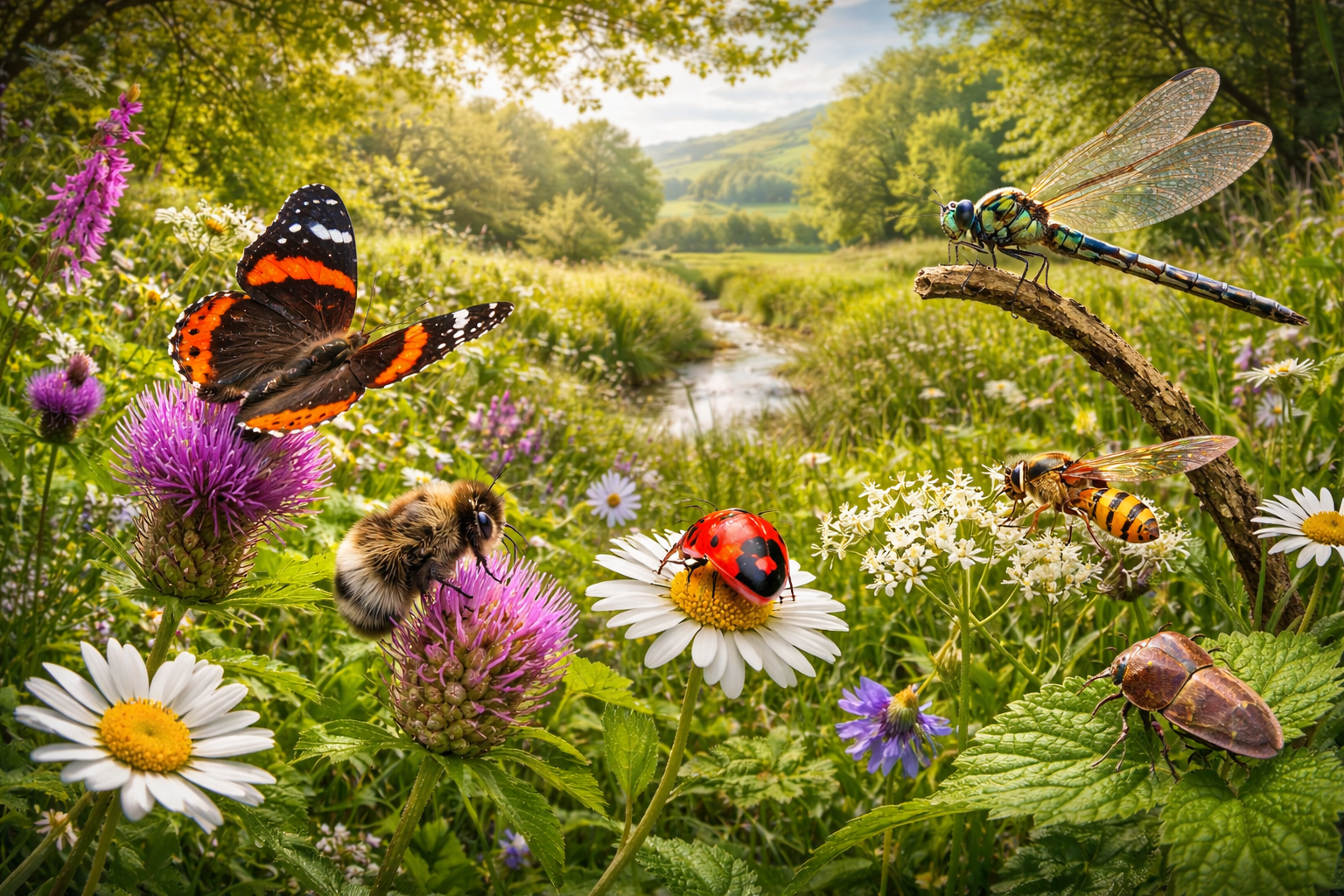
| Introduction — The Quiet Kingdom of UK Insects Britain is often thought of as gentle and familiar — green fields, hedgerows, woodlands, rivers, and gardens shaped by centuries of human presence. Yet beneath this apparently settled landscape exists a far older and more complex world. Insects have lived, adapted, and endured here long before villages, farms, or roads took form. To understand the UK’s natural environment, you must look small. The British Isles host a remarkable diversity of insects, shaped not by extremes of heat or isolation, but by seasonality, moisture, and constant change. Cool winters, mild summers, shifting weather, and fragmented habitats have favoured insects that are adaptable, resilient, and often understated. Many are small, subtle, or easily overlooked — yet their influence is immense. This series explores the insects that quietly hold the UK together. Pollinators that sustain wildflowers and crops. Decomposers that return fallen leaves and dead wood to the soil. Predators that regulate populations. Migrants who cross seas and continents to arrive on British shores. And every day, species that share our towns, gardens, and countryside go unnoticed. Unlike more dramatic insect faunas elsewhere, British insects rarely announce themselves with spectacle. Their work is patient and continuous. They emerge with the spring, peak in summer, fade in autumn, and endure winter hidden beneath bark, soil, and leaf litter. Their lives are measured in cycles rather than explosions. This series does not attempt to catalogue every species. Instead, it offers a curated exploration of representative insects — familiar and unfamiliar — to reveal how deeply they are woven into Britain’s ecosystems and cultural memory. From hedgerow to heath, from city garden to ancient woodland, insects shape the living fabric of the UK. Often dismissed as background life or minor nuisance, insects are, in truth, the foundation of the natural world. Without them, landscapes fall silent, soils thin, and food webs unravel. This is a series about noticing. What follows is an invitation to slow down, look closer, and rediscover the small lives that quietly sustain the British countryside. |
Unless stated, featured images are my own work, created independently or with the assistance of AI.

