| The Gardener’s Companion Why robins follow us — and how they quietly make gardens their own Few birds feel as familiar as the robin. Its red breast, bright against winter greys or spring greens, has become woven into the language of gardens — a presence so constant that it can feel almost personal. When a robin appears nearby as you work, hopping close, tilting its head, it’s easy to believe it’s there for company. In a way, it is. Robins have learned to live alongside people in a way few wild birds manage. Their behaviour, boldness, and apparent curiosity have earned them a reputation as the gardener’s companion — not because they are tame, but because they understand opportunity. To watch a robin properly is to glimpse how wildlife adapts, remembers, and quietly thrives in human-shaped spaces. |

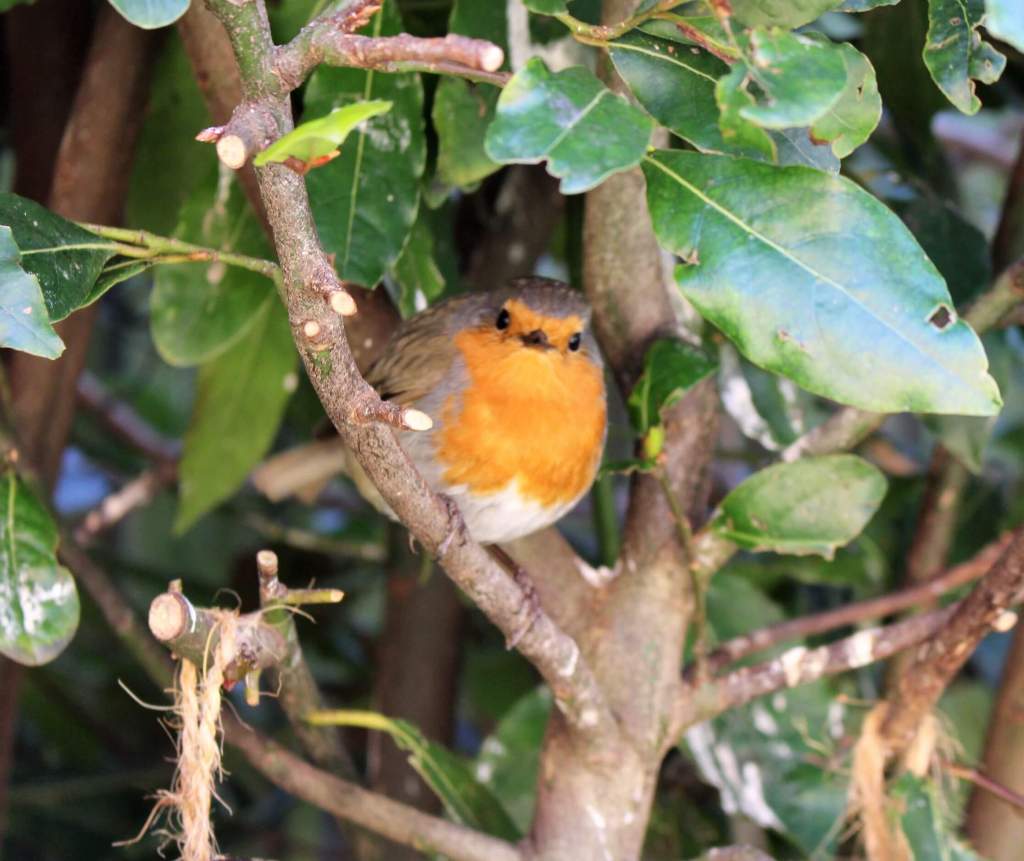
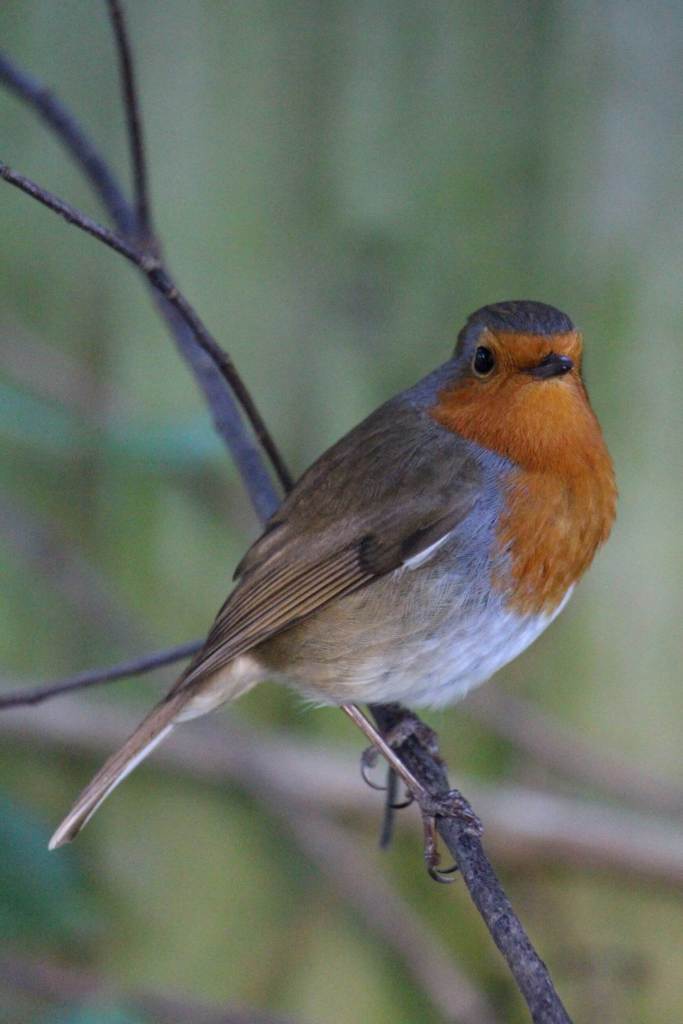
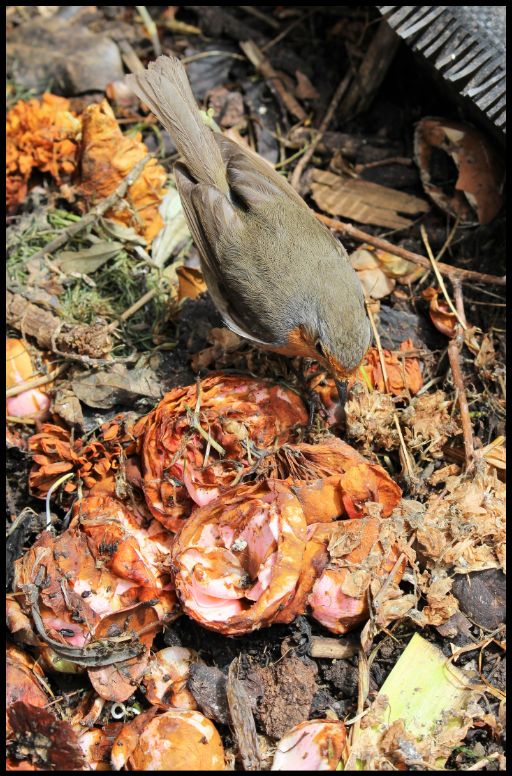
| Why do robins follow gardeners? The robin’s association with gardeners is not accidental. Robins are territorial insect-eaters. They rely heavily on ground-dwelling invertebrates — worms, larvae, beetles — many of which are disturbed when soil is turned, or leaf litter moved. A gardener at work is, to a robin, a moving food source. When you dig, rake, or weed, you expose prey that would otherwise remain hidden. Robins have learned to watch closely, moving in as soon as the opportunity arises. This behaviour is driven by instinct, not affection — but over time, familiarity builds. Some robins become so accustomed to a particular garden or routine that they appear whenever work begins, seemingly anticipating activity before it happens. |
| Bold, but not fearless Robins are famously bold, but this boldness is selective. They will approach people closely, yet remain wary of sudden movement. They defend their territories fiercely against other robins, especially in winter when food is scarce. That bright red breast is not decorative — it is a warning. In autumn and winter, robins sing to defend feeding territories, often more aggressively than in spring. A single garden may support only one robin at this time, which is why seeing two together can signal tension rather than harmony. Their confidence with people contrasts sharply with their intolerance of rivals. |
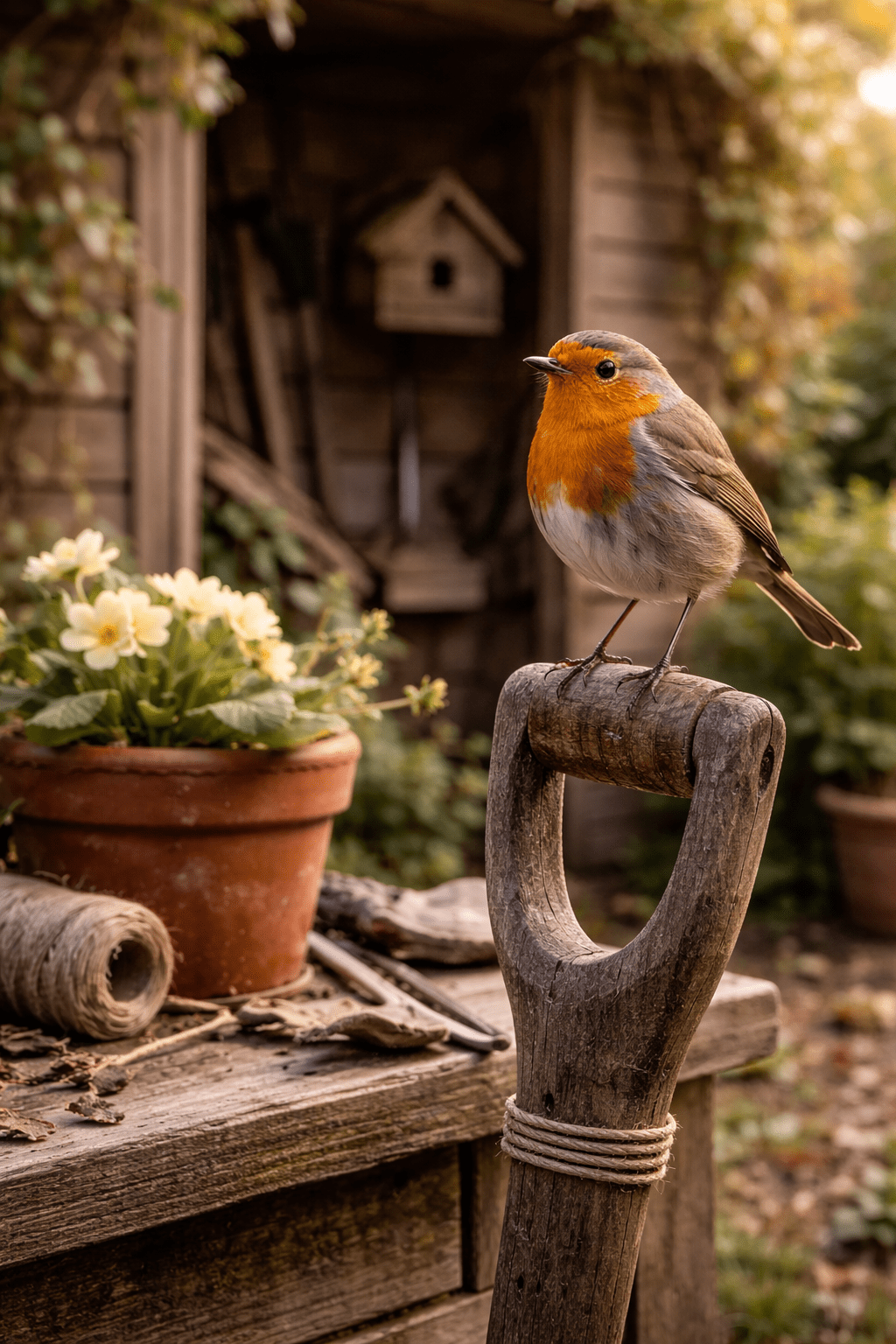
| A bird shaped by winter Unlike many garden birds, robins are year-round residents. Winter is when their relationship with gardens deepens. Natural food becomes scarce, the ground freezes, and daylight shortens. Gardens that provide shelter, leaf litter, and reliable feeding opportunities become essential. This is also when robins are most visible — hopping across lawns, perching on spades, appearing in quiet corners where warmth and food linger. The robin’s presence in winter has helped shape its place in folklore, symbolism, and seasonal tradition. |
| Robins in folklore and memory Across the UK, robins have long been associated with: Hope in winter The turning of the year Kindness and protection The presence of lost loved ones These stories persist because robins are most visible when gardens feel otherwise empty. They bring movement and colour into stillness. While folklore does not explain behaviour, it reflects something real: the robin’s ability to remain present when much else withdraws. In practical terms, this presence depends on shelter and continuity rather than myth. |
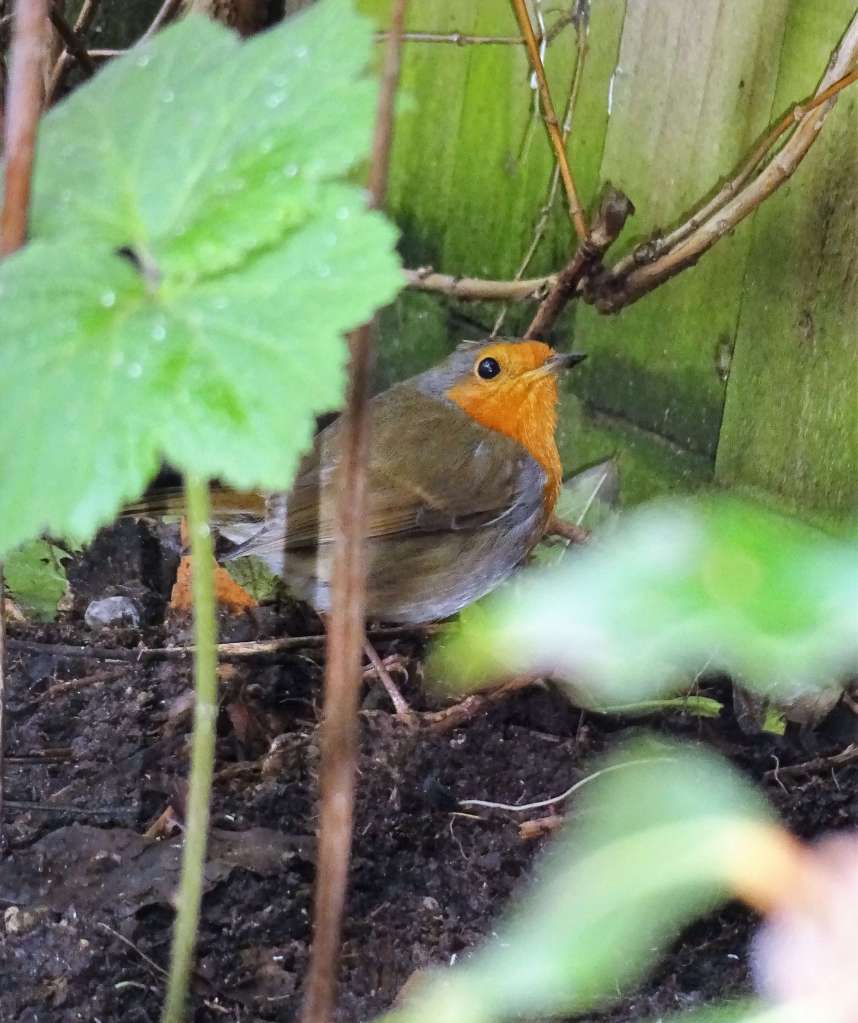
| Nesting close to human life Robins nest earlier than many birds and choose sites that are often startlingly close to people. They favour: Sheds and outbuildings Shelves and ledges Plant pots Ivy-covered walls Low, sheltered cavities Their nests are modest and well hidden, made from moss, leaves, and grass, lined with softer material. Once nesting begins, robins become quieter and more secretive — a contrast to their bold winter behaviour. Spring cleaning, moving pots, or tidying sheds can accidentally disturb nesting attempts. Robins often choose the same sites year after year if left undisturbed. |
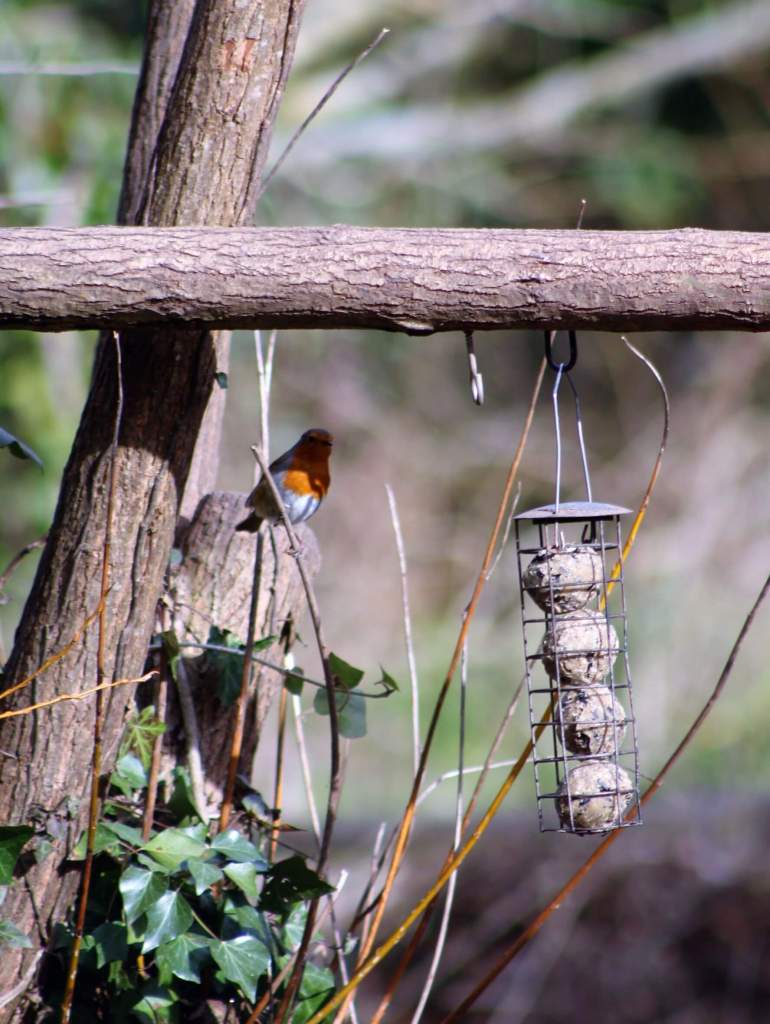
| Feeding: helpful, but not essential Robins will take food offered in gardens, especially in winter, but feeding is not the reason they stay. Their primary needs are: Access to natural prey Soft ground or leaf litter Shelter from cold and predators Supplementary food can help during harsh weather, but it works best when paired with a garden that still offers natural foraging opportunities. Robins that rely solely on feeders are more vulnerable than those that can combine feeding with hunting. |
| Leaf litter and soil matter Because robins feed at ground level, they benefit greatly from gardens that retain: Leaf litter Undisturbed soil Compost-rich borders Soft edges rather than sealed surfaces In autumn and winter, leaf litter becomes a vital hunting ground. Removing it entirely reduces food availability just as robins’ energy needs increase. A garden that looks a little unfinished often supports robins better than one that is immaculate. |
| A bird of relationship, not ownership Robins do not belong in gardens. They choose them. They return to places that remain predictable — where shelter persists, food sources remain accessible, and disturbance is manageable. When a robin appears regularly, it is responding to memory as much as opportunity. This is why sudden or repeated changes can cause robins to disappear, even if the garden still looks green and healthy. Stability matters more than abundance. |
| Why do robins feel personal? Robins meet our gaze. They hold eye contact. They approach within arm’s length. They seem to acknowledge our presence in a way that feels unusual for a wild animal. This creates a sense of relationship — one that is real, but one-sided. The robin is not bonding in a human sense. It is assessing, learning, and adapting. And yet, that quiet coexistence is meaningful. |
| A companion by choice The robin’s place in the garden is earned, not given. It thrives where: Ground remains workable Shelter is retained year-round. Activity is predictable rather than constant. Gardens change slowly In return, it offers presence — through winter, through change, through the quieter moments when gardens feel bare. Not as a pet. Not as a symbol. But as a small, resilient neighbour who has learned how to live alongside us. And when a robin follows you across the garden, it is not asking for friendship — it is recognising a shared rhythm. One that has developed, season by season, through familiarity rather than control. |