| Part 1 |
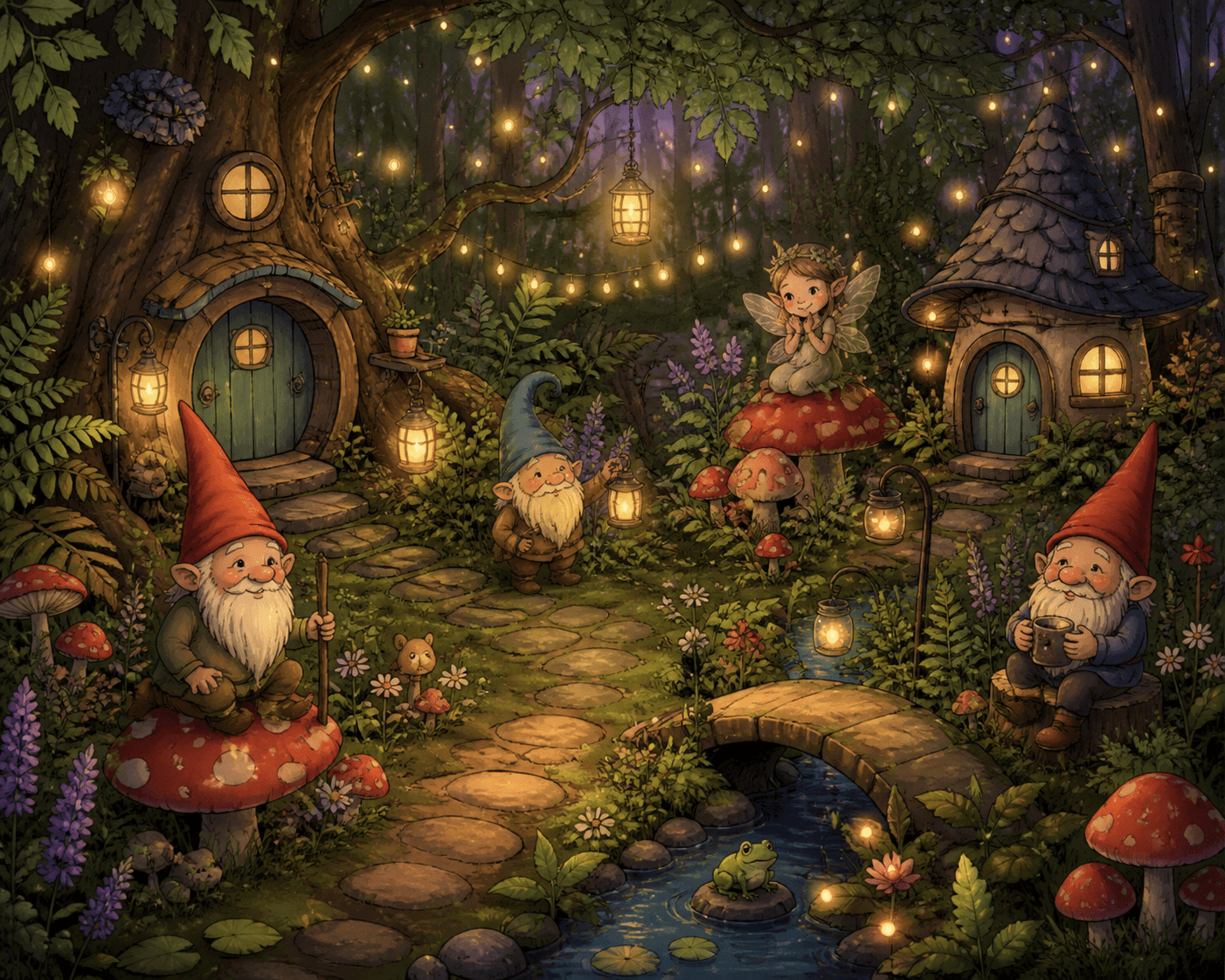
| Some things in gardens go unquestioned. They sit long and quietly enough to become part of the place—like a weathered bench, an old apple tree, or a cracked terracotta pot no one recalls buying. Garden gnomes fall into that category. They’re often already there when I arrive. Tucked under a shrub, half-hidden behind a pot, sometimes lined up along a path as if they’ve been given a purpose that nobody now remembers. Occasionally, they’re new—bright paint, sharp edges, deliberately placed—but more often they’re not. More often, they’ve softened into the garden. And yet, when you stop and actually look at them, properly look, they don’t quite sit as comfortably as everything else. It’s not that they don’t belong. It’s that they seem to belong to something older than the rest of the garden. The idea of something living beneath Long before gnomes became ornaments, they existed as an idea. Not a decorative one, not a whimsical one, but something far more grounded—quite literally. Across parts of Europe, there was a long-standing belief that the earth itself was inhabited. Not metaphorically, but in a practical sense. The soil wasn’t just matter; it was occupied. It had presence, agency, and, depending on who you asked, intention. The term “gnome” as we recognise it was brought into wider use by Paracelsus, a Renaissance thinker who attempted to categorise the natural world in a way that blended observation with philosophy. He described gnomes as elemental beings—creatures of the earth, just as salamanders belonged to fire, sylphs to air, and undines to water. But what matters most is the mindset behind such beliefs, and how they continue to shape how we relate to our gardens—even if we are no longer consciously aware of it. Seeing the earth as inhabited changes your approach; you tread more carefully, disturb less, and quietly acknowledge that what lies beneath isn’t entirely yours. As gardeners, we don’t talk like this anymore. We talk about soil structure, microbial life, drainage, and organic matter. We understand the ground in terms of systems and processes. And rightly so. But there’s a faint echo of that older thinking still present in how we behave. You don’t strip a garden bare without consequence. You don’t compact soil endlessly and expect it to recover on its own. You don’t remove everything living and assume you’ve improved it. We know, through experience if nothing else, that the ground responds. From belief to object The shift from unseen presence to object came much later. In 19th-century Germany, particularly in regions known for ceramics and clay work, figures began to be made—small, human-like representations of these earth-dwelling beings. They weren’t toys in the modern sense, nor were they purely decorative. They were placed in gardens with a kind of quiet intention. “ Protection” is often used, but it’s a simplified version of something more complex. It wasn’t about guarding against intruders in the way a fence or gate might. It was about maintaining a relationship. The figure stood in the garden as a recognition that the space wasn’t entirely controlled, that there were forces—natural, unseen, unpredictable—that played a role in how things grew or failed. That idea has softened over time, as most things do when they move from belief into commerce. The gnome becomes smaller, brighter, and more exaggerated. The expression shifts from neutral or watchful to cheerful, even comical. The context is lost, or at least diluted. And yet, despite all that, the placement hasn’t changed entirely. People still put them in beds, near roots, at the edges of spaces, rather than in the centre. They still tend to face outward or slightly off to one side, as if observing rather than performing. Whether intentional or not, something of the original purpose lingers. Gardens as shared spaces One of the more common assumptions about gardens is that they are controlled environments. Designed, managed, and maintained—spaces where human intention shapes everything. There is truth in that, but only up to a point. In practice, every garden is a negotiation. You can set the structure, choose the planting, maintain the edges, but the moment you step back, other things begin to move in. Seeds arrive without invitation. Insects establish themselves. Fungi develop where conditions allow. Even the soil itself shifts over time, responding to weather, use, and neglect. A garden is never just one thing. The older idea of earth spirits—or gnomes—fits this view. Not for literal truth, but because it recognises the garden isn’t entirely yours. It belongs partly to the process. It belongs partly to chance. And it belongs, in a very real and measurable way, to everything else that lives there. Working among symbols you don’t quite believe in I work in gardens where the belief is still present, in different forms. Some clients speak openly about fairies, woodland folk, or energies within the garden. Others don’t use that language, but create spaces that reflect it—miniature doors set into tree trunks, clusters of toadstools placed deliberately, small pathways that lead nowhere in particular but feel as though they should. I don’t literally share those beliefs. I’m grounded in what I can see, test, and measure. Soil health, plant choice, and timing matter. But dismissing these elements entirely would be missing the point. What those clients do, knowingly or unknowingly, shapes how the garden is experienced. They are introducing narrative. They are encouraging a slower pace through the space. You notice more when you’re looking for something hidden. You pay attention to corners that might otherwise be ignored. You allow for the possibility that not everything needs to be explained. That matters. Not in a mystical sense necessarily, but in a practical one. A garden that invites attention is a garden that gets looked after. A garden that feels alive, in whatever way that’s interpreted, is less likely to be reduced to a set of tasks. The quiet persistence of old ideas It would be easy to write off garden gnomes as outdated, even slightly embarrassing. And in some contexts, they are used in a way that leans heavily into novelty rather than meaning. But their persistence is worth noting. They haven’t disappeared. They’ve changed, certainly—mass-produced, stylised, sometimes ironic—but they remain. And I think that’s because they occupy a meaningful intersection: gnomes remind us of the boundaries between what we control and what we don’t—and, in a broader sense, they capture our ongoing negotiation between mastery and respect for the living processes beneath our feet. They represent a boundary. Not a physical one, but a conceptual one—between what we control and what we don’t, between what we understand and what we leave open. In modern gardening, we lean heavily towards control. Precision planting, structured layouts, managed growth. There’s a lot to be said for that approach. It creates clarity, reliability, and, when done well, a certain kind of beauty. But there’s risk in going too far. An entirely controlled garden can become static. It loses the subtle variations that come from allowing processes to unfold. It becomes something to maintain rather than something to observe. The older ideas—whether framed as gnomes, spirits, or simply the presence of something beyond immediate control—act as a counterbalance. They remind us, quietly, that the garden is not just a project. It’s a place where things happen. Practical observations from the ground From a practical perspective, I’ve noticed a few things over time that tie into this more abstract layer. Gardens that lean into a slightly looser, more natural aesthetic—often the same ones that include these symbolic elements—tend to support more varied life. That’s not surprising, but it’s worth stating plainly. Less rigid planting, more organic matter, and fewer interventions create conditions that facilitate the establishment of biodiversity more easily. These gardens can be harder to manage if left unchecked. Balance is needed between allowing and guiding. Too much structure, and depth is lost. Too little, and maintenance is difficult. Clients engage differently with such spaces. With narrative—through symbolism, design, or arrangement—people spend more time in them. Not always gardening, but observing. That, in turn, leads to better outcomes. Problems are spotted sooner. Changes noticed. The garden becomes a place to live in, not just a visit to fix. A different way of seeing You don’t have to believe in gnomes to understand why they exist. You don’t have to believe in earth-dwellers to see the ground’s complexity. And you don’t have to adopt the language of folklore to appreciate that a garden is not entirely under your control. What you can do, and what I think these objects quietly encourage, is to adjust how you look. See the garden not just as tasks, but as layers at work. The visible layer—plants, soil, structure—is what we work with directly. It’s where skill and knowledge are applied. It’s where results are measured. But beneath that, there’s another layer. Less tangible, but no less real in its effects. The accumulation of time, the interaction of living systems, and the gradual shaping of the space through use and neglect. And perhaps, in a more abstract sense, the way we choose to interpret all of that is a testament to the enduring influence of these old ideas—reminding us that gardens are both projects and places of shared existence, where symbols like gnomes mark the boundary between control and acceptance. Closing thoughts Garden gnomes are easy to overlook. Easy to dismiss, even. But when you place them back into their original context—not as decorations, but as markers of an older way of thinking—they start to make more sense. They are, in a quiet and slightly awkward way, a reminder. Not that something is watching, or guarding, or living beneath the soil in a literal sense. But the garden itself is not entirely ours. It operates on terms we only partially set. And that sometimes, without fully realising it, we leave small figures in the borders as a way of acknowledging that. |
| About our writing & imagery Most articles reflect our real gardening experience and reflection. Some use AI in drafting or research, but never for voice or authority. Featured images may show our photos, original AI-generated visuals, or, where stated, credited images shared by others. All content is shaped and edited by Earthly Comforts, expressing our own views. |

