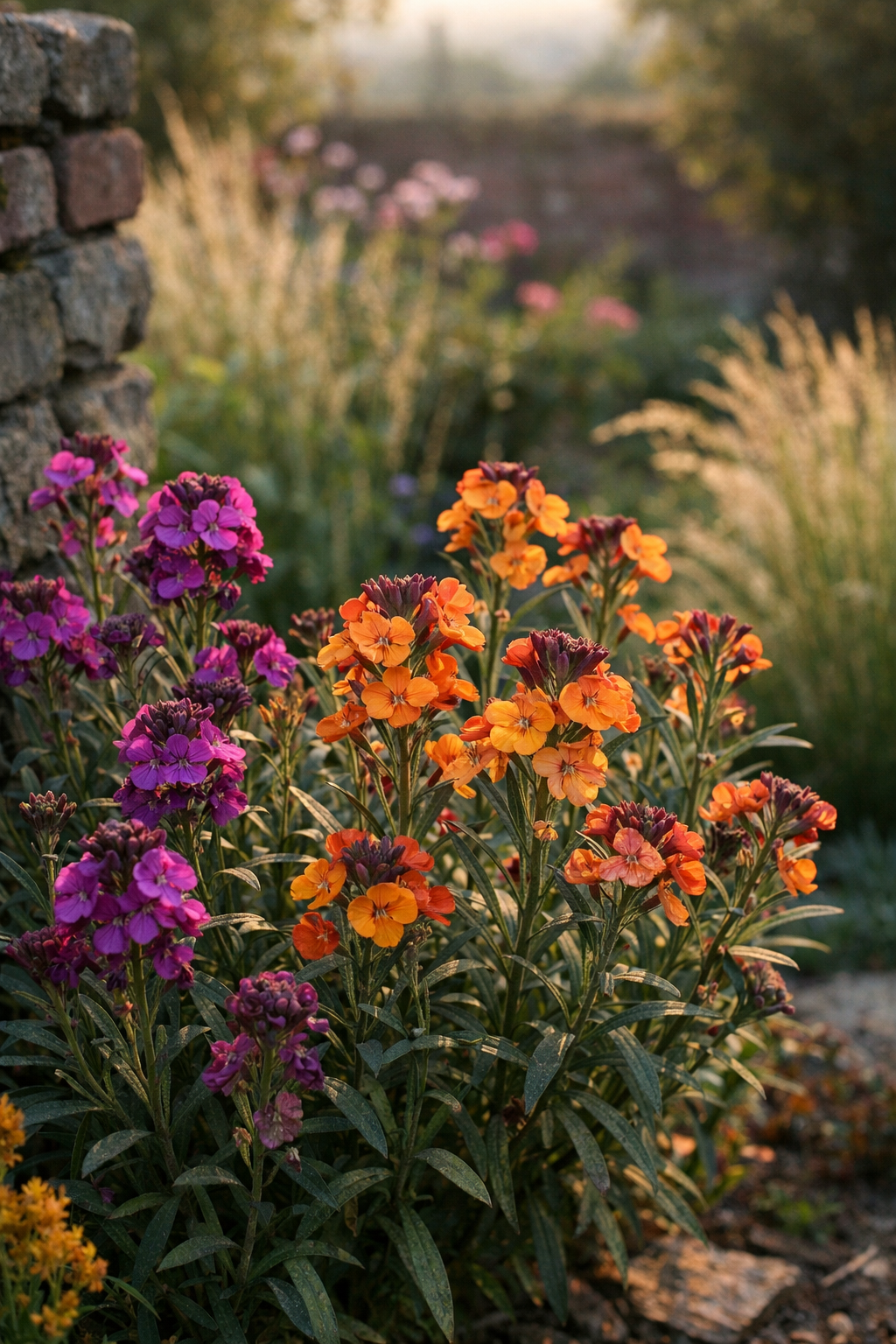
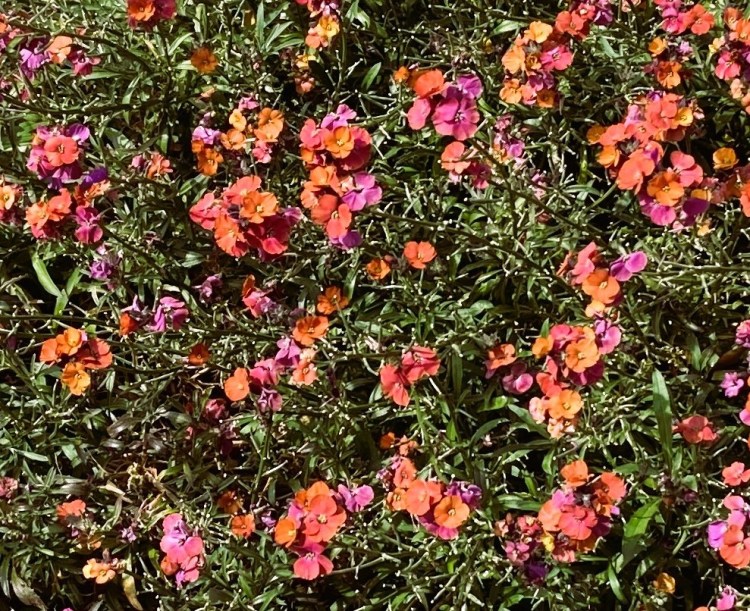
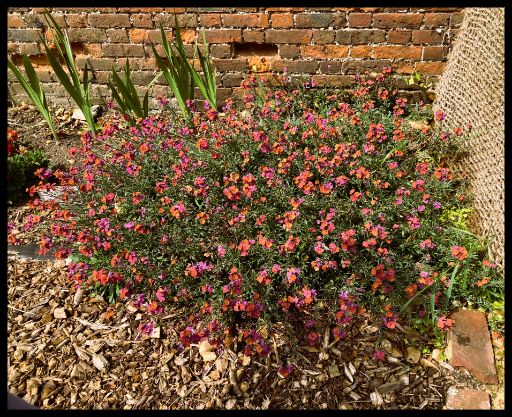
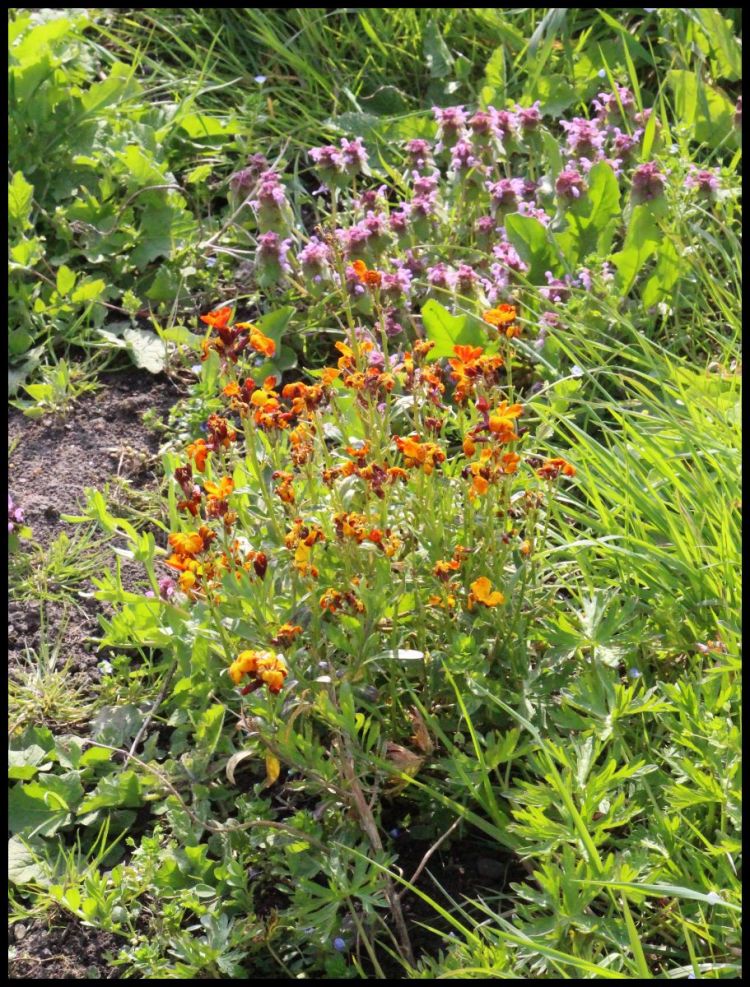
| The Quiet Business of Flowering Anyway There are plants that draw attention with boldness, and others that quietly persist. Erysimum — the perennial wallflowers — are firmly in the second group. Unlike showy or temperamental varieties, they are not rare, nor particularly fashionable, nor do they demand ideal conditions or frequent attention. Erysimums flower simply because they do, and often outlast flashier plants that fade quickly. I’ve planted them purposefully, acquired them by chance, cut them back fiercely, ignored them for weeks, and watched them endure where flashier neighbours failed. Erysimum doesn’t teach ambition but imparts a subtler lesson: reliability can appear untidy. Perennial wallflowers occupy a strange place in British gardens. They’re familiar enough to be overlooked, but unusual enough that people still ask their name. They sit somewhere between herbaceous perennials and short-lived shrubs, refusing to behave exactly like either. That refusal — gentle, unshowy, persistent — is part of their charm. Not Quite Perennial, Not Quite Shrub One of the first things you learn about Erysimum is that it resists neat categorisation. The books will call many of them short-lived perennials, or semi-woody perennials, or sometimes biennials that overstay their welcome. All of these are technically correct, but none quite capture how they behave in a real garden. In practice, a good wallflower can last several years if the conditions suit it and the gardener doesn’t try to force it into tidiness too early. The base slowly lignifies, the stems become woody, and the plant starts to resemble a small, informal shrub. This is often the moment people decide it looks “leggy” or “tired”, when in fact it has simply moved into its middle age. A common misconception is that perennial wallflowers should be managed like bedding wallflowers, which are grown for seasonal displays, uniformity, and routine replacement. In contrast, perennial Erysimums are valued for their resilience and ability to persist across seasons. Expecting perennial Erysimums to be tidy and flawless year-round is as unrealistic as expecting an old apple tree to look identical to a pruned, young sapling from a supermarket. What they offer instead is continuity. In a border where things come and go, die back entirely, or vanish underground for half the year, Erysimum stays present. It anchors the space visually, even when not in peak flower, and then rewards patience with an extraordinarily long blooming period. Flowering as a Habit, Not a Performance If you want a plant that dazzles once and departs, Erysimum will underwhelm. Its blooms are modest, clustered, and tinted with smoky complexity—burnt orange, dusky mauve, sulphur yellow, wine red—and keep returning. In a mild year, some varieties will flower from early spring well into autumn. Not continuously in the sense of a machine running without pause, but rhythmically. A flush, a lull, another push. The gardener learns to recognise this pattern and stop interfering. One of the most useful lessons Erysimum teaches is restraint. Cut it back too early, and you lose the next wave of flowers. Leave it entirely alone, and it can become top-heavy, leaning or splitting under its own enthusiasm. The balance lies somewhere in between: light trims, timed after flowering surges, never a full haircut unless the plant has genuinely collapsed. There’s a temptation, encouraged by online advice, to treat long-flowering plants as things that need constant deadheading to perform. With wallflowers, this can be counterproductive. They often self-regulate. Remove spent stems selectively, and the plant responds. Strip everything in one go, and it sulks. This is not a plant that rewards micromanagement. It rewards observation. Scruffiness as a Survival Strategy A slightly untidy plant is often a resilient one. Erysimum does not aim for symmetry. Its stems wander, its flower heads twist, and its silhouette shifts over the seasons. In formal planting schemes, this can look like a flaw. In real gardens — the kind that experience wind, foot traffic, pets, dry spells, and missed weekends — it looks like adaptability. I’ve seen wallflowers survive in thin soil at the base of brick walls, in raised beds that dry out faster than intended, and in mixed borders where more delicate plants quietly fade away. They don’t thrive everywhere, but they cope in many places where they shouldn’t, at least on paper. This tolerance doesn’t mean they’re indestructible. Heavy, waterlogged clay can finish them off, particularly in winter. Prolonged damp combined with cold is a bigger threat than frost alone. But given drainage and light, they rarely complain. There’s a useful contrast here with the way gardening advice is often framed. We talk a lot about “perfect conditions”, as if gardens are static laboratories. Most gardens are compromises — between soil types, microclimates, budgets, and time. Plants that accept those compromises without protest are worth paying attention to. Erysimum does not insist on perfection. It insists on being allowed to be itself. Colour Without Noise One of the quieter achievements of perennial wallflowers is their colour range. Not the primary-bright colours of bedding schemes, but more complex, almost weathered tones. These colours sit well with greys, silvers, and soft greens, and they age gracefully as the flowers mature. In practice, this means they don’t clash as easily as expected. I’ve seen them work alongside grasses, salvias, euphorbias, roses, and even self-seeded annuals without demanding redesign. They don’t dominate a palette; they underpin it. There’s also something interesting about how their colours shift with light. Early morning and late afternoon bring out different tones, and in overcast weather, the flowers seem deeper, more saturated. This makes them rewarding for gardeners who spend time in their gardens at different hours, rather than only admiring them at noon. The scent, often overlooked, is another quiet feature. Not all varieties are strongly scented, but those that are carry a soft, honeyed note that doesn’t announce itself until you’re close. It’s a plant that meets you halfway, rather than calling across the garden. Longevity, Replacement, and Letting Go Despite their persistence, Erysimums are not immortal. Most will eventually tire, becoming woody and sparse at the centre. This is not a failure; it’s a life cycle. The mistake is assuming that longevity means permanence. One of the more useful practices with wallflowers is allowing replacements to come along naturally. Some varieties self-seed modestly, particularly in gravel or open soil. These seedlings are often better adapted to the exact conditions of your garden than anything bought in a pot. There’s a lesson here that extends beyond this genus. Gardens are healthier when we allow a degree of succession. Plants that quietly bow out and make room for their own offspring — or for something else entirely — create a sense of continuity without stasis. Trying to keep a single specimen alive indefinitely can lead to increasingly aggressive pruning, feeding, and fussing. Accepting that a plant has had its moment and letting a younger one take over often produces better results with less effort. Erysimum seems comfortable with this arrangement. It does its job generously, then steps aside. A Plant for Working Gardens Perennial wallflowers suit busy, lived-in gardens. They endure missed waterings, sporadic care, and the occasional knock from a wheelbarrow or dog. They don’t collapse dramatically after summer neglect. For gardeners who work outdoors regularly, this matters. There’s a difference between plants you admire and plants you rely on. Erysimum falls into the second category. That doesn’t make it dull. It makes it trustworthy. There’s also something fitting about their association with walls and edges — places of transition rather than display. They occupy margins, soften boundaries, and thrive where structures meet soil. In doing so, they echo one of gardening’s quieter truths: that the most interesting things often happen at the edges. Reliability Without Perfection If there’s a single idea that Erysimum embodies, it’s this: reliability does not require flawlessness. A plant can be uneven, asymmetrical, and occasionally awkward, and still be deeply successful in a garden. In a culture that increasingly values immediate impact and photographic perfection, perennial wallflowers offer a counterpoint. They reward time spent rather than the attention they demand. They look better when you stop trying to improve them. As a gardener, that’s a useful reminder. Some of the best plants are not the ones you control most tightly, but the ones you learn to trust. |
| About our writing & imagery Many articles are by us, based on real experience, reflection, and practical work in gardens and places we know. Some pieces use AI for drafting or research, never as voice or authority. Featured images may include our own photography, original AI-generated imagery, or—where noted—images kindly shared by other creators and credited accordingly (for example, via Pixabay). All content is shaped, edited, and published by Earthly Comforts, and the views expressed are our own. |


What pretty and cheerful flowers, Rory.
LikeLike