| A 5-Part Series |
| A curated exploration of Britain’s most iconic, curious, and ecologically important insects |
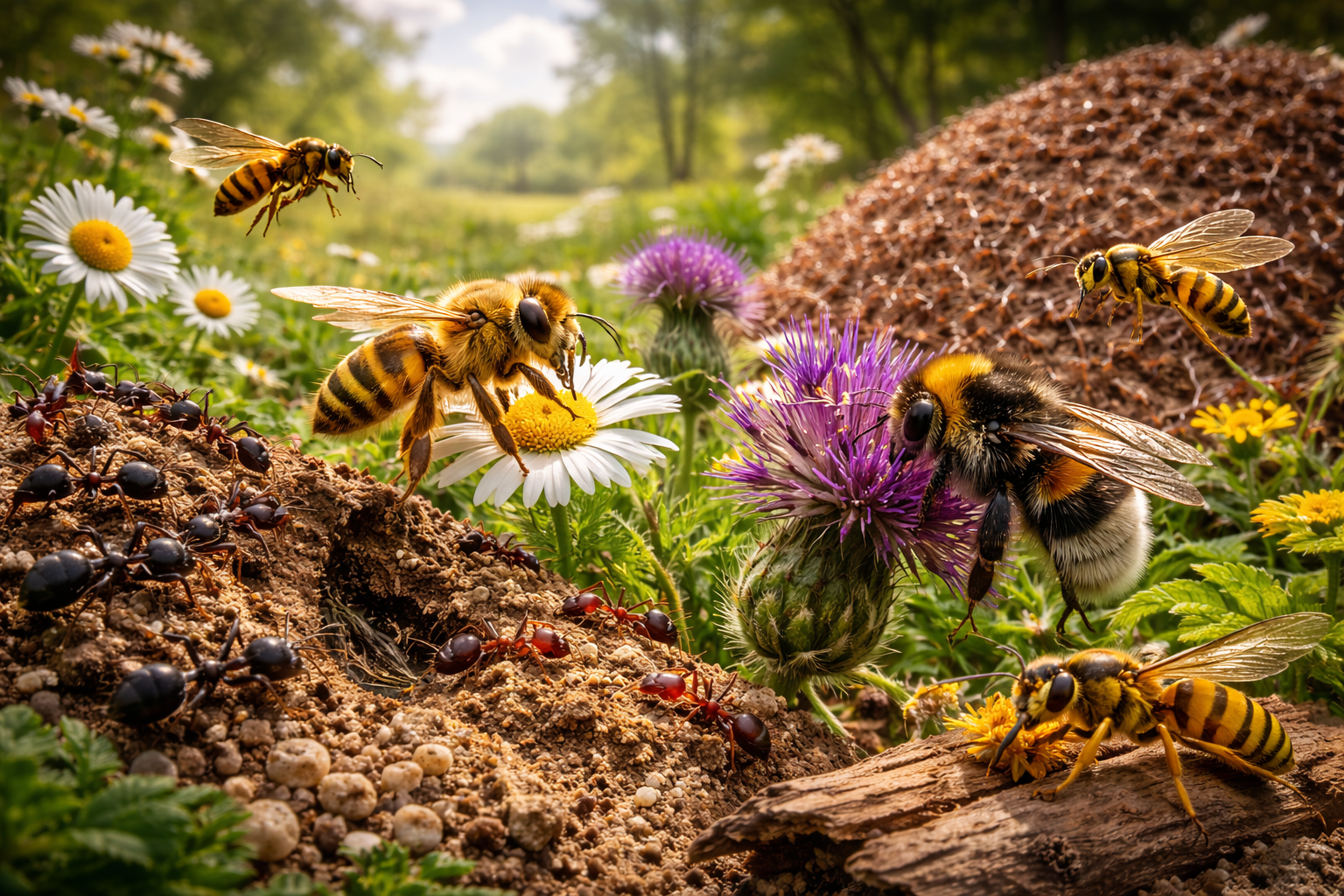
| Part 1 Ants, Bees & Wasps: The Quiet Infrastructure of Britain In the UK, insects don’t announce themselves with size or spectacle in the way Australian species often do. Instead, they work quietly, persistently, and close to the ground. Ants, bees, and wasps form the unseen infrastructure of British ecosystems, holding together soils, hedgerows, and gardens. Black garden ants are perhaps the most familiar. They live in extensive underground networks, recycling organic matter and tending aphids in a long-established relationship that benefits both species. Their presence is a sign of stable soil and long-term habitat. Wood ants take things further. Found mainly in coniferous forests, they build large mounded nests from pine needles and forest debris. These ants actively manage forest health, preying on pests and redistributing nutrients. Red ants, smaller but aggressive, defend their territory fiercely and thrive in warmer microclimates such as south-facing banks and meadows. Honeybees, both managed and wild, sit at the centre of British agriculture and gardening. Their importance is often overstated in isolation, but within a broader pollinator network, they remain vital. Bumblebees provide a quieter service. Larger, hairier, and more cold-tolerant, they pollinate early-flowering plants and crops when other insects are inactive. Common wasps are often viewed only through the lens of nuisance. Yet for most of the year, they hunt pest insects, feeding larvae with protein and keeping populations in check. Conflict only arises late in the season, when their role changes. In the UK, these insects rarely dominate attention, but without them the countryside would quietly unravel. |
Unless stated, featured images are my own work, created independently or with the assistance of AI.

