| When “I’ll Get Around to It” Becomes a Place You Live |
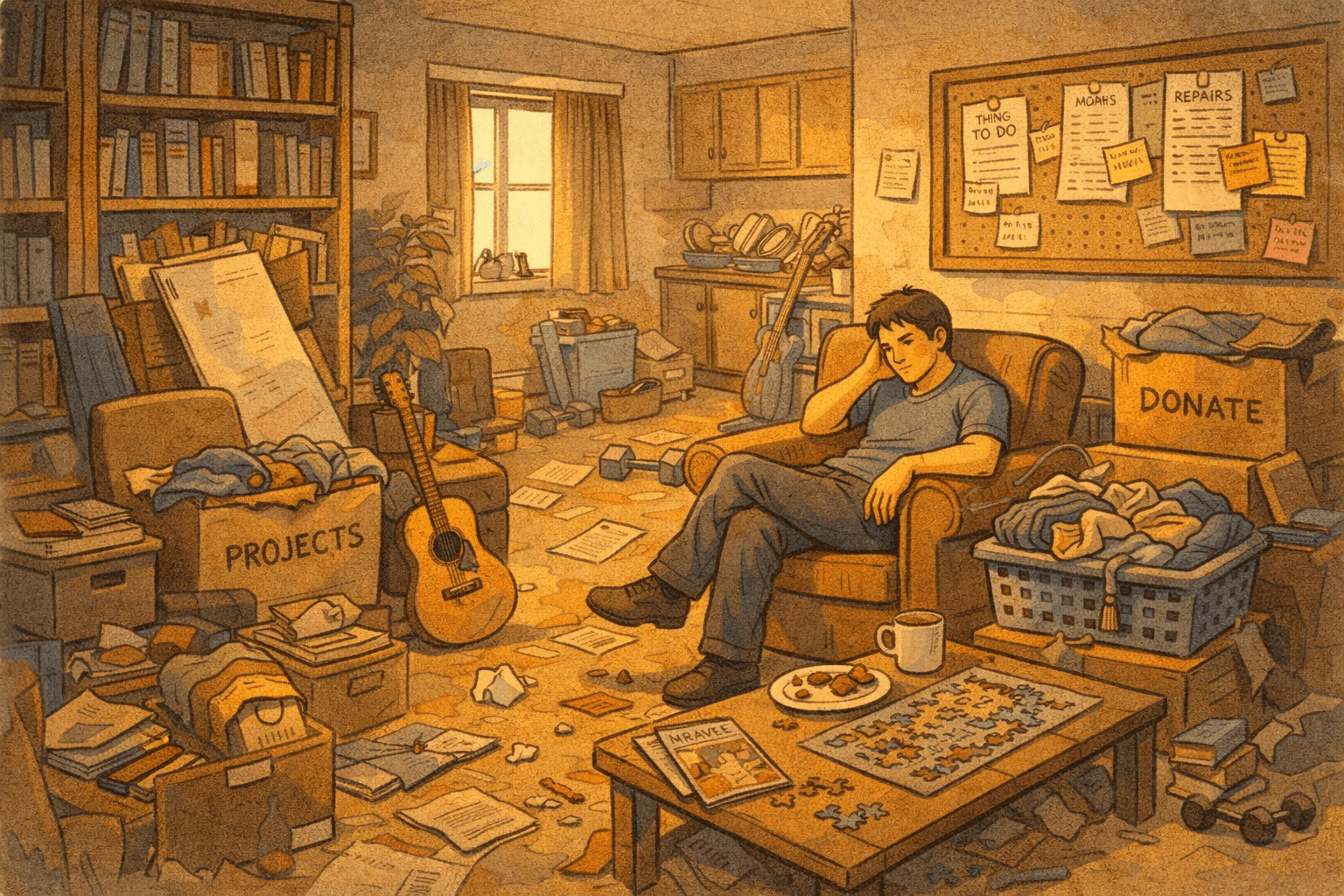
| “I’ll get around to it” sounds harmless. Sensible, even. It suggests intention without pressure. A quiet promise that something hasn’t been forgotten, just deferred until the right moment arrives. The problem is that the right moment rarely announces itself. Over time, “I’ll get around to it” stops being a sentence and becomes a location — a mental place where unfinished things gather. Tasks move there not because they are impossible, but because they are undefined. They don’t belong to today, and they don’t demand tomorrow. So they wait. As a gardener, I see this in physical form all the time. Jobs that don’t quite fail but don’t quite succeed either. Areas that are never neglected enough to force action, but never tended enough to settle. The result isn’t chaos; it’s a low-level drag on the whole system. One of the myths worth challenging is that postponement is about laziness. In practice, it’s more often about respect. People delay tasks because they sense they deserve proper attention — more time, more energy, more clarity than is currently available. The intention is good. The effect, over time, is heavy. Gardens are particularly good at revealing this because they don’t pause politely. Growth continues, whether you’re ready or not. The hedge that could have been lightly trimmed in May becomes a heavier job by August. The bed that needed a small reset quietly demands a complete rethink. “Later” changes the nature of the work. There’s a trade-off here that’s easy to miss. Deferring something can feel like reducing pressure, but it often relocates that pressure rather than removing it. The task stays present, just less visible. It becomes background noise—a constant low hum of obligation. Indoors, this shows up as shelves of half-started projects, cupboards full of items meant to be sorted, and notes written to yourself that you never act on. Each one is minor. Collectively, they shape how a space feels. Not messy — unresolved. Working with living systems has taught me that unresolved states require energy to maintain. A garden left halfway between tidy and wild needs more attention than one allowed to settle fully into either. The same is true of mental spaces. What shifts things isn’t urgency. Its definition. The moment a task becomes specific — this hedge, this afternoon, this level of finish — it stops floating. “I’ll get around to it” thrives on vagueness. It dissolves when edges are drawn. This doesn’t mean everything needs to be completed. Completion is not always the goal. Sometimes the most effective action is to decide that something will not be done. To consciously release it. Gardens benefit from this kind of decision-making. Not every idea deserves space. Not every intention needs follow-through. There’s relief in that clarity. The weight lifts not because everything is finished, but because everything is accounted for. You know what is waiting, what is planned, and what has been let go. I’ve noticed that people who feel constantly behind are often not overloaded with work, but with indeterminate work. Too many tasks exist in a state of maybe. They require attention to remain unresolved. Gardening has made me attentive to thresholds. Points where action is needed before a situation tips into something larger. Catching a task before it crosses that line often takes less effort than living with its presence for months. When “I’ll get around to it” becomes a place you live, it quietly shapes your sense of time. The present feels crowded. The future feels obligated. Neither feels free. The way out isn’t speed. It’s honesty. Naming what matters, what can wait, and what can be released without guilt. Turning postponement into a choice rather than a default. Once that happens, “I’ll get around to it” stops being a holding pen and becomes what it was always meant to be: a temporary pause, not a permanent address. |
| About our writing & imagery Most articles reflect our real gardening experience and reflection. Some use AI in drafting or research, but never for voice or authority. Featured images may show our photos, original AI-generated visuals, or, where stated, credited images shared by others. All content is shaped and edited by Earthly Comforts, expressing our own views. |

