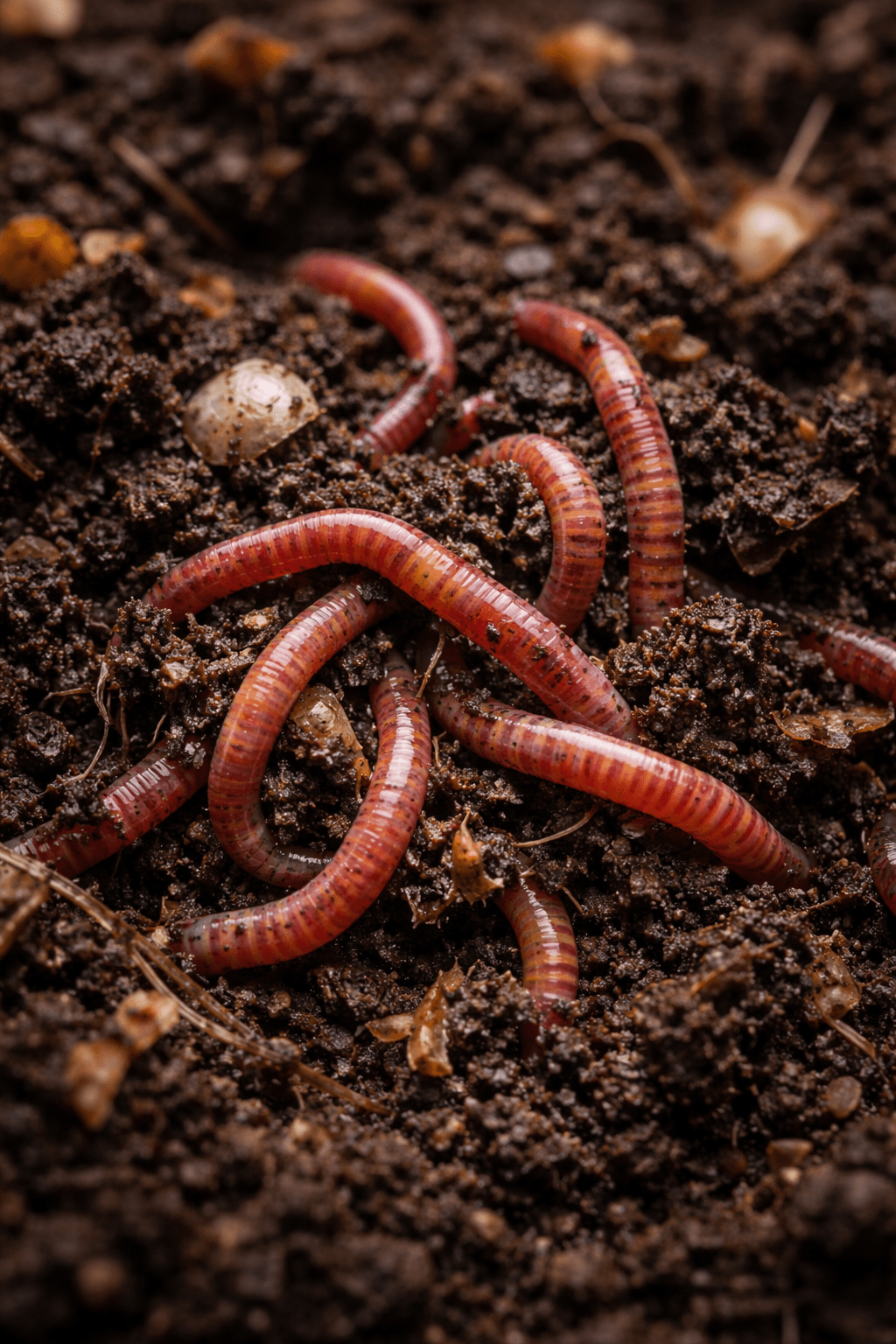
| The Worms Worm farming has a habit of becoming abstract surprisingly quickly. People talk about bins, ratios, outputs, and feedstocks. The worms themselves often fade into the background, reduced to a quantity rather than a presence. Yet most of what goes right or wrong in a worm farm begins with misunderstanding who the worms are, and just as importantly, who they are not. The worms used in worm farms are not miniature garden worms. They are not soil improvers in the same way earthworms are, and they are not interchangeable parts in a waste-processing system. Composting worms live in the surface layers of decay, not in mineral soil. Their world is shallow, dense, damp, and constantly changing. They are adapted to abundance and crowding, to life in the margins where organic matter accumulates and breaks down quickly. Expecting them to behave like earthworms — burrowing deeply, aerating soil, tolerating disturbance — is one of the first quiet mismatches between expectation and reality. What often surprises people is how conservative worms actually are. They do not explore eagerly. They do not rush towards novelty. Faced with unfamiliar food, moisture, or bedding, they tend to retreat, cluster, and wait. This is not a sign of weakness; it’s a survival strategy. Worms evolved in environments where sudden change usually meant danger. In a bin, that instinct remains intact. When conditions feel wrong, everything slows down. Feeding pauses. Reproduction stalls. Activity drops. From the outside, it can look like failure, but more often it’s restraint. There’s a common assumption that more worms equals a better system. The logic seems obvious enough: more mouths, more processing. In practice, worm populations regulate themselves far more tightly than people expect. Overstocking doesn’t usually cause dramatic die-offs; it creates stress. Worms become thinner, reproduction slows, and casting quality declines long before anything visibly “goes wrong”. A farm with fewer worms and stable conditions often outperforms a crowded one over time, simply because the system remains readable. You can see what’s happening. You can tell when to pause. Density hides feedback. This is also where the question of mixing species often arises. It sounds sensible on paper — diversity is good, after all — but worm farms are not ecosystems in the broad sense. They are constrained environments designed around a very specific ecological niche. Composting worms thrive where food is fresh, moisture is high, and oxygen is limited but present. Earthworms prefer depth, structure, and relative stability. Putting them together usually results in one group enduring conditions rather than benefiting from them. The worms don’t collaborate. They tolerate, or they withdraw. Mixing species tends to satisfy a human idea of balance rather than a biological one. Anatomy matters here, though it’s rarely discussed beyond diagrams. Composting worms are built for surface feeding. Their skin is thin, highly permeable, and moisture-dependent. Their digestive system is efficient but not robust; it relies on microbes to predigest material before it passes through. They are not shredders or grinders. They ingest what has already begun to break down. When people push worms to deal with material that hasn’t softened, cooled, or been colonised yet, the system strains. The worms aren’t failing. They’re being asked to operate outside their role. The phrase ‘worm welfare’ is uncomfortable for some, perhaps because it sounds sentimental. But it’s worth acknowledging that worms respond clearly to stress. They migrate when they can. They slow down reproduction when conditions are poor. They endure when escape isn’t possible. A worm farm that functions only because the worms have nowhere else to go is not a healthy system; it’s a constrained one. Thriving looks quieter than people expect. It looks like steady numbers, unremarkable activity, and a lack of urgency. There’s also a tendency to anthropomorphise worms in unhelpful ways. People imagine them as tireless workers or as passive recyclers, endlessly grateful for scraps. In reality, worms are selective and reactive. They avoid food that is too acidic, too hot, or too fresh. They congregate where microbial activity suits them. They abandon zones that feel wrong. If you read the bin through the worms’ behaviour rather than your intentions, the system becomes easier to understand. The worms are not there to serve the bin. The bin exists to support the worms’ way of life. Over time, most keepers stop counting worms altogether. Numbers matter less than patterns. Are the worms evenly distributed or tightly clustered? Do they remain active across the bedding or only in narrow zones? Are juveniles present, or has reproduction slowed? These observations tell you far more than estimates ever will. Worm farming rewards attention to behaviour, not metrics. It’s also worth saying that not everyone enjoys working with worms, and that’s fine. They are quiet, damp creatures doing invisible work. There’s no flourish, no moment of reveal. If you need visible progress or quick confirmation, worms will frustrate you. But if you’re willing to notice small shifts — texture changing, smells settling, populations stabilising — they become excellent teachers. They show you what happens when a system is allowed to operate within its limits. Understanding the worms does not mean mastering them. It means adjusting your expectations until they align with the lives actually being lived inside the bin. Once that happens, many of the problems people worry about simply stop arising. The worms do not need to be managed so much as understood. And understanding them, like most worthwhile things in gardening, takes longer than you think at the start. |
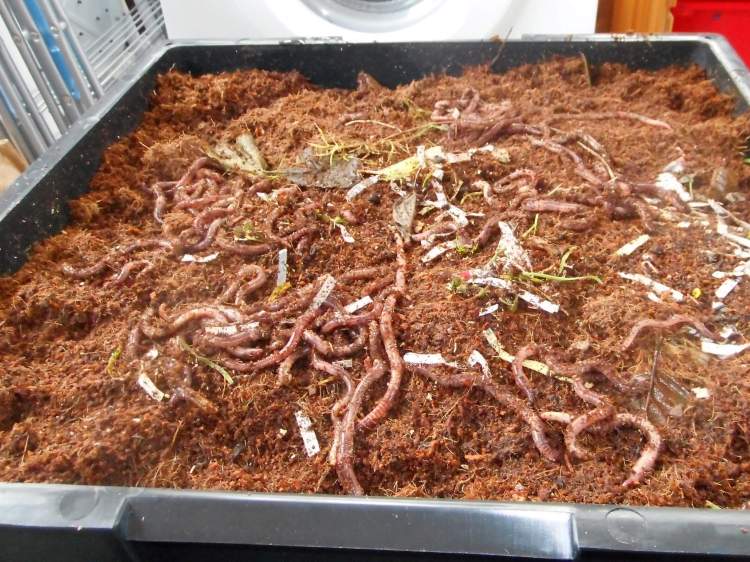
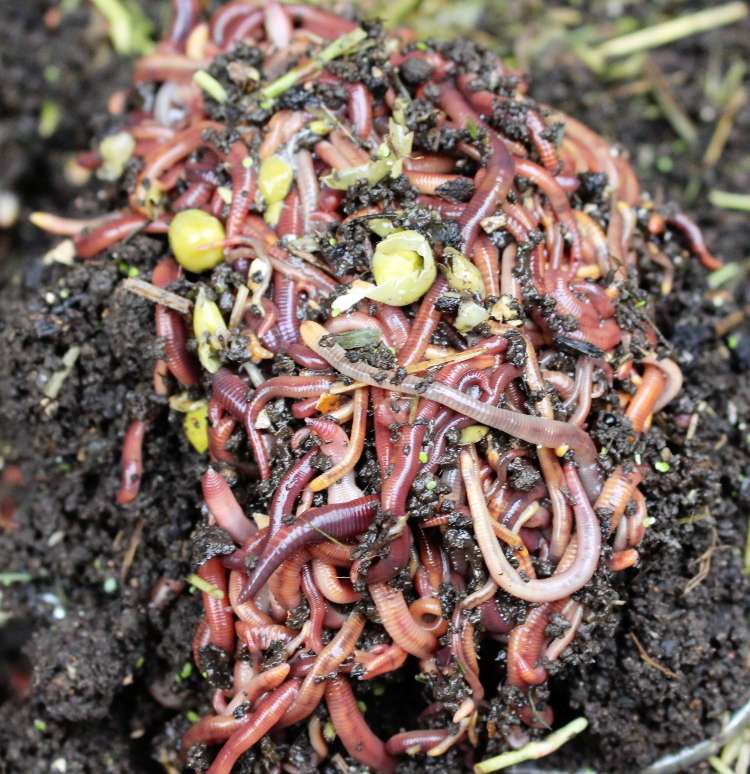
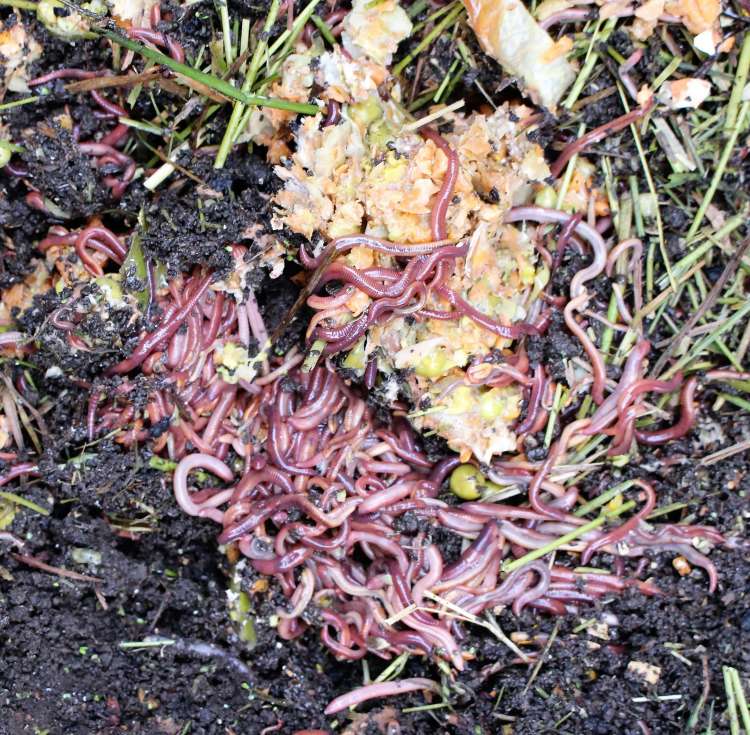
| About our writing & imagery Many of our articles are written by us, drawing on real experience, reflection, and practical work in gardens and places we know. Some pieces are developed with the assistance of AI, used as drafting and research tools rather than as a voice or authority. Featured images may include our own photography, original AI-generated imagery, or—where noted—images kindly shared by other creators and credited accordingly (for example, via Pixabay). All content is shaped, edited, and published by Earthly Comforts, and the views expressed are our own. |

