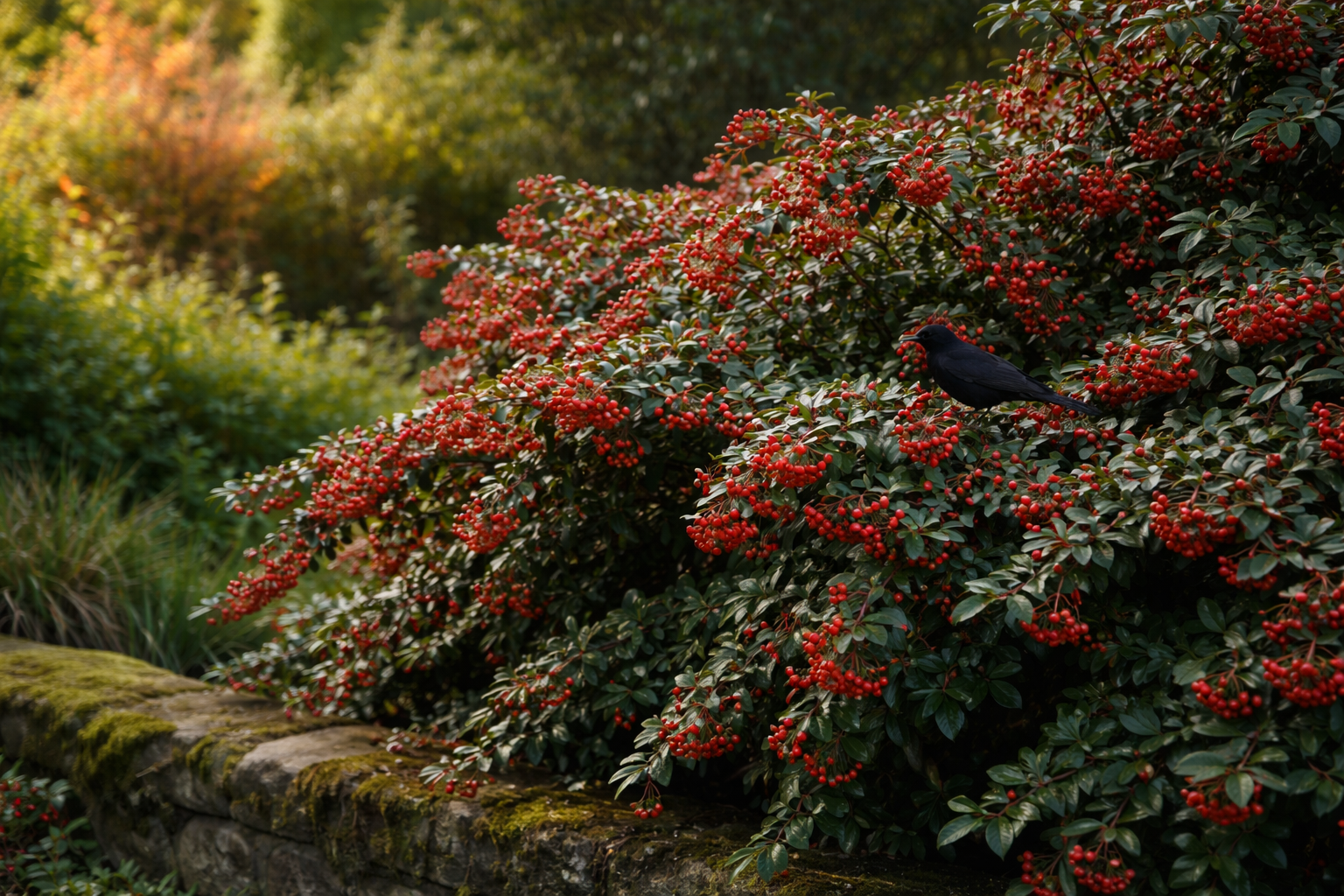
| Seen Properly Cotoneaster is one of those plants that carries a faint sense of apology. People lower their voice when they mention it. They qualify. It came with the house. I know it’s not fashionable. I’ve heard it’s invasive. That reaction alone suggests cotoneaster triggers debate because it straddles the line between usefulness and controversy. Unlike truly useless things, which people simply replace or ignore, cotoneaster provokes discussion—admired quietly by some, criticized loudly by others, and rarely discussed with nuance. As a working gardener, I meet cotoneaster more often than I seek it out. It appears in boundary hedges, bank stabilisation, old municipal planting schemes, and those thin strips of land that nobody quite knows what to do with. It thrives in environments with sporadic attention and poor soil. It survives long after the original planting intention has been forgotten. And it quietly supports life in places that otherwise offer very little. Cotoneaster None of that makes it perfect. But it does make it worth thinking about more carefully than the internet often allows. A Plant That Refuses to Disappear Cotoneaster faces criticism largely because of its persistence in the landscape. It reliably remains where planted and can spread to new areas, which alarms a modern gardening culture sensitive to control, purity, and strict species lists. But persistence is not the same thing as aggression, and it’s certainly not the same as ecological harm in every context. What Cotoneaster does extremely well is occupy space that would otherwise be bare, eroding, or chemically managed. Steep banks, roadside verges, awkward slopes beneath retaining walls — these are not romantic habitats. They are often ignored until something goes wrong. I’ve seen cotoneaster holding soil together where nothing else would establish without irrigation or regular intervention. I’ve also seen those same slopes stripped bare in the name of tidiness, only to be replanted with bark mulch and regret. The plant is useful in a quiet, practical way. This raises a core issue: do we remove plants like cotoneaster simply because they fail to fit current aesthetics or ethical trends, even when they are performing valuable functions? Wildlife, Without the Marketing Language Cotoneaster does not announce its wildlife value with the same enthusiasm as more fashionable plants. It doesn’t come with pollinator badges or seasonal slogans. But if you spend time around it, particularly in late summer and autumn, its role becomes obvious. The flowers, modest and easily overlooked, hum with insect activity in a way that surprises people who’ve only ever looked at the plant as a green mass. Later, the berries arrive — red, orange, sometimes almost coral — and they persist well into the colder months. Blackbirds, thrushes, and other garden birds use them heavily, especially when more delicate food sources have gone. What’s often missed in wildlife discussions is continuity. Cotoneaster reliably provides food and shelter, even in gardens that are otherwise sparse or heavily managed. It doesn’t rely on perfect conditions or careful timing. It shows up, year after year, doing the same job. That consistency matters. Not every garden can be a wildflower meadow or a carefully curated native planting scheme. In many real gardens — rented properties, elderly clients’ homes, small urban plots — cotoneaster may be one of the few stable habitat elements present. Removing it without replacing its function is not automatically a win for wildlife. The Moral Panic Around “Invasive” At some point, cotoneaster crossed an invisible line online. It became shorthand for “bad planting”. Lists circulate. Warnings escalate. Context disappears. The truth is more complicated and less dramatic. Some cotoneaster species self-seed readily in certain environments, particularly where birds disperse berries into disturbed ground. That can be a genuine management issue in specific sensitive habitats, such as chalk grassland or protected sites. In those places, control is sensible and necessary. The mistake is treating context-specific issues as universal. Cotoneaster in a private garden is not the same as cotoneaster spreading uncontrolled in a protected area. Equating all instances flattens a practical discussion into a moral performance. As gardeners, we deal with particular places, not abstract principles. Blanket judgments are easy online. On the ground, we’re working with soil type, surrounding land use, client capacity, and what will realistically be maintained over time. Sometimes cotoneaster is the best or only suitable choice. Sometimes it is helpful, and sometimes it must go. The real skill is in discerning which is true in each case, not in defaulting to slogans. What Working With It Actually Teaches You One of the quieter virtues of cotoneaster is how honestly it responds to management. Neglect it completely, and it will sprawl, thicken, and slowly assert itself. Cut it hard, and it comes back dense but manageable. Maintain it lightly, and it behaves itself. This responsiveness is instructive. It reminds you that plants are not static objects; they are relationships. Cotoneaster doesn’t demand constant attention, but it does respond to being acknowledged. That alone makes it useful in gardens where time, money, or physical ability are limited. I’ve seen older clients relax when they realise their garden doesn’t have to be constantly “improved” to be valid. A well-kept cotoneaster hedge, trimmed once or twice a year, can be enough. It can frame space, shelter birds, and reduce visual noise without becoming a project. There’s a humility in that, and perhaps that’s what makes some people uncomfortable. Cotoneaster doesn’t perform well. It doesn’t flatter the gardener’s ego. It just does the job. Fashion, Forgetting, and the Long View Gardening culture has always had its cycles of enthusiasm and rejection. Plants fall in and out of favour with remarkable speed. What was planted everywhere thirty years ago is often mocked today, only to be rediscovered by the next generation under a different name or narrative. Cotoneaster currently sits in the unfashionable category. That will change. When it does, the plant itself will not have altered. Only our framing of it will. The danger in fashion-led gardening is that it encourages removal before understanding. Whole hedges are taken out, not because they are failing, but because they no longer signal the “right” values. Replacement planting then struggles or requires more water, more inputs, and more ongoing management — all in the name of being seen to do the right thing. There is an environmental cost to that churn, which rarely gets discussed. Keeping an established plant that is doing useful work is often more sustainable than replacing it with something theoretically superior but practically fragile. A Plant That Reflects Us Back to Ourselves Cotoneaster is, in many ways, a mirror. It reflects our discomfort with the ordinary, our tendency to moralise aesthetics, and our habit of confusing lists with thinking. It asks us whether we are managing landscapes or performing beliefs. That doesn’t mean it belongs everywhere. It doesn’t mean criticism is invalid. It simply means the conversation deserves more care than it usually receives. In a world increasingly shaped by quick judgments and simplified narratives, cotoneaster quietly persists, feeding birds, holding soil, and minding its own business. Perhaps that’s why it irritates people. It refuses to be dramatic. As a gardener, I’ve come to respect that. |
| About our writing & imagery Many articles are by us, based on real experience, reflection, and practical work in gardens and places we know. Some pieces use AI for drafting or research, never as voice or authority. Featured images may include our own photography, original AI-generated imagery, or—where noted—images kindly shared by other creators and credited accordingly (for example, via Pixabay). All content is shaped, edited, and published by Earthly Comforts, and the views expressed are our own. |

