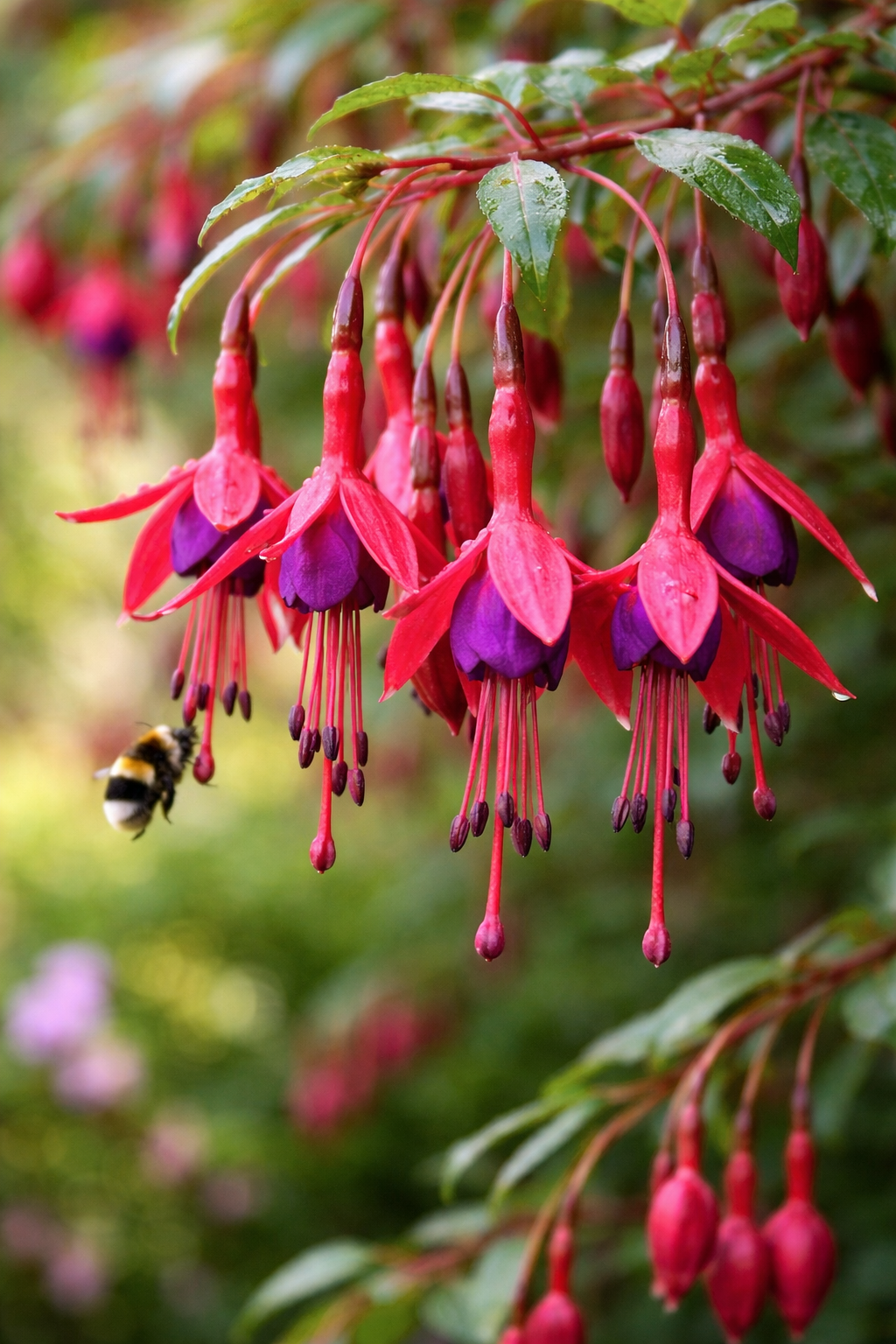
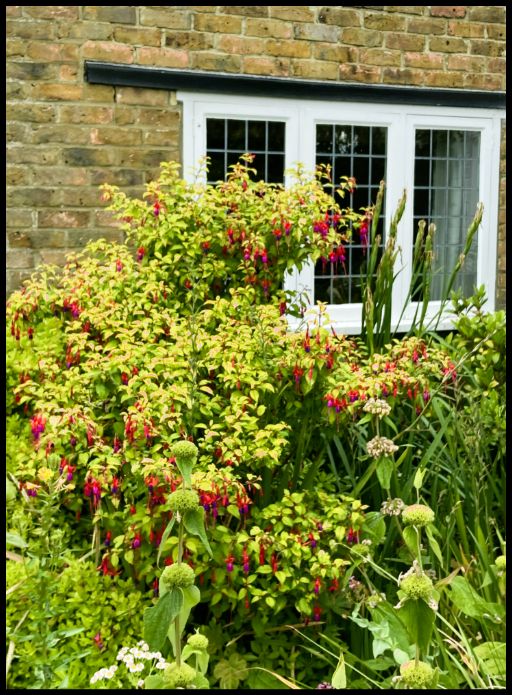
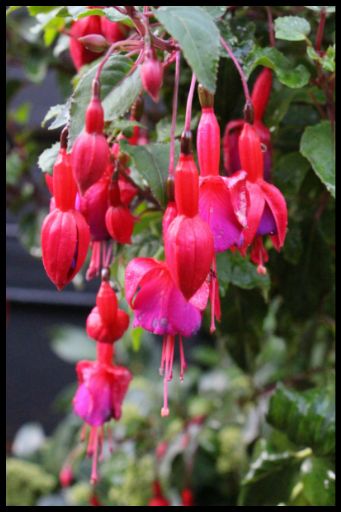
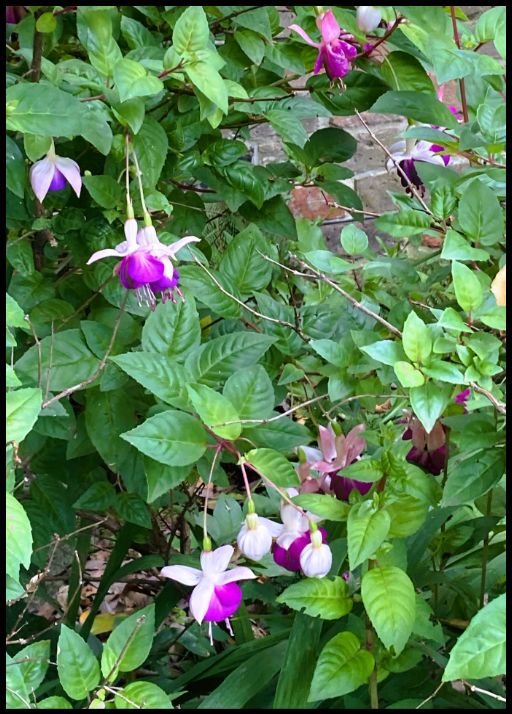
| Fuchsia (hardy forms): movement, wildlife, and the misjudged plant There are plants that shout for attention and plants that simply get on with things. Hardy fuchsias belong firmly in the second camp. They move when the air moves. They arrive late to the year, flower longer than most, and slip quietly back underground without fuss. They are, in practice, far tougher and more accommodating than their reputation allows. And yet—oddly—they are still treated as fragile guests in British gardens, tolerated rather than trusted. I’ve spent years working around fuchsias in ordinary gardens: tight town plots, coastal soils, clay-backed lawns, shady alleys between sheds. I’ve cut them back in January frost, watched them reappear in May, seen them flattened by wind and then rebound, stems knitting themselves upright again by August. Hardy fuchsias do not perform miracles. They do not solve design problems. But they do expose how often we misread resilience, movement, and wildlife value because our expectations are skewed by old labels. The assumption that fuchsias are “tender” persists like a half-remembered warning passed down through generations. It isn’t entirely wrong—many fuchsias are indeed frost-sensitive. But hardy forms, particularly those descended from Fuchsia magellanica and its close relatives, have quietly earned their place in British soil for decades. They are not showbench plants. They are garden plants, shaped by weather and time rather than perfection. The language of movement If you stand near a mature, hardy fuchsia on a breezy afternoon, you notice something unusual. The whole plant moves—not violently, not chaotically, but in a kind of contained sway. Leaves lift and settle. Flowers bob, suspended like punctuation marks at the ends of sentences. This movement is not decorative like grasses; it is functional. Fuchsia stems are flexible because rigidity would cause them to snap. They yield to pressure and then return. That flexibility matters more than we often acknowledge. In coastal gardens, or anywhere wind has space to gather speed, stiff shrubs fail not because they are weak, but because they refuse to bend. Fuchsias bend early and often. They read the weather well. Their structure distributes force rather than resisting it. I’ve seen plants that looked dishevelled after a storm recover within days, flowers continuing as if nothing much had happened. Movement also changes how a plant visually sits in a garden. Hardy fuchsias rarely dominate a space in still photographs, which may explain why they are overlooked in design culture. They are better experienced than captured. They soften edges, animate corners, and draw the eye without anchoring it. In gardens where everything else is clipped, squared, or locked into position, a fuchsia introduces a quiet reminder that gardens are not static objects. Fragility as a misunderstanding The belief that fuchsias are delicate usually stems from one of two experiences: a pot-grown specimen lost to frost, or a young plant cut down by a hard winter before it had time to establish. Both are understandable. Neither tells the whole story. Hardy fuchsias survive not by holding onto their above-ground presence, but by letting go of it. The woody framework that looks so promising in autumn is not precious. It is expendable. In colder winters, that framework may die back to ground level. In milder ones, it may persist. Either way, the plant’s real resilience lies below the surface, in a root system adapted to retreat and return. This is where expectation causes trouble. Gardeners who equate survival with evergreen presence see fuchsias “die” each winter and assume they have failed. In reality, the plant is behaving exactly as it should. It is not weak; it is pragmatic. There is a parallel here with how we judge gardens more broadly. We tend to value continuity over rhythm, presence over process. Hardy fuchsias ask for a different reading. They are seasonal in a way that feels old-fashioned now—absent, then generous, then gone again. If you can accept that cycle, they reward patience rather than constant intervention. Wildlife, quietly and reliably Hardy fuchsias rarely feature on lists of pollinator superplants, and that’s a mistake born of timing rather than quality. They flower when many other shrubs have finished or are winding down. From mid-summer into autumn, their dangling flowers become steady refuelling points for bees, hoverflies, and late-flying insects. What I’ve noticed, year after year, is not a frenzy but a consistency. Fuchsias do not draw crowds in the way lavender does on a hot day. Instead, they support a background hum—regular visits, repeated returns. In gardens where space limits variety, that reliability matters. Birds, too, take notice, particularly as the season shifts. The small, dark fruits that follow flowering are rarely remarked upon by gardeners, but they disappear quickly enough. In hedged or mixed borders, hardy fuchsias can form part of a loose feeding corridor, linking shrubs rather than standing alone. Their structure also offers something subtler: shelter. The flexible, twiggy framework provides cover without density. Insects move through it easily. Birds perch, dip, and move on. It’s a different sort of habitat from the thick, impenetrable mass of evergreen hedging—and one that fits better into smaller, lived-in gardens. Colour without shouting Fuchsia colour is often misunderstood because it is associated with excess—hot pinks, purples, and clashing tones. That image usually comes from bedding displays or hanging baskets, where intensity is the point. Hardy forms behave differently in the ground. In dappled shade, especially, their colours deepen rather than glare. The reds darken, the purples soften, and the whites read as cool rather than stark. Against brick, weathered timber, or mature foliage, fuchsias settle into the background more than expected. They do not demand a scheme; they adapt to one. This adaptability extends to light. Full sun can scorch them in exposed sites, but partial shade often produces better plants—longer stems, richer colour, fewer stressed leaves. In the sorts of gardens most people actually have—north-facing plots, narrow side returns, spaces under light tree cover—hardy fuchsias often outperform more fashionable shrubs. There is a lesson here about choosing plants for conditions rather than aspirations. Fuchsias do not need centre stage. They are content to work at the edges, where light shifts and expectations are lower. Establishment and patience One of the quieter truths about hardy fuchsias is that they improve with time. The first year can be underwhelming: a few stems, hesitant flowering, a sense that the plant is holding back. The second year is better. By the third, something clicks. Growth becomes confident, flowering extends, and the plant begins to shape its space rather than simply occupy it. This delayed confidence is not a flaw. It is an investment strategy. Fuchsias prioritise root development early on, particularly in heavier soils. Once that foundation is secure, top growth becomes more generous. In practice, this means they are ill-suited to impatient gardening. If you expect immediate impact, you will likely be disappointed. If you allow them to settle, they often outlast more dramatic introductions. I’ve seen hardy fuchsias persist through changes of ownership, periods of neglect, and border reworkings, quietly re-emerging each year regardless. Pruning as conversation, not instruction There is a tendency to treat pruning as a set of rules. With hardy fuchsias, it works better as a conversation. The plant tells you what survived winter. You respond accordingly. In some years, that response is drastic: cutting everything back to a low framework. In others, it’s selective—removing dead tips, shaping lightly, leaving older wood to support earlier flowering. No two winters produce the same result, and rigid schedules rarely help. What matters more is restraint. Hardy fuchsias do not benefit from constant correction. Their natural form is loose and layered. Over-pruning can strip them of character and reduce their wildlife value. Left alone too long, they can become leggy, but even then, renewal is usually possible. This give-and-take suits gardeners who prefer observation to instruction. It rewards familiarity rather than expertise. Correcting the assumption The common assumption is that hardy fuchsias are risky plants—unreliable, borderline, best avoided unless conditions are perfect. My experience suggests the opposite. They are forgiving plants that suffer mainly from misunderstanding. They dislike waterlogged soil, but so do many shrubs we happily recommend. They resent extreme exposure, but again, that’s hardly unique. What they do require is a willingness to let them behave like shrubs rather than ornaments. Once that shift happens, they reveal strengths that are increasingly relevant: flexibility in changing weather, value to late-season wildlife, tolerance of imperfect sites, and an ability to coexist rather than dominate. Limits and context None of this is to claim that hardy fuchsias belong everywhere. In very dry, south-facing sites, they struggle. In tightly clipped, formal gardens, they can look out of place. They are not structural anchors and never will be. But in the mixed, evolving gardens most people actually maintain—gardens shaped by work schedules, weather, and gradual change—they fit naturally. They forgive missed visits, reward attention when given, and accept a degree of neglect without protest. Their fragility, it turns out, is mostly a projection. We see pendulous flowers and assume weakness. We watch winter dieback and assume failure. We confuse softness with vulnerability. Hardy fuchsias challenge that reading, quietly, year after year. An ending without instructions I don’t recommend hardy fuchsias because they are fashionable or because they solve problems. I value them because they behave honestly. They respond to conditions rather than ideals. They move when the wind tells them to. They disappear when the season calls for it. And they return without fuss when the time is right. In a gardening culture increasingly driven by immediacy and performance, that kind of steadiness feels worth paying attention to. |




| About our writing & imagery Most articles reflect our real gardening experience and reflection. Some use AI in drafting or research, but never for voice or authority. Featured images may show our photos, original AI-generated visuals, or, where stated, credited images shared by others. All content is shaped and edited by Earthly Comforts, expressing our own views. |

