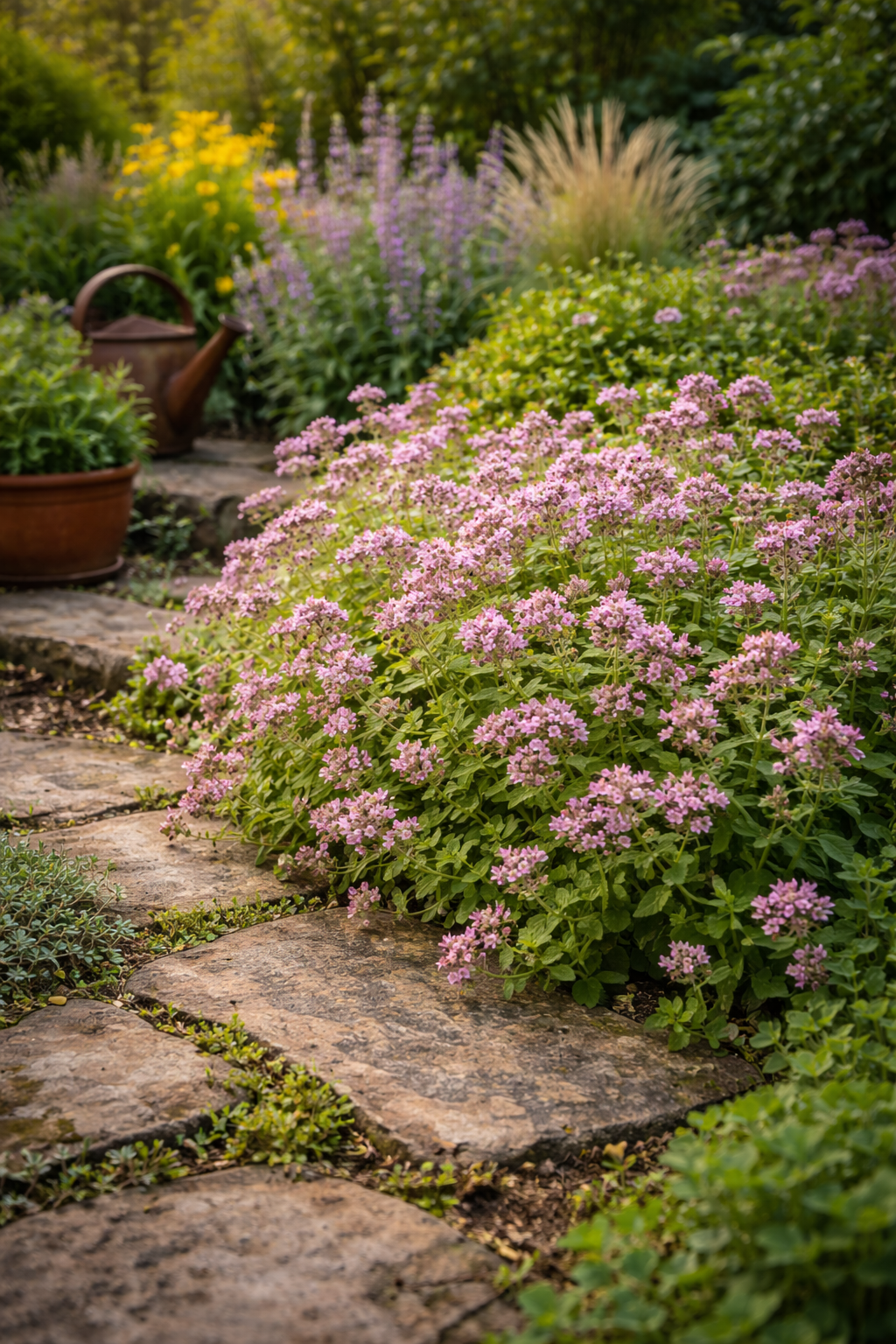
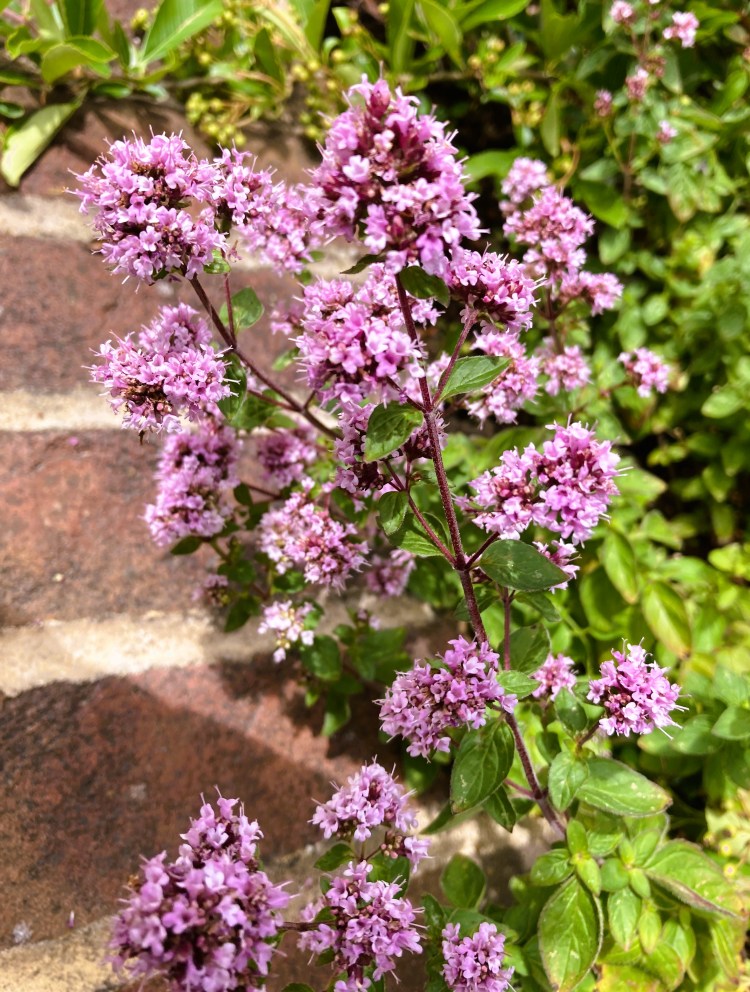
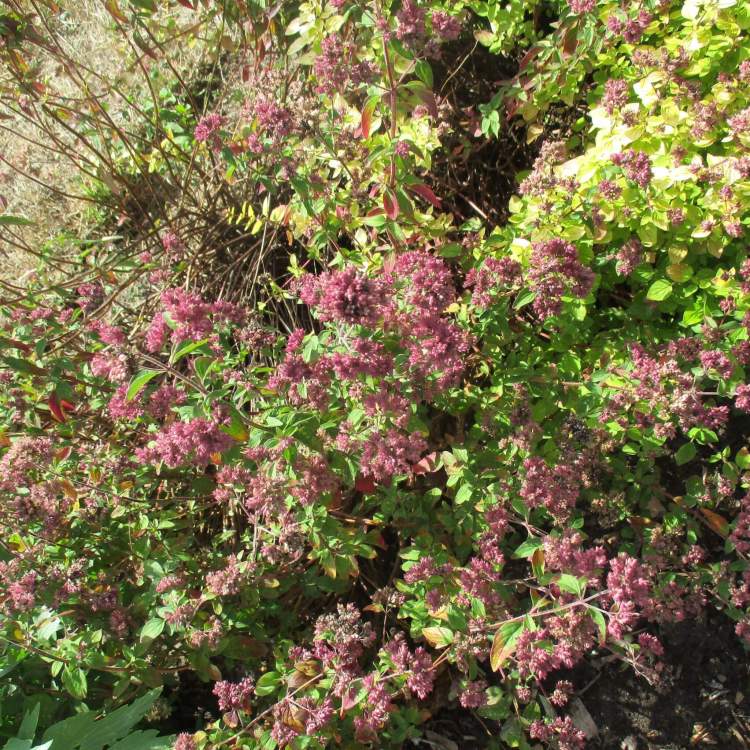
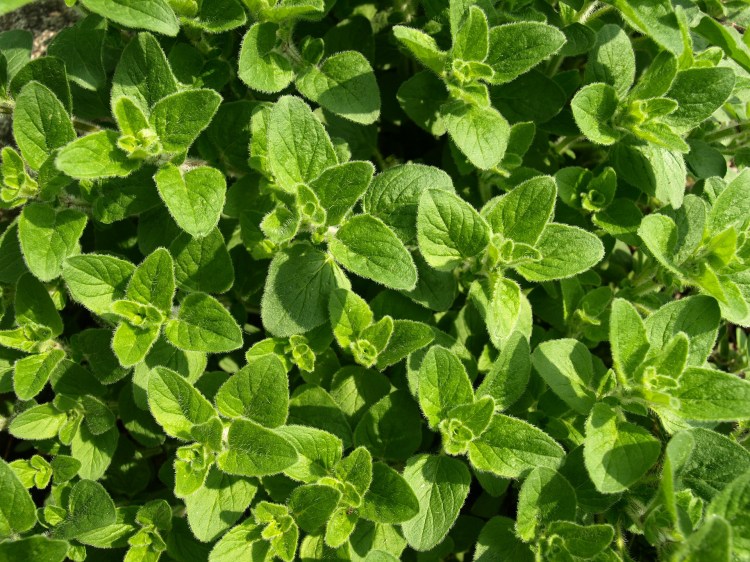
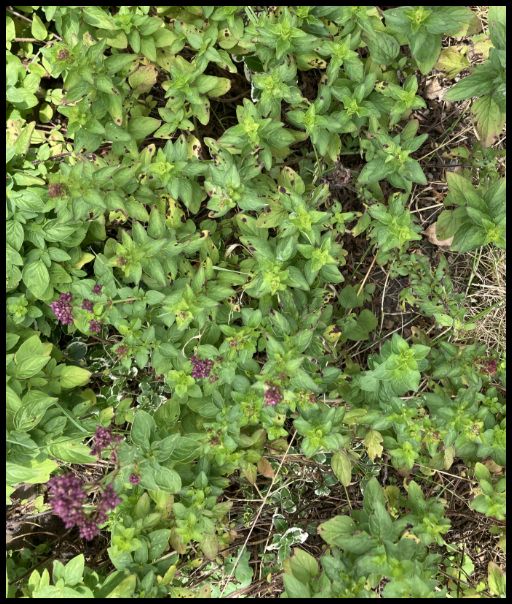
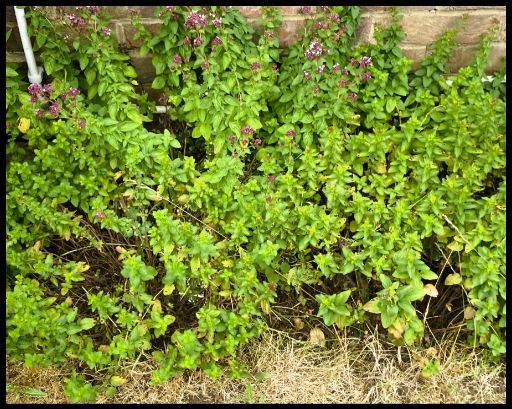
| Underfoot, oregano is easy to miss. It doesn’t announce itself in the way roses do, or demand attention like a peony at full stretch. It sits low, spreads sideways, threads itself into cracks and edges, and only later — often when you’re already standing above it — does it rise up into flower. By then, it’s too late to ignore. Bees are everywhere. The air smells faintly warm and herbal. The plant you thought of as culinary has quietly become structural. Oregano is one of those plants that suffers from familiarity. We recognise the name. We assume we understand the plant. It lives in kitchens, jars, labels, and recipes. In gardens, it’s often reduced to a corner of the herb bed. Neatly trimmed, harvested occasionally, and forgotten. But Origanum — particularly Origanum vulgare, the common oregano — is not just a herb. It’s a landscape plant. A boundary plant. A dry-soil specialist. In my experience, it is one of the most generous small plants you can grow. I’ve encountered oregano in planned herb gardens and in places no one ever planted it: between paving slabs, at the foot of old walls, creeping along sun-warmed edges. It thrives where other plants hesitate. That alone should tell us something. Oregano doesn’t need much from us, but it gives a surprising amount back—if we let it be itself. Not a shrub, not quite a groundcover Oregano occupies an awkward middle ground in garden classification. It’s not tall enough to be a shrub, not dense enough to be a classic groundcover, and not ornamental in the traditional sense. That ambiguity is part of its strength. It weaves rather than dominates. In a border, oregano softens hard edges. It spills gently without becoming invasive, unlike mint. Its stems are upright when flowering, lax when not, giving it a shifting form across the season. Early on, it’s mostly foliage — green, modest, quietly present. By midsummer, the flowers lift it into another role entirely. This change in character is something I’ve come to appreciate over time. Many plants have a single performance window; oregano has phases. The foliage stage matters just as much as the flowering stage, but in a subtler way. The leaves knit the soil, shade it lightly, and keep things moving at ground level. Then, when the flowers arrive, the plant steps up a register, connecting soil to sky. Gardeners sometimes complain that oregano “gets leggy” or “sprawls too much.” I think that’s often a sign it’s being asked to behave unnaturally — clipped into a tight shape or confined where it wants to roam. Given space, oregano’s movement feels intentional rather than messy. The flowers change everything. If oregano never flowered, it would still be useful. But when it does, it becomes something else entirely. The flower heads — small, rounded clusters of pink to purple — aren’t individually showy. It’s the scale that matters. Hundreds of tiny flowers, opening over weeks, provide a steady source of nectar when gardens can be surprisingly patchy. This is one of the first grounded observations I’d offer from practice: oregano is one of the most reliable mid- to late-summer pollinator plants I know. Not the flashiest, not the rarest, but one of the most consistently busy. Stand near flowering oregano on a warm day, and you’ll see bees of different sizes and species, hoverflies, and the occasional butterfly. It’s not a fleeting visit; insects linger. There’s also something democratic about oregano’s flowers. They’re accessible. Unlike deep tubular blooms that favour specialists, oregano’s open structure welcomes a wide range of insects. In a mixed garden, that matters. It supports diversity rather than selectivity. And yet, because the flowers are subtle, oregano is often neglected in ornamental planning. People select plants that please humans first, assuming wildlife will follow. Oregano quietly disproves this: function can lead, and beauty can follow for those paying attention. Its presence, not performance Oregano’s scent is another thing we think we know. We associate it with dried leaves, concentrated flavour, and heat. In the garden, the scent is softer, greener, more dispersed. You don’t smell oregano from across the garden; you smell it when you brush past, when the sun warms the leaves, when rain releases it into the air. This kind of scent operates differently from overtly fragrant plants. It’s not about an announcement, but about an encounter. It rewards proximity. That makes oregano particularly suited to paths, seating edges, or places where hands and knees might occasionally meet foliage. It’s a plant you discover rather than admire from afar. One trade-off here is that if you harvest oregano heavily for the kitchen, you may reduce flowering and scent in the garden. This isn’t a problem, just a choice. Oregano can be productive or expressive, but rarely both at once. In practice, I’ve found it’s worth growing more than one patch — one to cut, one to let go. A plant that prefers restraint Another assumption worth gently challenging is that oregano needs regular attention to stay tidy and useful. In fact, it often performs best when left largely alone. Overfeeding produces lush growth with weaker flavour and less resilience. Overwatering encourages softness. Over-pruning disrupts its natural rhythm. Oregano evolved in poor, well-drained soils, often on slopes and exposed ground. It expects scarcity. When we give it richness, it responds politely but loses its edge. This is something I’ve observed repeatedly: oregano grown in gravelly, dry soil develops a stronger scent, firmer growth, and better flowering than plants coddled in compost-heavy beds. That doesn’t mean oregano is delicate. Quite the opposite. It tolerates drought, heat, and neglect with remarkable calm. Once established, it rarely complains. This makes it a quietly important plant in the context of a changing climate and water use. It asks for less at a time when many gardens are being forced to reconsider abundance. Spreading, but not taking over. Oregano spreads. This is often said with a hint of warning, but it’s worth unpacking what that actually means. Unlike aggressive spreaders that dominate through runners or deep roots, oregano expands slowly and visibly. You can see where it’s going. You can intervene easily. In practice, oregano’s spread often improves a planting rather than undermines it. It fills gaps, softens transitions, and creates continuity between more assertive plants. I’ve seen it thread between grasses, shrubs, and perennials without overwhelming them. When it does outgrow its welcome, lifting or trimming it back is straightforward. This controlled spread makes oregano effective in informal designs, where movement and change are intended. It’s less suitable for rigid layouts, where every inch is planned. Again, context matters. and time. One of the quieter pleasures of oregano is how it marks time. Early in the year, it’s one of the last herbs to wake up, often looking unimpressive while others surge ahead. Then, suddenly, it catches up. By midsummer, it’s in its element. By autumn, it’s still feeding on insects while many plants have finished. In winter, it retreats, leaving little trace above ground. This cycle teaches patience. Oregano doesn’t reward early fussing. It asks you to trust that it will arrive when it’s ready. For gardeners used to managing every stage, that can feel uncomfortable. But over time, I’ve come to appreciate plants that don’t rush to meet our expectations. Culinary use, as a side note It would be odd not to mention oregano’s role in the kitchen, but I think it works best when that role is secondary. Fresh oregano has a different character from dried — brighter, less aggressive — and it pairs well with restraint. But in the garden, its value extends beyond harvest. One insight from experience is that flowering oregano loses some culinary intensity. That’s not a flaw; it’s a shift in purpose. When the flowers come, the plant is feeding others. We don’t always need to be the primary beneficiaries. Living with oregano Living with oregano means accepting a plant that doesn’t perform for attention. It rewards observation. It’s not tidy in the conventional sense. But it’s coherent. Its growth makes sense once you stop trying to control it too tightly. In a well-used garden — one with paths, pauses, edges — oregano feels at home. It belongs to the spaces between decisions. It reminds us that not every plant needs to be dramatic to be meaningful. In an age of curated gardens and instant results, oregano offers something slower and steadier. It doesn’t insist. It waits. Quietly, it does its work. |
| Companion side note: oregano and marjoram — close kin, different characters Oregano and marjoram are often treated as interchangeable. They aren’t — though the confusion is understandable. Botanically, marjoram is a type of oregano, but in the garden and the kitchen, they part company very quickly. Common oregano (Origanum vulgare) is the tougher of the two. It’s reliably hardy in the UK, perennial, and comfortable in poor, dry soil. It spreads gently, flowers freely, and tolerates moderate neglect. Marjoram (Origanum majorana), often called sweet marjoram, is softer in both habit and temperament. It’s usually grown as a tender perennial or annual here, dislikes cold, wet winters, and prefers better drainage and a little protection. That difference in resilience matters. Oregano survives being forgotten. Marjoram rarely does. The flavour split mirrors the growing habit. Oregano is assertive — warm, peppery, slightly bitter — and holds its own through heat and long cooking. Marjoram is quieter: sweet, floral, almost delicate. It blends rather than dominates, and its flavour is easily lost if handled roughly. Fresh marjoram shines briefly; dried oregano endures. Flowering reinforces the distinction. Oregano produces abundant pink-purple blooms that attract large numbers of insects, making it one of the more reliable mid-summer pollinator plants in a garden. Marjoram flowers too, but more modestly and for a shorter window. If wildlife value is the priority, oregano carries more weight. There’s a small myth worth gently setting aside: that marjoram is simply a refined or superior version of oregano. In reality, it’s just more specialised. Oregano evolved to persist in open, exposed places; marjoram evolved to thrive with care and closeness. Neither replaces the other. In practice, they tend to settle into different roles. Oregano belongs in the wider garden — allowed to flower, spread, and support insects. Marjoram makes more sense near the kitchen, often in a pot, where its softness and subtlety can be appreciated up close. They share a name. They don’t share a nature. |
| About our writing & imagery Most articles reflect our real gardening experience and reflection. Some use AI in drafting or research, but never for voice or authority. Featured images may show our photos, original AI-generated visuals, or, where stated, credited images shared by others. All content is shaped and edited by Earthly Comforts, expressing our own views. |

