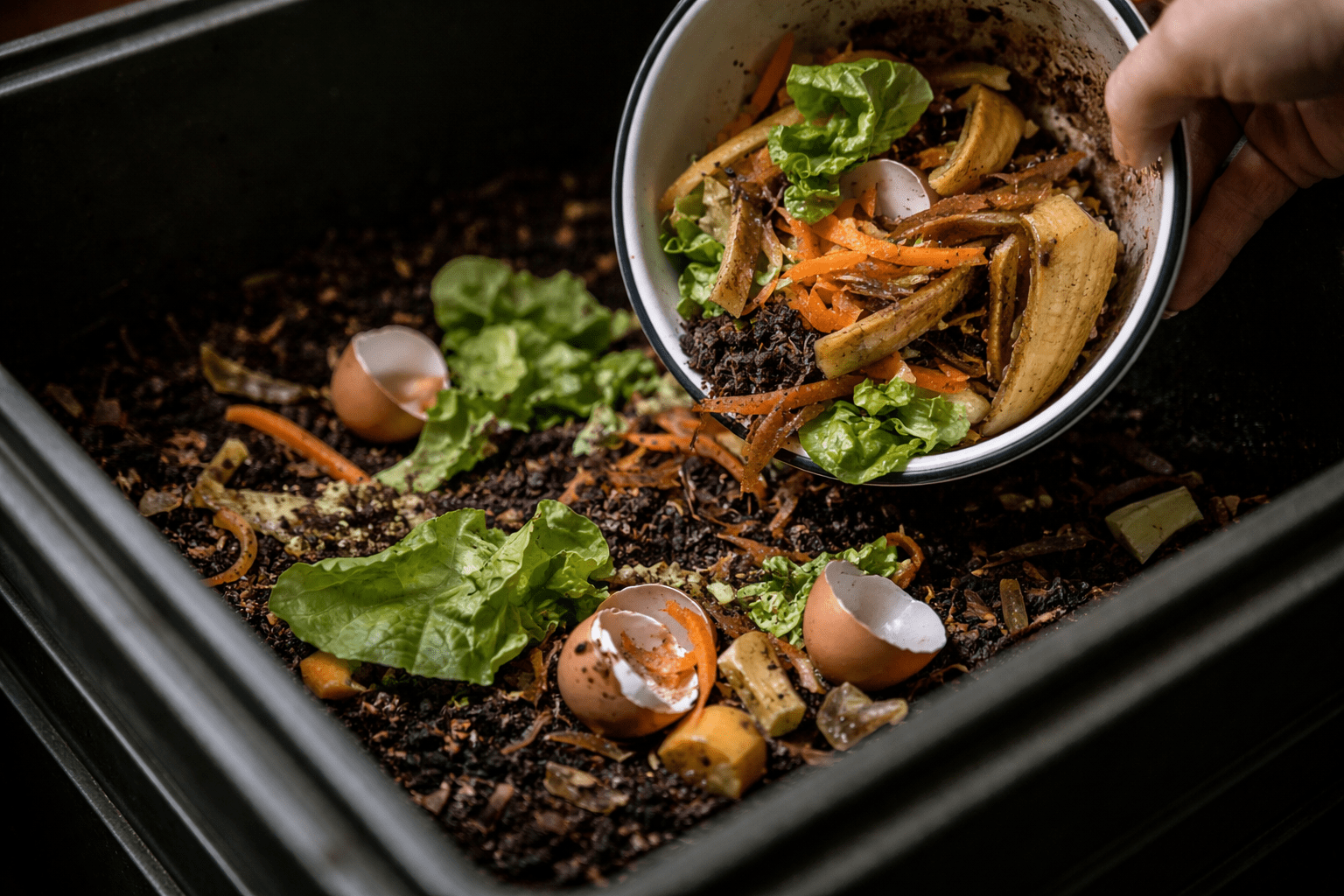
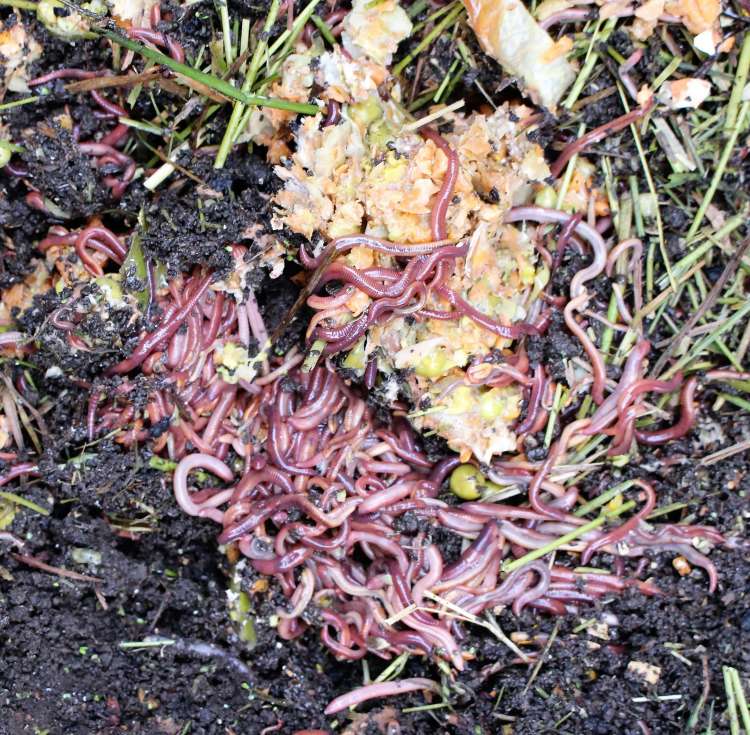
| Feeding Feeding is where most worm farms begin to drift off course, not because people don’t care, but because feeding feels like participation. It’s the visible part of the process, the moment where human intention meets the system directly. You add something and expect a response. When that response doesn’t arrive quickly enough, the instinct is almost always to add more. Worms do not experience feeding as an event. They experience it as a gradual change in their environment. Food is not something they rush towards; it becomes habitable over time. Fresh waste, however benign it looks to us, is often hostile at first. It can be cold, acidic, unstable, or simply uncolonised. Worms rarely engage with it directly. They wait for bacteria and fungi to move in, soften it, moderate it, and make it safe. When feeding goes wrong, it’s usually because the pace of addition outstrips the pace of preparation. One of the most persistent internet ideas is that worms are hungry like pets, that they need regular meals delivered on a schedule. In reality, worms are far closer to grazers than feeders. They work along edges, not piles. They respond to gradients, not portions. A bin with less food but more consistency almost always outperforms one that is frequently topped up. Uneaten food is not a failure; it’s information. It tells you the system is still catching up. Coffee grounds are a good example of how feeding myths take hold. They’re often described as either miraculous or disastrous, with very little space in between. In practice, they’re simply concentrated. Fresh grounds are cold, fine, and biologically active. Added in bulk, they compact, exclude air, and acidify small zones. A thin layer, aged or mixed, is usually unremarkable. The problem is rarely the material itself; it’s scale and timing. Worm farms struggle not with ingredients, but with excess. The same applies to quantity more broadly. People often ask how much a worm bin can handle, as if there’s a fixed capacity that can be calculated and met. Capacity in a living system is not static. It expands and contracts in response to temperature, moisture, microbial activity, and worm density. Feeding to yesterday’s capacity in today’s conditions is one of the easiest ways to destabilise a bin. Worms slow down in cold weather, during heat, or after disturbance. Feeding should slow with them. This adjustment feels counterintuitive because it appears to be neglect, but it’s closer to attentiveness. There’s also a tendency to pre-process food aggressively — chopping, blending, freezing — under the assumption that faster breakdown is always better. Sometimes it is. Often it isn’t. Highly processed inputs can overwhelm microbial populations just as easily as whole scraps can stall them. What matters more than particle size is whether the material has had time to settle into the system. Worms don’t benefit from speed if the rest of the bin can’t keep up. One of the quieter trade-offs in feeding is control versus resilience. A tightly managed feeding regime can produce predictable outputs for a while, but it leaves little room for error. A more relaxed approach, where food arrives irregularly but in modest amounts, tends to build systems that recover on their own. Worms are remarkably good at adjusting when given space. They are far less forgiving when constantly pushed to perform. Feeding is also where human habits leak into the bin. Clearing the kitchen counter feels productive. Disposing of waste feels virtuous. Worm farms are often treated as endpoints for guilt rather than as systems with limits. When feeding becomes a way to solve a human problem rather than support a biological one, imbalance follows. Worms don’t care how tidy the kitchen is. They care whether the environment remains stable. Over time, experienced keepers feed less, not more. They learn to wait until food is mostly gone before adding anything new. They notice where worms gather and place food accordingly. They accept that some weeks nothing needs to be added at all. This isn’t minimalism for its own sake; it’s responsiveness. Feeding becomes an adjustment, not an action. A well-fed worm farm doesn’t look busy. It looks settled. Food disappears gradually. Smells remain neutral. Worms spread themselves thinly rather than clustering in desperation. If feeding feels urgent, something has already slipped out of balance. The worms are telling you, quietly, that they work best when no one is trying to hurry them along. |
| About our writing & imagery Many of our articles are written by us, drawing on real experience, reflection, and practical work in gardens and places we know. Some pieces are developed with the assistance of AI, used as drafting and research tools rather than as a voice or authority. Featured images may include our own photography, original AI-generated imagery, or—where noted—images kindly shared by other creators and credited accordingly (for example, via Pixabay). All content is shaped, edited, and published by Earthly Comforts, and the views expressed are our own. |

