| A 5-Part Series |
| A curated exploration of Britain’s most iconic, curious, and ecologically important insects |
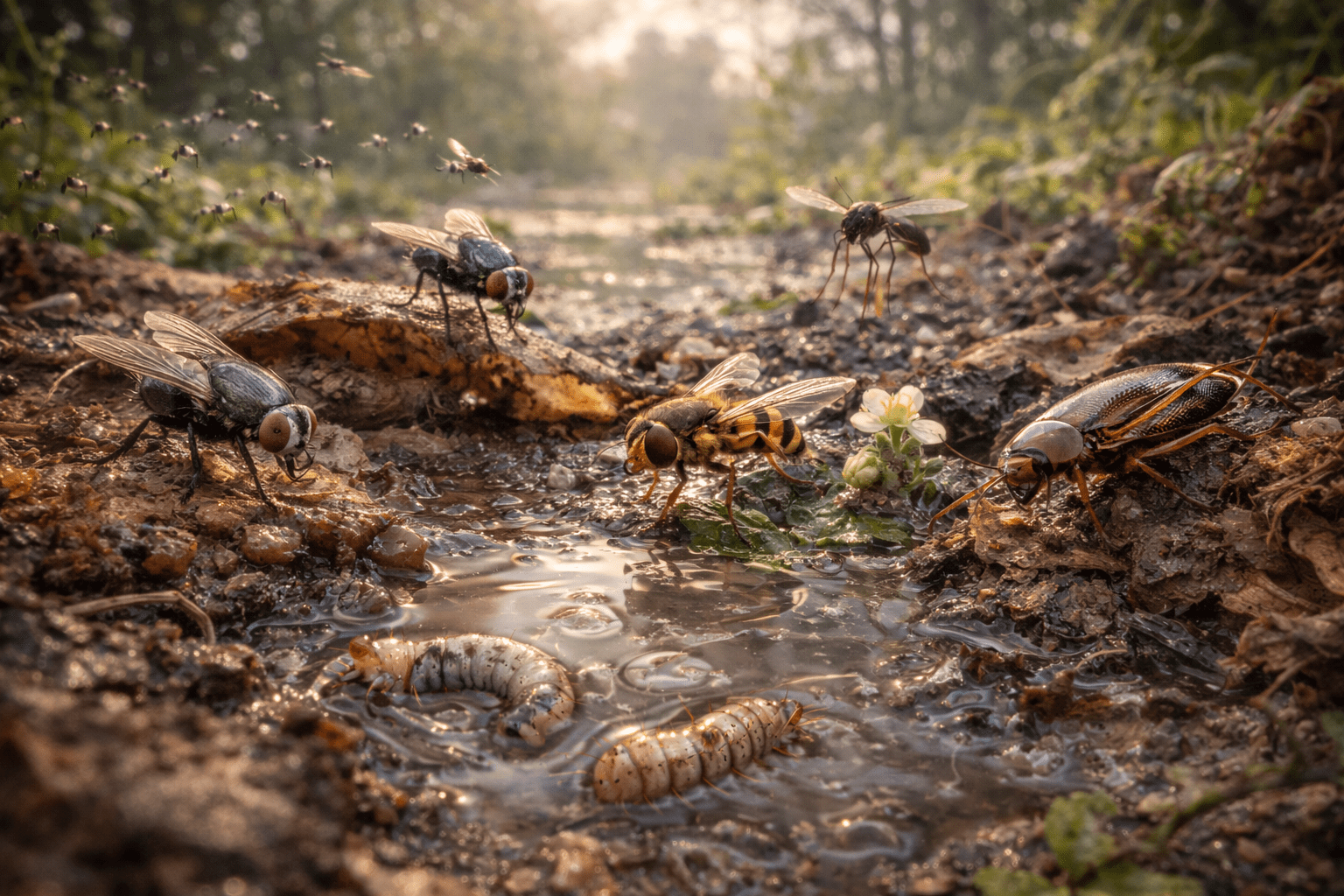
| Part 4 Flies, Roaches & Overlooked Species Some insects only gain attention when they cause discomfort. They buzz too close, bite unexpectedly, or appear where they are not wanted. As a result, flies, roaches, and other small, fast-breeding insects are often framed purely as nuisances — problems to be controlled rather than lives to be understood. In reality, many of these species sit at the core of Britain’s ecological functioning. They are recyclers, regulators, and connectors, operating in places where decay, moisture, and transition meet. Without them, waste would accumulate, food webs would fracture, and biological processes would slow to a crawl. This is the world of overlooked insects — not charismatic, rarely celebrated, but essential. Houseflies and blowflies are among the most misunderstood insects in Britain. Associated with waste, carcasses, and unpleasant smells, they are often treated as symbols of uncleanliness. Yet this association reflects their role, not their failure. Blowflies, in particular, are specialists in rapid decomposition. Drawn to dead animals and organic waste, they lay eggs that hatch quickly into larvae capable of breaking down tissue at remarkable speed. This process reduces the time that decaying matter remains in the environment, limiting the spread of harmful bacteria and returning nutrients to the soil. Houseflies perform a similar function on a smaller scale, feeding on organic matter, manure, and other waste products. Their fast, efficient life cycles are not accidents — they are evolutionary solutions to a problem every ecosystem faces: what to do with death and decay. In natural systems, flies are among the first responders. Remove them, and the consequences ripple outward — slower decomposition, increased disease risk, and nutrient bottlenecks that affect plant growth. Hoverflies occupy a strange position in public perception. With their black-and-yellow markings and darting flight, they are frequently mistaken for wasps and avoided accordingly. In truth, they are harmless — unable to sting and uninterested in confrontation. More importantly, hoverflies are among Britain’s most effective pollinators. Adults feed on nectar and pollen, visiting a wide range of wildflowers and crops. In some habitats, they rival bees in pollination efficiency, particularly where bee numbers are low. Their larvae add a second layer of value. Many species develop as aphid predators, consuming large numbers of plant pests during their growth. This dual role — pollinator above ground, pest controller below — makes hoverflies quietly indispensable in gardens, farmland, and hedgerows. They demonstrate how appearance can mislead, and how ecological importance often hides behind mistaken identity. Mosquitoes have a bad reputation worldwide, but in the UK, they occur in far fewer numbers and play a different role. While their bites can be irritating, British mosquitoes are not major disease vectors, and their populations are tightly tied to wetlands, ponds, and damp habitats. Ecologically, mosquitoes are food. Their larvae play a significant role in aquatic ecosystems, feeding fish, amphibians, and invertebrates. Adult mosquitoes are consumed by bats, birds, and other insects, particularly during summer breeding seasons when protein demand is high. Their presence signals functioning wetland systems. Drain or degrade these habitats, and mosquitoes vanish — along with many other, less visible species. As with many overlooked insects, their disappearance would not bring ecological relief, but imbalance. Few insects are as universally disliked as cockroaches. In Britain, this dislike is largely misplaced. The cockroaches that occasionally appear indoors are non-native introductions, transported through global trade and adapted to heated buildings. Britain’s native cockroach species live outdoors. They inhabit leaf litter, compost, rotting wood, and damp environments, where they feed on decaying organic matter. In doing so, they contribute to decomposition and nutrient cycling in much the same way as woodlice or beetles. They do not infest homes, spread disease, or seek human proximity. Their negative reputation is a case study in how imported species and cultural narratives can overshadow native ecological roles. March flies and midges are deeply seasonal insects, their emergence closely tied to temperature, moisture, and daylight. They appear suddenly, often in large numbers, then fade just as quickly. March flies, known for their painful bites, are strong fliers with keen eyesight. While unpleasant for humans and livestock, they play roles as pollinators and prey, particularly in wet grasslands and near water. Midges, especially common near rivers, lakes, and coastal areas, form enormous swarms that support entire food webs. Fish rely on their larvae, while birds and bats depend on adult midges during breeding seasons. Their sheer abundance compensates for their small size. These insects remind us that ecological value is not measured in comfort. What irritates us often sustains something else. Flies, roaches, and similar insects rarely earn appreciation. They do not photograph well, inspire affection, or fit neatly into conservation campaigns. Yet they are the connective tissue of ecosystems — accelerating decay, feeding predators, pollinating plants, and regulating populations. Without them, waste would accumulate, nutrients would stall, and life would slow down. They operate in the margins: damp places, dark corners, brief seasons, and uncomfortable proximity to decay. In doing so, they keep systems moving. To ignore them is to misunderstand how nature works — not as a series of highlights, but as a continuous process of breakdown and renewal. |
Unless stated, featured images are my own work, created independently or with the assistance of AI.

