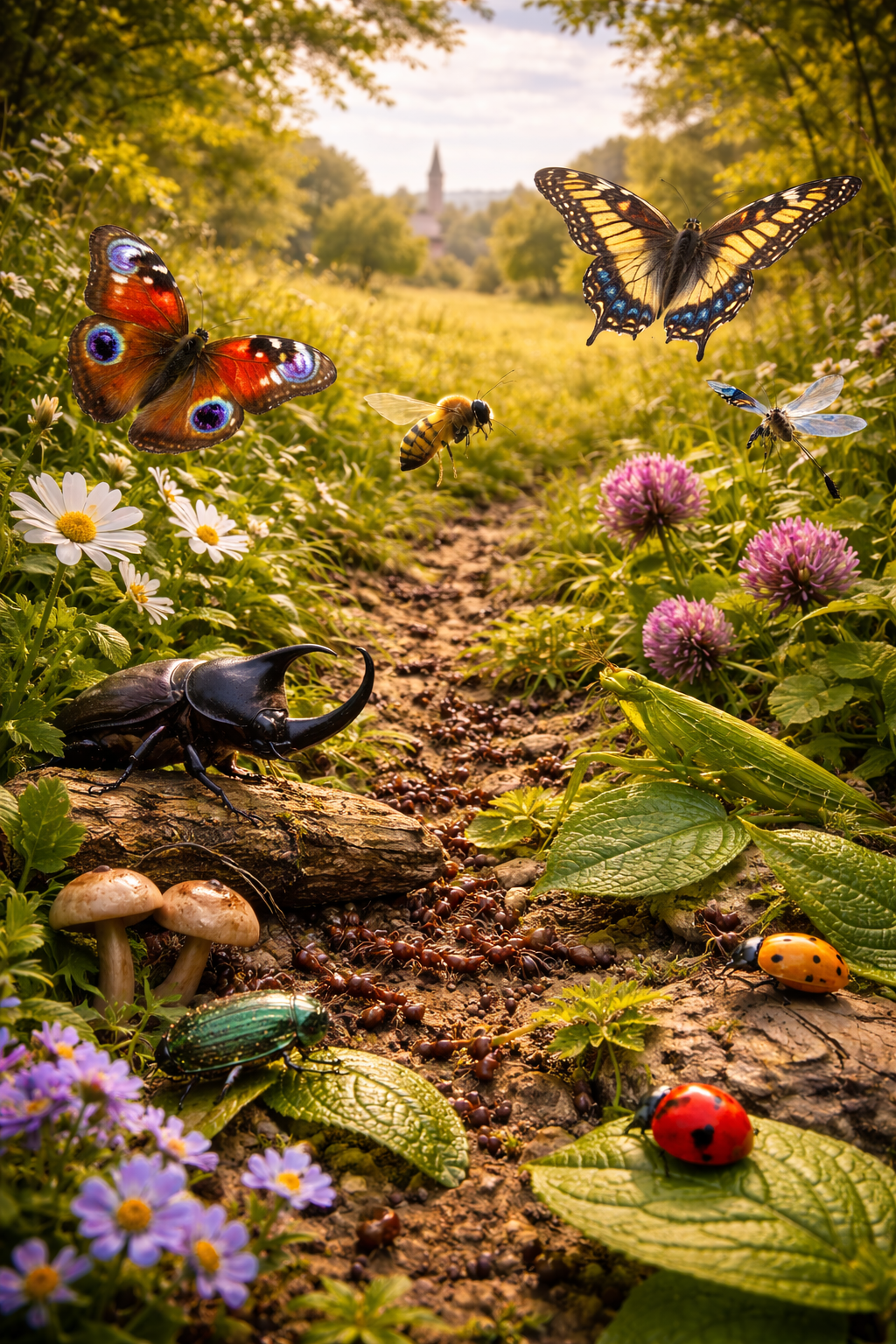
| A 5-Part Series |
| A curated exploration of Europe’s most iconic, curious, and ecologically important insects |
| Introduction — Europe’s Insect Continent Europe’s insects live in landscapes shaped, cut, grazed, paved, drained, replanted, and revisited for millennia. Very little here is untouched. Fields follow old boundaries, hedgerows trace forgotten property lines, forests are worked and reworked, and towns sit atop layers of earlier lives. And within all of this, insects endure. This series is not about rarity or spectacle. It is about persistence. European insect life has adapted not by withdrawing from human influence, but by threading itself through it. Many species rely on long-established rhythms: seasonal cutting, grazing cycles, decaying wood left in place, damp margins beside water, and walls that crack slowly rather than being sealed tight. These insects do not thrive in extremes. They depend on continuity, patience, and restraint. Across five posts, this series looks at insects not as isolated species, but as systems — quiet engineers, recyclers, pollinators, predators, and messengers. Some are celebrated, others ignored or disliked, but all are functional. Their presence tells us how land is being treated, how stable it remains, and what has already begun to unravel when they disappear. Rather than focusing solely on crisis, this series pays attention to how European insects have always worked: slowly, locally, and in balance with landscapes that remember their own pasts. What follows is a companion to familiar places — gardens, hedges, woods, meadows, waterways, and towns — seen through the lives that quietly keep them working. |

