| (and why some of the things we apologise for are quietly doing the most good) |
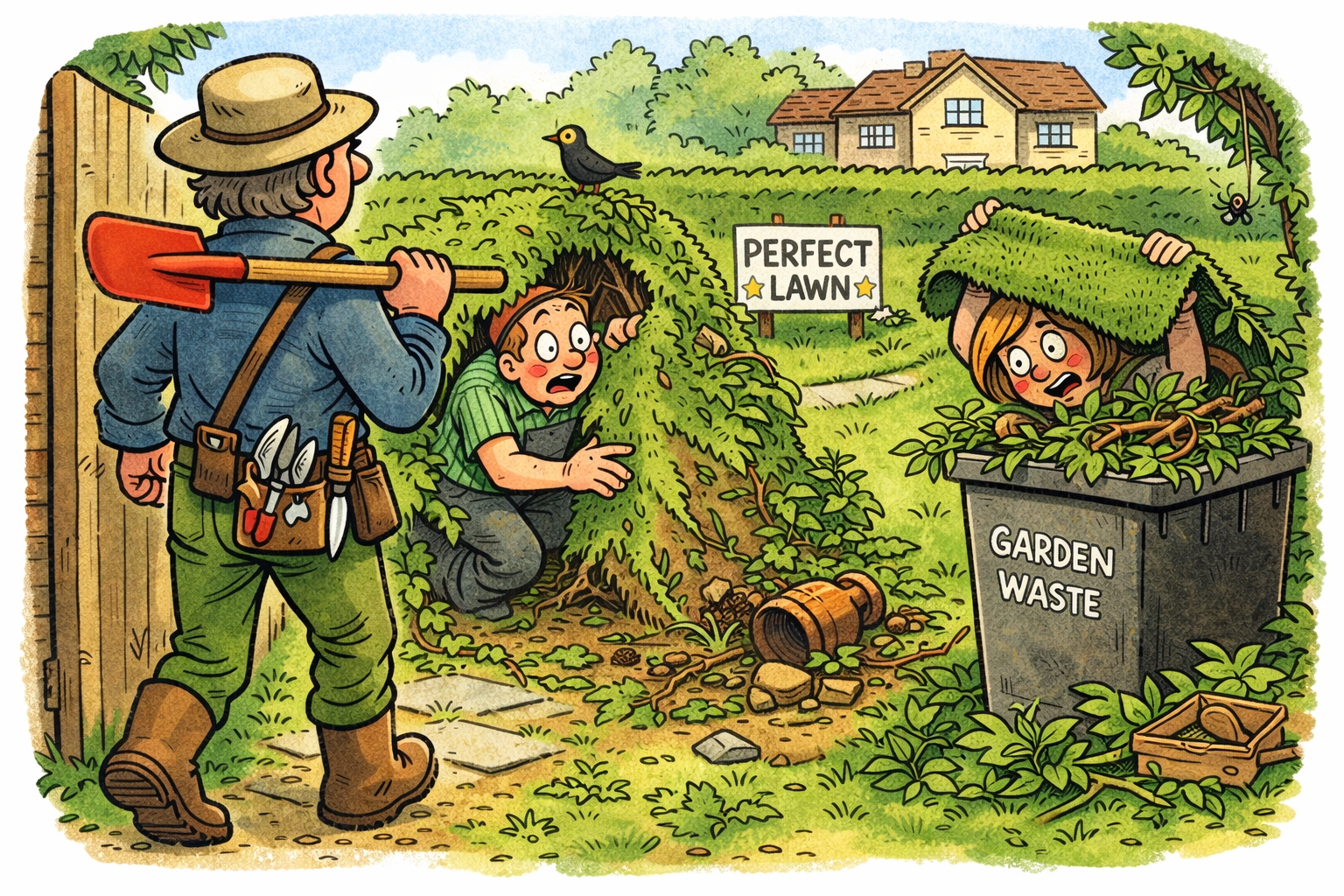
| There is a moment that happens again and again when you work in other people’s ‘new and old’ gardens. You step through the gate or round the side passage, and before you’ve had time to take anything in correctly, the apology arrives. It comes quickly, almost reflexively, as if the garden itself might be offended if it isn’t explained away. “Sorry about the lawn.” “Ignore that corner.” “We haven’t had time.” “That plant just does what it wants.” Sometimes the apology is delivered with humour, sometimes with embarrassment, sometimes with a faint edge of guilt, as though a garden were a moral project rather than a living one. What strikes me is not that people apologise, but what they apologise for. Rarely is it something truly harmful or neglected. More often, it’s the things that don’t fit a narrow idea of how a garden is supposed to behave: plants spreading where they weren’t invited, moss settling into a lawn, edges softening, leaves staying where they fall. These are not failures of care. They are signs of life continuing on its own terms. Yet we have learned to treat them as problems, and to apologise for them as if they were personal shortcomings. A great many garden “rules” sit quietly beneath these moments, rarely spoken aloud but deeply absorbed. Lawns should be neat. Beds should be controlled. Weeds should not exist. A good garden should look intentional at all times. Maintenance should reduce work year on year. None of these ideas is inherently malicious. Many of them came from practical needs, social fashion, or historical context. The trouble begins when they harden into expectations that no longer match the realities of modern life, soil, climate, or time. As a working gardener, I see the cost of these expectations more clearly each year. They don’t just shape how gardens look; they shape how people feel about them. The garden becomes something to keep up with, something that is either “doing well” or “getting away”. It becomes another place where effort is measured against an imagined standard, and where falling short carries a faint sense of failure. This is where many rules deserve to be broken — not loudly or defiantly, but quietly, with relief. One of the most persistent assumptions is that a garden must always look tidy to be cared for. Tidiness, in this sense, is often less about plant health than about reassurance. Clean edges, bare soil, clipped forms — these signal that someone is in control. They are visual shorthand for effort. But gardens do not experience time in neat increments. Growth comes in surges, pauses, and sideways movements. Decay happens gradually, then suddenly. When we impose constant tidiness, we often interrupt processes that would otherwise stabilise themselves. Self-seeded plants are removed before they can knit soil together. Fallen leaves are cleared before they can feed the ground. Perennials are cut back just as they’re offering shelter. It is no accident that many of the plants people apologise for are the ones doing quiet, uncelebrated work. Ivy is a typical example. It has been so thoroughly recast as a villain that people apologise for it before it’s even mentioned. And yes, ivy can be damaging in specific contexts. It can overwhelm neglected structures and compete where space is genuinely limited. But in many gardens, it is also one of the most reliable sources of late nectar, winter shelter, and year-round cover. It stabilises walls, shades soil, and provides habitat when very little else does. The apology attached to it often has less to do with its behaviour and more to do with its reputation. The same is true of brambles at the edges, self-seeded foxgloves, buddleia appearing where it wasn’t planted, and moss spreading through grass. These are plants honestly responding to conditions. They are telling us something about light, moisture, compaction, neglect, or opportunity. When we treat them only as intruders, we miss the information they offer. More than that, we miss the chance to let the garden make some of its own decisions. This is where another deeply held belief comes into view: that good gardening is about control. Control over shape, timing, spread, colour, and behaviour. Control feels efficient. It promises predictability. But in practice, total control is exhausting, expensive, and increasingly fragile. The more tightly a garden is managed, the more intervention it tends to require. Lawns cut to within an inch of their lives demand constant feeding and repair. Beds stripped bare between plants need regular watering and weeding. Artificial solutions creep in not because people are lazy, but because the system they’ve inherited asks too much of them. Which brings us, inevitably, to plastic grass. It’s difficult to talk about artificial lawns without slipping into anger or judgment, neither of which is particularly useful. Plastic grass is rarely installed out of malice. It arrives through exhaustion, frustration, or the feeling that one has failed at something that should have been simple. It is sold as relief: no mowing, no mud, no weeds, no embarrassment. And yet, standing in a garden where plastic grass has replaced soil, there is often a peculiar stillness. Not calm, exactly, but flatness. Nothing changes. Nothing responds. Nothing improves with time. What makes plastic grass sad is not that it looks unnatural — though it often does — but that it represents a full stop where a conversation might have continued. It removes the possibility of learning, adjusting, or softening expectations. Moss can be negotiated with. Clover can be welcomed. Long grass can be cut differently. But plastic grass does not respond. It cannot surprise you. It cannot recover from misuse or reward patience. It solves a problem by removing the living system altogether. In this sense, plastic grass sits at the far end of a spectrum that begins with garden rules left unquestioned. If a lawn must be perfect, and perfection requires more time, money, and energy than someone has, then replacement begins to look like the only reasonable option. Break the rule, and the replacement is no longer necessary. Accept a lawn that flowers, browns off, thins out, and recovers, and the pressure eases. The sadness of plastic grass is not just environmental; it’s emotional. It signals a loss of trust — in soil, in plants, and often in oneself. This loss of trust shows up in smaller ways, too. In the things people think are problems that aren’t. A patch where nothing seems to grow. A bed that looks unfinished. A hedge that doesn’t match its neighbour. A corner that has become a repository for pots, leaves, and indecision. These are often spoken about with mild embarrassment, yet they are rarely urgent or damaging. There are pauses. Breathing spaces. Places where the garden hasn’t yet decided what comes next. As a gardener, I have learned to be wary of rushing these spaces. Some of the most stable parts of a garden emerge slowly, almost by accident. A plant self-seeds into a gap and proves better suited than anything deliberately chosen. Shade deepens as a tree matures, and the planting beneath it changes in response. A border becomes less floriferous but more textured. None of this aligns well with the idea that a garden should constantly be improving in visible ways. Improvement, in living systems, often looks like settling. There is also a quiet class element to many garden rules, though it is rarely acknowledged. The expectation of neatness, constant care, and visual polish assumes time, physical ability, and disposable income. When someone apologises for a garden that is “a bit much”, what they are often really saying is that they haven’t been able to prioritise it in the way they feel they should. Breaking specific rules is not about abandoning standards; it’s about recognising whose standards they were in the first place. One of the more liberating shifts I’ve seen in recent years is people beginning to say, tentatively, “I quite like it like this.” They say it about long grass, or fallen leaves, or a plant that has gone rogue. It’s often followed by a glance, as if checking whether that preference is allowed. The relief when it’s met with agreement is palpable. The garden hasn’t changed in that moment, but the relationship to it has. The apology dissolves, and in its place is something closer to ownership. This is not an argument for neglect or for abandoning care. Gardens benefit from attention, knowledge, and intervention. Paths need clearing. Shrubs need pruning at the right time. Boundaries need managing. But care does not have to mean constant correction. It can mean noticing what thrives without help, and why. It can mean letting some areas be looser so others can be more focused. It can mean accepting that not every square metre needs to justify itself visually. There are trade-offs in all of this. A less controlled garden may look untidy to some. It may not photograph well in spring. It may contain plants that spread more than expected. But it will often be more resilient, more interesting over time, and easier to live with. It will offer moments of surprise rather than constant obligation. For many people, that trade-off is worth making once they realise it’s available. What sits beneath all these themes — the broken rules, the apologised-for plants, the non-problems, the sadness of plastic grass — is a question of permission. Who decides what a garden is for? Is it a display, a project, a problem to be solved, or a place to be with living things? When the answer is fixed too narrowly, the garden becomes brittle. When it is allowed to be broader, the pressure eases on both sides of the fence. The most contented gardeners I know are not the ones with the most immaculate spaces. They are the ones who have stopped apologising. They know which compromises they’ve made and why. They understand their limits, and their gardens reflect that honestly. Nothing is pretending to be something it isn’t. Soil remains soil. Grass remains grass. Change is expected, not resisted. Breaking garden rules does not require rebellion. It often begins with a slight, internal shift: deciding not to fix something just because it doesn’t match an inherited idea, deciding to watch for a season before acting, and deciding that a plant which arrived uninvited might be worth keeping. These decisions are rarely dramatic, but over time, they change the tone of a garden. It becomes less of a task list and more of a relationship. Perhaps the saddest thing in a garden is not plastic grass itself, but the moment before it is laid — the moment when someone believes there is no other way forward. That belief deserves to be questioned gently, and often, because in most cases, there are many other ways. Messier ways. Slower ways. Kinder ways. Gardens are not improved by constant judgment. They respond better to attention, patience, and a willingness to let go of rules that no longer serve them. When we do that, something curious happens. The apologies stop. The problems shrink. And the garden, quietly, gets on with being a garden. |
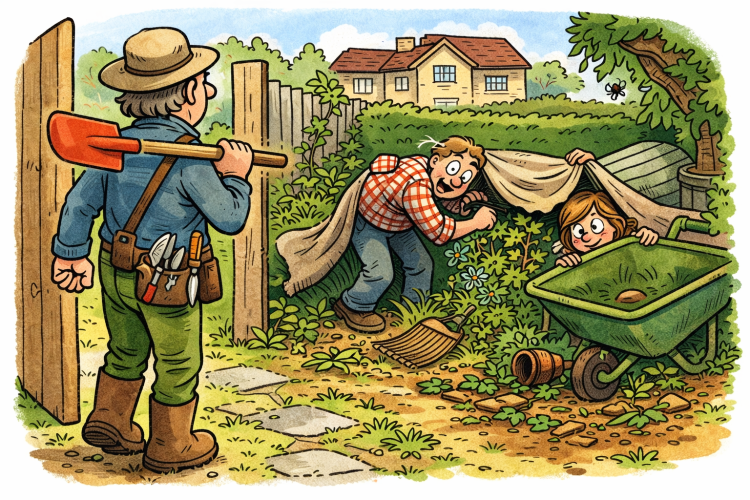
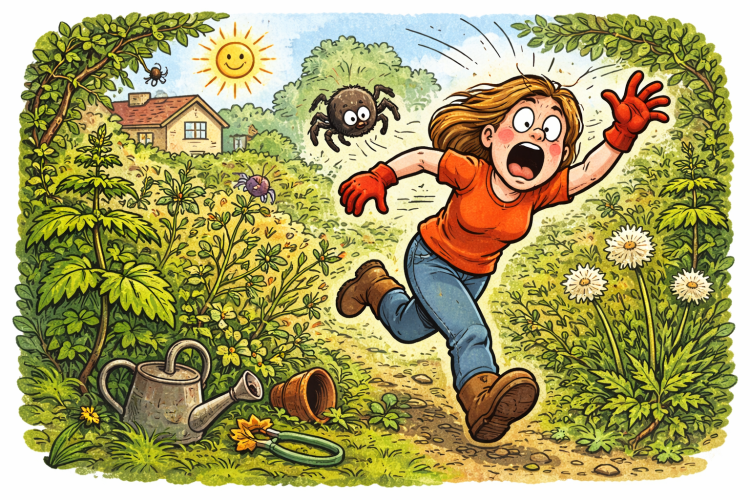
| One of the most memorable conversations I’ve ever had with a client started, quite innocently, with weeds. Not the dramatic kind — just the usual green persistence along paths and borders. She was exasperated in a way that was both genuine and faintly bewildered. Why do they keep coming back? she asked. Then again, louder, as if volume might change the answer. Why? Why? Why? I told her, as gently as I could, that this was rather the point. Weeds aren’t failing at gardening; they’re succeeding at survival. They arrive quickly, settle fast, and don’t wait for permission. They’re very good at what they do. This did not bring the comfort she was hoping for. “Well how do I stop them?” she asked. “You can remove them from the ground,” I said. She paused. Considered this. “Do I have to?” There was real hope in the question. Hope that perhaps, if ignored long enough, they might simply get bored and leave of their own accord. That gardens, like awkward guests, sometimes take a hint. They do not. What struck me wasn’t the misunderstanding — it was the perfectly reasonable wish behind it. The desire for things to resolve themselves quietly, without effort or confrontation. Gardening is full of moments like this, where biological reality meets human optimism and neither is particularly wrong. Weeds don’t mean you’re doing something badly. They mean there is space, light, and opportunity. In other words, life. I did learn something else that day too: never, under any circumstances, mention spiders around her. But that’s a separate conversation entirely. |
| About our writing & imagery Most articles reflect our real gardening experience and reflection. Some use AI in drafting or research, but never for voice or authority. Featured images may show our photos, original AI-generated visuals, or, where stated, credited images shared by others. All content is shaped and edited by Earthly Comforts, expressing our own views. |

