| The Vine That Refuses to Be Ordinary |
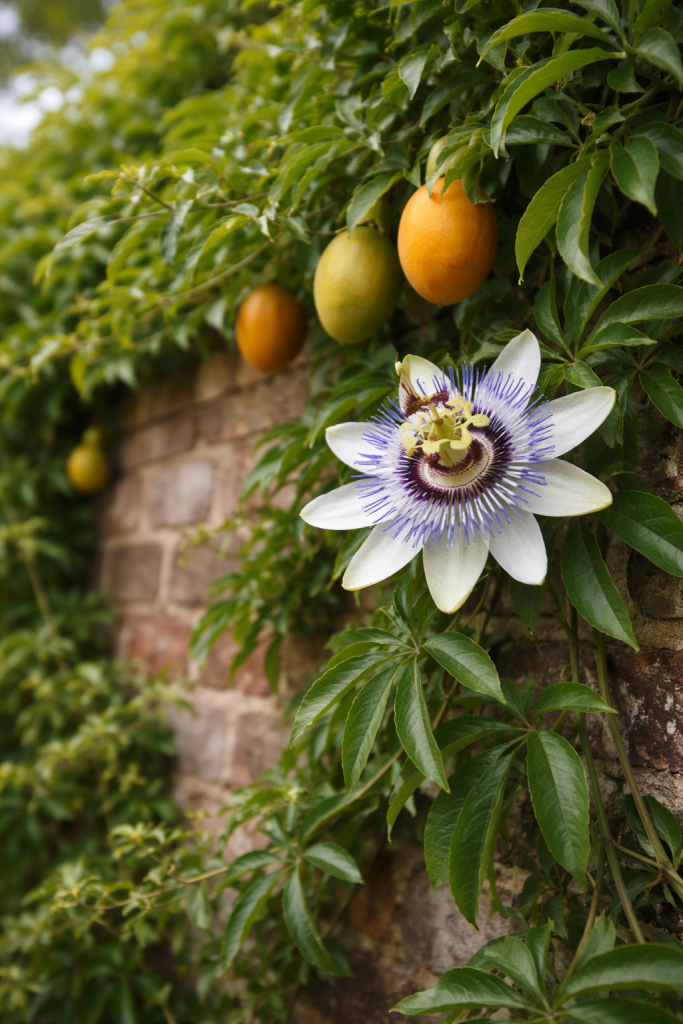
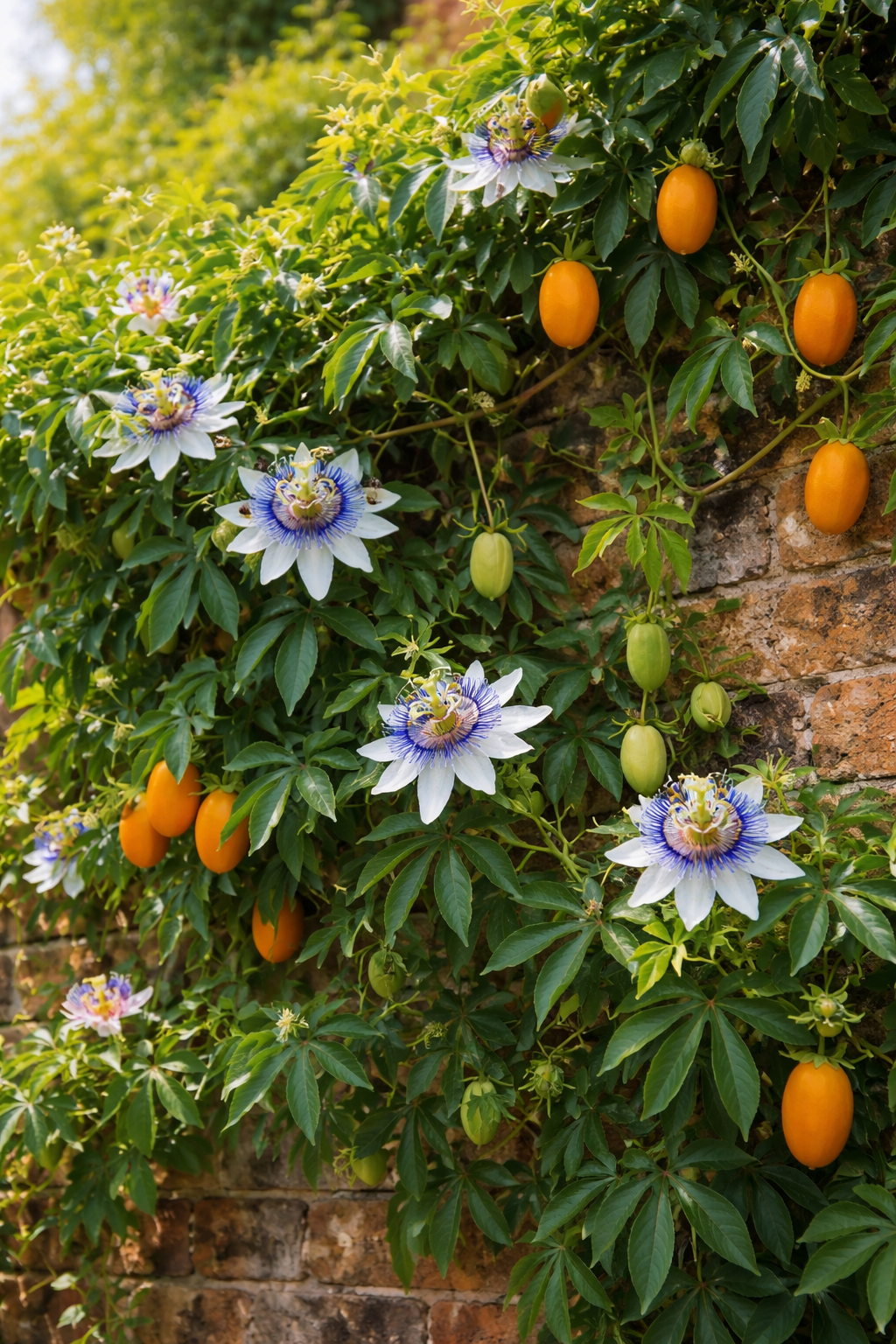
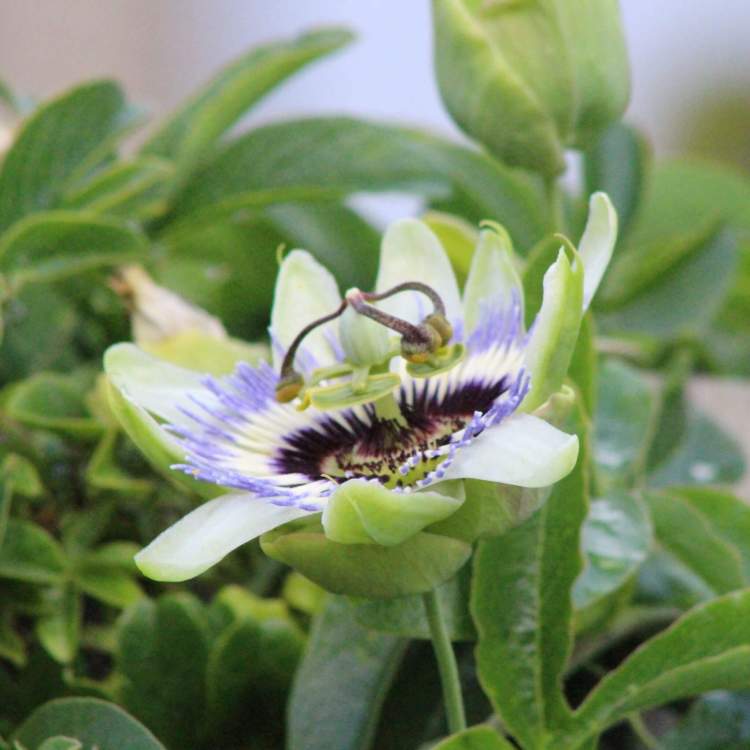
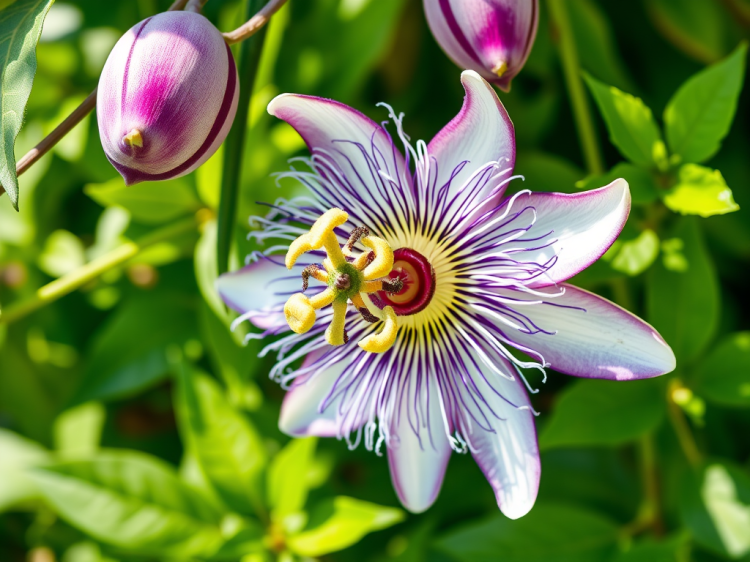
| Some plants behave. They keep to their allotted space, flower politely, and recede without fuss when winter comes. And then there is Passiflora caerulea — the blue passionflower — which does none of those things in moderation. It climbs as if it has somewhere urgent to be. It flowers with theatrical complexity. It produces fruit that many people do not realise is edible. And it carries with it a faint air of misunderstanding. I have planted it in town gardens pressed tight against brick. I have seen it throw itself over pergolas in coastal plots. I have cut it back hard after frost, only to watch it return with renewed intent. It is not subtle. It is not native. It is not fragile in the way its flowers suggest. And yet, for all its flamboyance, it has settled comfortably into British horticulture. What interests me most is not the flower — though the flower is remarkable — but the plant’s character. Its energy. It’s refusal to conform to tidy categories. It is hardy, but only just. Exotic, yet reliable. Edible, though rarely treated as such. Ornamental, but never entirely ornamental. It is a plant that asks us to reconsider what we think we know. A Flower That Stops Conversation The first time most people encounter Passiflora caerulea in full bloom, they stop. The structure of the flower does that. There is geometry there that feels almost engineered: white petals beneath a corona of blue and violet filaments, all arranged around a central column that looks both alien and precise. The bloom is not large and blousy; it is intricate. You lean in. You notice the detail. Bees approach with intent rather than confusion. It has an architectural quality that suits brickwork and timber frames particularly well. Against a south-facing wall, the flower reads almost like enamel. Each bloom lasts only a short time — usually a day or two — but the plant produces them steadily across summer if it is settled and receiving sufficient light. In warm years, I have seen flowering begin in late June and continue well into September. The common assumption is that such a flower must belong to a delicate plant. It looks as though it should require greenhouse coddling or Mediterranean heat. In fact, Passiflora caerulea is among the hardiest of the passionflowers, capable of withstanding typical southern English winters, though not without consequence. Hardiness, as ever, is contextual. A plant against a sun-warmed wall in Kent will fare differently from one exposed in a damp inland hollow. I have learned to judge not by temperature alone, but by drainage and aspect as well. A cold that comes dry and bright does less harm than a winter that lingers in saturated soil. Vigour and Boundaries The second misunderstanding is about its growth. Some people imagine it as a delicate climber, content to thread politely among other plants. That has not been my experience. Once established, it is vigorous. Tendrils search and latch. Shoots extend rapidly in early summer. In small urban gardens, that energy can be either a gift or a complication. I have deliberately planted it to soften hard edges — over metal fencing, along timber trellis, across the sides of sheds where a purely decorative climber might struggle. In these contexts, it performs well. It creates a veil rather than a curtain if allowed room. Where it becomes problematic is in mixed borders with less assertive neighbours. I have seen it compete successfully against climbing roses and clematis, not always to the latter’s benefit. It is not malicious; it simply grows with conviction. From practice, I have come to treat it as a structural climber rather than a companion. Give it its own framework. Allow it space. Prune decisively in late winter when growth is dormant. It responds well to being cut back — often better than people expect — because it flowers on current season’s growth. This is worth remembering: fear of pruning tends to create more work later. A hard cut in February is kinder than hesitant trimming in July. Winter and Return In colder winters, the top growth may blacken and collapse. Clients sometimes assume the plant has died. I have learned not to rush judgment. More often than not, the roots survive if the soil drains freely. By late spring, fresh shoots emerge from the base, sometimes stronger than before. It can behave almost herbaceous in harsher years, retreating and reasserting itself. The trade-off is visual continuity. If you require a permanently evergreen screen, this is not always the most dependable choice in exposed settings. But if you accept its seasonal ebb and flow, it rewards patience. Mulching the base in autumn helps moderate soil temperature and moisture. Not elaborate insulation — simply a thick layer of organic matter. It is a small gesture that makes a difference. The Fruit No One Mentions And then there is the fruit. By late summer or early autumn, following successful pollination, oval fruits begin to swell. Green at first, they turn a warm orange as they ripen. They hang quietly among the leaves, rarely drawing the attention that the flowers command. Many people assume they are ornamental only. Some assume they are toxic. I have heard them dismissed as “decorative pods” or “inedible curiosities.” They are edible. Not in the intense, tropical way of commercial passionfruit (Passiflora edulis), but edible nonetheless. The interior contains a gelatinous pulp surrounding seeds, lightly sweet, mildly aromatic. In warm summers, the flavour develops more fully. In cooler seasons, it can be bland. The misunderstanding may arise because the fruit rarely reaches the intensity people expect from supermarket passionfruit. And because no one speaks about it. I have tasted fruit from plants grown against sun-warmed brick in coastal gardens where autumn lingers. The flavour was subtle but pleasant. Not dramatic, but interesting. It makes a modest addition to yoghurt or can be eaten simply with a spoon. There are caveats. The unripe fruit is not advisable. And as with many plants, the foliage contains compounds best not consumed in quantity. But the ripe fruit itself is not a decorative deception. There is something quietly satisfying about harvesting fruit from a plant grown primarily for its flowers. It challenges the tidy distinction between ornamental and edible. In smaller gardens, especially, that overlap feels increasingly relevant. Pollinators and Presence The open structure of the flower makes it accessible to bees. I have observed both honeybees and bumblebees working the central column methodically. The plant is not a primary wildlife powerhouse like a native hawthorn, but it does contribute. The dense foliage also provides seasonal cover. In urban plots with limited green volume, a climber like this increases vertical habitat. There is, however, a wider conversation about non-native plants and ecological responsibility. Passiflora caerulea is not native to Britain. It originates in South America. It does not integrate into the food web in the same way as indigenous species. The assumption that native equals good and non-native equals bad oversimplifies matters. In my experience, thoughtful planting considers context. In a small courtyard surrounded by brick and tarmac, a well-behaved non-native climber providing nectar and shade may be more beneficial than bare fencing. That said, I would not introduce it into sensitive natural habitats. Gardens are managed spaces. Responsibility lies in understanding that distinction. Soil, Light, and the Ordinary Realities It prefers full sun. It tolerates light shade, but flowering reduces. Soil need not be rich; indeed, overly fertile conditions can encourage leaf at the expense of bloom. Good drainage matters more than nutrient abundance. I have seen it struggle in compacted, waterlogged ground. Conversely, in free-draining soil against a wall, it thrives with minimal feeding. In containers, it can be grown successfully, though the effort increases. Roots confined to pots are more vulnerable to winter cold and summer drought. A large, deep container and consistent watering are essential. I recommend open ground where possible. One practical observation: it benefits from a clear root running away from competing shrubs. Crowded bases reduce vigour. Give it space at the soil level and above. On Control and Assumption There is a quiet myth that passionflowers are invasive in Britain. They are not invasive in the ecological sense. They do not rampage across the countryside or outcompete native woodland. They can, however, send up shoots from spreading roots in favourable conditions. In managed gardens, this is manageable. I have lifted unwanted shoots with a spade and found the parent root easily traceable. The myth stems from unfamiliarity. When a plant behaves energetically, we label it aggressive. Yet many of our cherished climbers — wisteria, ivy, even certain roses — demand similar vigilance. The difference is expectation. We expect wisteria to need pruning. We expect Ivy to wander. We are surprised when passionflower does the same. A Mediterranean Impression in an English Setting There is something faintly Mediterranean about the aesthetic of Passiflora caerulea. Not because it demands Mediterranean heat — it does not — but because its flowers carry that sunlit geometry. In south-east England, particularly in sheltered town gardens, it bridges climates. It feels exotic without being impractical. In recent years, warmer summers have improved the reliability of flowering and fruiting. Climate shifts complicate planting decisions. Hardiness zones blur. Some plants become more viable; others struggle. The passionflower appears to benefit from longer, warmer growing seasons, provided winter extremes do not intensify dramatically. This is not to romanticise climate change. It is simply to observe that certain species adapt well to incremental warmth. Living With It Over time, I have come to see Passiflora caerulea less as a feature plant and more as a presence. It changes the mood of a wall. It softens fencing. It produces moments of surprise when a flower opens overnight. Clients often ask whether it is “worth it.” The question usually hides a concern about maintenance or hardiness. My answer is measured. If you want a completely hands-off climber, there are easier options. If you want architectural flowers, a long season, occasional fruit, and a plant that responds well to considered pruning, it is worth understanding. The key lies in placement and expectation. Plant it where it can climb without apology. Prune it firmly in late winter. Accept that some winters will humble it. Taste the fruit at least once before dismissing it. And perhaps allow it to challenge the tidy categories of ornamental versus edible, native versus foreign, delicate versus robust. Gardening, after all, is not about perfect obedience. It is about relationships — between soil and root, season and growth, expectation and reality. Passiflora caerulea does not behave perfectly. It behaves vividly. And in a climate that is shifting and gardens that are shrinking, something is refreshing about a plant that insists on being seen, tasted, and reconsidered. |
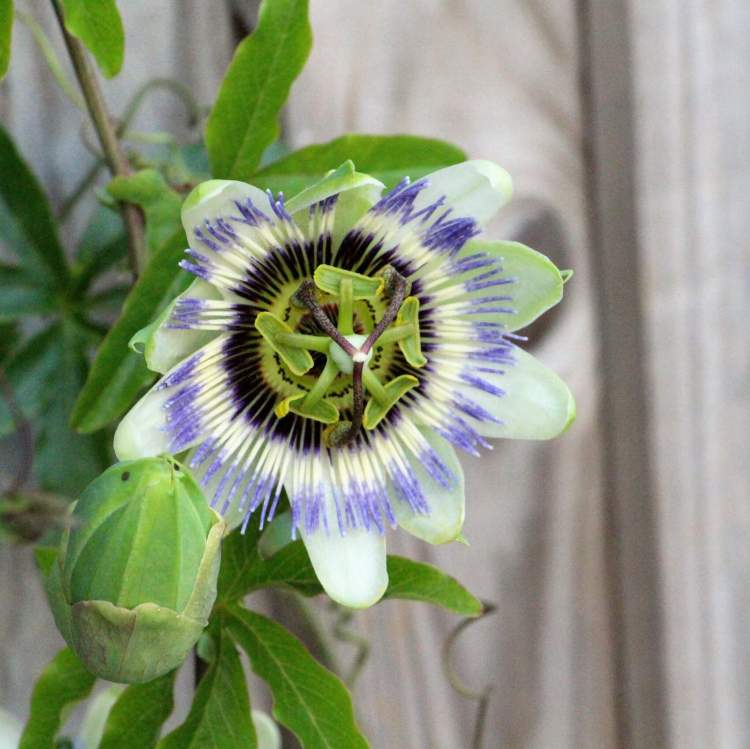
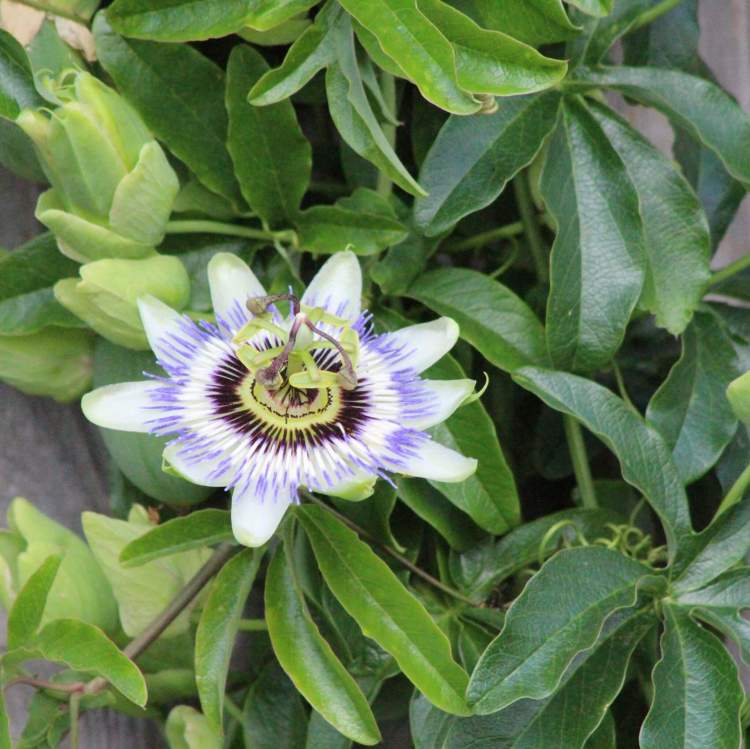
| About our writing & imagery Most articles reflect our real gardening experience and reflection. Some use AI in drafting or research, but never for voice or authority. Featured images may show our photos, original AI-generated visuals, or, where stated, credited images shared by others. All content is shaped and edited by Earthly Comforts, expressing our own views. |


I have been thinking of installing a passion flower in my own garden, basically to replace a sub standard wisteria that never flowers. Such a fascinating plant.
LikeLiked by 1 person
Good morning Jaye, they are wonderful. Tell me, your wisteria, did you have a seed grown or a grafted plant?
LikeLiked by 1 person
I bought it years ago from a garden centre, so probably grafted. It grows like wildfire, but we have only ever had one flower.
LikeLike
It’s a gorgeous flower with a very interesting background, Rory. I love its intricateness.
LikeLike