| Part 13 |
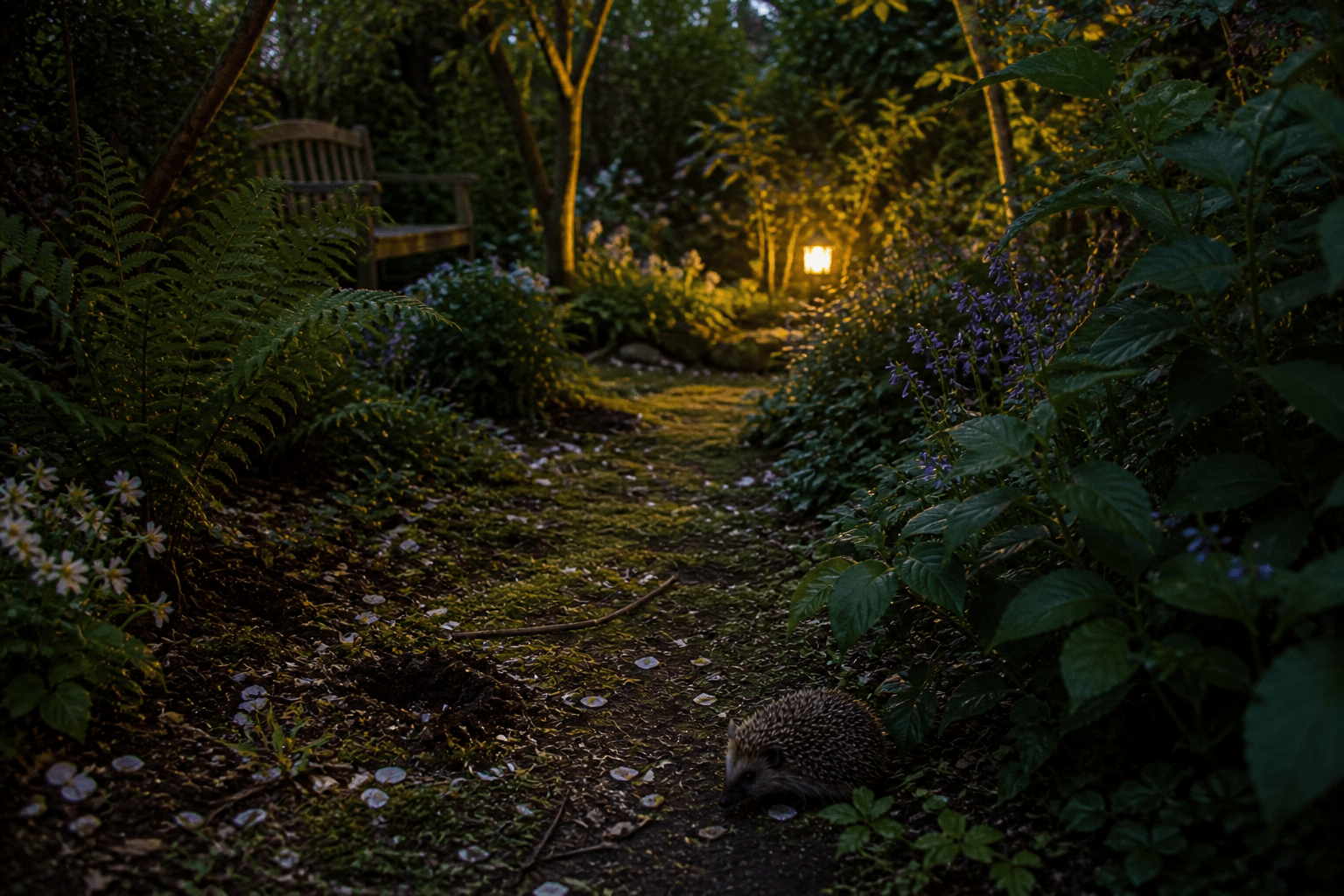
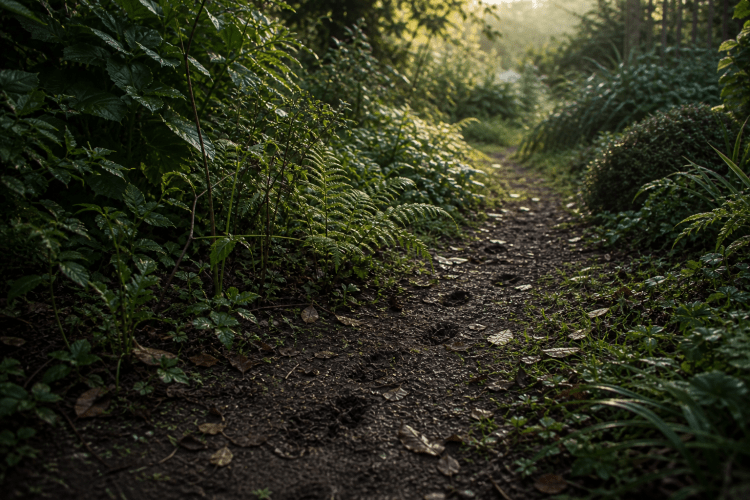
| By the time the garden is understood as something not entirely visible in a single view and not entirely defined by what is consciously maintained, it becomes clear that the garden is shaped by both visible and unseen activities. The main argument here is that the garden is a dynamic space, occupied and shaped by presences and patterns that are often hidden, and not just what is seen or deliberately managed. As a result, the question of what occupies the garden shifts: it is no longer enough to consider only what can be seen, or even what can be inferred from immediate conditions. There is an increasing awareness that the garden is in use in ways that are not directly observed, and that this use leaves traces that are often noticed without the activity itself being witnessed. The traces left behind are subtle, more understated than direct evidence of occupation. Yet, when tracked over time, they form discernible patterns. Disturbed soil suggests movement below, not harm. Leaves are shifted along lines with no visible path, but the displacement recurs. Areas of planting show repeated interaction, implying use as routes or resources, even without obvious change. Each of these observations can be explained without difficulty. Wildlife moves through gardens as part of its normal activity, using available cover and following established routes that extend beyond the immediate space. The garden provides food, shelter, and passage, and its boundaries are not barriers as they might appear. From this perspective, the presence of animals is expected, and the signs they leave are simply a reflection of that. What is less immediately apparent is the extent to which this activity occurs without being seen. It is possible to work in a garden regularly, maintain it consistently, and rarely, if ever, encounter the animals using it. The evidence of their presence accumulates, but the presence itself remains largely unobserved. This creates a distinction between what is known to be there and what is directly experienced, a gap that is often overlooked in how the garden is understood. This gap becomes more noticeable when the signs of activity are viewed together rather than in isolation. A single disturbance may be insignificant, but repeated in the same location suggests a pattern. Trails that appear intermittently may seem incidental, but when they align with other signs of movement, they begin to form a network that is not immediately visible as a whole. The garden, in this sense, reveals itself not as a series of isolated events, but as a system of interactions that are only partially expressed at the surface. Working within this understanding requires a shift in focus. The aim is no longer simply to address each sign as it appears, but to recognise the patterns they form and consider how those patterns interact with the garden’s structure. This does not mean that every instance of activity needs to be preserved or accommodated, but it does suggest that the garden is not a passive environment in which these events occur. It is an active space that supports and directs movement in ways that are not always immediately apparent. Clients are often aware of some aspects of this activity, though it is usually framed in terms of specific issues rather than as part of a broader system. They may notice that certain plants are affected or that areas of the garden show repeated signs of disturbance, but these observations are not always linked to the idea that the garden is consistently used by other occupants. The focus remains on the visible impact rather than on the underlying presence. There are, however, moments when this awareness becomes more pronounced. An animal is seen crossing the garden at an unexpected time, or a pattern of activity becomes too consistent to ignore. In these instances, the garden is understood differently, not as a contained space, but as one that is part of a larger environment. This does not fundamentally change the practical approach to maintenance, but it does alter the context in which that maintenance takes place. In practice, wildlife presence introduces new management requirements. Some areas might remain undisturbed for movement, and treatments may need to be adjusted. Case-by-case decisions reveal an understanding that use extends beyond intended functions. This integrated view shows the garden not as isolated, but as interwoven with its environment, shaped by wildlife movement and resource distribution. Physical boundaries remain but diminish in significance compared to the activity they contain. This does not require a change in how the garden is valued or maintained, but it does add another layer to its understanding. The presence of unseen occupants is not an anomaly, but a consistent feature of the environment, and the signs they leave are part of the ongoing interaction between the garden and the wider landscape. Patterns in grass, the impact of trees, and overnight changes all reinforce that the garden cannot be fully observed at once. Ongoing processes surpass immediate perception, remaining present and influential even if not directly experienced. Once this is recognised, it becomes more difficult to view the garden as a space that is entirely under direct observation. It remains structured and manageable, but its use is not entirely visible. There are always elements that exist just beyond what is seen, shaping the space in ways that are only partially revealed. And within that understanding, the garden becomes something not only maintained but shared, not in a way that requires constant acknowledgement, but in a way that is consistently expressed through the patterns that remain after the activity itself has passed. |
| About our writing & imagery Most articles reflect our real gardening experience and reflection. Some use AI in drafting or research, but never for voice or authority. Featured images may show our photos, original AI-generated visuals, or, where stated, credited images shared by others. All content is shaped and edited by Earthly Comforts, expressing our own views. |

