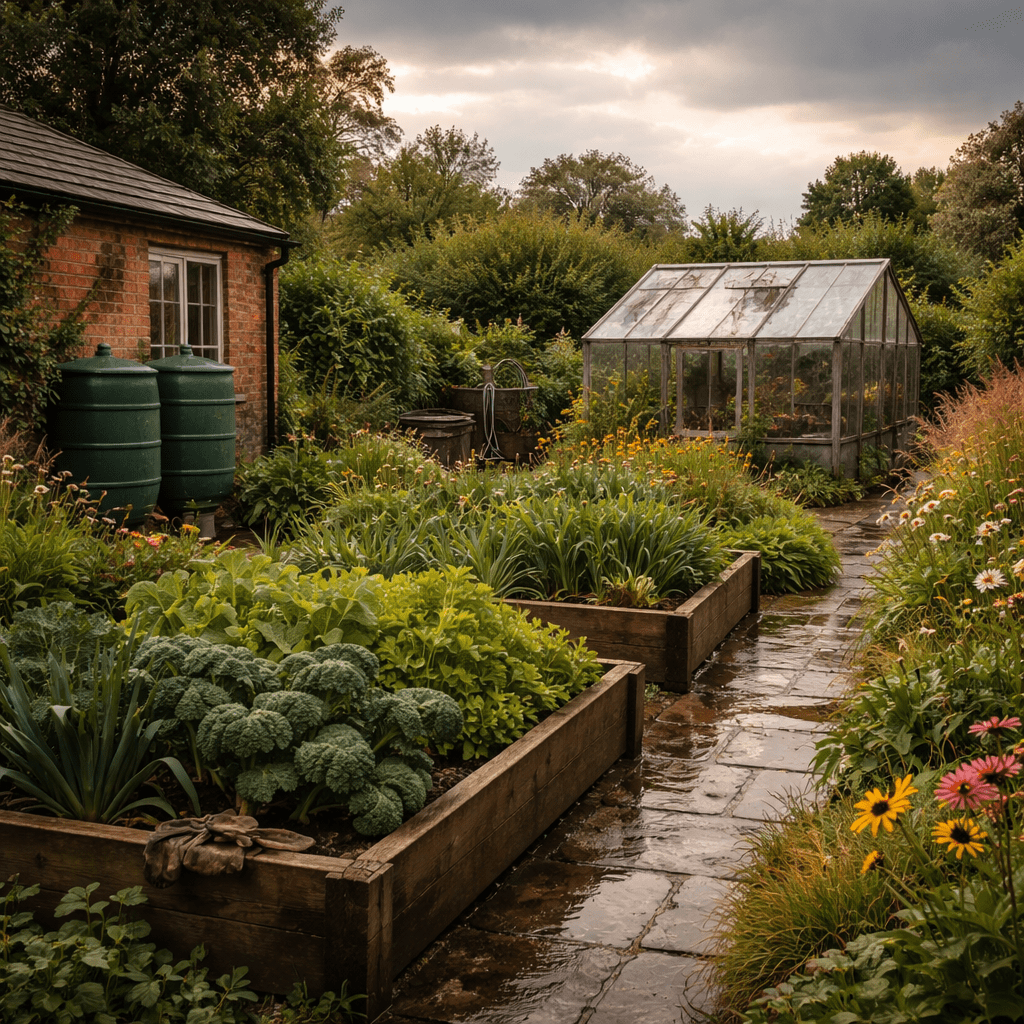
| Adapting a Garden Business Before the Weather Turns |
| There is a particular stillness that arrives in late August. The lawns are tired rather than lush. The borders have either found their rhythm or quietly given up. The frantic pace of early summer settles into something more observational. It is in this lull — not January — that a professional gardener must begin preparing for winter. Most people imagine adaptation as something reactive. It rains for eight weeks, and we scramble. A frost devastates tender planting, and we apologise. A client cancels because the ground is too wet to walk on, and we take the loss. But adaptation, if it is to mean anything, has to begin when the sun is still warm. Running a garden business in Kent now demands a different sort of thinking. Seasons no longer behave politely. Rainfall arrives in blocks rather than showers. Heat lingers, then disappears—growth surges, then stalls. Winter is not merely colder; it is often wetter, darker, longer in mood if not in temperature. And so, as summer progresses, the sensible question becomes not “How will winter be?” but “How will we be ready?” The Shift from Maintenance to Anticipation The traditional gardening model assumes an increasingly unreliable rhythm. Spring brings growth. Summer brings mowing and deadheading. Autumn clears. Winter rests. In reality, winter is no longer a rest. It is a compression. If we do not prepare in the summer, winter becomes reactive labour carried out in mud and frustration. Preparation begins with soil. That sounds obvious, but it is remarkable how often soil is treated as background rather than infrastructure. In prolonged wet winters — which we are seeing more often in Kent — soil structure is everything. Compaction becomes the quiet enemy. Waterlogging is not dramatic; it is insidious. Lawns thin not because of neglect but because air cannot circulate. So in summer, when the ground is workable, we have to think ahead. Aeration is no longer a once-a-year tick-box. Drainage lines are not luxuries. We have begun assessing gardens in July and August for where water will sit in January. That shift — looking at dry ground and imagining it saturated — changes how we plan. Clients sometimes assume that winter preparation is about fleece and frost covers. In truth, it is more often about managing water long before frost arrives. The Business Reality of Unpredictable Winters The more difficult part of adaptation is not horticultural but financial. A rain-heavy winter reduces workable days. Clients understandably prefer not to have muddy footprints through borders. Clay soils become off-limits. Hourly billing, which feels honest and transparent, suddenly exposes vulnerability. Eight weeks of poor weather can erode momentum and income. So summer must become the season of structural planning. One quiet adjustment we have made is to reframe what winter work actually includes. Instead of seeing it as reduced maintenance, we see it as redistribution. Propagation moves indoors or into greenhouses. Tool maintenance is scheduled deliberately rather than squeezed in. Soil testing and garden planning take precedence. This is not glamorous work, but it is stabilising. It prevents winter from becoming a season of waiting. There is also a necessary conversation about payment structures. Many gardeners still operate on a purely reactive hourly basis. That works in predictable climates. It struggles in volatile ones. A more resilient approach involves blended arrangements—not as a corporate manoeuvre but as a way to ensure continuity. Clients who value long-term care often understand that consistency in winter protects quality in spring. It requires tact to explain that gardening reliability is not merely about turning up, but about being able to turn up. Preparing Gardens for Harder Winters There is a quiet discipline to late-summer assessment. We walk through gardens not admiring blooms but studying structure. Are trees balanced? Are shrubs too top-heavy? Are borders dense enough to protect soil but not so crowded that winter rot will spread unchecked? Hard pruning is often postponed until winter itself, but formative corrections can begin earlier. Weak stems are strengthened. Overcrowding is thinning. Paths are edged so that winter growth does not encroach. Water management becomes central. In recent years, installing water butts has felt like preparing for a drought. Increasingly, they serve a dual purpose. During heavy rainfall, capturing roof water reduces saturation elsewhere. It is a simple intervention with disproportionate benefit. One common assumption is that winter preparation is primarily about protecting tender plants. That is partly true, but it misses the larger point. The majority of winter damage now stems not from frost but from excess moisture and wind exposure. Gardens designed only for summer display suffer in winter storms. So summer is when we quietly reintroduce structure. Evergreen presence. Root depth. Wind buffering. These decisions are not dramatic, but they change how a garden survives January. Diversification as Seasonal Insurance The practical truth is that a garden business cannot rely solely on mowing and pruning if winters are increasingly unworkable. Diversification is not opportunistic; it is protective. Over the past year, we have begun using underused utility areas within clients’ gardens — raised beds, compost systems, and small greenhouses. What started as an experiment has gradually become part of our adaptive strategy. Summer is when these spaces are most productive. Seedlings are started not only for the garden they sit in, but for others. Plug plants bought in bulk are grown slowly. Herbs are trialled. Cut flowers are tested for durability and vase life. This distributed growing network does two things. First, it generates stock for autumn planting without heavy purchase costs. Second, it shifts part of our value creation indoors or under cover, making it less vulnerable to winter weather. There is a temptation in gardening to assume that scale equals professionalism: large nurseries, extensive stock, impressive glasshouses. But small, distributed growing spaces offer flexibility. If one greenhouse struggles, another thrives. If a client’s raised bed produces surplus, it can be shared. It is modest but resilient. The Quiet Economics of Growing On Buying plants wholesale and growing them is not new. What is new is its role as winter insurance. In summer, when light is reliable, young plants can be established in controlled conditions. By autumn, they are robust enough for installation. Instead of rushing purchases in October when availability narrows, we plan. The margin is not simply financial. It is qualitative. A plant grown under observation develops differently. We know its strength. We know its temperament. Clients sense that difference. There is, of course, labour involved. Watering schedules. Feeding. Space management. But this labour is less weather-dependent than lawn care in January. One myth worth challenging gently is the idea that gardening businesses should avoid retail entirely. Selling plants is sometimes seen as drifting into garden centre territory. Yet when done thoughtfully — with plants we have grown or tested — it becomes an extension of stewardship rather than commerce. The difference lies in intent. Are we selling products, or are we providing continuity? Climate Awareness Without Alarmism Preparing for winter now involves acknowledging climate variability without dramatising it. Sensible gardeners observe patterns over years rather than reacting to single seasons. Kent has experienced prolonged rain spells that would once have been considered exceptional. We would be naïve to assume they are isolated. This does not require panic planting or radical redesign in every garden. It requires attentiveness. When lawns struggle repeatedly in low-lying areas, perhaps they are not meant to remain lawns. When borders flood annually, elevation or drainage must be considered. Diversification within the business mirrors diversification within the garden. Mixed income streams, like mixed planting, provide stability. Exploring Affiliation and Recommendation Another strand of adaptation lies in recommendation. As clients become more climate-conscious, they ask about raised beds, compost systems, and irrigation kits. Rather than merely installing what is requested, we are beginning to trial specific systems ourselves. Summer is when these trials occur. Drip irrigation is stress-tested in heat. Compost units are monitored for efficiency. Raised bed kits are assembled and observed for durability. If we believe in something, we quietly recommend it. In time, structured affiliate relationships make sense. But this must be approached with restraint. Trust, once diluted, is difficult to rebuild. The purpose is not just additional income. It is coherence. If we advise on water management, we should understand the systems we suggest. Preparing the Team, Not Just the Garden Adaptation is not solely operational. It is cultural. Summer is when the team’s energy is high. Workdays are longer. There is room to discuss winter plans. Tool training, maintenance protocols, propagation techniques — these are easier to embed before the darker months. Winter fatigue is often underestimated. Working in persistent rain requires morale as much as waterproofs. If we prepare psychologically — by knowing what winter tasks will look like — we reduce that fatigue. A professional garden service must consider its people as part of the ecosystem. Rethinking the Idea of Winter Downtime There remains a romantic notion that winter is quieter and therefore less demanding. For a climate-aware business, winter is simply different. Planning becomes foregrounded. Soil health programmes are reviewed. Compost systems are evaluated. Growing stock is monitored. Marketing and writing — reflections on the year — take shape. In this sense, summer preparation for winter is less about stockpiling materials and more about redistributing focus. When rain prevents heavy labour, quieter work should already be defined. The Philosophy Beneath Adaptation Gardening has always been an exercise in humility. We respond to forces larger than ourselves. Yet running a business within that context demands a degree of foresight. Preparing in summer for winter is a discipline in imagination. We stand in sunlight and picture saturation. We feel dry soil and imagine frost heave. We assess cash flow in July, knowing February may be constrained. There is gentle humour in it. We discuss fleece in short sleeves. We install water butts under blue skies. We talk about compost insulation during heatwaves. But this dual awareness is what allows a small business to endure. Diversification is not a pivot away from gardening. It is an expansion of what gardening now includes. Growing stock, offering climate assessments, trialling irrigation systems, redistributing work patterns — these are not add-ons. They are responses to a shifting baseline. If there is a single insight that summer teaches, it is that preparation rarely feels urgent when conditions are comfortable. That is precisely why it must happen then. Winter will arrive as it always does — perhaps wetter, perhaps milder, perhaps unexpectedly cold. The garden will respond according to how we have shaped it in the preceding months. And the business will respond according to how deliberately we have shaped it in the summer. In both cases, adaptation is quieter than reaction. It is less visible than crisis management. But it is steadier. And steadiness, in a changing climate, is a form of resilience. |
| About our writing & imagery Most articles reflect our real gardening experience and reflection. Some use AI in drafting or research, but never for voice or authority. Featured images may show our photos, original AI-generated visuals, or, where stated, credited images shared by others. All content is shaped and edited by Earthly Comforts, expressing our own views. |

