| — and Offer Much |
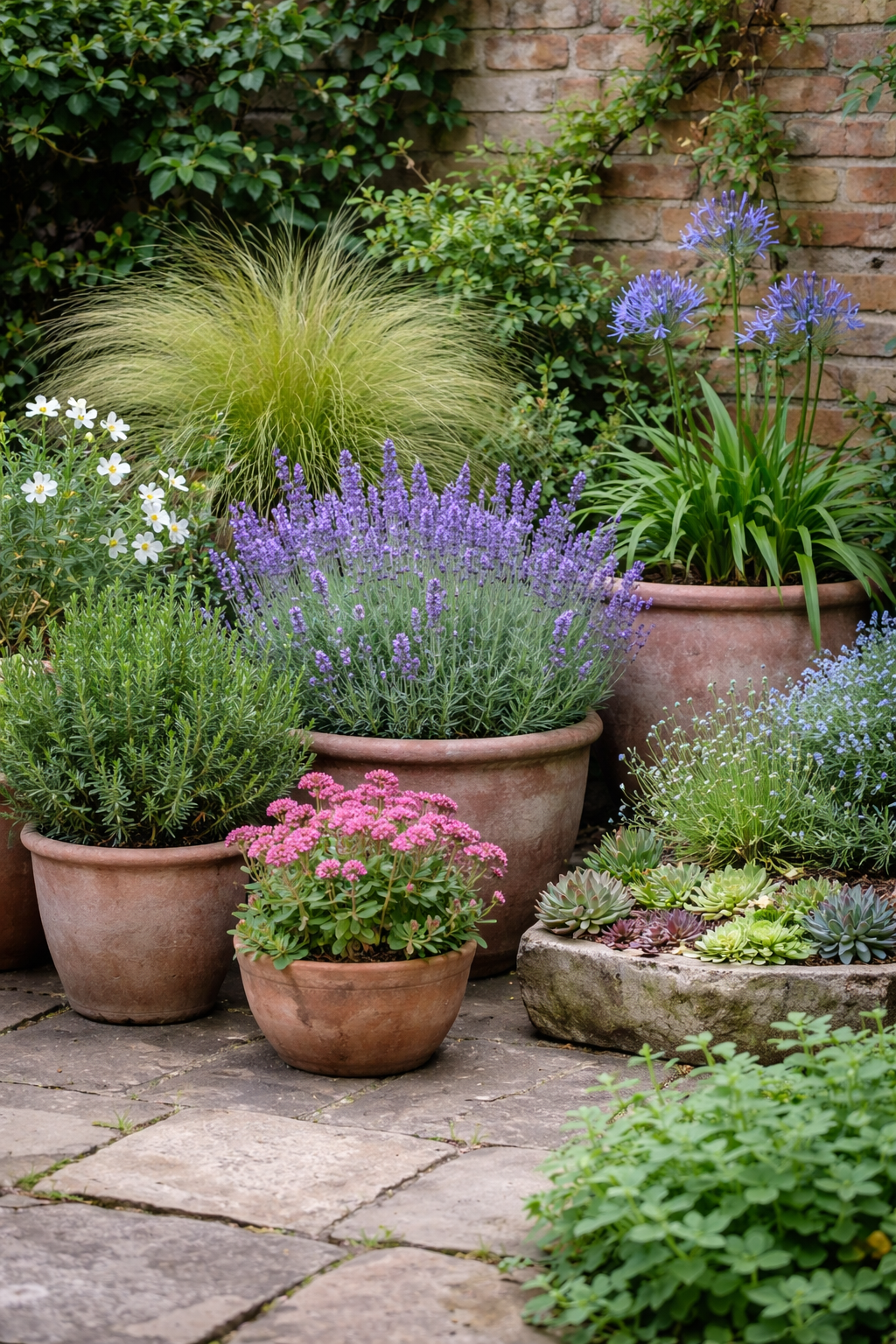
| There is a particular honesty to a patio garden. Borders in open ground can disguise neglect for a while. Lawns forgive. Shrubs root deeply and quietly get on with it. But a pot on paving tells the truth. It dries when it dries. It wilts when it must. It rewards consistency and exposes forgetfulness. If we are seeking plants that require little watering and low maintenance in a UK patio setting, we are really asking a subtler question: which plants understand containment, exposure, and restraint? Over the years, working in courtyards in Sandwich, on roof terraces in London, and in narrow town gardens where sun ricochets off brick, I have found that certain species carry themselves differently in containers. They do not demand constant correction. They accept the rhythm of dry spells. They respond to restraint rather than abundance. They are not thirsty romantics. This is not a list of “bulletproof” plants. There are no miracle cures in gardening. But there are plants whose temperament suits the patio life. Mediterranean temperaments It is no surprise that many of the most reliable low-water patio plants originate from Mediterranean climates. What matters is not simply their drought tolerance, but their preference for lean soil and sharp drainage. In a container, this is an advantage rather than a compromise. Lavandula angustifolia and its cultivars remain unmatched for reliability. I have seen lavender thrive in terracotta pots that bake all afternoon against a south-facing wall. The key is not generous compost, but poor compost improved with grit. Lavender resents cosseting. Watering it too often is a greater danger than forgetting it once in a while. The common assumption is that lavender dies from drought; more often, it dies from kindness. Salvia rosmarinus (formerly Rosmarinus officinalis) behaves similarly. Rosemary in a container needs well-drained soil and full sun. It does not want to sit in a saucer of water after a summer shower. Upright forms such as ‘Miss Jessopp’s Upright’ create vertical structure in a pot, while trailing varieties soften the rim. In winter, rosemary tolerates cold better than most expect, provided its roots are not waterlogged. Thymus vulgaris and the creeping thymes form low, aromatic cushions that barely notice a missed watering. In gravel-topped pots, they look entirely at home. Their flowers attract bees to a patio, transforming the atmosphere entirely. Origanum vulgare, especially ornamental forms like ‘Kent Beauty’, bridges the gap between herb and ornamental. It is generous in flower, tolerant of drought, and asks little beyond sun and drainage. These Mediterranean plants share a philosophy: abundance of light, poverty of soil, freedom of drainage. Once we understand that, watering becomes a background act rather than a daily anxiety. Foliage that stores its own water Some plants take drought tolerance further by storing water in their own leaves. Succulence is not exotic in Britain; it simply needs to be matched carefully to winter conditions. Sedum spectabile (now often classified as Hylotelephium) and related varieties are dependable perennials for larger pots. Their fleshy leaves retain moisture, and their late-summer flower heads provide structure into autumn. They tolerate wind on exposed patios better than many softer plants. Lower-growing sedums such as Sedum spurium spill elegantly over the edges of shallow containers. They are useful in mixed plantings, weaving between more upright species. Sempervivum tectorum, the houseleek, is almost philosophical in its self-sufficiency. It will grow in the thinnest soil and survive surprising neglect. In winter, it looks modest; in summer, it flowers boldly and then dies, leaving offsets behind. This lifecycle unsettles some gardeners, but it is part of its quiet rhythm. The myth here is that succulents require no care. In truth, they require the right care: gritty compost, minimal feeding, and protection from prolonged winter saturation. They are low-maintenance, not no-maintenance. Structural perennials that endure dryness Beyond the Mediterranean herbs and succulents, some perennials cope admirably with reduced watering once established. Nepeta × faassenii, the catmint, is one of the most forgiving patio perennials I know. Its grey foliage hints at drought tolerance; its long flowering period offers remarkable value. It can look untidy after its first flush, but a firm cut back revives it. It is often underestimated because it is common. Common, in this case, is a compliment. Echinacea purpurea has become fashionable in recent years, but its resilience is longstanding. In a deep pot with good drainage, it tolerates dry spells well once established. It does, however, resent sitting wet in winter. This is the trade-off: many drought-tolerant summer perennials dislike winter damp more than summer dryness. Verbena bonariensis threads its tall stems through mixed container plantings, adding lightness without bulk. It self-seeds freely in open ground; in pots, it is more contained and less intrusive. It tolerates dryness but benefits from occasional deep watering in prolonged heat. Agapanthus africanus and its hybrids are well-suited to container life. In fact, they often flower better when slightly root-bound. Their strappy leaves cope with sun and moderate drought, though newly planted specimens need attention until established. These plants offer height and movement without demanding constant irrigation. They reward occasional, thoughtful watering rather than daily intervention. Evergreen shrubs for permanence Patios often benefit from a degree of permanence — plants that hold their shape through winter and provide structure. Cistus × purpureus and related rock roses are quintessentially drought-tolerant once established. Their papery flowers are fleeting, but the evergreen foliage provides year-round presence. They insist on excellent drainage. In heavier compost, they decline quickly. Hebe rakaiensis and other compact hebes cope well with moderate dryness, particularly in coastal or sheltered urban settings. They do not tolerate severe frost in exposed positions, so placement matters. Santolina chamaecyparissus, with its silver foliage, reflects light beautifully on stone patios. It dislikes winter wet and benefits from a light trim after flowering to maintain shape. The challenge with evergreen shrubs in pots is longevity. Over several years, the compost structure deteriorates, and drainage declines. Repotting every few seasons is not glamorous work, but it preserves the plant’s health. Low maintenance does not mean never revisiting. Grasses and movement Ornamental grasses introduce movement without fuss. Stipa tenuissima (often still sold under that name) creates a haze of fine foliage that shimmers in the light. It copes well with dry conditions but needs free drainage. In prolonged wet winters, it can suffer. Festuca glauca, the blue fescue, forms neat mounds of steely foliage. It thrives in lean soil and moderate dryness, making it ideal for contemporary patio schemes. Grasses rarely require feeding and generally resent heavy soil. Their maintenance consists mainly of a spring comb-through or cut back. They ask for light and space, not water. Practical observations from working patios Over time, certain patterns repeat themselves. Five observations have shaped how I plant low-water patios. First, depth matters more than frequency—a deep pot, even for a drought-tolerant plant, buffers temperature and moisture fluctuations. Shallow bowls dry dramatically faster. Clients sometimes choose shallow planters for aesthetic reasons, then struggle with watering. A few extra inches of compost can halve the workload. Second, grouping by temperament simplifies care. A pot of lavender and rosemary together is easier to manage than lavender planted beside something that demands regular irrigation. Mixed containers can work, but only when water preferences align. Third, compost choice is critical. Standard multi-purpose compost holds water generously. For Mediterranean plants, I routinely add horticultural grit or sharp sand. This small adjustment prevents the most common cause of failure: root rot. Fourth, establishment is a separate phase. Even drought-tolerant plants require regular watering in their first season. I have seen frustration arise when a newly planted lavender wilts and is declared “not drought-tolerant”. Tolerance develops with root growth. Fifth, there is a difference between drought-tolerant and neglect-tolerant plants. A plant may survive dryness, but still look poor if never watered. Occasional deep watering during prolonged heat maintains vigour without encouraging dependency. Challenging the “low maintenance” idea There is an assumption that low maintenance means low engagement. I do not find this true. In fact, patio gardening demands a different kind of attentiveness. You notice the weight of a pot when you move it. You see the subtle shift in foliage colour that suggests thirst. You respond before collapse. Low-water plants reduce labour, but they increase observation. They encourage a quieter form of gardening — less frantic, more responsive. Another myth worth gently unsettling is that drought-tolerant plants suit only full sun. While many prefer it, some, like heucheras (Heuchera micrantha cultivars), cope well with partial shade and moderate dryness once established. Shade reduces evaporation, which can offset lower drought tolerance. Context always matters. The role of restraint Patio gardening rewards restraint. Overplanting is tempting. A single pot can quickly become crowded, leading to competition for limited moisture. Allowing space between plants reduces watering needs and enhances form. Similarly, feeding sparingly supports the aim of low maintenance. High nitrogen fertilisers encourage soft growth that demands more water. Lean feeding maintains compact, resilient plants. Seasonality and acceptance No plant looks immaculate year-round. Sedums collapse after flowering; lavender grows woody; grasses brown. Accepting seasonal shifts reduces intervention. Not every faded stem requires removal the moment it declines. Sometimes stillness has its own beauty. In winter, water demand reduces dramatically. Many patio failures occur when summer habits persist into colder months. Mediterranean species, in particular, prefer to remain almost dry in winter. The discipline to withhold water is part of the craft. A patio as a microclimate Urban patios often create their own microclimate. South-facing brick walls radiate heat well into the evening. Courtyards shelter plants from wind. Conversely, roof terraces expose them to desiccating gusts. Choosing species such as Lavandula, Santolina, Stipa, Sedum, Nepeta, Agapanthus, Cistus, Festuca, Thymus, and Rosmarinus is not merely about low watering; it is about matching temperament to environment. Where exposure is severe, slightly more robust shrubs like Phormium tenax (in well-drained compost) can provide structure with moderate drought tolerance. Though not strictly minimal-water plants, established phormiums cope better than many assume. The quiet satisfaction There is something deeply satisfying about a patio that sustains itself with modest input. It feels measured rather than managed. A lavender hums with bees without daily irrigation. A pot of thyme releases scent underfoot. Sedum holds its shape through a heatwave with only an occasional deep drink. The garden, even in miniature, becomes a conversation rather than a dependency. In the end, choosing low-water, low-maintenance patio plants in the UK is less about selecting a fixed list and more about understanding plant character. Mediterranean herbs, succulents, drought-tolerant perennials, compact evergreens, and resilient grasses all have a place. They share a preference for light, drainage, and restraint. They reward thoughtful planting and measured care. And perhaps most importantly, they free us from the anxiety that gardening must be relentless to be worthwhile. A patio planted with Lavandula angustifolia, Salvia rosmarinus, Thymus vulgaris, Origanum vulgare, Sedum spectabile, Sempervivum tectorum, Nepeta × faassenii, Echinacea purpurea, Verbena bonariensis, Agapanthus africanus, Cistus × purpureus, Santolina chamaecyparissus, Stipa tenuissima, and Festuca glauca will not demand daily attention. It will ask instead for observation, occasional intervention, and a willingness to let plants be themselves. That is a far more durable form of low maintenance. |
| About our writing & imagery Most articles reflect our real gardening experience and reflection. Some use AI in drafting or research, but never for voice or authority. Featured images may show our photos, original AI-generated visuals, or, where stated, credited images shared by others. All content is shaped and edited by Earthly Comforts, expressing our own views. |

