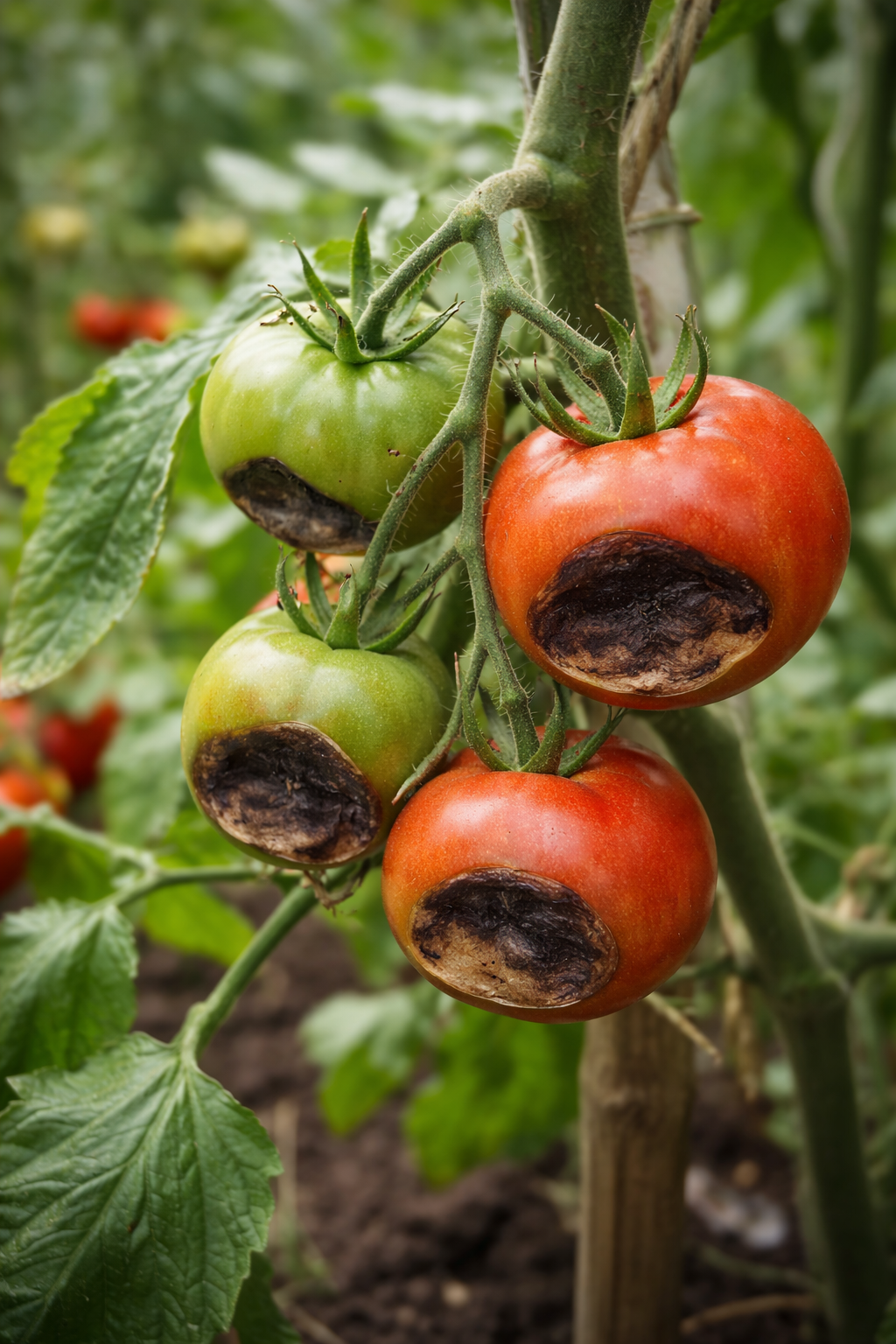
| A Symptom of Imbalance, Not Disease |
| There are moments in the garden that feel disproportionate. You wait patiently for the first tomatoes to swell, admire their gloss in early summer light, and then — just as they begin to colour — you notice it. A darkened patch at the base. Slightly sunken. At first, it was no larger than a coin. Then spreading, leathery, unambiguous. Blossom end rot has a way of unnerving even experienced gardeners. It appears suddenly and contradicts all the effort invested in soil preparation and care. The instinct is to assume infection, to search for a treatment, to reach for something corrective. But blossom end rot is not a disease in the way mildew or blight is. It is not contagious. It is not fungal. It is not a pathogen creeping from plant to plant. It is a symptom. And like most symptoms in gardening, it tells a story about balance. What It Is — And What It Is Not Blossom end rot presents as a sunken, brown or black patch at the blossom end of fruit — the end opposite the stem. It begins as a water-soaked area and gradually becomes dry, papery, sometimes almost charcoal in texture. The plant itself may look perfectly healthy. Leaves are green. Growth is strong. Flowers are abundant. And yet, one fruit after another develops this blemish. The common explanation is calcium deficiency. That is partly true — but incomplete. Blossom end rot occurs when calcium cannot reach the developing fruit in sufficient quantity. That is not the same as saying there is no calcium in the soil. In many British gardens, particularly those with chalk or limestone influence, calcium is plentiful. The issue is transport. Calcium moves through plants with water. If water uptake is erratic — periods of drought followed by heavy watering, or inconsistent moisture around roots — calcium delivery to rapidly developing fruit is disrupted. The plant prioritises new leaf growth, and the fruit suffers as a result. So the visible rot is the end point of a physiological imbalance, not a surface infection. That distinction changes how we respond. Which Plants Are Affected Blossom end rot most commonly affects tomatoes. In greenhouses and polytunnels, where conditions fluctuate more dramatically than we sometimes realise, it is particularly prevalent. Peppers and chillies are also susceptible. Aubergines can develop it. Courgettes occasionally show similar symptoms, though less frequently. Among fruits, it is rare but not unheard of in certain squashes and melons. It does not affect apples, pears or soft fruit in this form. And it is not a problem for leafy crops. There are related disorders in flowers — particularly in certain bedding plants — in which the petal edges brown due to a calcium imbalance. Still, these are not typically labelled as blossom end rot. The key pattern is this: it affects fleshy fruits that develop quickly and demand consistent moisture during early formation. The Greenhouse Paradox It is no coincidence that blossom end rot often appears in greenhouse-grown tomatoes. Greenhouses create an illusion of control. We shelter plants from wind and rain, regulate feeding, and manage temperature. But we also create microclimates — pockets of heat and dryness that shift quickly from day to night. A warm June afternoon can dry compost more rapidly than expected. The following day, in response to wilting, we water heavily. The plant drinks deeply. Fruit swells quickly. The cycle repeats. This irregularity is often enough to trigger blossom end rot, even in nutrient-rich compost. In outdoor beds, rainfall and soil volume tend to buffer these extremes. In pots or grow bags, the margin for error is narrower. That is not to discourage greenhouse growing. It is simple to recognise that containment amplifies fluctuations. Calcium: Present but Unavailable One persistent myth about blossom end rot is that adding crushed eggshells to the soil will solve the problem. It is a charming image — domestic waste repurposed, calcium returned to the earth. But in practice, eggshells break down slowly. Their calcium is not immediately available to roots. Even if incorporated in autumn, they are unlikely to correct an acute issue in summer. Similarly, spraying fruit with calcium solutions can offer temporary mitigation but does not address the underlying water imbalance. Foliar feeds may reduce severity in some cases, but they are not a cure-all. The deeper issue is that calcium moves passively in the transpiration stream. It does not relocate easily within the plant. If a developing fruit misses its window of supply during early cell formation, the damage cannot be reversed. Once the dark patch appears, that fruit will not recover. The remedy lies not in rescuing the fruit, but in steadying the plant. Water: Consistency Over Quantity In my own practice, the single most effective preventive measure has been consistent watering. Not overwatering. Not constant saturation. But rhythm. In containers, I check moisture daily in warm weather. Compost should feel evenly damp below the surface, not bone dry at depth. A simple finger test tells more than a schedule ever will. Deep watering in the morning allows moisture to settle before heat intensifies. Mulching the surface — even in pots — reduces evaporation. In open ground, incorporating organic matter improves moisture retention. Soil with good structure holds water without becoming stagnant. It is worth noting that uneven watering does not only mean drought followed by drenching. It can also mean cold, wet spells followed by sudden warmth. Roots stressed by saturated soil absorb nutrients poorly. When temperatures rise, rapid fruit development outpaces supply. The lesson is the same: moderation and steadiness. Feeding: The Nitrogen Trap Excess nitrogen fertiliser can exacerbate blossom end rot. Lush, rapid leaf growth increases demand for water and nutrients. The plant diverts calcium to new foliage rather than fruit. In high-nitrogen regimes — often unintentionally created by generous liquid feeds — fruit development can become imbalanced. Tomatoes, peppers and aubergines require feeding once fruit sets, but the emphasis should shift towards potassium rather than nitrogen. Balanced feeding supports steady development. Overfeeding invites instability. This is another instance where more is not better. Soil pH and Structure Calcium availability is influenced by soil pH. In very acidic soils, calcium can be less accessible to plants. Liming acidic ground in winter can improve long-term calcium availability. But again, this is a background adjustment, not an emergency intervention. More often than not, blossom end rot appears in soils that are not deficient in calcium but are subject to inconsistent moisture or root disturbance. Compacted soil can restrict root spread, limiting water uptake. Containers that are too small restrict root development. Root damage from cultivation or pest activity can also impair nutrient transport. The plant’s ability to access water is inseparable from its ability to access calcium. Treatment: Realistic and Measured Once blossom end rot appears on a fruit, it cannot be reversed. Remove affected fruits promptly. This reduces energy wasted on compromised growth and allows the plant to redirect resources. Then focus on prevention for subsequent fruits. Adjust watering practices. Review the feeding regime. Check pot size — tomatoes in undersized containers are far more prone to irregular uptake. If soil tests reveal low calcium and acidic conditions, winter applications of lime can help. But do not scatter lime mid-season without understanding pH; over-liming can create other imbalances. Calcium sprays can be used as a supplementary measure in persistent cases, but they should accompany improved watering consistency, not replace it. The most honest treatment is patience and adjustment. Natural Prevention: A Cultural Approach Natural prevention of blossom end rot rests on cultural practices rather than products. First, improve soil structure. Organic matter enhances water retention and moderates fluctuations. Second, mulch. A layer of compost, leaf mould or even straw around the base of plants reduces evaporation and keeps root zones cooler. Third, water deeply and regularly, particularly during fruit set. Avoid allowing plants to wilt repeatedly. Fourth, avoid excessive nitrogen feeding. Use balanced fertilisers appropriate to fruiting stages. Fifth, choose appropriate container sizes. A tomato plant in a cramped pot will struggle to maintain equilibrium, no matter how attentive the gardener. These measures are neither dramatic nor expensive. They are habits. Challenging a Common Assumption It is tempting to see blossom end rot as a failure of fertility — as if the soil has let us down. But often, the soil is adequate. It is our management that wavers. The assumption that a visible deficiency must mean the absence of nutrients is understandable but misleading. In many cases, the nutrient is present but inaccessible due to environmental fluctuation. This shifts the emphasis from adding to stabilising. In gardening, stability is often more valuable than abundance. Flowers and Ornamentals Although blossom end rot is most discussed in relation to vegetables, calcium imbalance can affect ornamental plants, too. Certain bedding plants may show browning at the petal edges or distorted growth due to irregular watering. Container-grown dahlias and begonias can suffer similar stress symptoms. The principle remains the same: steady moisture, balanced feeding, adequate root space. Ornamental gardeners are not immune to physiological disorders simply because crops are not edible. Climate and Increasing Variability In recent years, we have experienced longer dry spells punctuated by intense rainfall. This pattern amplifies the risk of blossom end rot. Plants in open ground may endure drought, then receive heavy rain. Fruit swells rapidly. Internal tissues rupture. Mulching and soil organic matter become even more critical under these conditions. They buffer extremes. Greenhouse growers may need to increase ventilation to moderate heat spikes. Shade cloth during peak summer can reduce transpiration stress. Blossom end rot is, in some ways, a reflection of climate irregularity. Accepting Imperfection There is a tendency to view any blemish as unacceptable. Yet fruit with early-stage blossom end rot can sometimes be trimmed and used if the damage is superficial. It is not toxic. It is simply tissue breakdown. Commercial growers discard such fruit. Home gardeners can afford more nuance. Still, prevention is preferable. The satisfaction of slicing into an unblemished tomato — dense, balanced, evenly ripened — is greater when achieved through steady care rather than corrective sprays. Three Observations From Practice First: containers demand vigilance. Open ground forgives inconsistency more readily. Second: Mulching has reduced my incidence of blossom end rot more effectively than any additive. Third: early-season stress often determines later outcomes. The first trusses are most vulnerable. Once plants establish a steady rhythm, later fruit is less likely to suffer. These observations are not universal laws, but patterns repeated across seasons. A Final Perspective Blossom end rot is a reminder that plants are systems, not machines. They respond to flows — of water, nutrients, temperature — rather than single inputs. When we focus narrowly on correcting a symptom, we risk missing the underlying rhythm. The remedy is rarely dramatic. It is steadiness. Water consistently. Feed moderately. Build soil that buffers extremes. Allow roots space. Accept that some seasons test our management more than others. Blossom end rot need not be a recurring disappointment. It can instead be a quiet teacher — reminding us that balance in the garden is not achieved by force, but by attention. And when the next flush of tomatoes ripens clean and firm, the lesson feels worthwhile. |
| About our writing & imagery Most articles reflect our real gardening experience and reflection. Some use AI in drafting or research, but never for voice or authority. Featured images may show our photos, original AI-generated visuals, or, where stated, credited images shared by others. All content is shaped and edited by Earthly Comforts, expressing our own views. |

