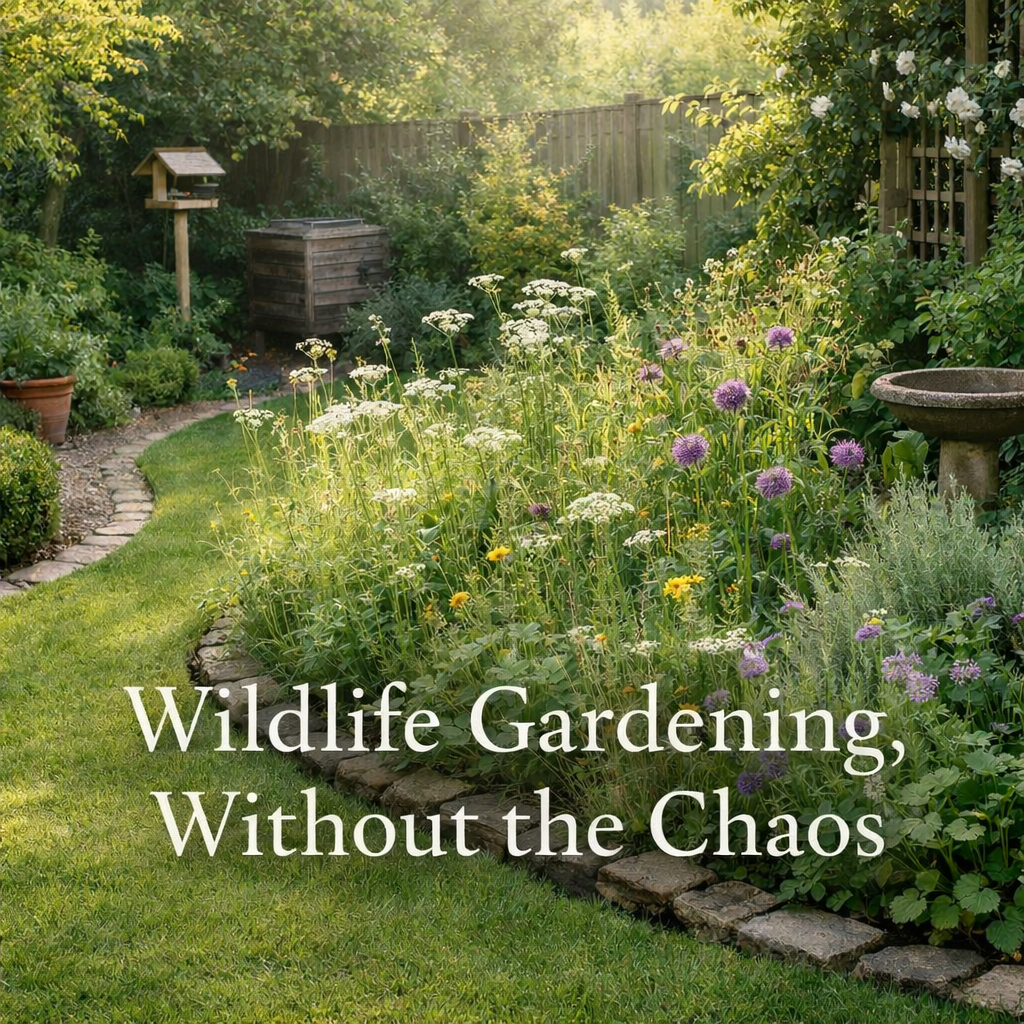
| Why Some Weeds Stay — and Others Go The question of why some weeds persist while others are removed points to a deeper debate about what truly benefits gardens and wildlife. It’s usually said with a shrug, or a sigh, or a vague sweep of the hand towards a patch of ground that’s begun doing something unexpected. Sometimes it’s said defensively. Sometimes apologetically. Occasionally, with real irritation. What it rarely invites is thought. In practice, the question is never whether a plant is a weed. The question is what that plant is doing, and whether it belongs there, now, like this. Most of the tension in wildlife gardening comes from that uncertainty. People are told—sometimes loudly—that weeds are good for wildlife, full stop. That removing them is ignorance or fear dressed as tidiness. Others are told the opposite: anything uninvited is a failure of maintenance. Neither view survives long in a real garden. Plants don’t arrive as ideas. One problem with gardening discourse is that plants are often treated as symbols rather than as organisms. Nettles are either heroes or villains. Dandelions are either ecological saints or lawn-wreckers. Reality is less dramatic and more demanding. Plants arrive where conditions suit them. Bare soil invites pioneers. Compacted ground selects for toughness. Nutrient imbalance favours certain species over others. None of this is moral. It’s responsive. A plant that appears briefly, flowers, feeds insects, and disappears has a very different impact from one that expands laterally, shades out neighbours, and claims the same territory year after year. Lumping both under the same label obscures the difference. Wildlife doesn’t benefit from confusion. It benefits from diversity held in balance. The difference between presence and dominance In well-functioning ecological gardens, many so-called weeds are present. They flower. They seed. They are browsed, visited, and occasionally cut back. But they do not dominate. Dominance is the line most people sense instinctively, even if they struggle to articulate it. It’s the moment when one plant begins to simplify a space rather than enrich it. When variety collapses into repetition. When movement becomes difficult. When light stops reaching the lower layers. At that point, leaving a plant “for wildlife” stops being generosity and starts being neglect. Selective removal is not a betrayal of ecological values. It is how those values are protected over time. Timing matters more than ideology. One of the most common mistakes I see is not what people remove, but when they remove it. A plant cut down mid-flower has done little. The same plant is left until the seed has played its part. A plant removed once it has begun to sprawl may already have displaced others. Gardening for wildlife is as much about patience as it is about restraint. Waiting a few weeks can be the difference between a space that supports insects and one that simply looks untidy for no gain. Equally, waiting too long can turn a manageable situation into a disruptive one. Some plants do not politely fade away. They advance. This is where real observation matters. Not dogma. Not guilt. Just paying attention. Why do some weeds earn their place Certain plants persist in gardens because they offer something others don’t. Early nectar. Deep roots that break compacted soil. Leaves that shelter ground-dwelling insects. These plants often appear before anything else is ready to take over. Removing them too quickly creates a vacuum. Nature fills vacuums efficiently, but not always with what you’d prefer. Allowing these plants a temporary role—then making space for others—is a form of succession gardening, whether or not anyone uses that term. It’s a process that mirrors natural systems while still acknowledging the limits of a small, managed space. Again, the key is intention. A plant that is allowed because it serves a purpose is different from one that is allowed because nobody knows what to do with it. The quiet damage of leaving everything There is a particular kind of disappointment that sets in when someone has tried to “let nature take over” and finds themselves with less life, not more. Fewer flowers. Fewer insects. More of the same, repeated endlessly. This is not a failure of wildlife gardening. It’s a misunderstanding of how diversity works. Left entirely alone, many gardens simplify. A handful of robust species outcompete others. Light and space narrow. The system stabilises, but at a lower level of variety. Intervention, done lightly and consistently, keeps doors open. It prevents early winners from becoming permanent monopolies. Wildlife does not need you to step back entirely. It needs you to edit. Editing without erasing The word editing matters here. Editing implies judgement, but also care. It suggests you are not tearing pages out at random, nor letting the manuscript ramble unchecked. In a garden, editing means thinning, not clearing. Cutting back, not uprooting. Removing seed heads in one spot and leaving them in another. Deciding a plant’s job is done for this year. These actions are subtle. They do not announce themselves. But over time, they shape a garden that supports more life, not less. People often worry that they are “doing it wrong” if they remove something labelled beneficial. In truth, they are often doing it right—provided they are making space for something else to follow. Context is everything A plant that is welcome in one garden may be a problem in another. Soil, light, scale, and surrounding habitat all matter. What works at the edge of a field does not always work between fences. This is where generic advice fails. Gardens are specific places. They require specific responses. Understanding that frees people from the anxiety of rules. It allows them to respond to what they actually see, rather than what they think they ought to tolerate. Staying comfortable with decision-making The hardest part of this conversation is permission. Many people are waiting for it. Permission to remove a plant without feeling anti-nature. Permission to prefer balance over abundance. Permission to accept that a living garden still requires judgment. Wildlife gardening without chaos relies on steady confidence: paying attention, noticing patterns, and acting before things tip too far. Some weeds stay. Others go. The difference is practical, seasonal, and grounded in care. |
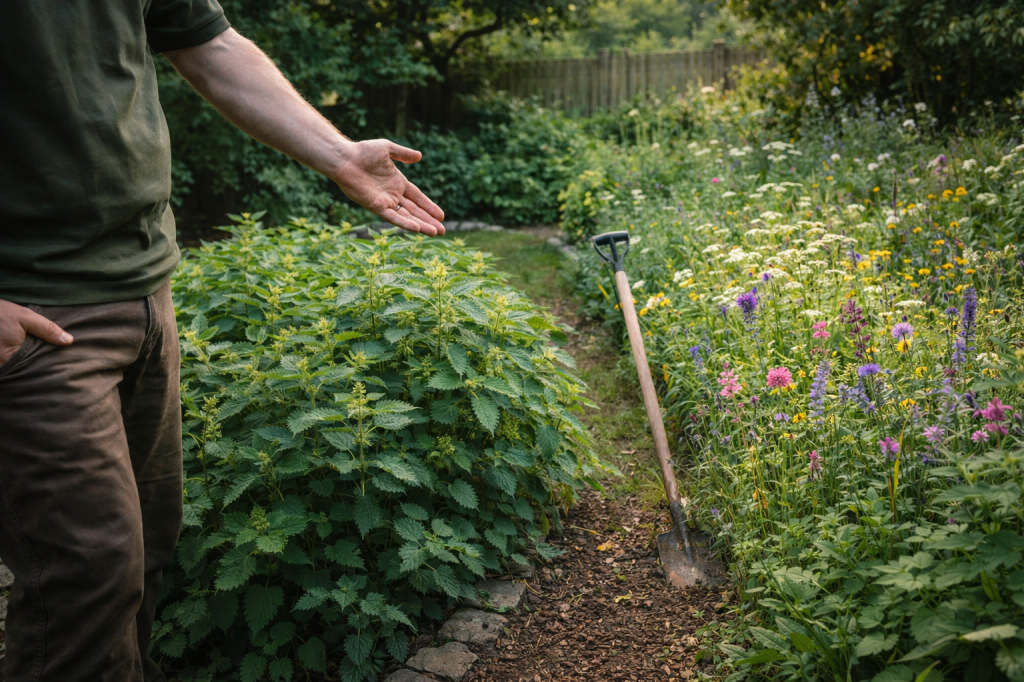
| About our writing & imagery Most articles reflect our real gardening experience and reflection. Some use AI in drafting or research, but never for voice or authority. Featured images may show our photos, original AI-generated visuals, or, where stated, credited images shared by others. All content is shaped and edited by Earthly Comforts, expressing our own views. |

