| A Comprehensive Guide to Beds, Borders, Containers and Open Ground |
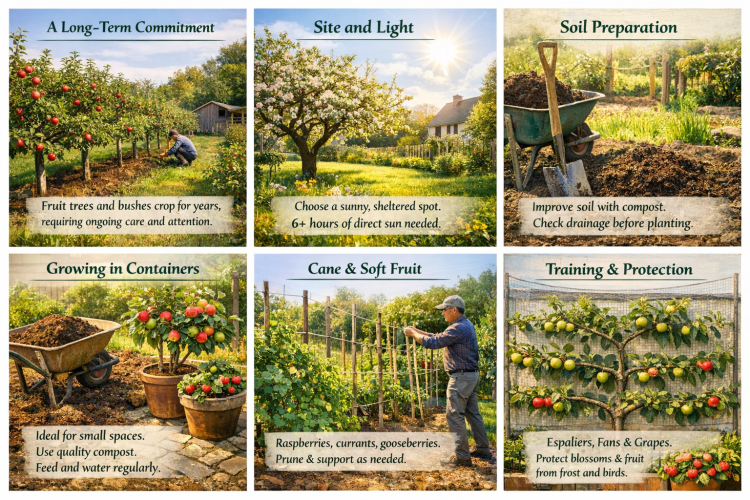
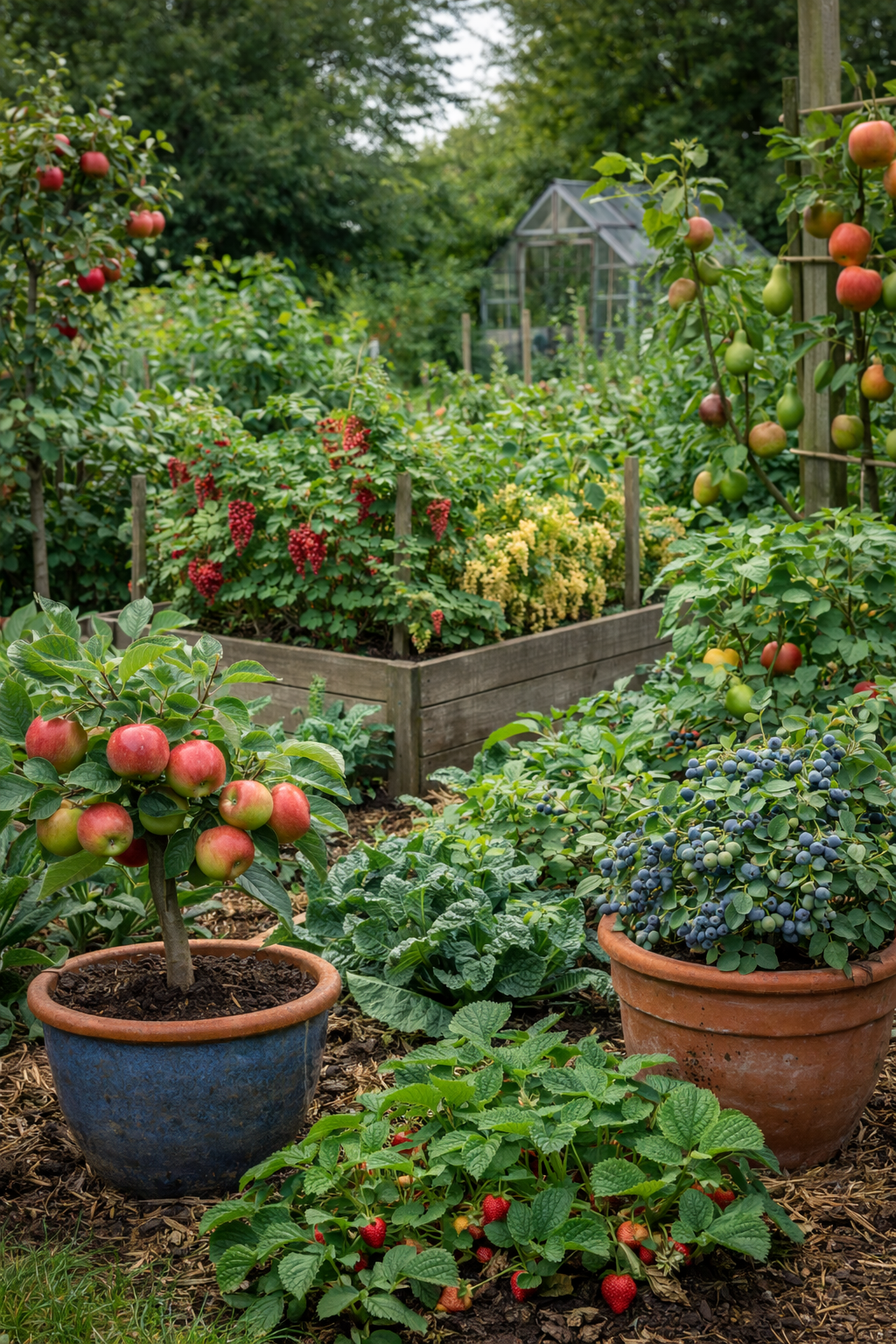
| Fruit asks something different of a gardener. Vegetables are often annual conversations — a spring sowing, a summer harvest, a cleared bed by autumn. Fruit is a longer relationship. A tree planted now may still be cropping in twenty years. A currant bush can outlast several garden redesigns. Even strawberries, though technically short-lived, demand attention to renewal and succession. For that reason, growing fruit successfully is less about single-season technique and more about thoughtful placement, soil preparation, and ongoing stewardship. What follows is not a quick list of varieties, but a grounded, working guide to growing fruit in beds, borders, containers and open ground in a UK climate. It considers trees, soft fruit, cane fruit, trained forms and container specimens — and, equally importantly, the conditions that allow them to thrive. The Nature of Fruit Growing Fruit plants are long-term occupants of the soil. They ask: Consistent fertility Good drainage Light — often more than we assume Pruning and structure Protection from pests and weather Unlike leafy vegetables, fruit quality depends heavily on sunlight exposure and steady moisture during flowering and fruit set. Poor light results in weak flowering and insipid flavour. Erratic watering can cause fruit drop or splitting. In Britain, we are fortunate: many temperate fruits thrive here. Apples, pears, plums, cherries, currants, gooseberries, raspberries, strawberries and even figs can all succeed with the right siting. But success begins with understanding the site. Site and Light: The Non-Negotiables Fruit requires sun. Not dappled shade, not reflected light alone. Six hours of direct sunlight per day is a reasonable benchmark for most fruiting crops. South- or west-facing positions are ideal. East-facing sites can work well, particularly where late frost is less likely to damage blossom. North-facing walls are rarely suitable for most fruit trees, though currants and gooseberries tolerate partial shade better than apples or peaches. Shelter matters. Blossoms are delicate. Strong winds reduce pollinator activity and can damage early fruit. Hedges, fences or walls provide valuable protection. Frost pockets — low-lying areas where cold air settles — are problematic for early-flowering fruits such as apricots and peaches. Before choosing varieties, walk the garden and observe how light moves across it. Soil Preparation: Investing for the Long Term Fruit trees and bushes prefer well-drained, fertile soil with good structure. Before planting in the ground: Remove perennial weeds thoroughly. Incorporate well-rotted compost or manure. Check drainage. If water sits after heavy rain, consider raised beds or mounding. Avoid fresh manure at planting time; it can scorch roots. Unlike annual crops, fruit trees benefit from soil that has been prepared months in advance, if possible. Autumn preparation for winter planting is ideal. Do not over-enrich. Excessive nitrogen leads to lush vegetative growth at the expense of fruiting. Growing Fruit in the Ground Apples and Pears Apples and pears are foundational fruit trees in UK gardens. They are available on different rootstocks, which determine the final size. M27: Very dwarf (containers or small gardens) M9: Dwarf (small gardens) MM106: Semi-dwarf (medium gardens) MM111: Larger, traditional orchard size Choosing rootstock is as important as choosing a variety. Plant bare-root trees between November and March when dormant. Soak roots before planting. Dig a generous hole, but ensure the graft union remains above soil level. Firm soil well around roots; air pockets hinder establishment. Apples and pears often require pollination partners. Some varieties are self-fertile; many benefit from a compatible partner flowering at the same time. Common varieties suited to UK gardens include: Apples: ‘Discovery’, ‘Cox’s Orange Pippin’, ‘Egremont Russet’, ‘James Grieve’, ‘Bramley’ Pears: ‘Conference’, ‘Williams’, ‘Concorde’ Pruning shapes the tree. Open-centre or central-leader forms encourage light penetration and airflow. Plums and Gages Plums and gages prefer slightly warmer sites. They are often self-fertile, though some benefit from cross-pollination. Unlike apples, plums are best pruned in summer to reduce the risk of silver leaf infection. They dislike waterlogged soil and are sensitive to late frosts during blossom. Cherries Cherries require good drainage and protection from birds. Sweet cherries need pollination partners unless self-fertile varieties are chosen. Sour cherries are more tolerant of shade and often self-fertile. Netting is often essential as fruit ripens. Growing Fruit in Raised Beds Raised beds are particularly useful where soil drainage is poor or where space is limited. Soft fruits perform especially well in raised beds: Strawberries Currants Gooseberries Blueberries (with acidic compost) Dwarf raspberries Raised beds warm earlier in spring and make soil modification easier. However, they dry out more quickly. Mulching and irrigation are important. Avoid planting large fruit trees in standard shallow raised beds; roots require depth and space. Fruit in Containers Container fruit growing has expanded significantly, particularly in smaller urban gardens. Strawberries Strawberries thrive in pots, hanging baskets or troughs. Good drainage is critical. Use high-quality compost and feed regularly once flowering begins. Replace plants every 2–3 years for best yields. Blueberries Blueberries require acidic soil (pH 4.5–5.5). Most UK garden soils are not acidic enough, making containers ideal. Use ericaceous compost. Keep soil consistently moist. Protect from birds. Plant at least two varieties for better pollination. Dwarf Apples and Pears On dwarfing rootstocks (M27 or M9), apples can be grown in large containers (minimum 45–50 cm diameter). Use loam-based compost. Feed annually. Ensure drainage holes are unobstructed. Container trees require more frequent watering and feeding than ground-planted specimens. Figs Figs perform exceptionally well in containers. In fact, restricting roots can encourage better fruiting. Place in full sun against a warm wall if possible. Cane and Soft Fruit: The Quiet Workhorses Raspberries Summer-fruiting raspberries crop on the previous year’s canes. Autumn-fruiting types crop on current year’s growth. Plant in fertile soil with support wires. Avoid heavy clay unless improved. Cut summer-fruiting canes down after harvest. Cut autumn-fruiting types to the ground in winter. Blackcurrants Blackcurrants fruit on young wood. Prune annually to encourage new shoots. They tolerate partial shade and cooler sites. Redcurrants and Whitecurrants These fruits are on older wood. Pruning focuses on maintaining an open framework. They are well-suited to trained cordon forms in smaller gardens. Gooseberries Gooseberries prefer open, sunny sites but tolerate partial shade. They are prone to mildew in dry conditions and sawfly attack. Prune to an open goblet shape to improve airflow. Grapes and Wall Fruits South-facing walls create microclimates suitable for grapes, peaches and apricots in many parts of southern England. Train vines along wires. Prune annually to maintain structure and encourage fruiting spurs. Peaches and nectarines benefit from fan training against warm walls and may require frost protection of blossoms. |
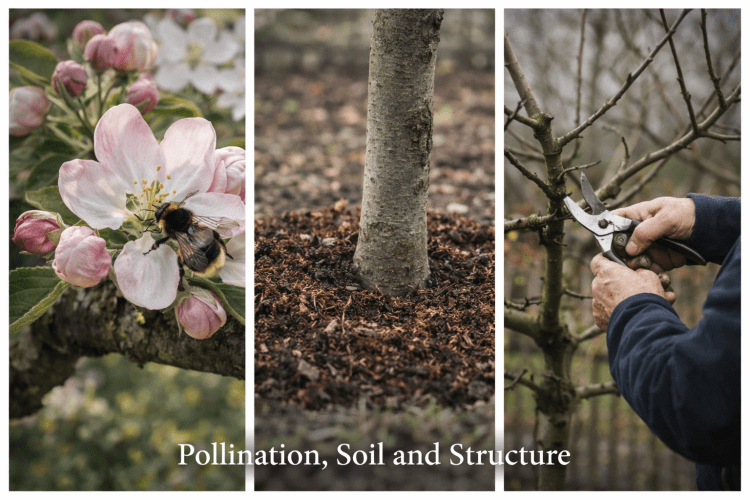
| Pollination: An Overlooked Essential Many fruit trees are not self-fertile. When selecting varieties, check pollination groups. Apples, for example, are divided into flowering groups. Compatible varieties that flower simultaneously ensure cross-pollination. In small gardens, choose self-fertile varieties or dual-purpose pollinators. Encourage pollinators by planting early-blooming flowers and avoiding pesticides during bloom. Feeding and Mulching Fruit trees and bushes benefit from annual mulching with compost or well-rotted manure in late winter or early spring. Avoid placing mulch directly against trunks. Feed container-grown fruit regularly during the growing season. Excessive feeding promotes leafy growth at the expense of fruit. Watering and Moisture Young trees require regular watering during establishment. Consistent moisture during flowering and fruit set reduces fruit drop and splitting. Containers need vigilant watering in summer. Mulch reduces evaporation and stabilises soil temperature. Pruning and Training Pruning is often seen as complicated. In reality, it serves three purposes: Shape the plant. Encourage fruiting wood. Improve light and airflow. Winter pruning stimulates growth. Summer pruning restricts vigour. Different fruits require different timing. Apples and pears: winter pruning primarily. Plums and cherries: summer pruning to avoid disease. Raspberries: pruning depends on fruiting type. Learn each plant’s growth habit before cutting. |
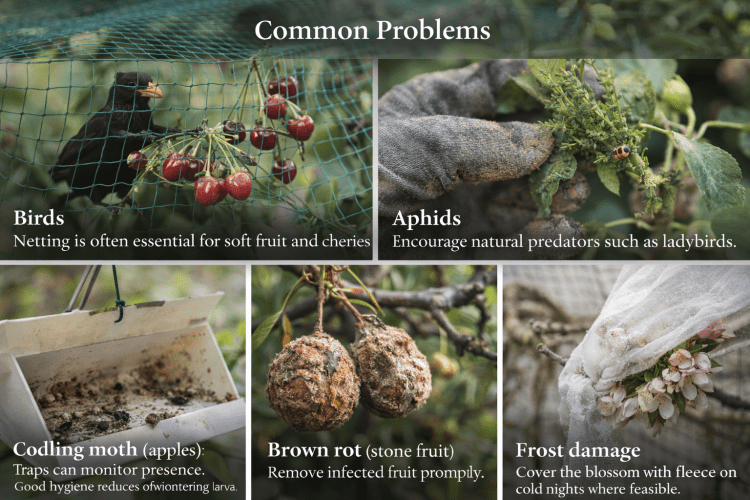
| Common Problems Birds Netting is often essential for soft fruit and cherries. Aphids Encourage natural predators such as ladybirds. Codling moth (apples) Traps can monitor presence. Good hygiene reduces overwintering larvae. Brown rot (stone fruit) Remove infected fruit promptly. Powdery mildew Improve airflow and avoid overcrowding. Frost damage Cover the blossom with fleece on cold nights where feasible. |
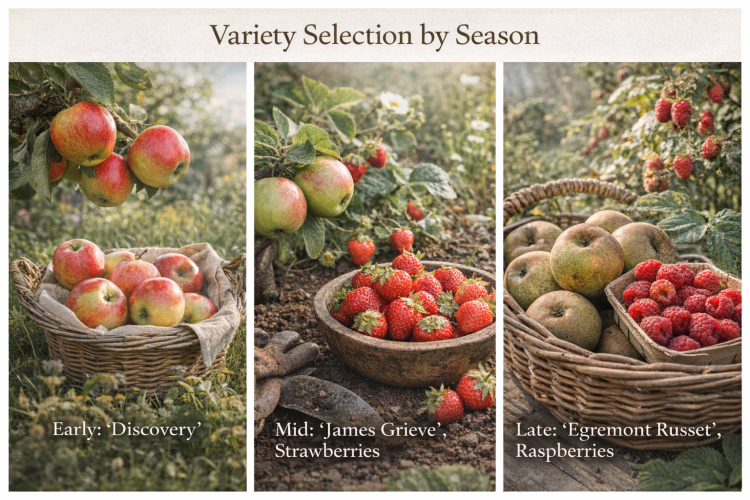
| Variety Selection by Season A balanced fruit garden includes early, mid and late varieties. Early apples: ‘Discovery’ Mid-season: ‘James Grieve’ Late storage: ‘Egremont Russet’ Strawberries: early (‘Honeoye’), mid (‘Cambridge Favourite’), late (‘Florence’) Raspberries: mix summer- and autumn-types. This extends the harvest across months. Three Observations From Practice First: soil preparation matters more than variety choice in the long term. Second: container-grown fruit requires more attention than ground-grown plants. Third: Over-pruning young trees delays fruiting; restraint is often wiser. Challenging an Assumption There is a belief that fruit growing is complicated and technical. In truth, once the site and soil are right, fruit plants are steady. The most common failures arise from poor siting, insufficient light, or inconsistent care — not inherent difficulty. Fruit rewards patience. Planning for Longevity Fruit trees can live decades. Plan spacing carefully. Avoid planting too close to buildings or boundaries. Consider rootstock size and eventual canopy spread. Think ahead about access for pruning and harvesting. Fruit growing is a commitment to the future garden. |
| Conclusion Growing fruit in beds, containers, or open ground is not fundamentally different in principle. The principles remain constant: Good light Well-prepared soil Appropriate root space Consistent moisture Sensible pruning Protection from pests The differences lie in scale and attention. Containers demand vigilance. Open ground offers forgiveness. Raised beds provide control but require discipline with irrigation. A fruit garden is not instant. It develops over seasons. But few garden investments yield as much quiet satisfaction as harvesting apples from a tree you planted years before, or picking raspberries warm from the cane. Fruit teaches patience. It rewards foresight. And once established, it becomes part of the structure of the garden itself. |
| About our writing & imagery Most articles reflect our real gardening experience and reflection. Some use AI in drafting or research, but never for voice or authority. Featured images may show our photos, original AI-generated visuals, or, where stated, credited images shared by others. All content is shaped and edited by Earthly Comforts, expressing our own views. |

