| Living With What Lives Beneath Us |
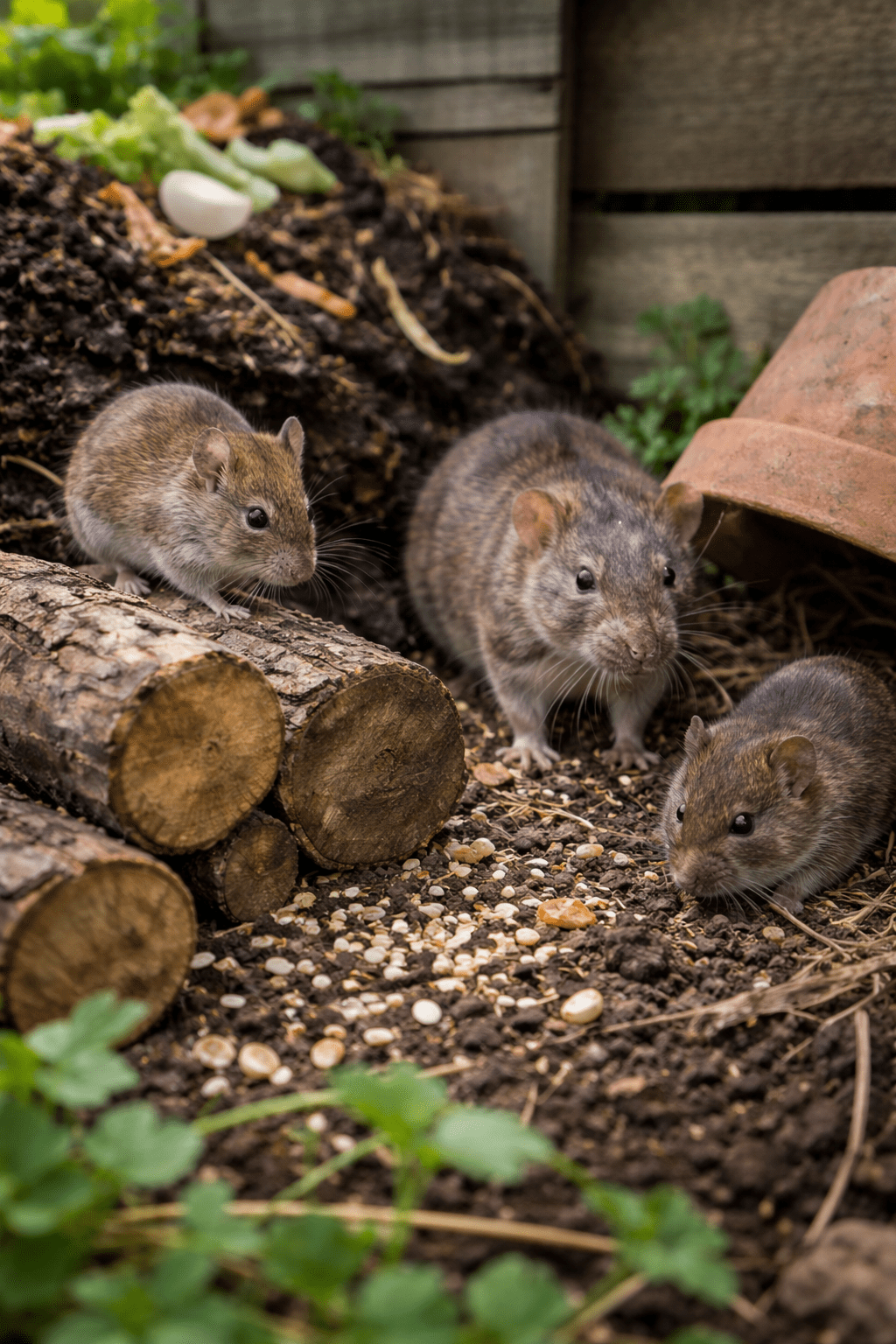
| Every gardener who works long enough in one place eventually realises something mildly humbling: we are not the only ones cultivating the soil. Lift a board that has lain undisturbed behind a shed, and something flickers away. Pull back mulch in winter and discover neat little tunnels. Dig potatoes and find one hollowed as cleanly as if with a spoon. Mice, rats and voles are not occasional garden accidents. They are residents. Some seasons, they are discreet; others, they feel almost assertive. The instinct is to see them as enemies to be eradicated. Yet, as with many things in the garden, the more effective approach begins with understanding rather than outrage. These animals are opportunists. They move where food, shelter and safety align. Our vegetable beds, compost heaps, sheds and stacked timber create precisely that alignment. The question is not whether they exist. The question is how we manage coexistence without surrendering our crops. |
| Knowing Who You Are Dealing With It is tempting to group all small mammals, but their habits differ. House mice and field mice are agile climbers. They will scale netting, scramble up pea supports, and enter sheds through the smallest gaps. They favour seeds, grains, young shoots and stored produce. Rats — particularly brown rats — are larger, more assertive and often linked to compost heaps, poultry feed or spillage. They burrow more extensively and can undermine raised beds if conditions suit them. Voles, often mistaken for mice, are usually the quiet burrowers in lawns and borders. Bank voles and field voles create shallow runs just beneath the soil surface, feeding on roots, bulbs and young stems. Each requires a slightly different response. Conflating them leads to blunt strategies that may not work. Why Gardens Attract Them We sometimes imagine rodents arrive because something has gone wrong. In truth, they are responding to abundance. A compost heap rich with kitchen scraps offers warmth and nourishment. A stack of logs provides dry shelter. Mulch creates cover from predators. Fallen fruit left beneath trees is an open invitation. Even bird feeders can be part of the equation. Seed spilt onto the soil becomes a secondary feeding ground. In winter, when natural food is scarce, gardens become lifelines. In recent years, with milder winters and longer growing seasons, rodent populations have had more opportunity to persist. Climate variability affects them as much as us. Understanding this shifts the tone from blame to management. Prevention Begins With Design The most sustainable way to deal with mice, rats and voles is through garden design and habit. Compost heaps are often the focal point. If using open heaps, avoid adding cooked food, meat or large quantities of bread. These are particularly attractive to rats. Turning compost regularly discourages long-term nesting. Enclosed compost bins with secure bases reduce access. Log piles are invaluable for biodiversity, but position them thoughtfully. Keep them away from sheds and vegetable beds if rodent activity is already high. Raised beds with solid bases or buried wire mesh can deter voles from tunnelling upward. In allotments where vole pressure is persistent, lining the base of beds with galvanised mesh has proven effective without harming soil health. Mulch should not be piled thickly against stems. While mulch conserves moisture, it also provides cover for gnawing. These adjustments are structural rather than reactive. Dealing With Mice Mice are often seasonal visitors, particularly in autumn when they seek shelter. Securing sheds and greenhouses matters. Seal small gaps. Store seeds in sealed containers. Avoid leaving harvested produce in open crates. In outdoor beds, protection during sowing is crucial. Newly sown peas and beans are particularly vulnerable. Covering rows with mesh or horticultural fleece prevents digging. Once seedlings establish, risk diminishes. If trapping becomes necessary, humane snap traps placed inside secure boxes can be effective. Avoid poison baits; they risk secondary poisoning of predators such as owls and foxes. Encouraging natural predators is one of the most balanced approaches. Owl boxes in rural settings, maintaining hedgerows for kestrels, and allowing some wild edges can support the natural checks that have long existed. Mice rarely need aggressive eradication. They respond quickly to reduced access and exposure. Addressing Rats With Care Rats evoke stronger reactions, perhaps because of their size and reputation. In gardens, they are usually linked to a consistent food source. Poultry feed, accessible compost, or deliberate feeding of wildlife can sustain them. The first step is always removal of attractants. Secure feed in metal bins. Clear fallen fruit promptly. Avoid leaving pet food outdoors. If burrows appear beneath sheds or compost bins, collapse them after removing food sources. Rats prefer stable tunnels; repeated disturbance encourages relocation. Trapping can be effective, but must be undertaken carefully and legally. Poison should be a last resort and used only in compliance with UK regulations, as misuse harms non-target species. Importantly, rats are wary. Sudden placement of traps without understanding their runs often yields little. Observing movement patterns before intervention increases effectiveness. And here is an uncomfortable truth: eradication in one garden rarely solves a neighbourhood issue. Collaboration with neighbours is often necessary in established populations. Voles: The Underground Challenge Voles can be more frustrating because their damage is subtle until it is not. You may notice a young fruit tree wilting inexplicably. Lift it, and roots are gnawed cleanly. Bulbs disappear over winter. Lawns show narrow runs just beneath the grass. Unlike rats, voles are less attracted to human food waste. They are herbivores that feed on roots and stems. Physical barriers are among the most reliable defences. When planting young trees, encasing root balls in underground wire-mesh guards prevents root damage during establishment. For bulbs, planting in mesh baskets deters access. Keeping grass short around vulnerable plants reduces cover. Voles prefer sheltered corridors. Encouraging predators again plays a role. Barn owls and kestrels are particularly effective at hunting voles. Installing perches in open spaces provides vantage points. Complete elimination is rarely realistic. The aim is reduction and deterrence. Natural Balance Versus Total Control It is worth challenging the assumption that every mouse, rat or vole must be removed entirely. A garden devoid of small mammals is also likely devoid of certain birds of prey. Ecosystems rely on interaction. The difficulty arises when populations tip into imbalance. Heavy-handed poison use disrupts that balance further. Secondary poisoning harms foxes, owls and even domestic pets. In many cases, modest adjustments to habitat and food availability reduce populations naturally over time. Gardening is rarely about absolutes. It is about thresholds. Three Observations From Practice First: compost management makes a profound difference. Gardens with disciplined composting rarely experience sustained rat presence. Second: newly planted areas are most vulnerable. Once plants mature, damage decreases significantly. Third: vigilance matters more than reaction. Early signs — droppings, burrows, gnawed stems — are easier to address than established networks. These patterns repeat across seasons. Humane and Legal Considerations In the UK, the use of rodenticides is regulated. Certain poisons require professional oversight. Misuse can result in environmental harm and legal consequences. Humane traps should be checked regularly. Live trapping, while appealing in theory, often results in relocation stress and mortality if animals are released far from suitable habitat. The RSPCA advises that prevention and habitat management are preferable to reactive killing wherever possible. As gardeners, our responsibility extends beyond our own plots. A Broader Perspective It is easy to frame mice, rats and voles as adversaries. But they are, fundamentally, responding to the same conditions we create to nurture plants: shelter, food and warmth. In some seasons, I have noticed vole runs in a quiet corner of the orchard and chosen to tolerate them, recognising that predators soon follow. In other years, when damage threatened young trees, I intervened swiftly. The key is proportion. If we treat every sign of wildlife as an invasion, we risk turning gardens into battlegrounds. If we ignore genuine problems, we lose crops and compromise structures. Between those extremes lies thoughtful management. Practical Steps That Matter Most Secure compost and feed sources. Reduce shelter close to vulnerable crops. Use physical barriers for young trees and bulbs. Encourage predators. Act early, not dramatically. These are not dramatic strategies. They are steady ones. Living With What Lives With Us Gardens are layered spaces. Beneath the visible order of beds and borders lies another world — tunnels, nests, movement at dusk. To garden is to accept that life gathers where life is supported. Dealing with mice, rats and voles is not about total conquest. It is about maintaining balance so that our crops thrive without unnecessary harm to the wider ecosystem. When we adjust our habits — tidy compost, thoughtful planting, measured response — we often find the problem diminishes without spectacle. And perhaps that is the larger lesson. In gardening, as elsewhere, stability comes less from force and more from design. |
| About our writing & imagery Most articles reflect our real gardening experience and reflection. Some use AI in drafting or research, but never for voice or authority. Featured images may show our photos, original AI-generated visuals, or, where stated, credited images shared by others. All content is shaped and edited by Earthly Comforts, expressing our own views. |

