| Before I Knew It Had a Name |
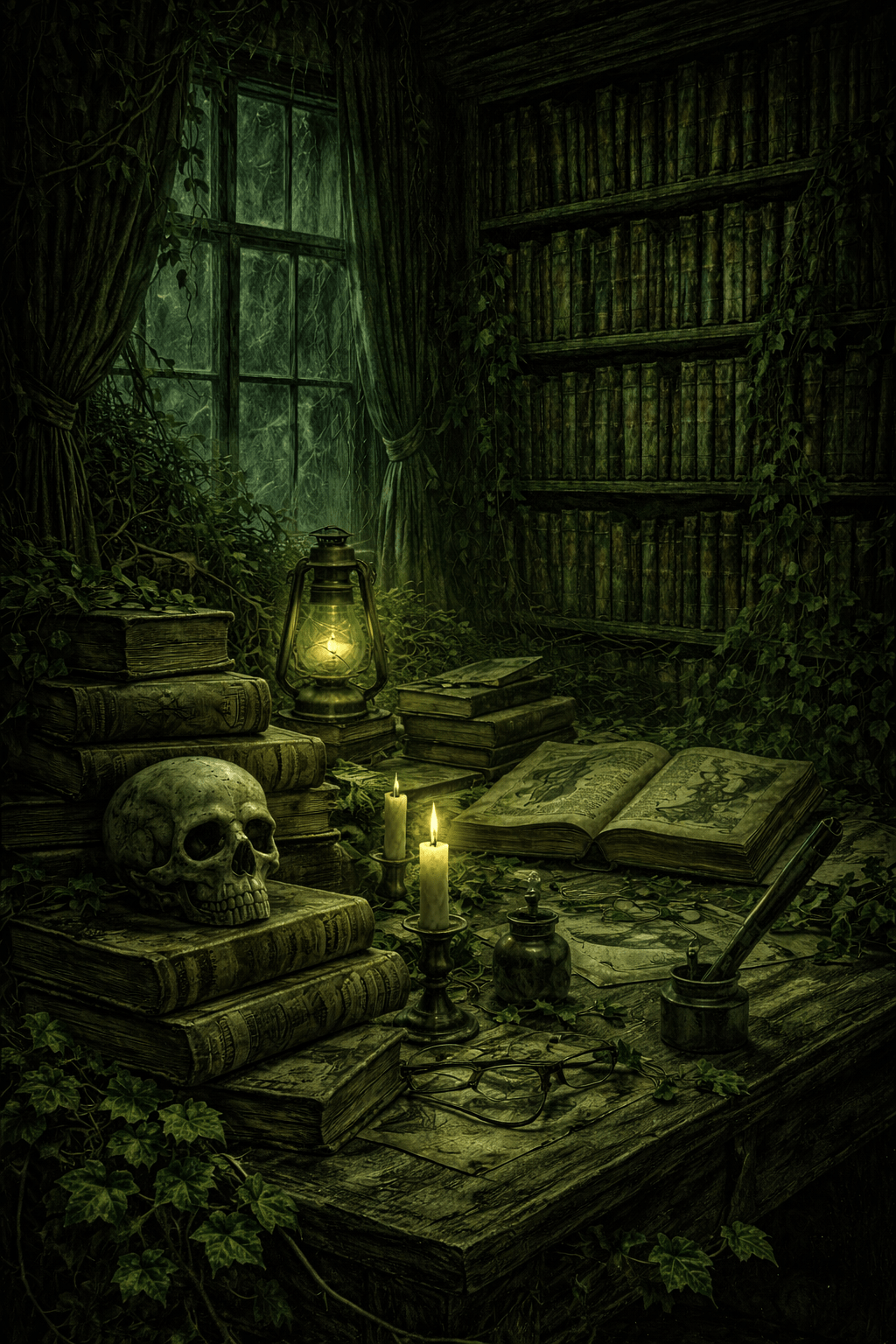
| I don’t remember a moment when horror entered my life. There was no first book, no illicit film, no older sibling daring me to look. That absence has always mattered to me. Horror didn’t arrive as a shock or a rebellion. It was simply there, already waiting, already familiar, as though I’d wandered into a room I recognised before I understood why. As a child, I was drawn to stories where something was wrong in a quiet way. Not broken, not violent, but misaligned. A subtle imbalance. A disturbance in the ordinary rhythm of things. A house that felt aware of itself. A village that smiled a little too easily. A narrator who insisted on their own innocence far too much. These stories didn’t announce themselves as frightening. They revealed themselves slowly, through implication, atmosphere, and consequence. Long before I could have named the genre, I understood its temperature. That early recognition wasn’t about thrill-seeking. I wasn’t looking to be frightened in a conventional sense. I was looking for a particular kind of attention. Horror asked you to slow down, to notice what others ignored, to observe the small signs before the larger consequences arrived. It rewarded patience. It punished carelessness. It assumed the reader could make connections without being led. That mattered. Many of the writers I found early on shared an understanding that fear didn’t need to be loud. Edgar Allan Poe showed me that horror could exist entirely in the mind, that guilt and obsession could generate their own architecture. Mary Shelley taught me that the most unsettling stories were often about responsibility rather than monstrosity. Bram Stoker demonstrated that dread could be assembled carefully, document by document, until inevitability replaced surprise. None of these stories rushed. They trusted the reader to stay with them. I didn’t read them as “classics”. I read them as instructions. They taught me how to pay attention. They suggested that the world had hidden structures that cause-and-effect extended further than was immediately visible, and that actions left residues capable of resurfacing years later in unexpected forms. They implied that disturbance was rarely isolated, that it travelled, that it accumulated. That sense of structure was comforting in a way I didn’t fully understand at the time. Horror offered rules. It offered consequences. It suggested that even the worst events followed an internal logic. In a world that often felt arbitrary, that logic mattered more than the fear itself. As I grew older, my reading widened, but the internal compass remained the same. Ray Bradbury showed me that nostalgia could be dangerous, that memory itself could wound. Shirley Jackson stripped horror of spectacle entirely and placed it in families, in social rituals, in rooms where nothing visibly happened, and everything shifted beneath the surface. Lovecraft widened the frame until human significance itself became questionable, until knowledge was revealed as something that could unsettle rather than stabilise. By the time I encountered modern paperback horror, my taste had already been formed by this quieter schooling. I wasn’t drawn to excess for its own sake. I was drawn to stories that respected the reader’s intelligence, that understood restraint, that left something unresolved. I was drawn to work that recognised imbalance early and traced it patiently to its outcome. This is where a common assumption often creeps in, usually spoken with a kind of indulgent smile: that horror is primarily about shock, or escapism, or adolescent provocation that it exists to be outgrown. That it is a phase rather than a practice. That wasn’t my experience. Horror, at its best, didn’t offer escape. It offered engagement. It asked difficult questions and refused to smooth over their implications. It allowed cruelty, chance, and injustice to exist without apology. It didn’t reassure you that everything would be all right. It suggested that sometimes it wouldn’t be, and that understanding this mattered. The more I read, the more this way of thinking embedded itself. I began to notice how short horror stories worked differently from novels. There was nowhere to hide in them. No space for extended explanation or comfort. They ended when they needed to end, often abruptly, leaving the reader to carry the weight of what had happened without guidance. Those endings stayed with me. Not as images, but as sensations. A tightening. A pause. A sense that something had been completed, even if it hadn’t been resolved. A recognition that not every disturbance can be repaired. Looking back now, I can see that these stories were teaching me something practical, though I wouldn’t have described it that way at the time. They trained me to tolerate uncertainty. They taught me that not all questions receive answers, and that this isn’t a failure of the story but part of its purpose. They suggested that understanding often arrives too late to prevent consequences, and that this, too, is part of being human. This is perhaps why horror never felt adolescent to me. It didn’t flatter the reader. It didn’t offer power fantasies. More often, it stripped power away. It placed ordinary people in situations where intelligence, decency, and good intentions were not always enough. It allowed harm to ripple outward. It allowed systems to respond slowly, indifferently, sometimes irreversibly. There is a quiet honesty in that. Another assumption that often surfaces is that readers of horror are drawn to darkness for its own sake. There is something inherently morbid or unhealthy in spending so much time with these stories. I’ve never found that particularly convincing. For me, horror functioned less as indulgence and more as calibration. It helped me understand where my boundaries were. It gave shape to anxieties that otherwise remained vague and diffuse. It clarified where tension lay and how it accumulated. It also taught me empathy in unexpected ways. Many of the most unsettling stories I read were not about villains, but about ordinary people making small, understandable decisions that led to irreversible outcomes. They asked the reader not to condemn from a distance, but to recognise the path that led there — the small choices, the ignored signals, the incremental shifts that compounded over time. This recognition mattered. It kept the genre human. As my reading deepened, something else began to happen almost without my noticing. I stopped reading randomly. I began to notice patterns: recurring editors, recurring authors, recurring series. I started to recognise that these books existed within systems, that they were part of conversations extending across decades. This was the beginning of a shift from consumption to attention. I began to care about where stories came from. Who selected them? How they were framed. Why did certain voices appear repeatedly while others vanished after a single appearance? I learned, slowly, that horror wasn’t just a collection of isolated texts. It was a network of people, influences, decisions, constraints — many of them invisible to the casual reader. That awareness changed the way I read. I paid more attention to tone, to what was implied rather than stated, to the way different writers handled silence and restraint. I noticed that some stories trusted the reader, while others did not. I noticed when fear felt earned and when it felt manufactured. None of this was conscious analysis at the time. It was instinctive, accumulative. An apprenticeship that happened in the background. One of the quiet truths about developing a deep relationship with any genre is that it reshapes how you experience the world outside it. Horror sharpened my awareness of atmosphere. I noticed how spaces felt, not just how they looked. I became sensitive to transitions, to thresholds, to moments when something ordinary tipped into something else without warning. A shift in the air. A silence where there had been sound. A detail slightly out of place. This sensitivity wasn’t constant dread. It was attentiveness. I didn’t live in fear. I lived in curiosity. Horror didn’t make the world darker; it made it more legible. It suggested that beneath routine and repetition lay patterns worth noticing, and that ignoring small imbalances often carried consequences far larger than their origin. Over time, this attentiveness turned into something more deliberate. Reading became less about filling time and more about following threads. I began to seek out entire runs, entire sequences, entire bodies of work. A single book was no longer enough. I wanted to understand how voices developed over time, how themes recurred and mutated, how fear responded to changing contexts. This was the point at which reading quietly became a pursuit. I didn’t yet think of it as a hunt, but the impulse was already there. A desire not just to encounter stories, but to trace them. To see where they came from and where they led. To understand horror not as a collection of shocks, but as a long, evolving conversation about human vulnerability and consequence. What strikes me now, looking back, is how little of this felt dramatic at the time. There was no sense of destiny or obsession. It felt natural. Reading led to more reading. Curiosity led to deeper curiosity. One shelf filled, then another. Patterns emerged. Gaps appeared. I didn’t know yet that those gaps would begin to bother me. I didn’t know yet that I would start to memorise missing volumes, that I would begin to recognise covers from a distance, that I would feel a small, irrational satisfaction when a sequence finally aligned. I only knew that horror had become something I returned to not for excitement, but for orientation. Before I knew it had a name, horror had already taught me how to sit with uncertainty, how to respect systems I didn’t fully understand, and how to recognise when disturbance travels further than expected. That education happened quietly. Patiently. Without instruction. By the time I was ready to name it, the shape was already there. |
| About our writing & imagery Most articles reflect our real gardening experience and reflection. Some use AI in drafting or research, but never for voice or authority. Featured images may show our photos, original AI-generated visuals, or, where stated, credited images shared by others. All content is shaped and edited by Earthly Comforts, expressing our own views. |


I was never one to read horror, though I enjoyed a good mystery now and then.
LikeLike