| Part 15 |
| Once the garden is seen not just as a maintained space, but as one interpreted through ongoing observation, it becomes hard to separate present actions from past ones. Garden stories don’t exist in isolation; they arise from repeated interactions, small decisions over time, and unexamined responses. Observation soon becomes habit, and habit is rarely questioned unless it disappoints expectations. These habits often go unrecognised. They appear as practical decisions, grounded in experience and reinforced by repetition. Some plants are placed in certain spots because they did well before; others are avoided based on previous results. Timing follows the same pattern: tasks are performed when they feel right, even if the reason is unclear. These choices are not arbitrary, but they aren’t always adjusted when conditions change. This continuity extends beyond individual gardens. There are patterns in how gardens are approached more broadly, and in the methods that are passed on, adopted, and adapted, often without direct reference to their origins. The placement of planting along boundaries, the tendency to define entrances with particular species, and the inclination to leave certain areas less disturbed are all behaviours that persist across different contexts. They are explained in practical terms and are valid, but their consistent appearance suggests they are not solely the result of immediate conditions. Working within this framework requires an awareness that not all decisions are made in response to what is present. Some are carried forward from previous experiences and applied to new situations, with the expectation that they will produce similar outcomes. This is not inherently problematic; experience is a valuable guide, and patterns that have proven effective are often worth maintaining. But it does introduce the possibility that certain approaches persist even when the conditions that originally supported them have changed. This becomes particularly evident in areas where the garden resists a particular form of intervention. A section of ground may be treated repeatedly in an effort to achieve a certain result, despite limited success. Adjustments are made, but the overall approach remains consistent, assuming the method is sound and that the outcome can be achieved with sufficient refinement. In some cases, this is effective, but in others, it reflects a reliance on established practice rather than a reassessment of the conditions at hand. Clients often engage with these habits in a similar way. They will describe how a garden has been managed in the past, outlining the routines and preferences that have been followed over time. These routines are not always questioned, particularly when they have produced acceptable results, and they tend to form the basis for how the garden is expected to be maintained going forward. This continuity provides stability, but it can also limit the scope for adjustment when conditions change. A subtle shift happens when habits are seen in light of broader patterns. The garden isn’t static; its conditions keep changing. Light, soil, and activity evolve no matter how carefully managed. The persistence of certain behaviours shows they’re not just responses to now, but part of a bigger, ongoing continuity. This continuity does not require a historical lens. It appears when certain actions simply feel right, even if the reasoning is unclear. There’s an unspoken fit between actions and space—a consistency that often steers how the garden is approached. From a practical standpoint, the value of these habits lies in their ability to provide a framework for action. They offer a starting point, a set of assumptions that can guide decisions without requiring constant reassessment. But their limitations become apparent when they are applied without consideration of how the garden has changed. The conditions that supported a particular approach may no longer be present, and its persistence may prevent a more effective response from being identified. Balancing continuity and adaptation is key. It requires awareness of what’s been carried forward and a readiness to reassess. This doesn’t mean abandoning proven practices, but it does mean recognising when they no longer fit the present space. The presence of these habits also reinforces the idea that the garden is not solely defined by immediate observation. Just as unseen activity and shifting conditions shape how the space behaves, so too do the accumulated decisions that have been made within it. These decisions leave a trace, not in visible structures, but in the patterns of behaviour that continue to influence how the garden is managed. Over time, this creates a layered understanding of the space. The visible elements are supported by processes that extend beyond the surface, and these processes, in turn, are shaped by habits carried forward from previous interactions. The garden is not simply what is present at any given moment, but the result of ongoing relationships between conditions, activity, and response. Once recognised, no decision feels isolated. Each action sits in a context, shaped by the past and influencing the future. The garden doesn’t reset with each visit; it continues, formed by both actions and assumptions. Within this continuity, past and present blur. The garden reflects not just current conditions, but also the ways it’s been understood, and the habits formed in response. |
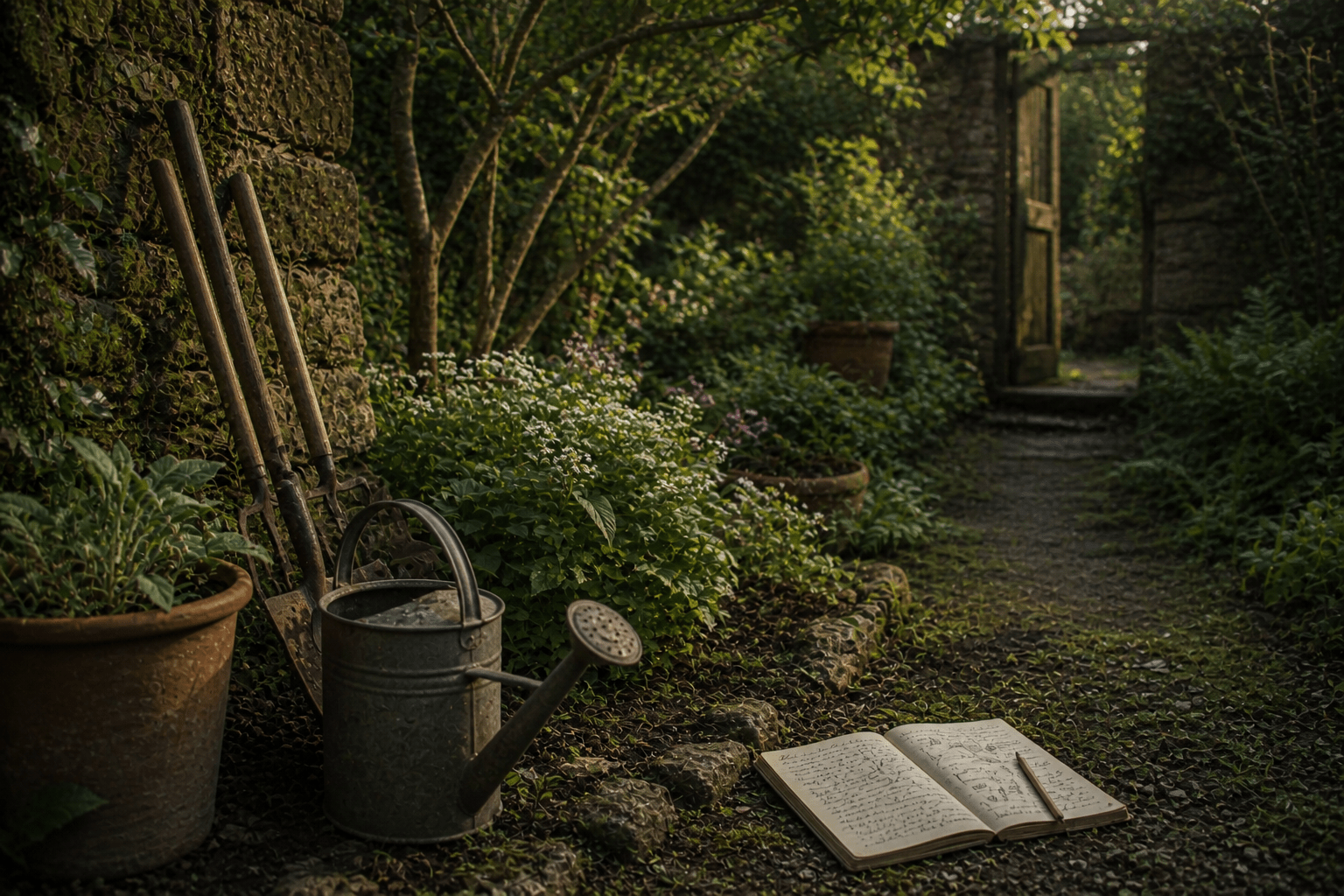
| About our writing & imagery Most articles reflect our real gardening experience and reflection. Some use AI in drafting or research, but never for voice or authority. Featured images may show our photos, original AI-generated visuals, or, where stated, credited images shared by others. All content is shaped and edited by Earthly Comforts, expressing our own views. |

