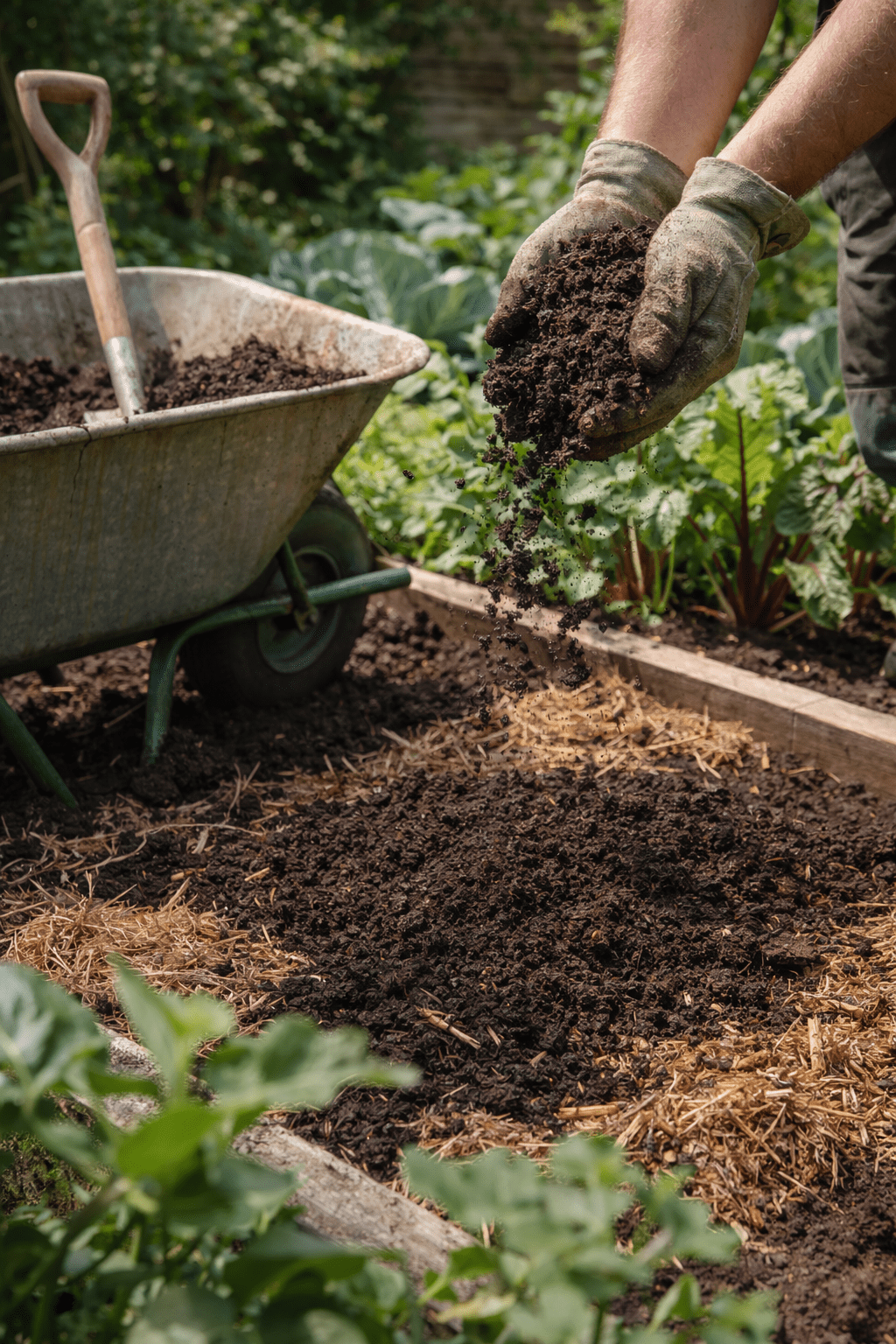
| Gardening often focuses on what grows above ground—leaves, flowers, harvests, height and yield—but nearly everything that determines success lies beneath our boots. Soil improvement is frequently treated as repair work, something addressed after disappointment, yet in reality, it is an ongoing conversation. It is not about fixing failure but about creating conditions in which growth becomes steadier and less dramatic. Soil is not simply a substance to manage; it is a living system to support. When asked how to improve soil, many reach instinctively for supplements—lime, fertiliser, specialist products designed to correct and enhance. Before adding anything, it is worth observing closely. Does the soil crumble or smear? Does water linger or drain instantly? Are earthworms present? Does it smell alive or flat? Structure governs everything. Waterlogged clay suffocates roots; fast-draining sand deprives them of moisture. Improvement begins with physical condition rather than nutrient charts, and the most reliable way to influence structure is through organic matter. Compost remains the most effective foundation. Well-made garden compost, leaf mould, or well-rotted manure, applied regularly and in modest amounts, transforms soil over time. In clay, it opens channels and reduces compaction; in sandy soil, it increases water retention; in all soils, it feeds microbial life. The key is repetition, not volume. One application helps slightly; annual additions create cumulative change. In established plots, a yearly surface dressing—left for worms and weather to incorporate—often proves more beneficial than aggressive digging. The shift from disruption to accumulation marks a more mature approach. Deep digging was once equated with virtue and productivity, yet repeated inversion can damage structure, disrupt fungal networks, and accelerate organic matter loss. This is not a call to abandon cultivation entirely but to practise restraint. Loosen compacted areas where necessary and incorporate compost thoughtfully, but avoid habitual upheaval. Soil life thrives on continuity, and productivity often increases as disturbance decreases. Drainage is equally critical, as roots require oxygen as much as water. Saturated soil restricts growth even when nutrients are abundant. In heavy soils, repeated additions of organic matter gradually improve porosity, while raised beds may offer temporary relief as structure develops beneath. Avoiding compaction is just as important; walking repeatedly on beds compresses vital air spaces, so defined paths protect the structure more effectively than any additive. Improvement often lies in what you refrain from doing. Improving soil also means feeding what cannot be seen. Bacteria, fungi, and invertebrates convert organic matter into plant-available nutrients and build aggregates that balance air and moisture. Synthetic fertilisers can stimulate rapid growth but do not build structure and, if overused, may diminish biological activity. They serve as stimulants rather than builders. For long-term resilience, feeding soil life matters more than feeding crops directly. Surface protection is equally important. Bare soil is vulnerable to sun, rain, and wind, which bake, compact, and erode it. A layer of compost, leaf mould, straw, or shredded garden waste moderates temperature, reduces evaporation, and slowly enriches the layers below. Mulch is often described as labour-saving, but it is more accurately soil-preserving. Soil pH has its place, particularly for specialist crops, yet most gardens operate within a workable range. Rather than obsessing over precise adjustment, prioritise structure and organic matter first. Healthy soils buffer minor imbalances naturally. Only when persistent crop failure suggests deeper issues should testing and targeted amendment take precedence. Improvement is rarely about chasing numbers; it is about strengthening systems. Patience remains the hardest ingredient. Soil does not respond to urgency but to consistency. Add compost annually, reduce compaction, observe drainage and worm activity, and note subtle shifts in plant health. Gradually, the soil darkens, loosens, and becomes more fragrant. Growth steadies. Weeds become easier to manage. Change reveals itself quietly. A dramatic overhaul is sometimes justified, but more often incremental improvement is more sustainable and economical. Fertile soil does not have to resemble perfect loam from the outset; sandy and chalky soils can still perform well when managed thoughtfully. Improvement is not transformation into something else, but enabling what is already present to function better. To improve your soil is to commit to continuity. Compost regularly, disturb thoughtfully, protect the surface, respect the structure, and observe with patience. In time, the soil responds, and as it improves, everything above it follows. |
| About our writing & imagery Most articles reflect our real gardening experience and reflection. Some use AI in drafting or research, but never for voice or authority. Featured images may show our photos, original AI-generated visuals, or, where stated, credited images shared by others. All content is shaped and edited by Earthly Comforts, expressing our own views. |

