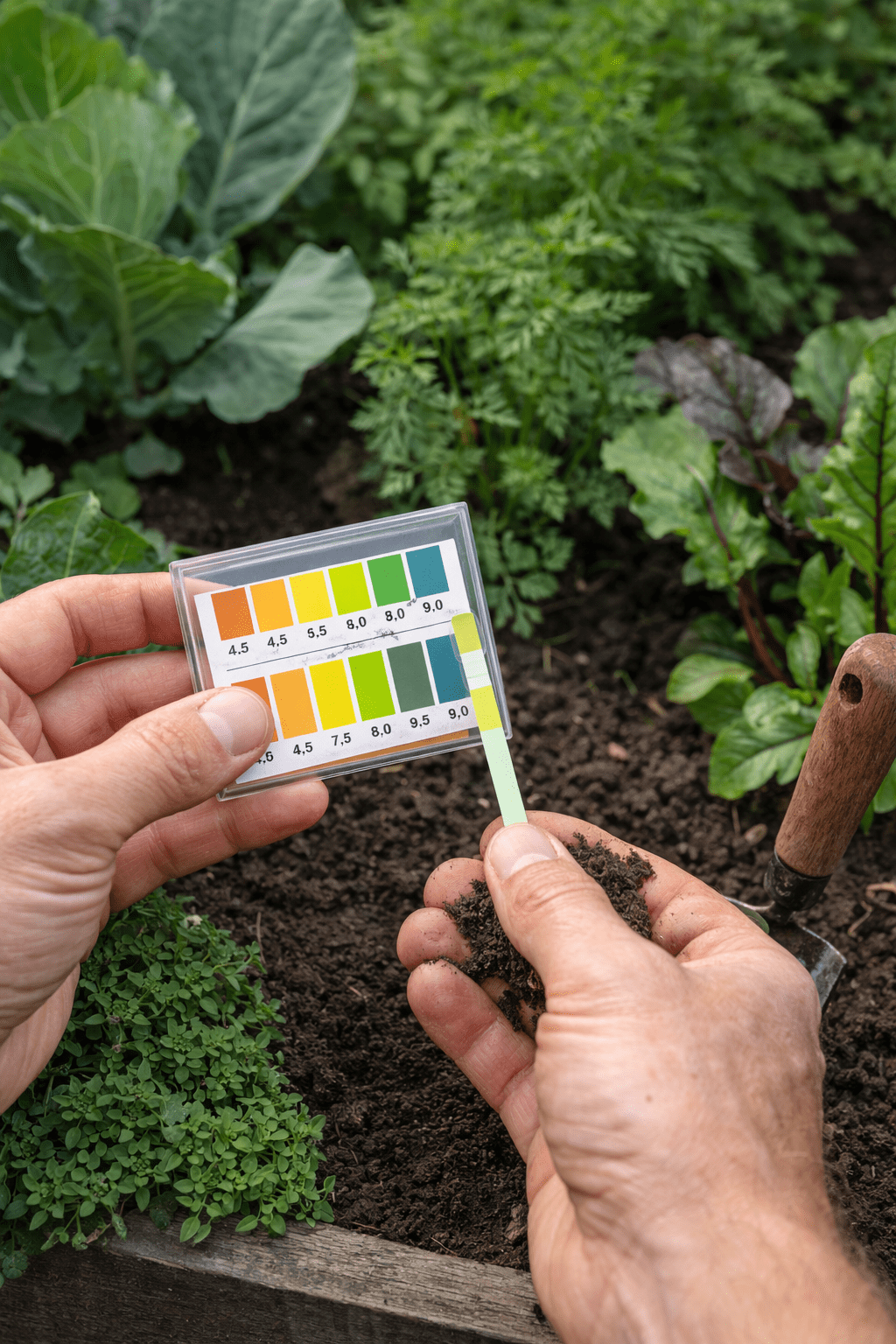
| When soil pH comes up in gardening conversations, the tone often shifts. It becomes technical, almost clinical — charts, colour strips, decimal precision. Beginners can be left with the impression that vegetables require chemical fertilisers before they will grow. In reality, that assumption rarely reflects how most gardens function. In the majority of UK soils, pH sits somewhere between mildly acidic and mildly alkaline. Conditions vary — chalk in some regions, clay in others, sand along the coasts — yet most vegetable crops are adaptable within this broad range. They evolved in changing environments and tolerate variability far better than gardening folklore sometimes suggests. Soil pH is not irrelevant, but it is seldom the primary limiting factor in domestic vegetable growing. What pH governs is nutrient availability. Certain elements are more accessible in slightly acidic soils; others become more available as alkalinity increases. When pH moves to extremes, deficiencies can arise even where nutrients are present in the soil. However, genuine extremes are uncommon in ordinary garden plots. Strong acidity that impedes brassicas, or high alkalinity severe enough to cause persistent chlorosis, tends to occur in specific geological contexts rather than typical back gardens. In practice, soil structure, drainage, and organic matter exert greater influence on crop success. Waterlogged clay restricts root growth regardless of pH. Free-draining sand stresses plants even if the numbers appear ideal. A healthy soil ecosystem — one that holds moisture without stagnation and supports microbial life — naturally mitigates minor imbalances. The figure on a test strip is one variable among several, not the master control. Observation is therefore more instructive than pre-emptive measurement. If brassicas form firm heads, leaves remain green, and growth progresses steadily, the soil is functioning within a workable range. Consistent underperformance across seasons may justify testing, but diagnosis should follow evidence rather than precede action. Testing out of curiosity is harmless; testing out of anxiety can delay the practical learning that comes only from planting. Containers and raised beds operate within a more controlled system. Commercial composts are formulated to sit within a broadly suitable pH range for general vegetable cultivation. While repeated watering and feeding can shift conditions over time, intervention is rarely required—drainage, light, and nutrient replenishment matter more in these confined environments than numerical adjustment. There are, of course, exceptions. Blueberries require acidity. Gardens on chalk will challenge acid-loving crops unless amended or grown in raised beds. When repeated crop failures occur despite sound management, a soil test may reveal an imbalance. These cases are specific, not universal. The notion that every vegetable plot requires verification before the first seed is sown is a misconception. Regular incorporation of organic matter remains the most reliable moderating force. Compost improves structure, supports microbial networks, and gradually buffers pH fluctuations. Attempting aggressive correction with lime or sulphur without a clear indication can disrupt more than it resolves. Long-term soil health stabilises conditions more effectively than reactive adjustment. There is also a psychological element at play. Numbers offer reassurance; they imply control. Gardening does not operate solely on controlled variables. Weather patterns shift, pests intervene, and biological systems respond dynamically. Seeking precision before participation can become a form of hesitation. Far more is learned by sowing, observing, and adjusting when genuine symptoms arise. Soil pH matters, but it rarely matters first. Before reaching for testing kits, improve the structure, add organic matter, ensure drainage, and observe performance over a full season. If crops grow with reasonable vigour, the soil is functioning adequately. If persistent problems emerge, testing becomes a diagnostic tool rather than a prerequisite. Soil is not merely a number on a scale. It is a living system. Engage with it directly, respond to what it shows you, and intervene when evidence warrants it. In most cases, the decimals can wait. |
| About our writing & imagery Most articles reflect our real gardening experience and reflection. Some use AI in drafting or research, but never for voice or authority. Featured images may show our photos, original AI-generated visuals, or, where stated, credited images shared by others. All content is shaped and edited by Earthly Comforts, expressing our own views. |

