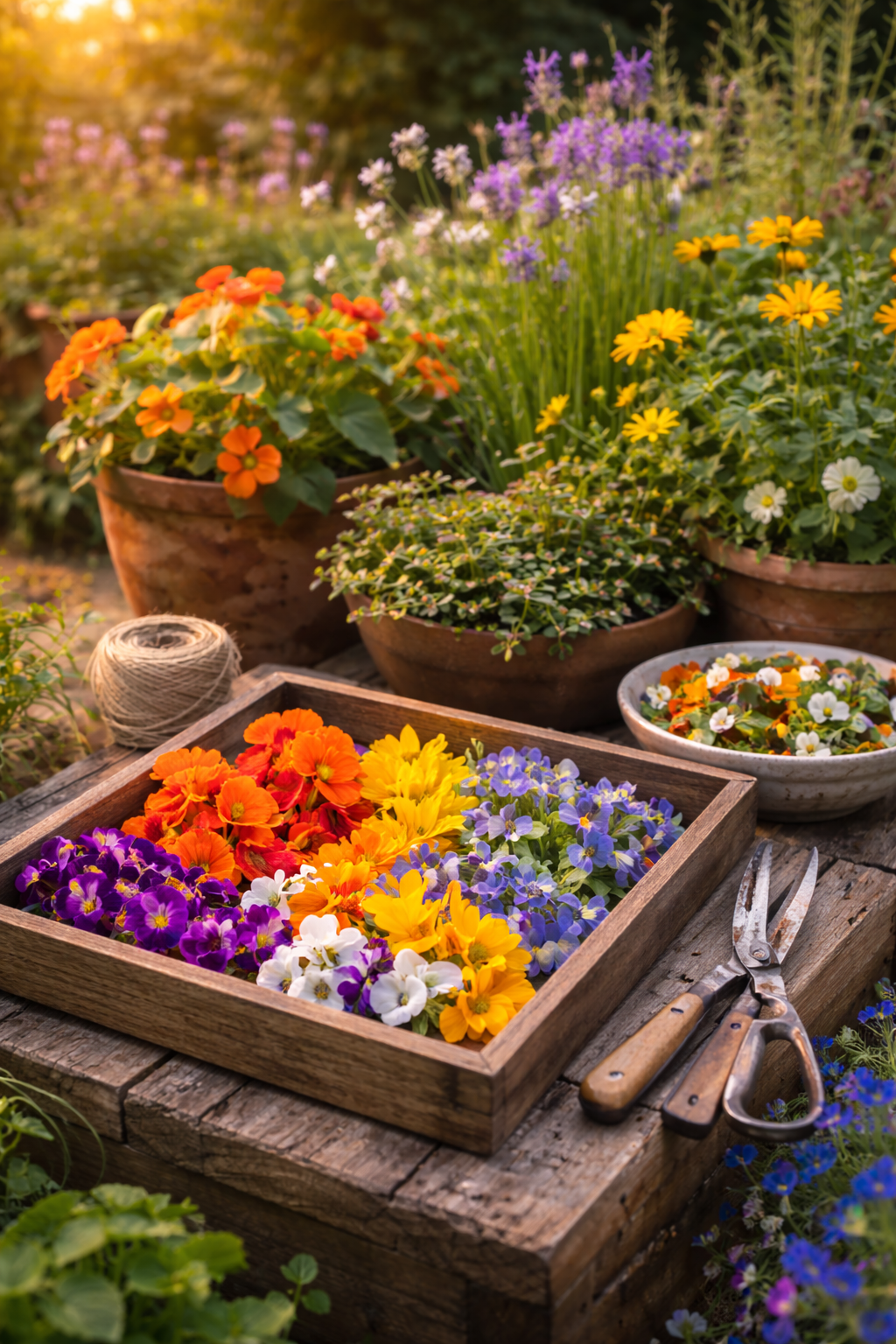
| There is a moment, usually in late spring, when the garden begins to blur the line between ornamental and edible. Calendula glows against dark soil. Nasturtiums spill across paving. Chive flowers rise like soft purple punctuation above the leaves. And somewhere in the back of your mind, a quiet question forms: Could I eat that? Edible flowers are often treated as a novelty. Something decorative for restaurant plates or special occasions. Yet historically, they were part of ordinary kitchen practice. Before global supply chains and year-round imports, flavour was seasonal, and colour on a plate often came from the garden itself. Growing edible flowers is not difficult. Using them well is less about theatrics and more about subtlety. |
| Start With Certainty The first and most important rule is simple: only eat flowers you can identify with confidence. Not all flowers are edible. Some are mildly unpleasant. Others are toxic. Guesswork has no place here. Stick to well-established edible varieties. Calendula, nasturtium, borage, chive flowers, viola, rose petals (unsprayed), marigold (pot marigold, not ornamental bedding types), and certain herbs like thyme and fennel blossoms are widely accepted as safe. Avoid flowers from garden centres that may have been treated with pesticides unless you know their growing history. If you intend to eat flowers, grow them specifically for that purpose and treat them accordingly. Clarity first. Experiment second. Growing for the Plate Most edible flowers are straightforward to grow. Nasturtiums thrive in poor soil and full sun. In fact, too much fertility encourages leaves over flowers. They are forgiving and often self-seed gently. Their round leaves and trailing stems soften borders and containers alike. Calendula tolerates cool conditions and offers long, steady blooming. It prefers moderate soil and full sun. Deadheading prolongs flowering. Borage grows quickly, sometimes exuberantly, producing star-shaped blue flowers that bees adore. It appreciates reasonable soil and space. Chives, if already in your herb bed, will naturally produce edible purple pom-pom blooms in early summer. There is no special technique required. Violas and pansies prefer cooler weather and partial sun. They can be grown in containers easily and add subtle sweetness to dishes. In essence, growing edible flowers is no more complicated than growing ornamental ones—provided they are not sprayed and are given basic care. Soil and Feeding As with all flowering plants, soil matters. Well-drained, compost-enriched ground supports steady growth. Overfeeding, particularly with nitrogen-rich fertilisers, can lead to excessive foliage at the expense of flowers. If the goal is bloom rather than bulk, moderate feeding is sufficient. Regular deadheading encourages continued production. With edible flowers, this becomes part of harvesting itself. Harvesting Thoughtfully Morning is the best time to pick edible flowers. They are fully hydrated, open, and fragrant. Select blooms that are freshly opened and free from blemish. Avoid those areas already heavily infested with insects. Gently shake off any small visitors before bringing them indoors. Use immediately if possible. Flowers wilt more quickly than leaves. If necessary, store briefly in a cool place, loosely wrapped in damp paper. Remove bitter bases where appropriate—nasturtiums, for example, can have a slightly peppery kick that intensifies in certain parts. Harvesting regularly encourages more flowers. The rhythm mirrors that of sweet peas: cut, and they respond. Understanding Flavour The greatest misconception about edible flowers is that they are primarily visual. In reality, they carry flavour. Nasturtiums are peppery, similar to rocket. Borage tastes faintly of cucumber. Chive flowers deliver a mild onion note. Calendula petals are earthy and slightly bitter. Rose petals vary from sweet to perfumed depending on the variety. Use sparingly at first. Taste individually before incorporating into dishes. Learn their character. Edible flowers work best when they complement rather than overwhelm. Simple Ways to Use Them There is no need for elaborate plating. Scatter nasturtium petals through a green salad. Stir chopped chive flowers into soft cheese. Float borage blossoms in chilled drinks. Press violas into the surface of shortbread before baking. Calendula petals can be sprinkled into rice or soups for colour. Rose petals can be infused in syrups or gently folded into sugar. The key is restraint. Edible flowers enhance; they rarely define a dish. And remember: remove stamens and pistils from larger blooms if they prove bitter. A Note on Seasonality Edible flowers, like all produce, follow seasons. Violas appear early. Chives bloom in late spring. Nasturtiums thrive in summer warmth. Calendula stretches from spring into autumn if regularly cut. Rather than trying to have them all at once, let your cooking follow the garden. There is pleasure in noticing that a certain dish can only be made when the chive flowers are out. It anchors you to time. Wildlife and Balance Growing edible flowers benefits more than the kitchen. Many of these plants are pollinator-friendly. Borage and calendula attract bees. Nasturtiums draw beneficial insects. Chive flowers support early pollinators. By planting with both culinary and ecological purposes, you avoid the artificial division between “useful” and “decorative.” The garden need not choose sides. A Gentle Correction There is sometimes a temptation to treat edible flowers as novelty garnish—an Instagram flourish. That approach quickly feels hollow. Edible flowers belong in everyday cooking, lightly and thoughtfully. They should taste something. They should feel like a natural extension of what you are growing, not a spectacle. Equally, they should not replace vegetables. They are accent, not substance. Growing them reconnects cooking with season and garden in small, quiet ways. Closing Reflections To grow edible flowers is to blur boundaries. The border feeds the table. The herb bed colours the plate. The patio pot becomes both ornament and ingredient. You do not need a dedicated edible flower garden. You need a handful of well-chosen plants, grown without chemicals, harvested with care, and used with restraint. In doing so, you rediscover something older than the trend. Flowers were always part of the feast. |
| About our writing & imagery Most articles reflect our real gardening experience and reflection. Some use AI in drafting or research, but never for voice or authority. Featured images may show our photos, original AI-generated visuals, or, where stated, credited images shared by others. All content is shaped and edited by Earthly Comforts, expressing our own views. |

