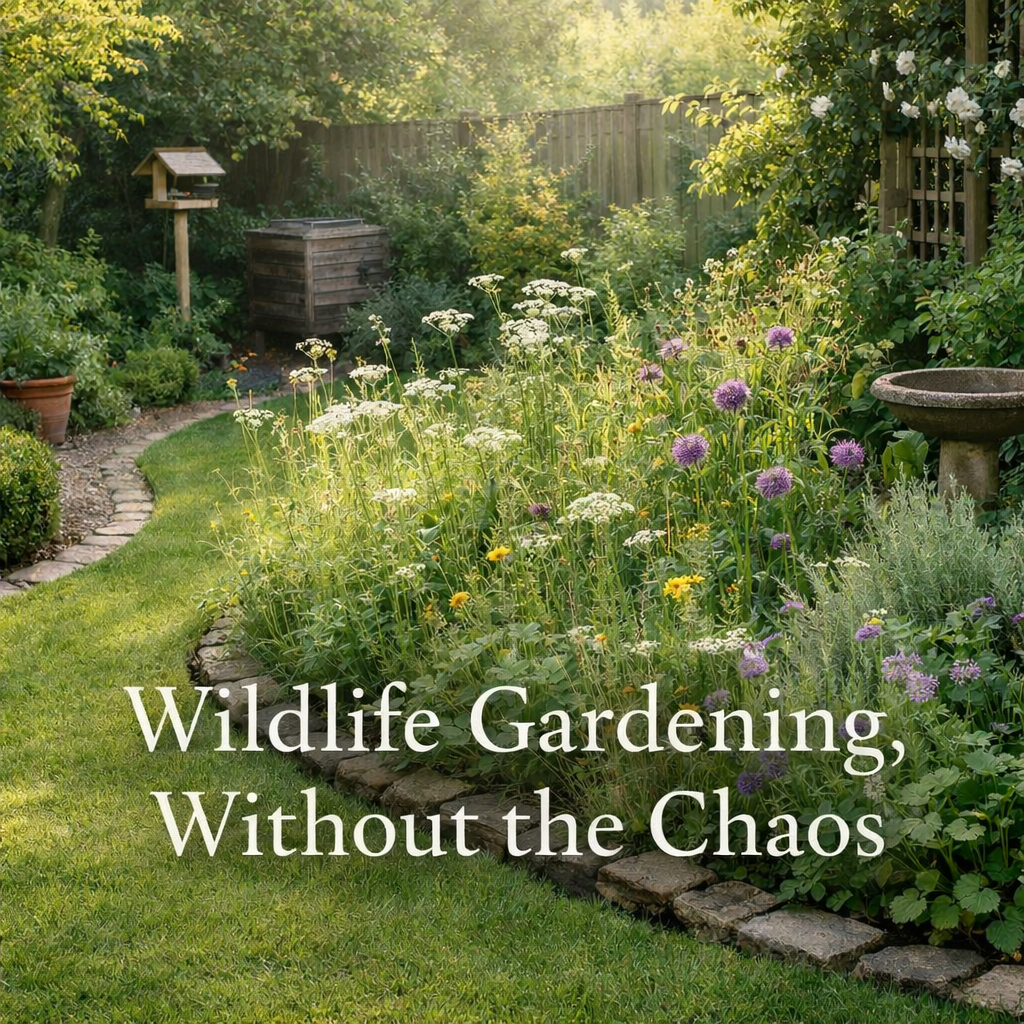
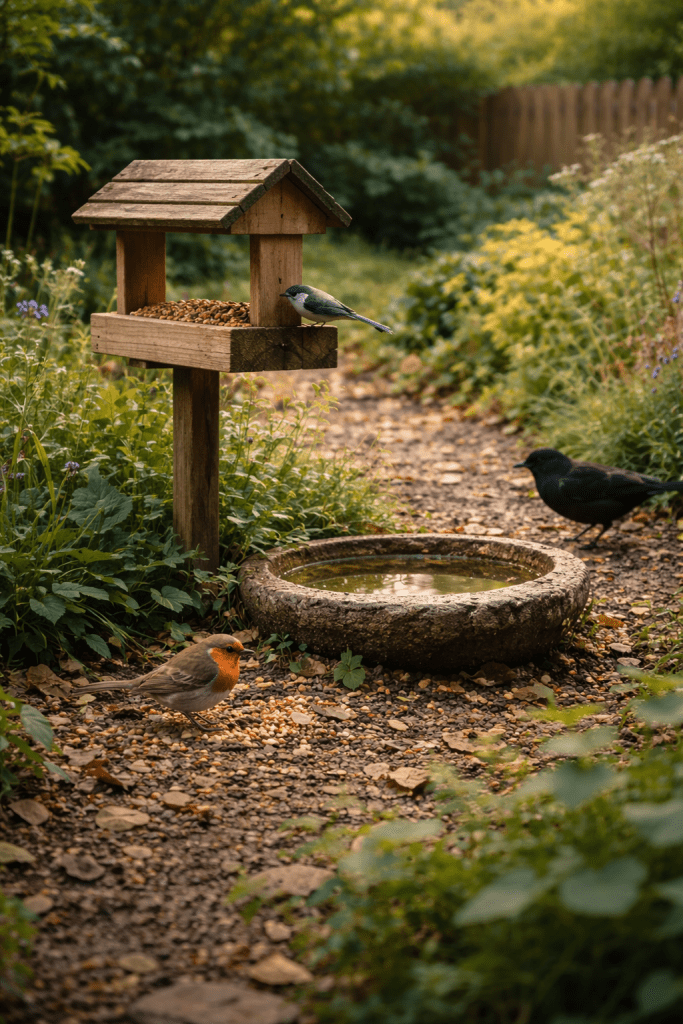
| Feeding Birds Without Creating Problems Feeding birds is one of the few gardening acts that carries real emotional weight. People don’t talk about it as maintenance or design; they talk about it as care. It sits somewhere between kindness and responsibility, and that makes it surprisingly difficult to question. Almost everyone I meet who feeds birds does so with good intent. They like the presence. They notice absences. They mark time by who arrives and when. Feeding becomes a small, daily ritual that connects them to the garden even when they’re not actively working in it. Which is precisely why it’s such a sensitive subject. Because good intent, on its own, is not always enough. When help turns into a habit Feeding used to be occasional support. Now it’s year-round and central. This didn’t happen because people became careless. It happened because the garden itself changed. Lawns became shorter. Borders became tidier. Seed heads disappeared earlier. Insects declined in some places, flourished in others, and became less predictable overall. Feeding stepped in to fill the gap. The trouble is that habits form quickly, and ecosystems adjust more slowly. When food appears reliably in the same place, at the same height, in the same container, birds respond as you’d expect: they build routines around it. That’s not inherently bad. But it does shift the balance of how the garden functions. The difference between support and replacement A garden that supports birds well does not rely solely on feeders. It offers a mix of cover, forage, and quiet. Insects in the soil. Seeds left standing. Berries that ripen and rot naturally. Damp ground where worms surface after rain. Feeders can complement that system. They can help birds through lean periods, cold snaps, or moments when natural food is briefly scarce. What they cannot do—at least not without consequences—is replace it entirely. When feeding becomes the primary source of food, patterns change. Some species benefit disproportionately. Others are edged out. Behaviour becomes bolder. Movement narrows. Disease risk increases. Keep in mind: these shifts in bird behaviour and ecosystem health typically emerge slowly, not all at once. The impact of feeding is best judged over the long term. Hygiene is ecology, whether we like it or not. There is a reluctance to talk about hygiene in wildlife gardening, perhaps because it feels clinical or breaks the illusion of effortless naturalness. But hygiene is not an artificial concern. It exists everywhere life congregates. Feeders concentrate animals. Concentration increases contact. Contact increases transmission. This is not alarmist; it is basic biology. Unclean feeders, damp seed, and stagnant water create ideal conditions for disease. Birds do not have the luxury of choice we imagine. If food is there, they will use it, even if it carries risk. The uncomfortable truth is that feeding birds without cleaning feeders is often worse than not feeding them at all. This is not a call for scrubbing everything obsessively. It is a reminder that once we intervene, we inherit responsibility. Nature does not outsource consequences. When “more” becomes too much There is a common assumption that the solution to any perceived scarcity is abundance. More feeders. More food. More variety. In practice, it more often leads to imbalance. Gardens flooded with food attract larger numbers of a narrower range of species. Dominant birds learn the routes and defend them. Smaller, less assertive birds retreat to edges or disappear altogether. What looks like success—a busy feeder, constant movement—may actually be simplification. A quieter garden, with fewer obvious feeding points but richer background ecology, often supports a broader mix of species over the long term. You see fewer birds at once, but more kinds across the year. Key takeaway: Measuring success by diversity over time, not feeder activity alone, leads to healthier bird populations and gardens. Feeding as part of the whole garden One of the most effective ways to reduce reliance on feeders is not to remove them, but to rebalance the rest of the garden. Leaving seed heads standing longer. Allowing leaf litter to gather under hedges. Accepting that a few fallen berries will stain the paving. Letting soil remain damp in corners rather than drained and tidy. Main takeaway: Every small, positive garden decision adds up to a significant difference for birds and their health. Birds are remarkably adaptable when food sources are varied and dispersed. They forage more naturally. They move more. They rely less heavily on any single intervention. When it happens, feeding becomes support rather than a substitute. Seasonality still matters There is a strong argument for feeding birds during harsh winters or prolonged cold spells, particularly in urban areas where natural forage is fragmented. There is a weaker argument for intensive feeding during periods of abundance. Takeaway: Effective feeding means being attentive and responsive to real conditions, not following inflexible rules. Feeding through every season, without adjustment, flattens natural rhythms. It removes cues birds use to shift behaviour, breeding patterns, and movement. Allowing some fluctuation—feeding more in winter, less in high summer—restores those cues without abandoning support entirely. Again, this requires attention rather than instruction. Water: the overlooked responsibility Food gets attention, but water often matters more. Clean water supports drinking, bathing, and thermoregulation, and becomes a focal point for species that never touch feeders. Like feeders, water sources concentrate life. And like feeders, they demand care. Stagnant water is not neutral. It breeds bacteria, algae, and insects in ways that are not always beneficial. A bird bath topped up occasionally but never refreshed can become a problem disguised as kindness. The solution is simple but non-negotiable: regular emptying, rinsing, and refilling. Not because we are controlling nature, but because we are shaping the conditions in which it operates. When feeding attracts the wrong attention. One of the unspoken anxieties around bird feeding is what else it brings in. Split the seed. Ground feeders. Rodents. Occasionally, larger predators. Ignoring this does not make it go away. Feeding birds without creating problems means acknowledging that gardens are part of wider systems. What happens at one level ripples outward. Food left overnight, piles of seed beneath feeders, and inaccessible clean-up zones all shift who uses the space. Key takeaway: Good feeding practices involve providing food, responsibly managing leftovers, and maintaining hygiene. The myth of non-intervention There is a belief that the most ethical approach is to step back entirely. To let nature decide. In a truly wild landscape, that might hold. In a town garden, it rarely does. Urban gardens are already interventions. Boundaries, drainage, planting choices, mowing regimes—all shape outcomes long before a feeder appears. The question is not whether to intervene, but how to do so consciously. Feeding birds thoughtfully—seasonally, hygienically, as part of a broader habitat—is one form of conscious intervention. It recognises limits without abandoning care. A quieter relationship The most satisfying gardens I work in are not the busiest at the feeder. They are the ones where birds appear throughout the day, in different places, doing different things. They forage. They bathe. They pause. They disappear into cover. Feeding still happens. But it does not dominate the relationship. This is where feeding stops being performance and becomes participation. Where the garden feels shared rather than serviced. Letting care mature Like much of wildlife gardening, feeding birds is not about doing more. It’s about doing enough, at the right time, and then stepping back. Care matures when it becomes less visible. When the garden carries more of the work itself. When intervention supports, rather than replaces, what is already there. Main takeaway: Feeding birds responsibly is about awareness, trust, and timely support—helping when needed, stepping back when not. |
| About our writing & imagery Most articles reflect our real gardening experience and reflection. Some use AI in drafting or research, but never for voice or authority. Featured images may show our photos, original AI-generated visuals, or, where stated, credited images shared by others. All content is shaped and edited by Earthly Comforts, expressing our own views. |

