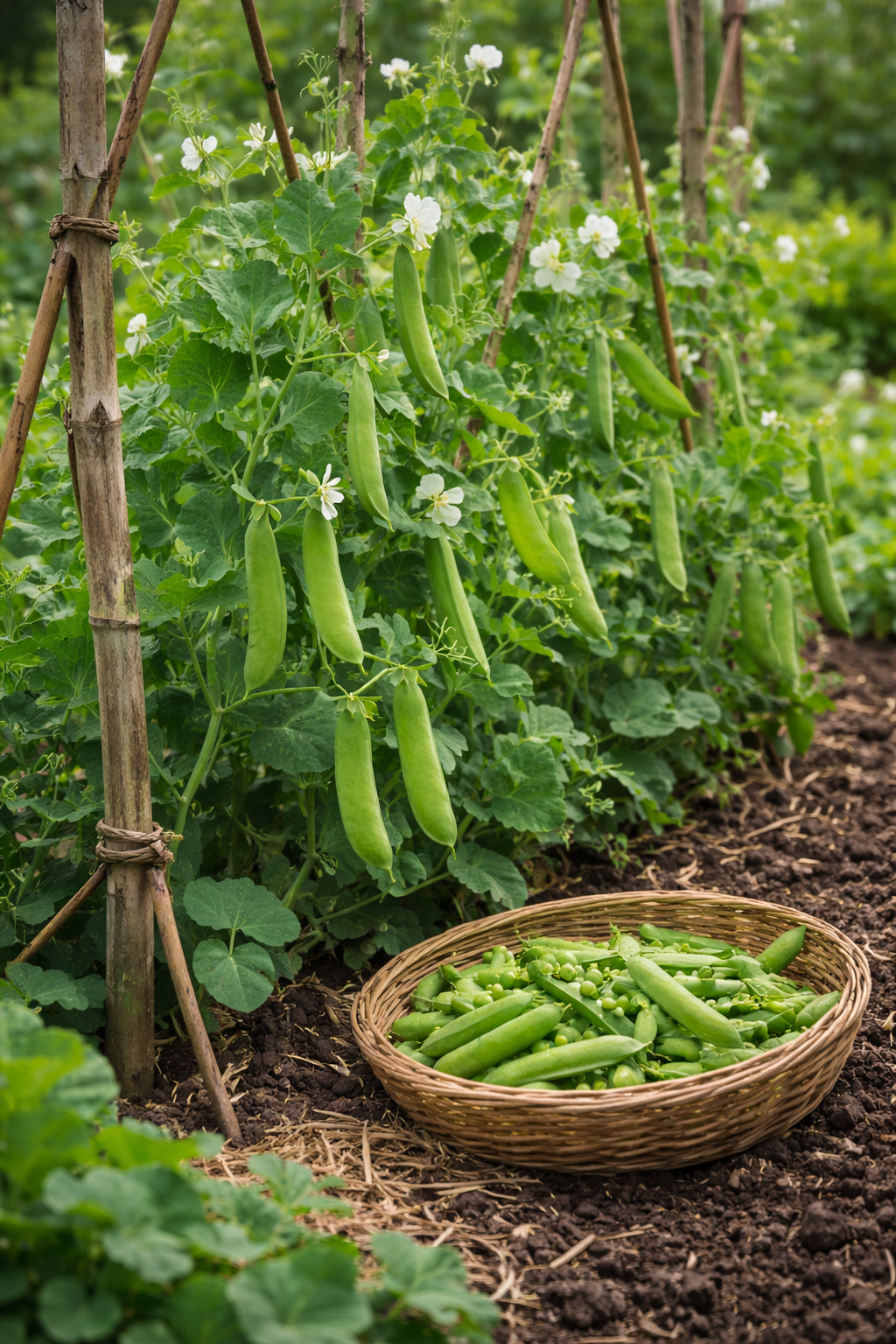
| The Quiet Architecture of Spring |
| Peas are among the first true gestures of the gardening year. There is something unmistakable about the act of sowing peas. The soil is still cool. The light has not yet grown confident. And yet, pushing those round seeds into a shallow drill feels like an announcement — that winter is no longer in charge. Peas belong to that early optimism. They rise steadily in lengthening days, catch hold of supports with delicate tendrils, and begin to flower when much of the garden is only just finding momentum. They are not dramatic plants. They do not sprawl or blaze. But they construct something quietly architectural: upright stems, paired leaflets, white or mauve flowers, and finally pods that swell almost invisibly before one day being ready. Growing peas well is not complicated. But it does require a little understanding of timing, support and soil — and an appreciation of what they prefer rather than what we assume they need. |
| The Nature of Peas Peas are cool-season legumes. They prefer mild temperatures, steady moisture and open air. They dislike extremes: prolonged cold that stalls germination, and high heat that hastens flowering and shortens cropping. Unlike brassicas, they are not heavy feeders. Unlike tomatoes, they do not crave heat. They sit somewhere between — modest in their demands but clear in their preferences. Being legumes, peas fix nitrogen in the soil through nodules on their roots. This means they require less feeding than many vegetables and, in fact, can suffer if grown in overly rich ground. They are, in essence, light-footed plants. Soil: Less Rich Than You Think One common misconception about peas is that they require deeply enriched soil. In practice, too much nitrogen encourages lush leafy growth at the expense of pods. Peas grow best in soil that is well-drained, moderately fertile and has been improved in previous seasons rather than freshly manured immediately before sowing. In our own beds, I prefer to grow peas where compost was incorporated the year before. The soil is settled, structured and balanced. They dislike waterlogging. In heavy clay, raised beds or slight ridging improve drainage. In sandy soil, incorporating organic matter helps retain moisture during dry spells. Peas also appreciate a neutral to slightly alkaline pH, though they are forgiving in most typical garden soils. The guiding principle is moderation. When to Sow Timing is perhaps the most important factor. In southern England, peas can often be sown outdoors from March, provided the soil is workable and not saturated. Earlier sowings are possible under cloches or in cold frames, but cold, wet soil delays germination and increases the risk of rot. I tend to sow in succession rather than all at once. A row in early spring, another two or three weeks later, and perhaps a final sowing in early summer for autumn cropping. This spreads the harvest and avoids gluts. Peas are short-lived croppers. Once they begin producing, they do so steadily but not endlessly. Succession ensures continuity. Autumn sowing is also possible with hardy varieties in milder regions, producing an earlier crop the following spring. But here is something experience has taught me: peas resent prolonged heat. In hot summers, flowering shortens and pods toughen quickly. For that reason, early sowing is often more reliable than chasing late-season abundance. Direct Sowing or Modules? Peas are best sown directly into the soil where they are to grow. They develop a delicate root system that prefers not to be disturbed. While sowing into modules is possible — and sometimes useful where soil is heavy or prone to pests — transplanting must be done carefully and early. Direct sowing allows roots to settle immediately. Sow seeds at a depth of 3–5 cm in a shallow trench. Spacing can vary depending on variety, but generally 5–8 cm apart works well. Rows can be 30–45 cm apart, or closer if growing in blocks rather than straight lines. Some gardeners soak seeds overnight before sowing. I have done so occasionally in very dry springs, but in moist soil it is rarely necessary. Protecting Seeds and Seedlings Newly sown peas are irresistible to mice and birds. Blackbirds, pigeons and even squirrels may dig them up. Mice will quietly remove seeds from beneath the soil. Protection at this stage is often essential. Lightweight netting or mesh laid over the row until seedlings emerge significantly reduces losses. Once seedlings are a few inches tall, the risk diminishes. Firming soil after sowing also reduces access and makes digging less rewarding. Support: More Than Decoration Peas climb using tendrils. Even dwarf varieties benefit from some support. Traditional pea sticks — twiggy branches pushed into the soil — remain one of the most effective methods. They provide irregular surfaces for tendrils to grasp. Netting stretched between posts is another option. It creates a vertical plane and keeps rows orderly. Support should be in place before plants become tall. Attempting to insert stakes later disturbs roots and tangles stems. Even varieties marketed as “self-supporting” tend to perform better with some structure. Plants left unsupported often sprawl, increasing the risk of mildew and slug damage. Support is not aesthetic; it is structural. Watering and Feeding Peas require consistent moisture, particularly during flowering and pod formation. Dry soil leads to reduced pod set and tough peas. However, waterlogging encourages root problems. Deep watering during dry spells is preferable to frequent light sprinkling. As legumes, peas generally require minimal feeding. If the soil is particularly poor, a light application of balanced fertiliser before sowing can help, but avoid high-nitrogen feeds. Mulching lightly once plants establish helps conserve moisture and suppresses weeds. Varieties: Early, Maincrop and Mangetout Peas fall broadly into several categories. Early Varieties Early peas such as ‘Meteor’ or ‘Kelvedon Wonder’ crop quickly and are well suited to early sowings. They tend to be shorter and may tolerate cooler conditions. Maincrop Peas Maincrop varieties grow taller and produce over a longer period. ‘Alderman’ is a traditional tall variety, reaching well over a metre and producing generously when well supported. Mangetout and Sugar Snap Mangetout peas are harvested whole before the pods swell fully. Sugar snap types are eaten whole, but with thicker, juicier pods. These varieties are often more tolerant of slightly warmer conditions and are productive over a longer period. Choosing a mix extends the harvest and adds variety in the kitchen. Harvesting: The Moment Matters Peas are best harvested young and eaten promptly. There is a narrow window between sweetness and starchiness. Pods left on the plant too long become floury. Regular picking encourages continued production. If pods mature and harden on the plant, flowering slows. Harvest in the morning if possible, when pods are cool and hydrated. There is a particular pleasure in shelling peas straight after picking. The sweetness is incomparable to anything shop-bought. Common Problems Powdery Mildew In warm, dry summers, powdery mildew may coat leaves late in the season. Good airflow and avoiding overcrowding reduce risk. Early sowing often avoids peak mildew conditions. Pea Moth In some regions, pea moth larvae burrow into pods. Sowing early varieties and harvesting promptly reduces exposure. Slugs Young seedlings are vulnerable. Physical barriers and vigilance help. Heat Stress High temperatures cause flowers to drop and shorten cropping. Succession sowing earlier in the season is the most reliable mitigation. Growing Peas in Containers Peas can be grown in large containers, particularly dwarf or mangetout types. Choose deep pots to allow adequate root space. Use quality compost and ensure drainage. Container-grown peas require more frequent watering and modest feeding during flowering. Provide compact supports within the pot — small obelisks or netting frames work well. While yields may be lower than in open ground, container peas are perfectly viable for small gardens and patios. Succession and Soil Health After peas finish cropping, their roots can be left in the soil. The nitrogen-fixing nodules contribute modestly to soil fertility. Follow peas with crops that appreciate residual nitrogen, such as leafy greens. Avoid growing peas in the same spot year after year. Rotate to reduce disease build-up. Three Observations From Practice First: early sowing produces sweeter, more reliable crops than late attempts to extend the season. Second: proper support transforms yield. Unsupported peas underperform. Third: peas dislike extremes — too cold, too wet, too hot. Moderate conditions bring the best results. These are not rigid rules, but consistent patterns. Challenging an Assumption There is a belief that peas are old-fashioned, low-yielding and perhaps not worth the space. Yet few vegetables deliver the same immediacy. The flavour difference between freshly picked peas and shop-bought equivalents is profound. They also prepare the soil gently for what follows, leaving beds in good condition for summer planting. Peas are not glamorous. They are structural — marking the shift from winter to growth. A Closing Reflection Growing peas is not about abundance in the way courgettes overwhelm. It is about timing. Sow at the right moment. Provide support before it is needed. Protect when vulnerable. Harvest when ready. And then accept that the pea season is brief. Perhaps that is why they remain special. They belong to spring and early summer. They arrive with lengthening days and depart before high heat dominates. To grow peas well is to work with that rhythm rather than against it. And when you shell the first handful into a bowl, tasting sweetness that lasts only days, you are reminded why such quiet crops endure in our gardens year after year. |
| About our writing & imagery Most articles reflect our real gardening experience and reflection. Some use AI in drafting or research, but never for voice or authority. Featured images may show our photos, original AI-generated visuals, or, where stated, credited images shared by others. All content is shaped and edited by Earthly Comforts, expressing our own views. |

