| A 5-Part Series |
| A curated exploration of Malaysia’s most iconic, curious, and ecologically important insects |
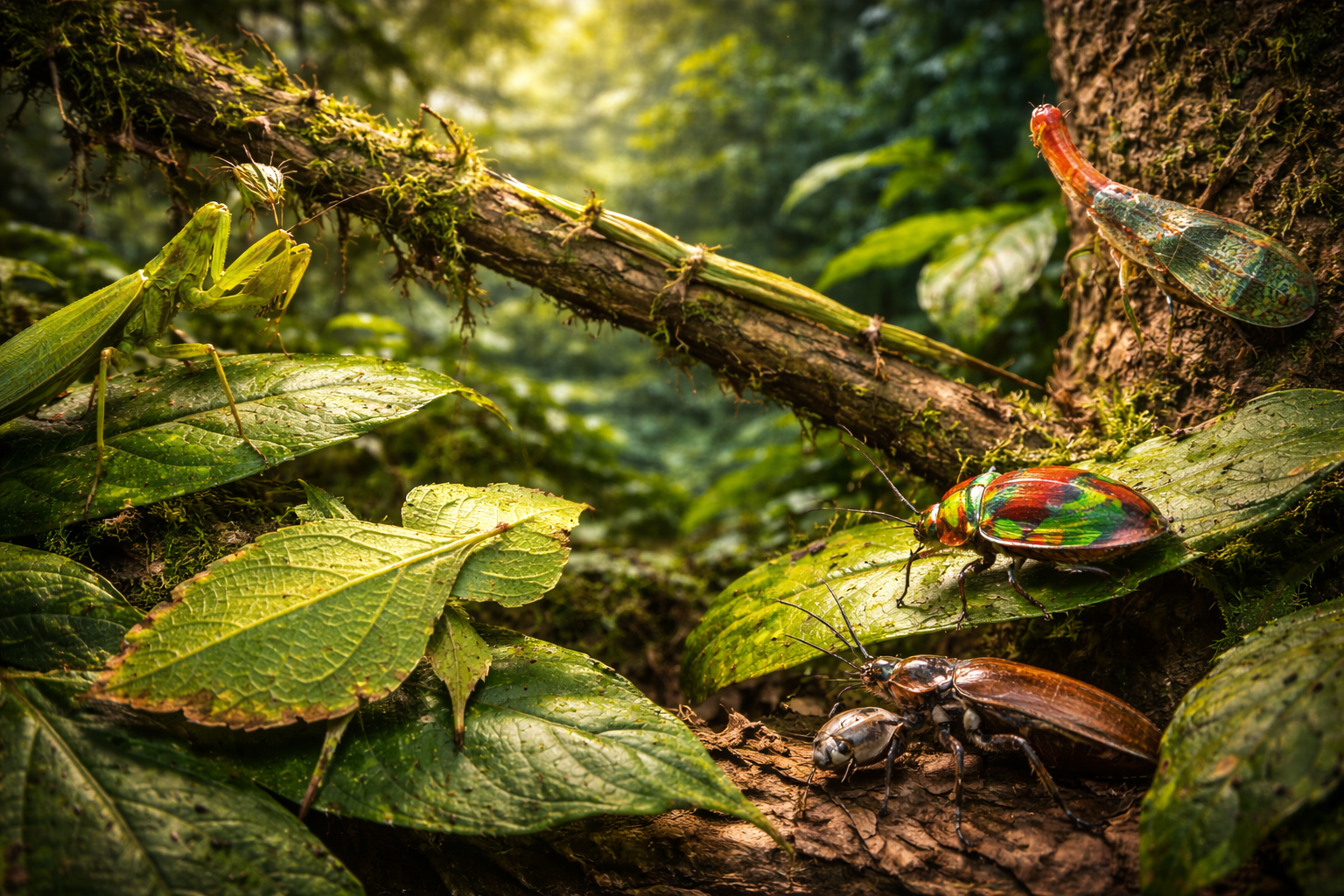
| Part 5 Mantids, Stick Insects & True Bugs: Shape and Stillness Some Malaysian insects survive not through speed or strength, but by becoming part of the background. In forests where movement attracts immediate attention and predators are everywhere, remaining unnoticed can be more effective than escape. Camouflage, patience, and deception are not passive strategies here — they are highly refined tools shaped by constant pressure. Praying mantids exemplify this approach. Rather than chasing prey, they wait. Their slow, deliberate movements reduce detection, conserving energy in environments where food appears irregularly. When prey comes within reach, the strike is fast and precise. The rest of the time, the mantis blends into stems and leaves, motionless and unremarkable, until the moment that matters. Stick insects take camouflage to an extreme. Some reach extraordinary lengths, their segmented bodies indistinguishable from twigs or branches. Colour, texture, and posture all contribute to the illusion. Detection depends almost entirely on movement, which is why stick insects sway gently, mimicking the motion of vegetation in the wind. In a dense forest, this deception is remarkably effective. Leaf insects refine the same strategy further. Their bodies resemble living leaves, complete with visible veins, irregular edges, and markings that imitate decay or insect damage. Even experienced observers frequently overlook them at close range. This is not accidental resemblance but detailed mimicry shaped over generations. By appearing already eaten or dying, leaf insects reduce predators’ interest altogether. Shield bugs and other true bugs rely on a different tactic. Instead of avoiding notice, they openly signal danger. Bright colours and bold patterns function as warnings, advertising chemical defences that make them unpleasant or toxic to eat. These signals save energy by discouraging an attack before it begins. Escape is unnecessary when the message is clear. Assassin bugs combine concealment with ambush. Often overlooked due to their subdued colours and stillness, they hunt other insects quietly. Their role is regulatory rather than dramatic, keeping populations in check without drawing attention to themselves. They are predators that leave little trace of their presence. Lantern bugs occupy a strange space between function and illusion. Their exaggerated head shapes serve no direct weaponised purpose but confuse predators long enough to create hesitation. In a moment of uncertainty, escape becomes possible. The shape itself becomes a defence. In Malaysia, survival does not always favour the fastest or the strongest. Often, it rewards those who become invisible — not absent, but so completely integrated into their surroundings that they are simply accepted as part of the landscape. |
| About our writing & imagery Many of our articles are written by us, drawing on real experience, reflection, and practical work in gardens and places we know. Some pieces are developed with the assistance of AI as a drafting and research tool. Featured images may include our own photography, original AI-generated imagery, or—where noted—images kindly shared by other creators and credited accordingly (for example, via Pixabay). All content is shaped, edited, and published by Earthly Comforts, and the views expressed are our own. |

