| The Soil Hub May Finally Have a Home |
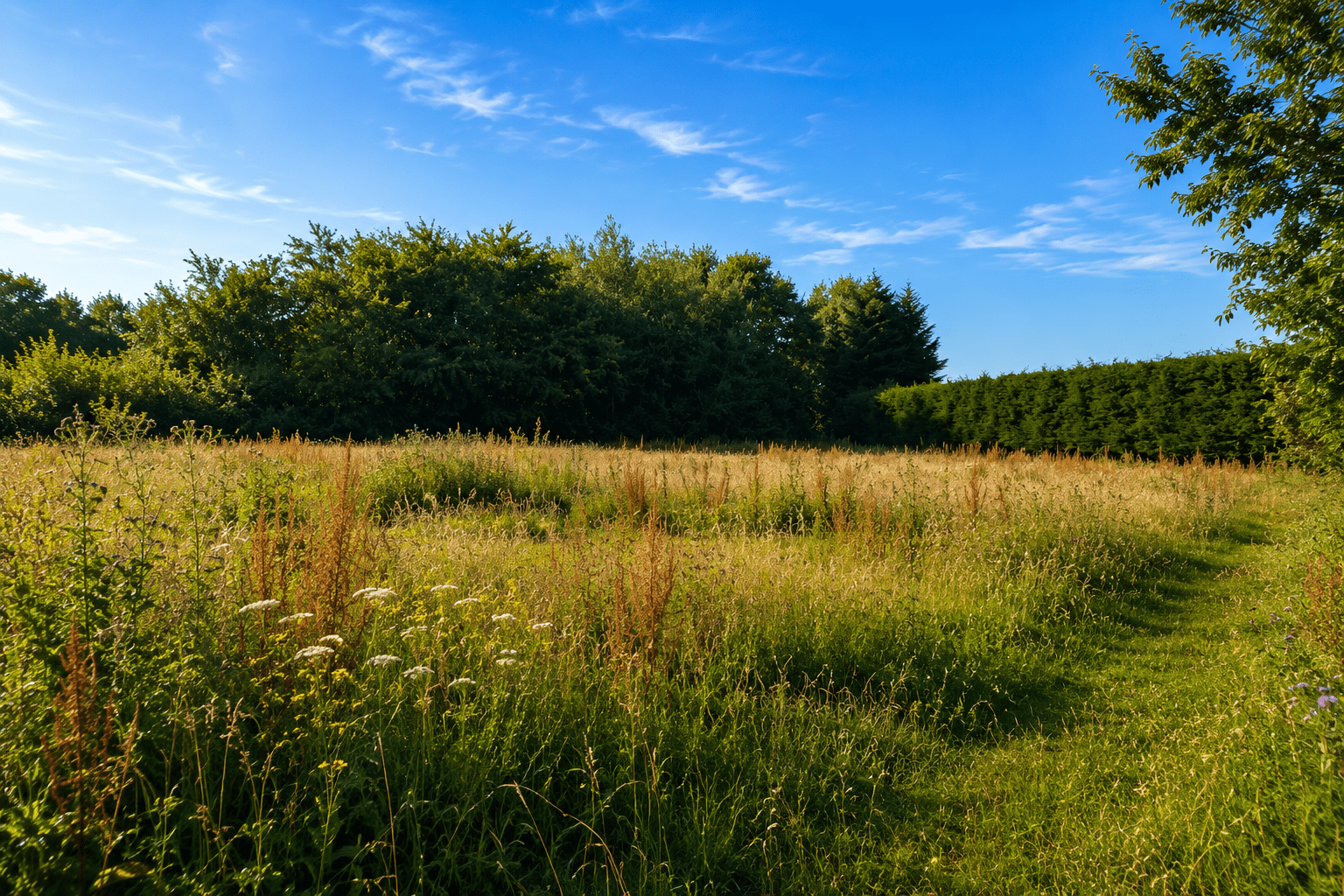
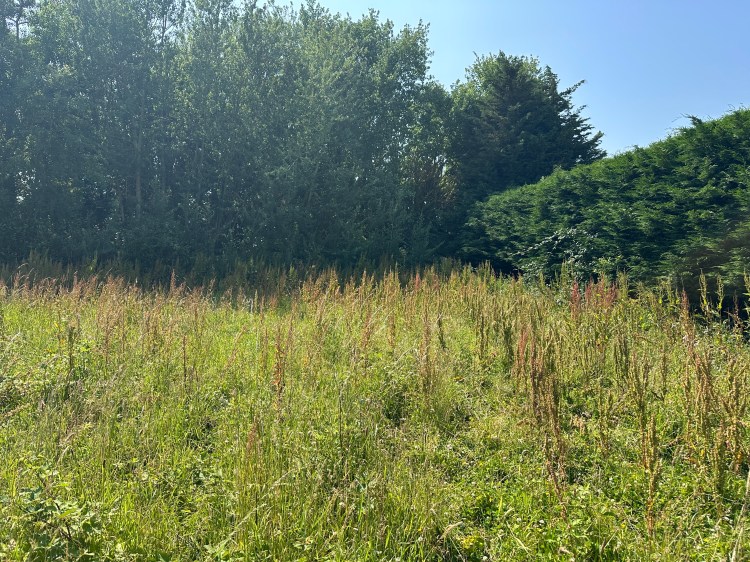
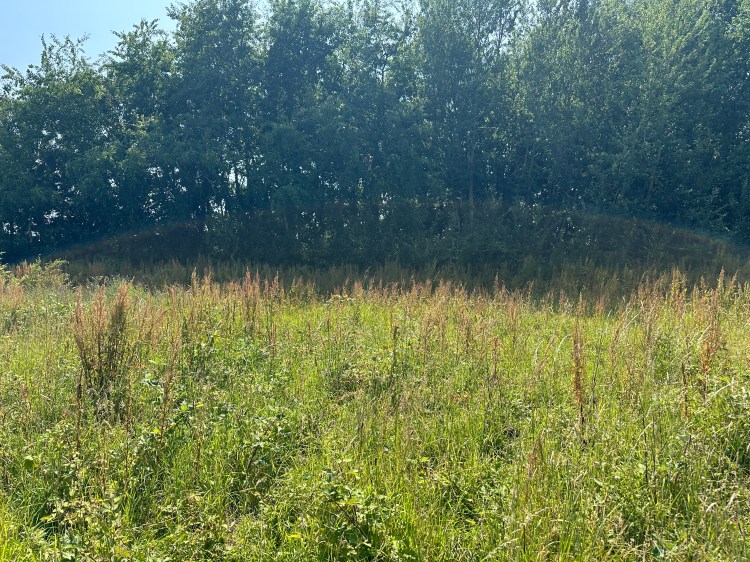
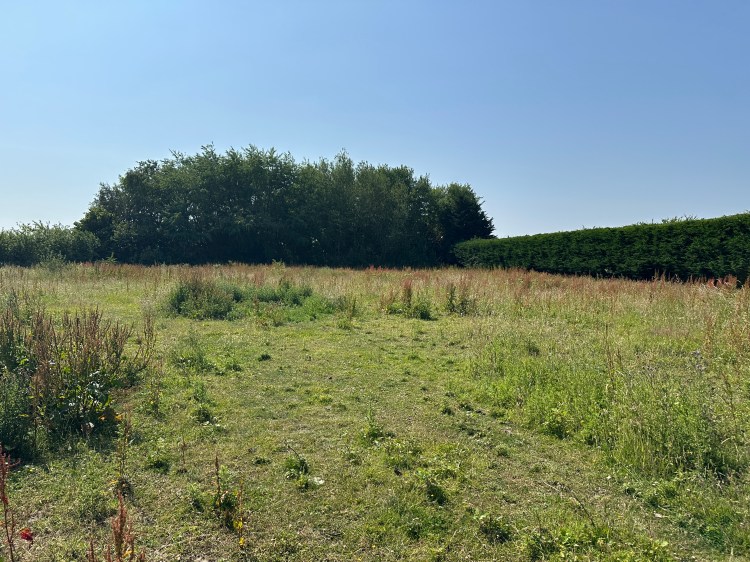
| Every so often in business, something happens that feels small to everyone else but significant to you. This was the case for me on Monday. To most people, my recent visit to a private field would seem unremarkable. On the surface, this moment seemed rather ordinary. That is all—at least, that is how it might appear at first glance. It was just a stretch of grass, a hedgerow, a few mature trees, and a piece of land that had quietly been a field for many years. Yet, appearances can be deceiving. Yet as I stood there with Suze, and the owner looking across it, my mind was not seeing a field at all. It was seeing the possibility. After several years of thinking, planning, sketching, refining, and occasionally questioning whether the idea would ever leave the drawing board, I may finally have found a location that can accommodate the Soil Hub. More importantly, it is large enough to support what the Soil Hub was always intended to become, rather than forcing it into a compromise. For a long time, the biggest obstacle has never been the design, the equipment or even the economics. It has simply been finding the right piece of land, and this field could be that solution . Ideas are often easier to find than space. This contrast has shaped much of my journey with the Soil Hub. The Soil Hub has existed in various forms for several years. It has appeared in notebooks, business plans, diagrams, spreadsheets and countless conversations. Like many gardening ideas, it has evolved gradually. New elements have been added, others have been removed, and occasionally the entire project has been pushed to one side while the day-to-day realities of running a gardening business took priority. Despite this, the central idea has remained remarkably consistent, carrying forward as the project evolved. Every month, Earthly Comforts generates a significant volume of green waste. Grass cuttings, hedge trimmings, leaves, perennial growth, woody material and all the countless by-products that arise from maintaining gardens throughout the year. Traditionally, much of this material is treated as a cost. It is loaded into bags, transported away and processed elsewhere. From a practical perspective, this is understandable, as most gardening businesses do exactly the same thing. Yet, this standard approach prompted further thought. However, the more years I spend working in my client’s gardens, the more I find myself questioning the language we use. This reflection gradually shifted my perspective. Is it really a waste? A grass clipping is not waste. A leaf is not waste. A branch is not waste. They are simply materials that have not yet reached their next stage, waiting to complete the natural process already well understood by nature itself. Nature has always understood this. Woodland floors do not hire skips. Meadows do not arrange collections. Instead, organic matter falls, accumulates, decomposes and gradually returns to the soil. What appears to be an ending is actually part of a continuous cycle—and this principle is central. Modern gardening has become remarkably efficient at removing organic material. We are often less efficient at returning it, a gap the Soil Hub seeks to address. That observation sits at the heart of the Soil Hub and guides everything that follows. The real objective is to create a local system capable of turning organic material back into useful resources, directly reducing waste transported offsite and helping local gardens access high-quality materials. Compost is part of that process, but it is only one part. Ultimately, the Soil Hub aims to enhance soil health, close resource loops, and strengthen local sustainability. Leaf mould, mulch, soil conditioners, worm castings, biochar and future soil blends all emerge from the same principle. Organic matter should remain within the cycle for as long as possible. What excites me most about the potential site is not what it is today but what it could become over the next year, if not two, allowing both ambition and patience to unfold together. Standing in the field, I found myself mentally mapping out rows of compost ovens, leaf kraals, woodchip storage areas and rainwater harvesting systems. In my mind, material was already moving through the site, arriving as green waste and gradually transforming into products that could be returned to gardens throughout the local area. It was a vivid vision, grounded in years of preparation. It is easy to become carried away by such visions, and experience has taught me that reality usually moves more slowly than enthusiasm. Gardening, after all, has a habit of reminding us that progress occurs at nature’s pace rather than our own. This is perhaps one of the reasons I remain so interested in composting, which embodies the balance between anticipation and patience. In a world increasingly obsessed with speed, compost refuses to hurry. You can improve conditions. You can shred material. You can manage moisture levels. You can monitor temperatures and optimise ratios. Yet ultimately, decomposition follows its own timetable. A leaf becomes leaf mould when it is ready. A compost heap matures when the biological processes have completed their work. No amount of impatience changes that. One of the assumptions often promoted within gardening is that faster is always better. Faster composting, faster growth, faster results. There is certainly value in efficiency, but some of the finest soil conditioners I have encountered have been the products of time rather than acceleration. A well-matured compost carries a richness and stability that cannot easily be rushed. Fungal networks become established. Wooden materials soften. Complex organic compounds break down into forms that plants and soil life can utilise more effectively. The result is often far more valuable than the sum of its original ingredients. The Soil Hub embraces this longer view. Many of the proposed compost ovens will operate over periods measured in months and years rather than weeks. Material will gradually reduce in volume, temperatures will rise and fall, and microbial communities will quietly perform the work they have evolved to do. From the outside, very little appears to happen. Internally, an astonishing amount of biological activity is taking place. Perhaps that is one of the reasons I have always preferred the term compost oven. An oven retains energy. It creates conditions. It transforms raw ingredients into something different. The process occurring inside a compost oven may be biological rather than culinary, but the principle feels remarkably similar. Of course, the Soil Hub is about more than compost alone. One of the most interesting aspects of the project is how the different components support one another. Leaves become leaf mould. Woody material becomes mulch. Shredded prunings provide carbon for composting systems. Rainwater harvesting supports moisture management. Future worm systems create castings that can be blended into soil products. None of these elements operates in isolation. The more I work with gardens, the more convinced I become that successful systems are built through relationships rather than individual components. Soil supports plants. Plants support insects. Insects support birds. Organic matter supports soil life. Everything depends upon something else. The Soil Hub simply attempts to make those connections more visible. There is also a broader question sitting quietly beneath the project. What happens when gardening businesses stop viewing organic material as a disposal problem and start viewing it as a resource? For decades, society has become accustomed to a linear model. We take resources, use them and remove the leftovers. Yet gardening constantly demonstrates that natural systems rarely operate in straight lines. They operate in circles. The leaf that falls this autumn may help feed the tree that produces next year’s leaves. The grass clipping removed from one garden may eventually support growth in another. The waste of today often becomes the fertility of tomorrow. This circular way of thinking feels increasingly important. Whether the Soil Hub eventually contains twenty, forty, or fifty compost ovens is almost secondary. The real significance lies in creating a working example of a different approach. An approach that values organic matter, builds soil locally and reduces the distance between waste and resource. There is still a great deal of work ahead. Nothing has been built. No compost ovens stand in neat rows. No leaf mould is quietly maturing behind pallet walls. There are permissions to consider, infrastructure to develop and practical challenges that will undoubtedly reveal themselves along the way. Yet for the first time in quite a while, the project feels tangible. The Soil Hub has spent years existing as an idea. Now, perhaps, it has found somewhere to put down roots. And every gardener knows that once something finds the right place to grow, remarkable things can follow. |
| About our writing & imagery Most articles reflect our real gardening experience and reflection. Some use AI in drafting or research, but never for voice or authority. Featured images may show our photos, original AI-generated visuals, or, where stated, credited images shared by others. All content is shaped and edited by Earthly Comforts, expressing our own views. |


Best of luck with the project Rory. I hope you get the required permission and a go ahead with this dream project.
LikeLiked by 1 person
Thanks Sadje
LikeLiked by 1 person
You’re welcome Rory
LikeLiked by 1 person