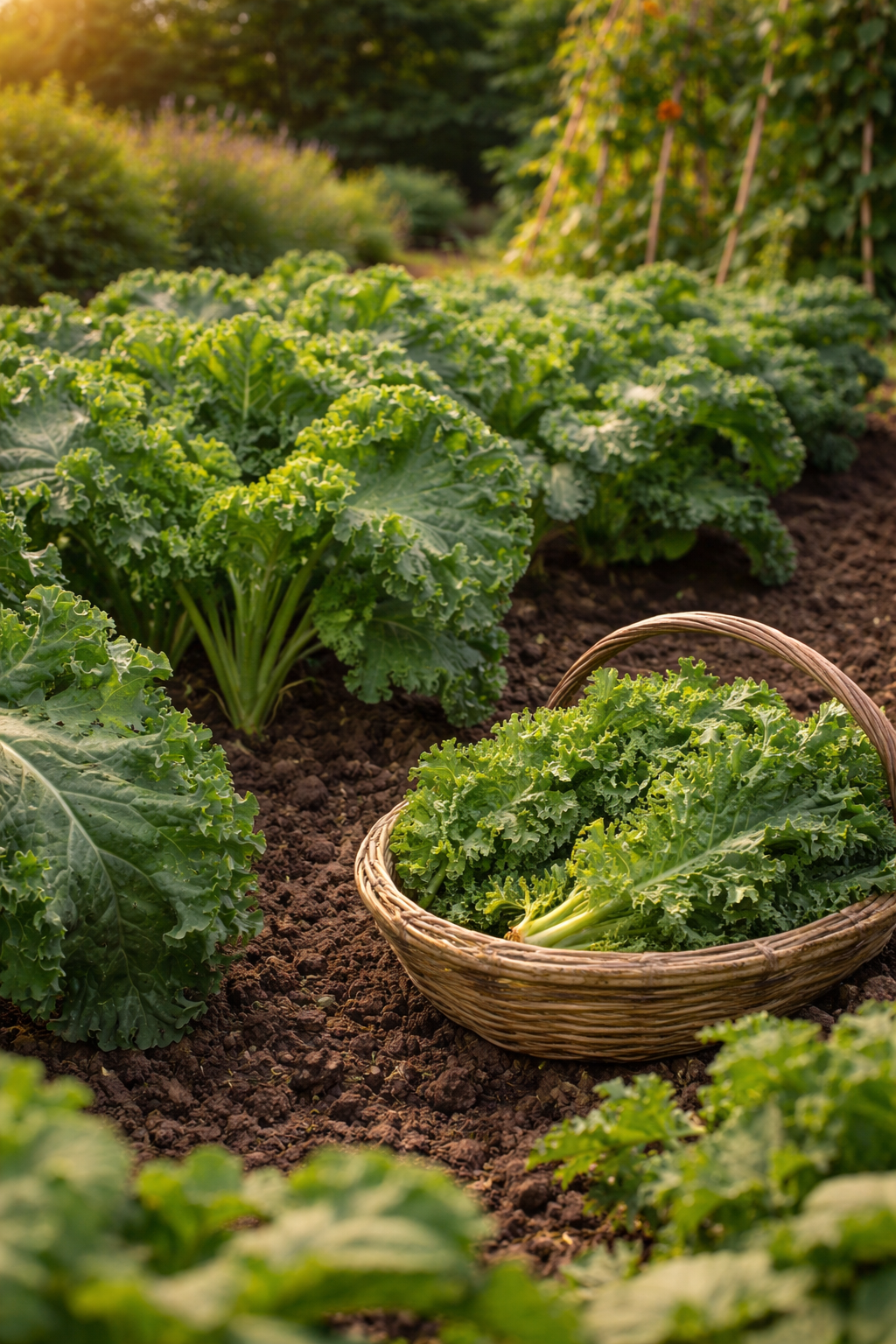
| Kale rarely arrives with fanfare. |
| It does not have the theatrical swelling of courgettes, the hidden treasure of potatoes, or the sweet immediacy of peas. It grows slowly, steadily, almost patiently, as though aware that its true season lies ahead. In high summer, it can look respectable. In late autumn, it begins to look necessary. By winter, when much else has surrendered, kale stands with quiet resilience. For beginner growers, kale is often described as “hardy” and left at that. Hardiness is certainly part of its character, but it is not the whole story. Kale thrives not simply because it tolerates cold, but because it grows with a measured consistency that rewards rhythm rather than urgency. It is a crop that teaches steadiness. |
| Soil That Supports, Not Smothers Kale belongs to the Brassica family, and Brassicas prefer fertile, well-structured soil. They are not delicate feeders, but they are responsive. Soil improved with compost provides the steady nutrients kale requires for leaf production through many months. What kale dislikes most is instability. Waterlogged soil weakens roots and invites disease. Severely depleted soil results in thin, pale leaves. The balance lies somewhere in between: ground that drains freely yet retains moisture, enriched with organic matter that supports long-term growth. It is often assumed that kale can grow anywhere simply because it survives winter. Survival, however, is not the same as vigour. When planted in thoughtfully improved soil, kale grows with deeper colour, thicker leaves, and stronger stems. This is the first lesson it offers: resilience is supported by preparation. With the soil ready, the next step is setting kale on its path to establishment. Sowing and Establishment Kale can be sown directly into prepared beds in spring or early summer, but many gardeners prefer to raise seedlings in modules before transplanting. This allows careful spacing and reduces early slug damage. Unlike fast-growing salad leaves, kale takes its time. Germination is steady, not dramatic. Early growth may seem modest, but once established, the plant gathers momentum. Spacing matters more than beginners expect. Kale needs air around its leaves. Crowded plants are more susceptible to mildew and caterpillar damage. Giving each plant room allows it to form a sturdy framework that withstands wind and weather later in the year. There is a tendency to overplant in hopes of abundance. With kale, fewer well-spaced plants yield more reliable harvests than a crowded bed struggling for light and airflow. Watering and Early Care During its early stages, kale benefits from consistent moisture. Young plants stressed by drought may never fully recover their vigour. Once established, however, kale is remarkably tolerant of varying conditions. Mulching around the base once plants are settled helps retain soil moisture and suppresses weeds. It also stabilises temperature during periods of fluctuation. It is worth remembering that kale’s ultimate role is as a long-season crop. Unlike lettuce, which completes its life cycle quickly, kale takes months to develop its structure. Early stress may not be immediately visible but can limit later performance. Patience during establishment repays itself in winter resilience. Pests and Realism Brassicas attract attention. Cabbage white butterflies regard them with enthusiasm. Aphids occasionally cluster. Slugs may test seedlings. The common reaction is alarm. Yet kale, unlike many brassicas, tolerates moderate pest pressure. A few nibbled leaves do not compromise the plant’s ability to continue producing. Netting can prevent heavy caterpillar damage where butterflies are prolific. Vigilance in early growth reduces losses. But perfection is neither realistic nor necessary. One of the quiet myths in vegetable gardening is that leaves must remain pristine. Kale disproves this. Minor damage does not diminish flavour or nutritional value. In fact, leaves grown in living soil with occasional insect interaction often feel more honest than immaculate specimens grown under constant protection. Learning to accept manageable imperfection reduces unnecessary intervention. Harvesting with Continuity Kale does not offer a single harvest moment. It offers succession. Outer leaves can be picked individually once plants are established, allowing the central growth to continue. This cut-and-come-again method extends productivity for months. The key is restraint. Removing too many leaves weakens the plant. Regular, moderate harvesting encourages steady regrowth. This rhythm aligns well with kitchen needs. Rather than gluts followed by gaps, kale provides a sense of continuity. A handful of leaves for soup or stir-fry, a few more for winter braising, a steady supply that adapts to the season. In colder months, flavour deepens. Frost often sweetens the leaves slightly, tempering bitterness and intensifying character. Kale seems to welcome cold rather than resent it. Variety and Character There are many forms of kale — curly, flat-leafed, dark green, purple, even almost black. Some are ornamental, others are more traditional. Curly types provide texture and hold up well in cooking. Cavolo nero, with its elongated dark leaves, offers depth of flavour and visual drama. Russian varieties, with frilled edges, bring softness and resilience. Choosing variety is less about difficulty and more about preference. All share the same underlying temperament: steady growth, tolerance of cool weather, and adaptability in the kitchen. Matching variety to climate and space is sensible, but none are inherently beyond a beginner’s reach. Kale in the Seasonal Garden Perhaps the most valuable role kale plays is its seasonal role. It fills the gap between summer abundance and winter scarcity. When tomatoes and courgettes have faded, kale remains. When frosts begin to mark the soil white, kale stands green against it. This continuity changes how a garden feels. Rather than ending abruptly in autumn, it extends quietly into colder months. For beginners, this offers reassurance. The garden does not shut down. There is still something to tend, harvest, and observe. Kale teaches that productivity is not limited to high summer. A Gentle Correction There is a perception, often fuelled by food trends, that kale is either a fashionable superfood or an austere winter necessity. Both framings distort its simplicity. Kale is not complicated. It does not require elaborate preparation or reverence. It is simply a robust leafy vegetable that responds well to thoughtful soil, adequate spacing, and moderate care. It is also not indestructible. Prolonged neglect or severely depleted soil will reduce performance. The myth of effortless survival sometimes leads to disappointment when expectations are unrealistic. Kale thrives with consistency, not heroics. Closing Reflections The message here is practical: Growing kale teaches endurance, not drama, and underscores the value of resilience in the garden. Prepare the soil well and allow space for airflow. Establish plants steadily and mulch for moisture. Harvest outer leaves regularly and accept minor blemishes as part of the process. In return, kale offers longevity. It bridges seasons. It stands through wind and frost. It provides nourishment when other crops retreat. For beginners, kale’s sustained presence will build gardening confidence, not through rapid change but through reliable ongoing results. In a garden, this reliable presence is an ongoing teacher, supporting learning season by season. |
| About our writing & imagery Most articles reflect our real gardening experience and reflection. Some use AI in drafting or research, but never for voice or authority. Featured images may show our photos, original AI-generated visuals, or, where stated, credited images shared by others. All content is shaped and edited by Earthly Comforts, expressing our own views. |

