| — and Why They Deserve More Respect |
| Radishes are often treated as the starter vegetable, the training exercise before “proper” crops begin. They germinate quickly, swell within weeks, and are usually recommended to beginners as a way of proving that seeds work. All of that is true, but it is also incomplete. Radishes are not merely easy; they are revealing. They show you how your soil behaves, how consistently you water, how quickly you harvest, and how well you understand timing. At their best, radishes are crisp, clean, and faintly peppery. At their worst, they are woody, split, and aggressively hot. The difference between those outcomes is rarely a dramatic technique. It is steadiness. |
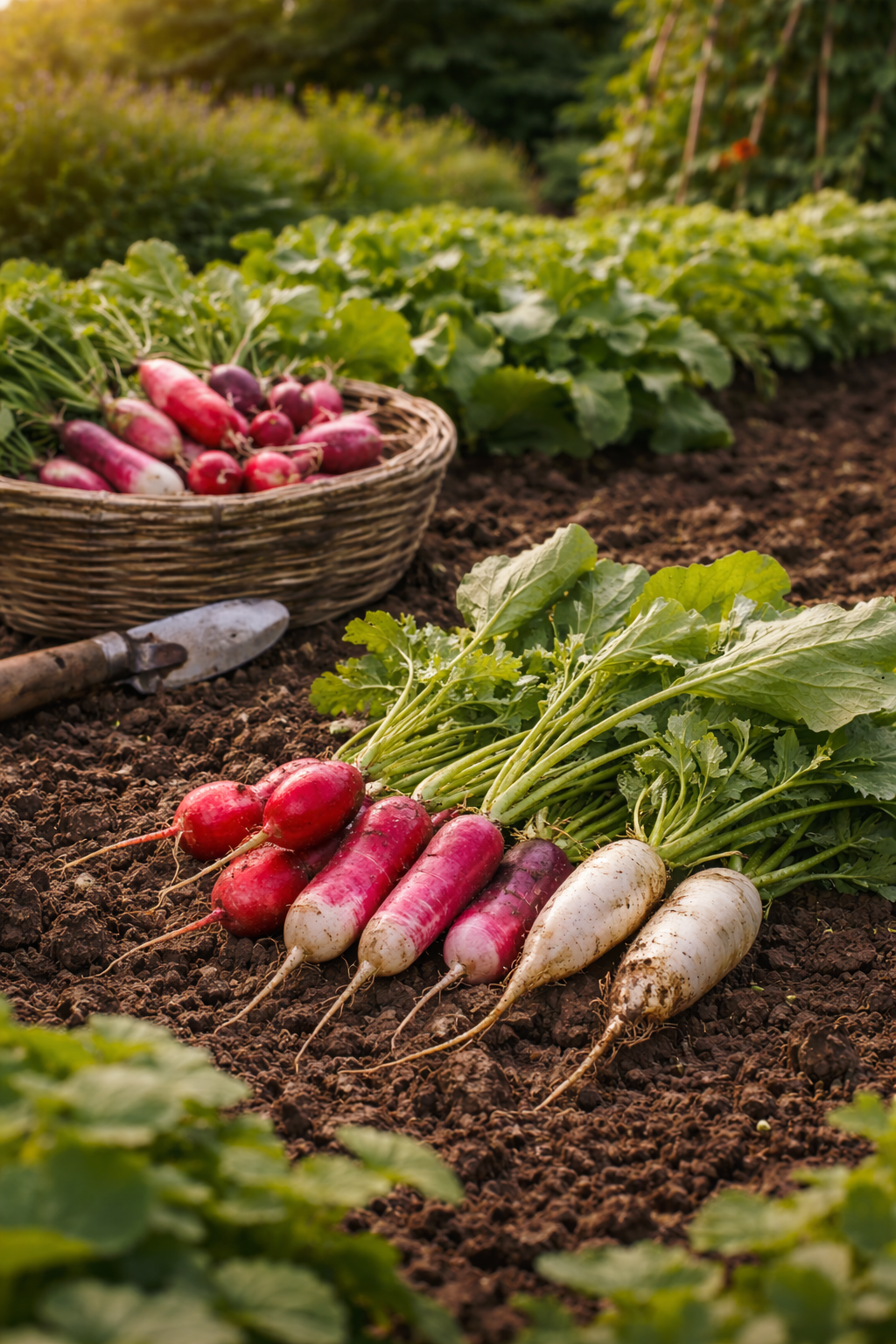
| The Soil They Prefer Radishes are root crops, but unlike carrots, they do not require deep, finely worked soil. They swell near the surface and tolerate minor irregularities. What they resent most is compaction and drought. If the soil crusts over or dries severely, growth stalls and texture suffers. Loose, well-prepared ground improved with compost is ideal, but compost should be mature rather than fresh. Excess nitrogen encourages leafy growth at the expense of root development. In most gardens, soil that has been quietly improved over time is entirely sufficient. Because radishes grow quickly, they are excellent indicators of soil condition. If they split, moisture has likely fluctuated. If they form only thin roots beneath lush tops, fertility may be unbalanced. They offer feedback within weeks. Timing and Temperature The greatest misunderstanding about radishes concerns season. Many assume they are a summer crop, sown once and forgotten. In truth, radishes prefer cool conditions. Early spring and early autumn are their most comfortable periods. In intense summer heat, they bolt readily, sending up flowers instead of swelling roots. Sowing little and often is wiser than sowing heavily once. A short row every two or three weeks ensures continuity without excess. Because they mature rapidly, succession is easy to maintain. Germination is usually swift. Within days, the first leaves appear, reminding you that growth is underway. This immediacy makes radishes satisfying for beginners, but it can also encourage impatience. Harvesting at the right moment matters. Leave them too long, particularly in warm weather, and the texture deteriorates. Watering and Consistency Radishes respond quickly to irregular watering. A dry spell followed by heavy rain often results in splitting. Consistent moisture keeps growth even and flavour balanced. Mulching lightly once seedlings establish can help stabilise conditions, particularly in sandy soil. However, radishes rarely require elaborate management. They reward simple attention. One practical observation learned over the years: radishes grown with steady watering develop a milder flavour. Those subjected to stress intensify in heat. Some gardeners seek that sharpness; others prefer restraint. Either way, moisture shapes character. Spacing and Thinning Crowded radishes compete. If sown too thickly and left unthinned, they produce thin roots rather than rounded bulbs. Thinning, though sometimes resisted, allows each plant space to swell properly. Unlike carrots, radishes tolerate minor disturbance during thinning. Their speed compensates for small setbacks. Nonetheless, sowing with moderate spacing from the outset reduces later interference. Again, the lesson is one of restraint rather than force. The Many Types of Radish The common small red radish is only the beginning. Understanding the range available changes how the crop is perceived. Spring radishes, such as ‘Cherry Belle’ or ‘French Breakfast’, are quick-growing and harvested young. They are crisp and mild when conditions suit. Then there are summer varieties that tolerate slightly warmer weather, though still preferring moderation. Winter radishes are an entirely different proposition. Larger, slower-growing, often black-skinned or white-fleshed, they mature over months and store well. These radishes have a deeper flavour and denser texture, making them suited to slicing, roasting, or pickling. Daikon types grow long and cylindrical, resembling pale carrots. They prefer cooler conditions and are excellent in autumn sowings. Understanding this diversity challenges the idea that radishes are merely a garnish. They occupy different seasons and serve different culinary roles. Harvest and Use Radishes are best harvested while firm and relatively young. Once they become spongy or hollow, the flavour diminishes. Regular checking prevents disappointment. Leaves are edible too, though often overlooked. Young radish tops can be sautéed or added to soups, reducing waste and broadening use. Winter radishes, by contrast, are harvested later and can be stored in cool conditions for extended periods. Their robustness contrasts sharply with the delicacy of spring types. The species’ versatility is often underestimated. Pests and Perspective Flea beetles occasionally mark radish leaves with small holes, particularly in dry weather. Because radishes grow quickly, damage is usually cosmetic rather than catastrophic. Maintaining moisture and sowing during cooler periods reduces vulnerability. Radishes rarely fail dramatically. Their speed allows correction. If one sowing disappoints, another can follow within weeks. This flexibility makes them forgiving teachers. A Gentle Reframing Radishes suffer from being too easy. Their quick maturity leads some to treat them casually. Yet when grown thoughtfully, they reveal subtlety. They respond to soil conditions, watering rhythm, and seasonal timing more clearly than many slower crops. They also demonstrate that small vegetables need not be trivial. In salads, sliced thinly, roasted whole, or pickled for preservation, radishes contribute texture and brightness that more imposing crops cannot. They are not filler. They are punctuation. Closing Reflections Growing radishes well requires little more than prepared soil, cool timing, moderate spacing, and consistent moisture. Within those simple conditions lies considerable variation. They teach that speed does not eliminate nuance. They show that steady care improves flavour. They remind us that vegetables need not be large to be worthwhile. For beginners, they provide early encouragement. For experienced growers, they offer refinement. And perhaps that is the quiet truth about radishes: they are simple, but never simplistic. |
| About our writing & imagery Most articles reflect our real gardening experience and reflection. Some use AI in drafting or research, but never for voice or authority. Featured images may show our photos, original AI-generated visuals, or, where stated, credited images shared by others. All content is shaped and edited by Earthly Comforts, expressing our own views. |

