| Growing Courgettes in Containers |
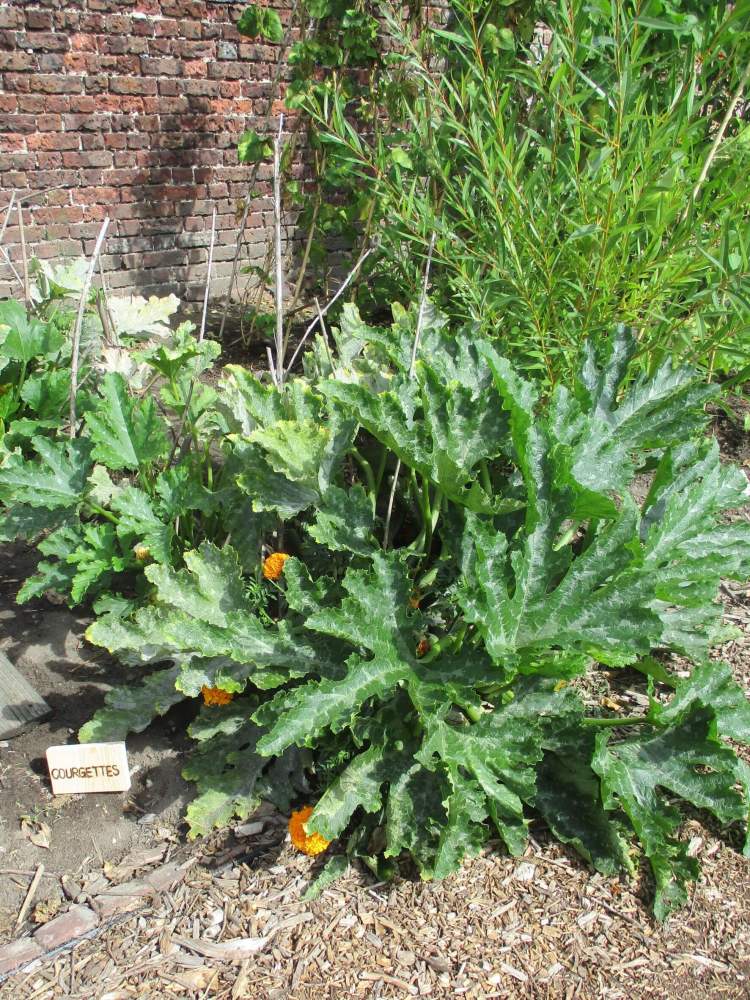
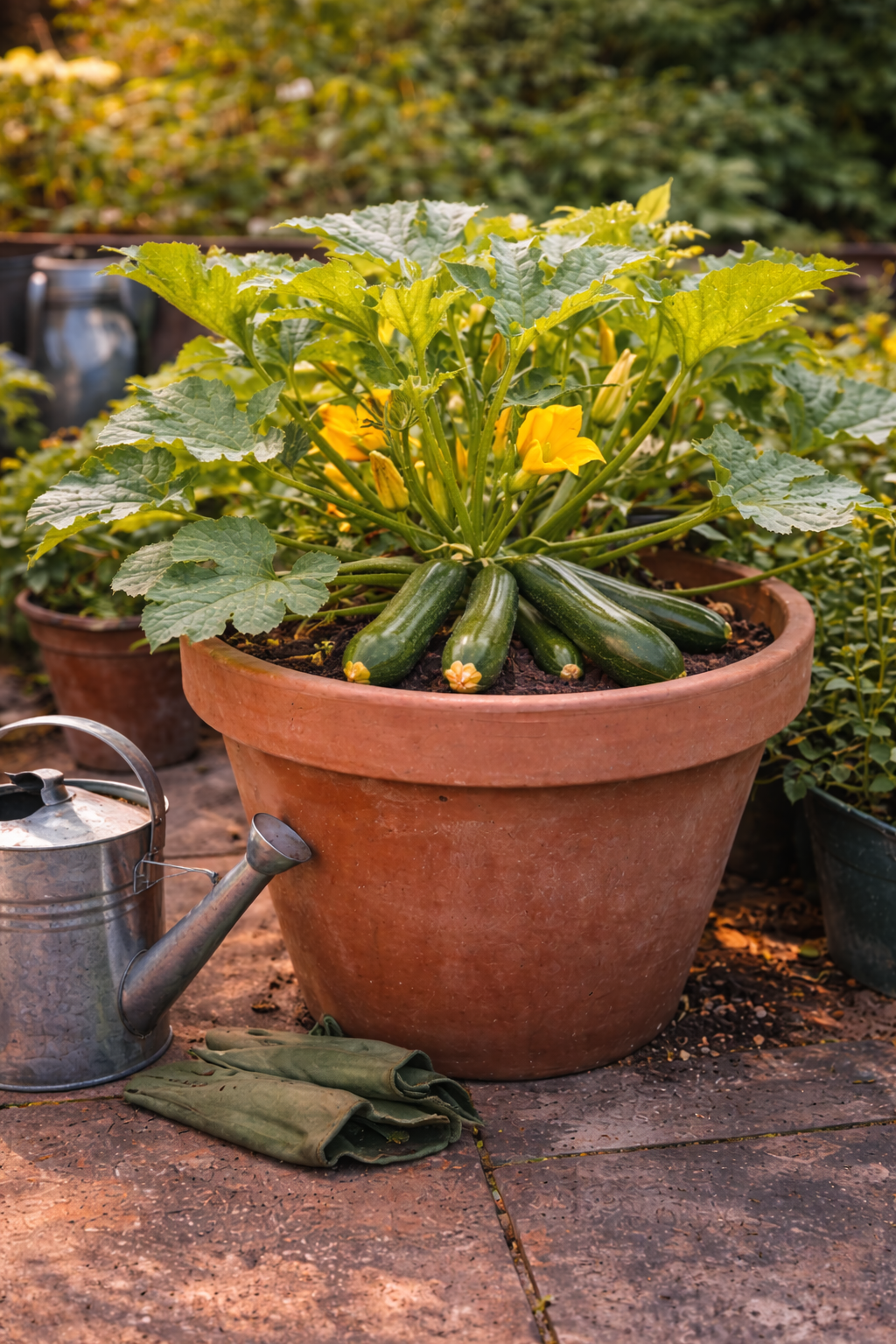
| Courgettes have a reputation for generosity. Some would say over-generosity. Leave one unattended for a few days, and it changes from neat and promising to something almost implausible. In open ground, they are vigorous, wide-spreading plants that seem to assume they have the run of the garden, pushing out large leaves and thick stems with very little hesitation. Because of this, growing them in containers can seem unlikely at first, as though the plant will always want more space than a pot can offer. In practice, courgettes grow perfectly well in containers if their basic nature is understood. The key is not to try to restrain the plant too much, but to give it enough of what it expects to find in the soil. In the ground, a courgette spreads its roots widely in search of moisture and nutrients. In a container where wandering is restricted, the gardener has to provide what the plant would normally discover for itself. Success depends less on control and more on accommodation — enough volume, enough food, and enough consistency to keep growth steady. The most common mistake is using a container that is too small. Courgettes need space below the surface as much as above. A cramped pot quickly leads to dry compost, poor feeding, and uneven growth. A container around forty to fifty centimetres wide and deep is usually the minimum. Larger is always safer. Half barrels, strong planters, or large grow bags all work well. They must allow excess water to drain, while still holding enough moisture to keep the roots cool. Courgettes dislike extremes. Compost that stays wet will rot the roots. Compost that dries out repeatedly will slow the plant and reduce fruit. A good peat-free compost, mixed with well-rotted garden compost, provides the right balance of structure and fertility. Some grit can be added for drainage, but too much will cause the container to dry too quickly in warm weather. Before planting, it is worth adding a slow-release fertiliser or extra compost, as courgettes are heavy feeders from the start and do not respond well to poor soil. They are not delicate plants; they are demanding and expect richness. Position makes a noticeable difference when growing in pots. Courgettes need full sun to produce strong growth and reliable flowers, and a warm, sheltered spot will always outperform a cold or exposed one. In containers, compost warms up more quickly than in open ground, which helps early growth, but it also dries out faster in the wind and heat. Large leaves lose water quickly, and a plant under stress will slow down even if everything else is correct. Placing containers where they receive plenty of light but some protection from strong wind helps keep conditions even, and grouping pots together can create a small sheltered space that holds moisture better. Watering is where most container-grown courgettes succeed or fail. These plants need steady moisture, not occasional soaking followed by drought. When compost dries out completely and is then flooded again, growth becomes uneven, and fruiting suffers. Deep watering, followed by proper drainage, encourages the roots to fill the container and keeps the plant stable. Light, frequent watering only wets the surface, leading to shallow roots that struggle in warm weather. In summer, daily watering may be necessary, especially in full sun, but the real guide is the compost itself. If it feels dry below the surface, the plant needs water. A layer of mulch on top of the container can help retain moisture and keep temperatures more even, which courgettes appreciate. Once flowering begins, feeding becomes important. Compost in a container cannot supply nutrients indefinitely, and courgettes will quickly exhaust the available nutrients if nothing is added. A weekly liquid feed high in potash supports fruiting and keeps the plant productive for longer. Without it, leaves pale, growth slows, and the plant begins to behave as though the season is ending early. Regular feeding does not need to be heavy, but it does need to be consistent. Courgettes respond best to steady care rather than sudden correction. The flowers themselves follow a pattern that can confuse new gardeners. Courgettes produce male and female flowers separately, and early in the season, it is common to see only male blooms. This is normal, and it does not mean the plant is failing. Female flowers appear once the plant has built enough strength to support fruit. In most gardens, insects take care of pollination without any help, but in very sheltered spaces or on balconies, it can be useful to transfer pollen gently from one flower to another. Even with good pollination, not every flower becomes a courgette, and some loss should be expected. The plant works to its own rhythm, and patience usually solves more problems than interference. Harvesting at the right moment makes a difference to how long the plant continues to produce. It is tempting to leave fruit to grow large, but this signals to the plant that its work is done. When courgettes are picked young, the plant continues to produce new flowers and fruit. In a container, where resources are limited, this balance is even more important. Regular harvesting keeps the plant active, while neglected fruit slows everything down. In warm weather, it is not unusual to pick every day, and the more often the plant is harvested, the longer it will continue. Container-grown courgettes rarely match the size or total yield of those grown in open soil, but they respond well to attention and can still produce generously. One or two healthy plants in large pots are often enough for a household through the summer, especially if watering and feeding remain steady. They are not difficult plants, but they do expect consistency, and when that consistency is given, they perform with enthusiasm. For patios, terraces, and small gardens where open ground is limited, they are one of the most rewarding vegetables to grow. Their leaves fill space quickly, their flowers attract insects, and their fruit ripens steadily throughout the warm months. Accept their appetite, keep conditions even, and they rarely disappoint. |
| About our writing & imagery Most articles reflect our real gardening experience and reflection. Some use AI in drafting or research, but never for voice or authority. Featured images may show our photos, original AI-generated visuals, or, where stated, credited images shared by others. All content is shaped and edited by Earthly Comforts, expressing our own views. |

