| The Spaces We Keep Tidy for Other People |
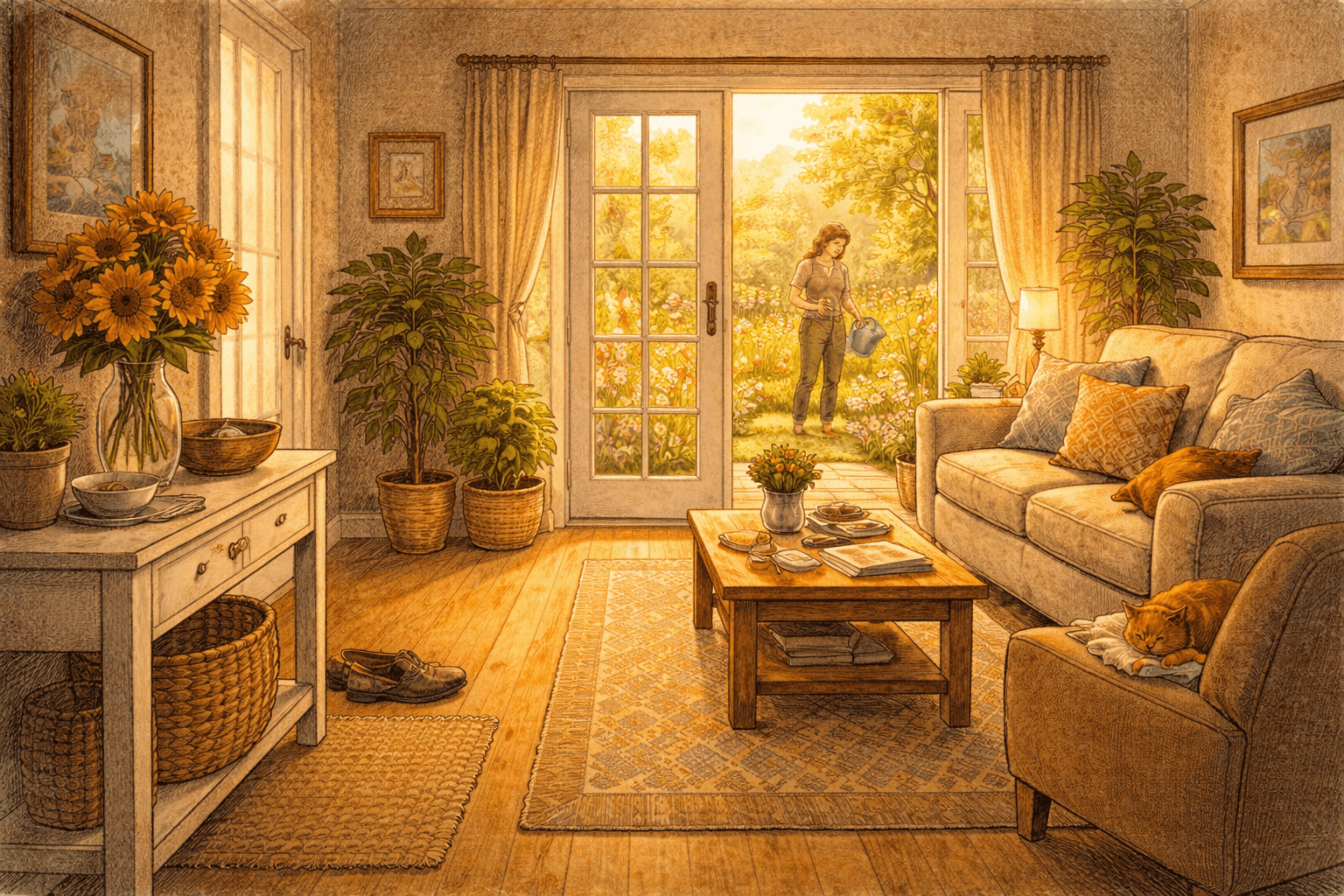
| There are parts of our lives that are maintained less for ourselves than for an imagined audience. They’re not the most used or the most comfortable spaces. They’re the ones that sit closest to the boundary between private and public. Front gardens. Hallways. Kitchens are used when guests are expected—the bits that feel visible, even when nobody is looking. I didn’t notice how much energy goes into these spaces until I started working regularly in other people’s gardens. The contrast is often stark. The front is clipped, presentable, restrained. The back is looser, more honest. Sometimes neglected, sometimes thriving, often doing more ecological work than the polished edge ever could. This isn’t hypocrisy. It’s communication. We tidy specific spaces because they speak for us. They say: I’m coping. I’m respectable. I’m organised enough. These spaces function as introductions. They don’t have to tell the whole truth; they have to say enough. One common assumption is that the divide between “kept” and “messy” reflects effort or care. In reality, it reflects the audience. People tend to what they believe will be seen. What sits out of sight is left to operate under different rules. Gardening makes this distinction tangible. Front borders are often over-managed, planted for appearance rather than resilience. Backs are where compost lives, where experimentation happens. Where things are allowed to fail quietly, the work done there may be more meaningful, but it carries less social weight. There’s a trade-off embedded in this. Spaces kept tidy for others tend to be stable but shallow. They resist change because change risks judgment. Spaces kept for ourselves evolve more freely, but they can also slip into neglect if they’re never re-entered consciously. I’ve noticed that people are often harsher on themselves about the latter. The back cupboard, the spare room, the shed — these become symbols of personal failure rather than neutral zones of use. Yet they are often the places where real life happens, where tools are adapted. Where plans change. Where things are tried and abandoned without explanation. This creates a quiet tension. We expend energy maintaining appearances while feeling guilty about the spaces that actually support us. Over time, this can distort our sense of care. We begin to confuse presentation with responsibility. Gardening challenges that confuse. A garden kept immaculate for show often demands constant intervention. It survives on control. A garden allowed some privacy tends to develop its own balance. It may look less impressive from the street, but it often functions better as a system. That doesn’t mean public-facing spaces don’t matter. They do. They shape how places feel when entering. They create trust. The issue is when they receive all the attention, and the private spaces receive only judgment. I’ve found that revisiting neglected private spaces with the same curiosity we bring to public ones can be surprisingly restorative. Not to tidy them aggressively, but to understand how they’re actually being used. What’s accumulating? What’s missing? What’s working quietly despite appearances. The same pattern appears beyond physical spaces. Conversations were kept polite. Emotions kept presentable. Opinions softened for public view while more complex truths are stored out of sight. These, too, are spaces maintained for others. There’s nothing wrong with this. Social life requires curation. The trouble comes when we forget that curated spaces are not the whole structure. When we start believing our own front-facing order is the measure of our lives. Gardening has made me more forgiving here. I’ve seen how much vitality lives behind the scenes. How much function happens where nobody is watching? The back of a garden often tells you more about its health than the front ever could. The question isn’t whether we keep spaces tidy for others. We all do. The question is whether we also allow ourselves spaces that don’t need to perform. Places where usefulness matters more than appearance. Where care is quiet and judgment absent. Those spaces rarely look impressive. But they hold things together. |
| About our writing & imagery Most articles reflect our real gardening experience and reflection. Some use AI in drafting or research, but never for voice or authority. Featured images may show our photos, original AI-generated visuals, or, where stated, credited images shared by others. All content is shaped and edited by Earthly Comforts, expressing our own views. |

