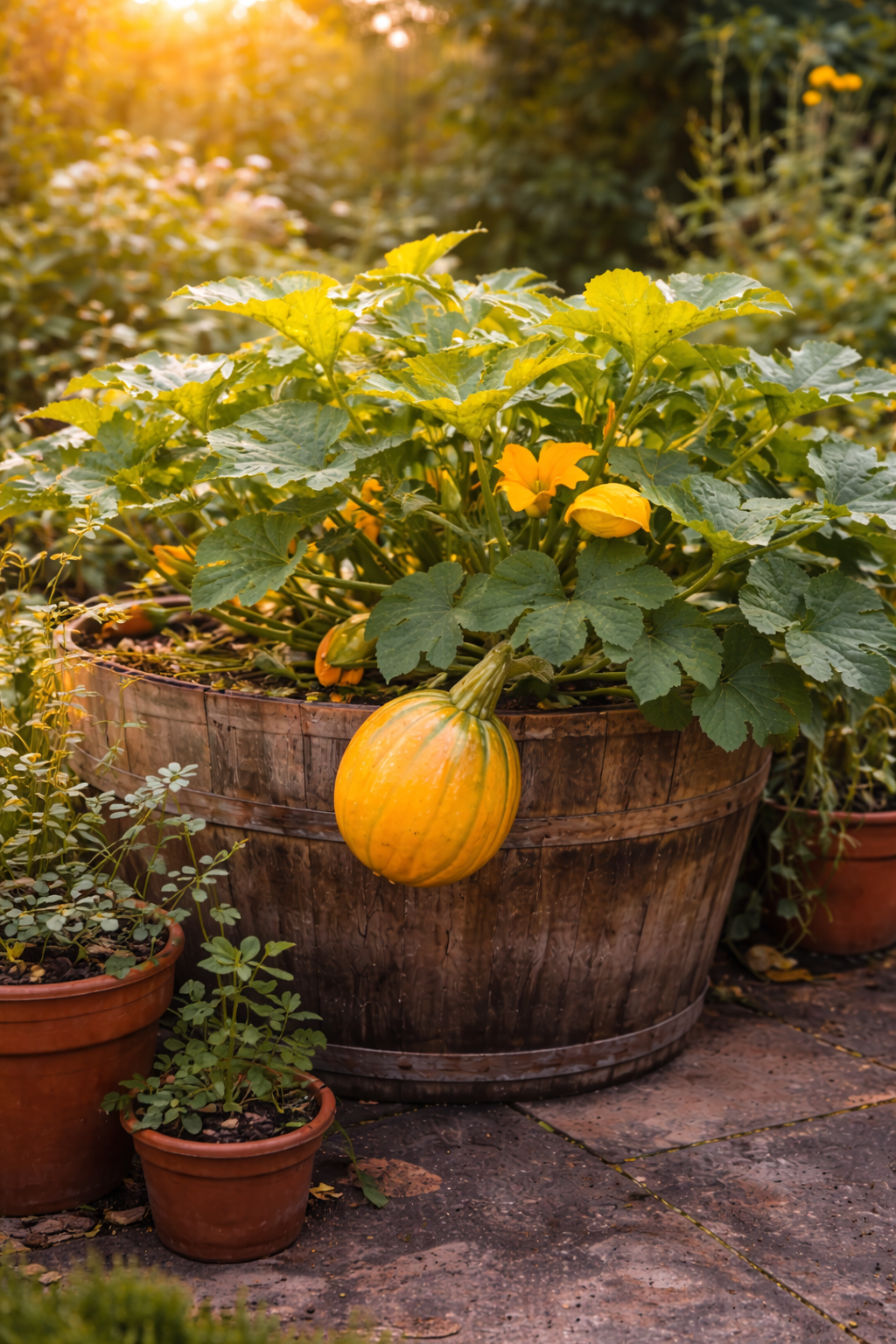
| Growing Squash in Containers |
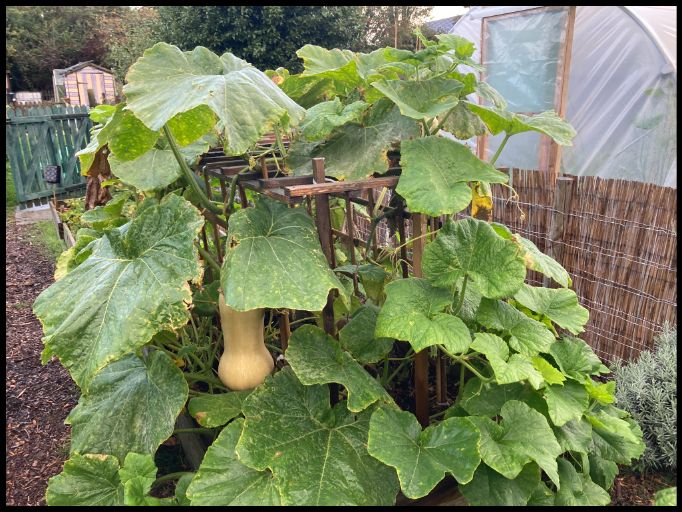
| Squash is often thought of as a plant for large gardens, the sort that sends long stems wandering across open ground and quietly takes over more space than expected. Some trails for metres, others swell into heavy fruit that seem improbable given their beginnings, and most give the impression that they belong in soil with room to spare. Because of this, growing squash in containers can seem unrealistic at first, as if the plant will always want more than a pot can provide. In reality, squash can grow very well in containers, provided the container is large enough and steady care is given. Like courgettes, they are hungry, thirsty plants that expect rich soil and consistent moisture. In a container with limited nutrient availability, the gardener must supply what the plant would find on its own. Success relies more on thorough preparation than on confining the plant. The first decision when growing squash in pots is choosing the right type. Not all varieties are suited to confined spaces, and the difference between bush and trailing squash matters more in a container than it does in open soil. Compact or bush varieties are usually the safest choice, as they produce strong plants without sending stems too far beyond the container. wide modern varieties have been bred specifically for smaller gardens and will grow well in large pots while still producing good fruit. Trailing vines can still be grown in containers. However, they need room to spread over the edge of a patio or along a support. The weight of the fruit must be considered. A heavy squash hanging from a thin stem can damage the plant if it is not supported. The container itself must be large. A small pot will dry out too quickly, restricting root growth and leading to weak plants and poor harvests. A container of at least 40 to 50 litres is usually suitable for one plant. Larger containers hold moisture better, keep the roots cooler, and allow the plant to grow steadily rather than in short bursts. Compost should be rich, loose, and able to hold moisture without becoming waterlogged. A mixture of peat-free compost and well-rotted garden compost works well. Add slow-release fertiliser before planting. Squash are sustained feeders and benefit from rich soil from the beginning rather than correcting deficiencies later. Warmth and light are just as important as soil. Squash thrives in the sunniest, most sheltered part of the garden. Containers warm up faster than open ground, which helps early growth but also causes them to lose moisture quickly, especially in the wind. Large leaves can lose significant water during warm weather, leaving the plant struggling if it repeatedly dries out. Placing containers in full sun with some wind protection helps maintain even conditions, which squash prefer. Watering must be regular and thorough. Squash do not tolerate neglect, especially in pots. Compost should drain freely, but never dry out completely. Deep watering encourages roots to grow down through the container, making the plant stronger and more stable. Light, frequent watering only wets the surface, leaving the lower compost dry and causing uneven growth. In warm weather, water every day or every other day. A surface mulch helps prevent moisture from evaporating too quickly. Feeding is important once the plant starts to grow strongly. Without added nutrients, plants may grow lots of leaves but produce fewer good-quality fruits. A liquid feed every week or two during the middle of the season keeps growth steady and improves both size and flavour. Trailing squash sometimes need guidance as they grow. In a container, stems can be allowed to spill over the edge of a patio or trained gently along the ground or up a support. If the fruit develops away from the container, it may need support to prevent the stem from tearing. Fabric slings or soft ties can hold the weight without damaging the plant. Bush varieties require less attention, but still benefit from good airflow around the leaves to reduce the risk of mildew, which can appear in warm, still conditions. Harvesting depends on the type of squash being grown. Summer squash are usually picked young, much like courgettes, while winter squash are left to mature fully on the plant. When growing in containers, fruit size may be slightly smaller than in open ground, but this is not a problem. Smaller fruit often has better flavour and stores well if allowed to ripen properly. For winter squash, the skin should feel firm, and the stem should begin to dry before cutting, as this helps the fruit keep longer. To sum up, growing squash in containers is possible and rewarding if you provide a large enough pot, use nutrient-rich compost, water regularly, choose compact varieties, and support trailing stems. Pay attention to warmth, sunlight, and airflow. By following these key steps, you can enjoy healthy squash plants and a reliable harvest even in small outdoor spaces. |
| About our writing & imagery Most articles reflect our real gardening experience and reflection. Some use AI in drafting or research, but never for voice or authority. Featured images may show our photos, original AI-generated visuals, or, where stated, credited images shared by others. All content is shaped and edited by Earthly Comforts, expressing our own views. |

